The Secret to Perfect Homemade Fermented Cabbage
Why Fermenting Cabbage at Home Is Easier Than You Think
Fermenting cabbage at home is one of the simplest food preservation projects you can try — and the results blow store-bought sauerkraut out of the water.
Here’s the quick version of how it works:
- Shred fresh cabbage thinly (about 1-2mm)
- Massage with non-iodized salt at a 2% ratio by weight (e.g., 20g salt per 1kg cabbage)
- Pack tightly into a clean glass jar
- Submerge the cabbage fully under its own brine
- Ferment at 65-75°F for 3 days to 3 weeks, tasting as you go
- Refrigerate when it reaches your preferred sourness
That’s it. No vinegar. No canning. No special skills required.
The magic happens thanks to Lactobacillus bacteria — naturally present on cabbage leaves — which convert the cabbage’s sugars into lactic acid. That acid is what gives sauerkraut its tangy flavor and preserves it for months.
Beyond the taste, the health case is compelling. Just 2 ounces of homemade fermented cabbage contains more probiotics than 100 probiotic capsules. It’s also rich in vitamin C, vitamin K, fiber, iron, folate, and potassium.
The only real challenge is patience. But once you understand a few key principles — salt ratio, temperature, and keeping cabbage submerged — very little can go wrong.
The Science of Lacto-Fermentation
To master fermenting cabbage at home, we first need to understand the invisible workforce making it all happen. We aren’t just “rotting” vegetables; we are curating a microbial universe where we are the benevolent gods. The process is known as lacto-fermentation, and it has nothing to do with dairy.
The stars of the show are Lactobacillus bacteria. These beneficial microbes are naturally present on the skin of almost all fruits and vegetables, especially cabbage. When we place shredded cabbage in an anaerobic environment (meaning “without oxygen”) and add salt, we create the perfect VIP lounge for these bacteria.
How the Magic Happens
The fermentation process typically occurs in three distinct stages:
- Stage One: Other microorganisms begin to die off because they can’t handle the salt, but Lactobacillus thrives. As they consume the natural sugars in the cabbage, they produce carbon dioxide (you’ll see these as tiny bubbles) and lactic acid.
- Stage Two: As the environment becomes more acidic (dropping the pH level), the lactic acid acts as a natural preservative. This acidity prevents harmful “bad” bacteria from moving in.
- Stage Three: The flavor matures. The cabbage softens slightly, the color turns translucent or golden, and that signature “funk” develops.
Because this process relies on specific biological conditions, safety is paramount. We always recommend checking out our Safety First: A Guide to Preserving Fermented Foods to ensure your kitchen environment is ready for action. In April 2026, home fermentation has moved beyond a “trend” into a staple of the modern healthy kitchen, and understanding the pH shift from neutral to acidic is the key to a safe, crunchy batch.
Essential Gear and Ingredients
One of the best things about fermenting cabbage at home is that you don’t need a massive ceramic crock or high-tech laboratory equipment. Most of what you need is likely already in your pantry. However, the quality of your gear matters. We avoid metallic utensils or bowls because the high acidity of the ferment can react with the metal, potentially leaving you with a metallic-tasting kraut.
The Salt Factor
Salt is the most critical ingredient. It draws moisture out of the cabbage through osmosis to create a natural brine and keeps the “bad guys” at bay while the Lactobacillus gets to work.
| Salt Type | Best for Fermentation? | Why? |
|---|---|---|
| Sea Salt | Yes | Unrefined, contains trace minerals, and dissolves easily. |
| Pickling Salt | Yes | Pure salt with no additives; ensures a clear brine. |
| Iodized Salt | No | Iodine and anti-caking agents can inhibit bacteria and discolor the cabbage. |
| Himalayan Pink Salt | Yes | Mineral-rich and works well, though can be pricey. |
The Gear List
- Glass Mason Jars: Wide-mouth jars are easiest for packing the cabbage down.
- Fermentation Weights: These are small glass discs that sit on top of the cabbage to keep it submerged. If you don’t have these, a clean stone or a smaller jar filled with water can work in a pinch.
- Airlock Lids: These allow carbon dioxide to escape without letting oxygen in. If you use a standard lid, you’ll need to “burp” the jar daily to release gas.
- Non-Metallic Bowls: Glass or ceramic bowls are perfect for the initial mixing and massaging.
If you find yourself falling in love with the “funk,” you might want to expand your horizons. Once you’ve mastered cabbage, try our Don’t Be Afraid of the Funk with This Easy Fermented Garlic Recipe to add another layer of probiotic goodness to your meals.
Choosing the Best Ingredients for Fermenting Cabbage at Home
While you can ferment almost any cabbage, the fresher the head, the better the result. Fresh cabbage has a higher water content, which means it will release more natural brine when massaged.
- Green Cabbage: The classic choice. Look for heads that feel heavy for their size and have tightly packed leaves.
- Red Cabbage: Produces a stunning, vibrant purple kraut. It’s often slightly more nutrient-dense and has a milder, earthier flavor.
- The 2% Salt Ratio: This is the industry standard for safety and flavor. For every 1000 grams of cabbage, use 20 grams of salt. Using a gram scale is much more accurate than measuring spoons!
- Filtered Water: If your cabbage is a bit older and doesn’t produce enough brine to cover itself, you can add a 2% salt-water solution. Always use filtered water, as chlorine in tap water can kill the beneficial bacteria.
- Flavor Boosters: Don’t be afraid to experiment! Caraway seeds and juniper berries are traditional. Garlic cloves, ginger, or even thinly sliced beets can create a unique flavor profile.
Step-by-Step Guide: How to Ferment Cabbage at Home
Now, let’s get our hands dirty (but clean—please wash them first!).
1. Preparation and Shredding
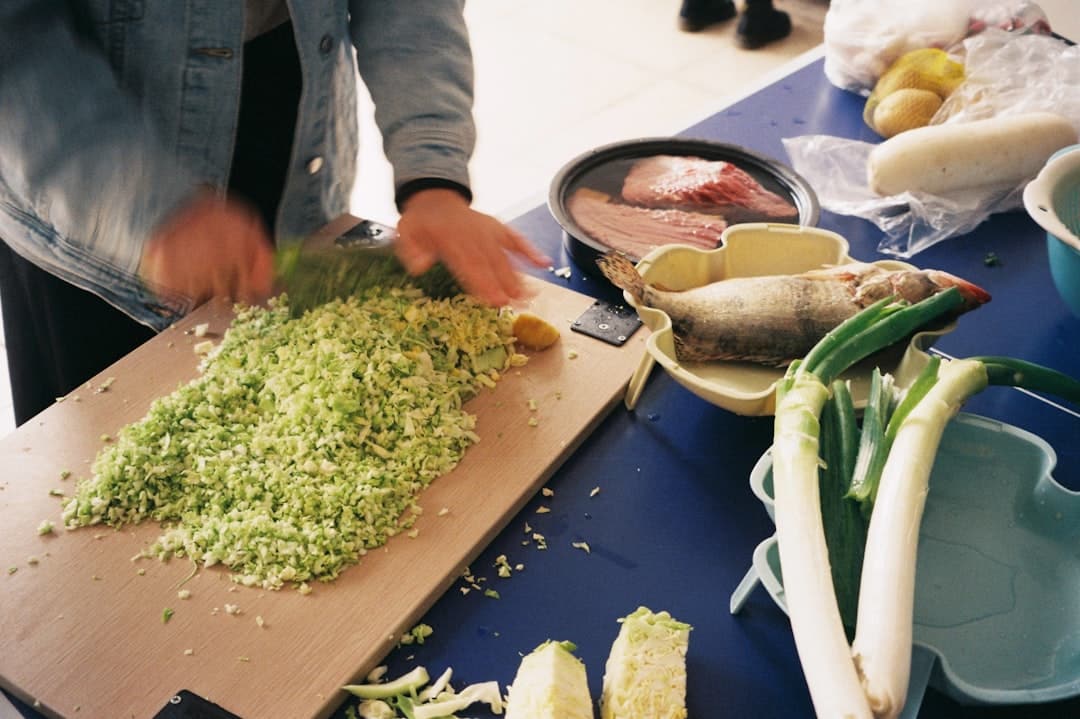
Start by removing the outer leaves of the cabbage. Save one or two large, clean leaves; we’ll use these later as a “buffer” to keep the small bits submerged. Quarter the cabbage and cut out the hard core. Shred the cabbage into thin ribbons, about 1-2mm thick. You can use a sharp knife, a mandoline (watch your fingers!), or a food processor.
2. The Massage
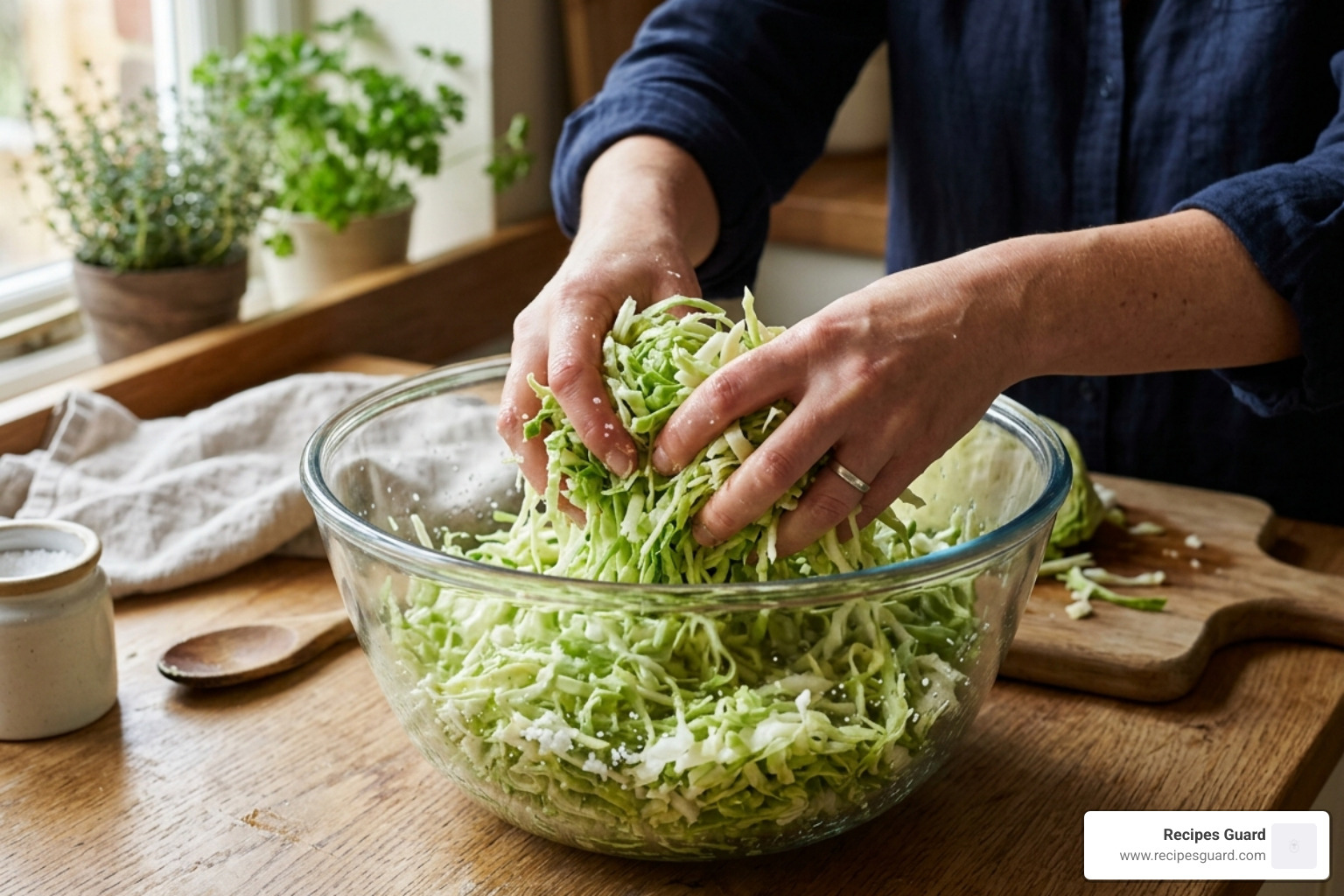
Place your shredded cabbage in a large glass or ceramic bowl. Sprinkle your measured salt over the top. Now, give it a vigorous massage. You want to squeeze and knead the cabbage for about 5 to 10 minutes. You’ll notice the cabbage starts to “weep” and get limp. This liquid is your precious brine.
3. Packing the Jar
Pack the cabbage into your clean Mason jar a handful at a time. After every few handfuls, use your fist or a wooden tamper to press it down firmly. The goal is to eliminate air pockets and force the brine to rise above the cabbage. Leave at least 2-3 inches of headspace at the top of the jar, as the cabbage will expand and bubble as it ferments.
4. The Submersion
Take that reserved cabbage leaf from step one and fold it to fit inside the jar, placing it on top of the shredded cabbage. Place your fermentation weight on top of that leaf. The brine should completely cover the leaf and the weight. If you’ve massaged well and your cabbage was fresh, you should have plenty of juice. For more inspiration on traditional techniques, you can reference this classic Sauerkraut Recipe.
Ideal Environment for Fermenting Cabbage at Home
Once the jar is packed, where does it go? Not in the fridge—not yet!
- Temperature: The “sweet spot” is between 65-75°F (18-24°C). If it’s too cold (below 60°F), fermentation will stall. If it’s too hot (above 75°F), the cabbage can become soft and mushy, and “bad” yeasts might take over.
- Light: Keep your jars in a dark spot, like a pantry or a kitchen cupboard. Direct sunlight can degrade the vitamins and affect the temperature.
- Timeline: For a small batch, you can start tasting after 3 days. Most people find the flavor peaks between 7 and 21 days. In the winter of 2026, you might find it takes a bit longer than in the summer months. The longer it ferments, the tangier and softer it becomes.
Troubleshooting Common Fermentation Issues
Even for experts, fermentation can be a bit unpredictable. It is a living process, after all! Here is how to handle the most common “funk” factors.
The “Under the Brine” Rule
The most important mantra in fermentation is: “Under the brine, everything is fine.” If cabbage bits float to the surface and are exposed to air, they can grow mold. Always ensure your weights are doing their job.
Scum vs. Mold
- Kahm Yeast: You might see a thin, white, translucent film on the surface. This is Kahm yeast. It’s harmless but can affect the flavor if left too long. Simply skim it off with a clean spoon.
- Mold: If you see fuzzy patches of green, black, or pink, that’s mold. While some old-school fermenters suggest just scraping it off, we at Recipes Guard recommend being cautious. If the mold is extensive or the kraut smells “off,” it’s better to compost it and start over.
- White Scum: Small amounts of white residue are often just settled yeast or bacteria and are perfectly normal.
Smells and Textures
- Sulfur Smells: Cabbage is a cruciferous vegetable; it contains sulfur. A bit of a “stinky” smell during the first few days is normal.
- Rotten Smells: If it smells like something died in the jar, something went wrong. Trust your nose—if it’s truly malodorous, toss it.
- Soft Texture: This usually happens if the temperature was too high or you didn’t use enough salt. It’s still safe to eat, but it won’t have that classic “crunch.”
For those who prefer a faster, non-fermented tang, you can check out our guide on Quick and Easy Pickled Vegetables for Every Meal, which uses vinegar for immediate results.
Health Benefits and Serving Suggestions
Why go through all this effort? Because fermenting cabbage at home creates a nutritional powerhouse.
Probiotic Power
As we mentioned, 2 ounces of sauerkraut can contain more probiotics than an entire bottle of high-end supplements. These “good” bacteria help balance your gut microbiome, which is linked to everything from improved digestion to better mental health and a stronger immune system.
Nutritional Density
The fermentation process actually increases the bioavailability of nutrients.
- Vitamin C: Sauerkraut was famously used by Captain Cook to prevent scurvy on long sea voyages.
- Vitamin K2: Essential for bone and heart health.
- Fiber: Great for digestion and keeping you full.
- Low Calorie: At roughly 45 calories per cup, it’s a guilt-free flavor booster.
How to Eat It
Don’t just eat it out of the jar (though we certainly do!).
- The Classic Reuben: Layer it with corned beef, Swiss cheese, and Russian dressing on rye.
- Bratwurst Topping: The acidity cuts right through the richness of grilled sausages.
- Grain Bowls: Add a dollop to your quinoa or rice bowls for a burst of tang.
- Salads: Mix it into a fresh green salad for added crunch.
Explore more ways to use your ferments in our Category: Fermented Recipes section.
Frequently Asked Questions about Sauerkraut
How do I know when my sauerkraut is ready to eat?
Trust your senses! Visually, the cabbage will look more yellow or beige and slightly translucent. It should have a clean, pleasantly sour aroma. When you taste it, it should be tangy and bright with a firm, “squeaky” crunch. We recommend a 5-day taste test: start trying it on day 5 and every day after until it’s exactly how you like it. Once it reaches that perfect point, move it to the fridge to slow the fermentation down.
What is the difference between fermented and pickled cabbage?
This is a common point of confusion!
- Pickled Cabbage: Usually made by submerged cabbage in a heated mixture of vinegar, sugar, and salt. The acidity comes from the added vinegar. This process often involves heat, which kills any beneficial bacteria.
- Fermented Cabbage: The acidity is created naturally by bacteria. There is no vinegar involved. It is a raw, living food teeming with probiotics. While both are delicious, only the fermented version offers the gut-health benefits we’ve discussed.
Can I use red cabbage instead of green?
Absolutely! In fact, many members of the Recipes Guard community prefer it. Red cabbage contains anthocyanins, the same powerful antioxidants found in blueberries. It results in a much more vibrant color and a slightly earthier, milder flavor. Red cabbage can sometimes ferment a little slower than green, so give it an extra day or two if needed.
Conclusion
At Recipes Guard, we believe that the kitchen is the heart of health, and fermenting cabbage at home is one of the most rewarding skills you can master. It’s a bridge between ancient preservation traditions and modern nutritional science. By taking just 15 minutes to massage some cabbage and salt, you are starting a journey toward better gut health and more flavorful meals.
Don’t be intimidated by the “bubbles” or the “funk”—embrace them! Whether you’re topping a summer bratwurst or building the ultimate Reuben sandwich, your homemade kraut will be the star of the show. Ready to take your skills to the next level? Master the art of fermentation at Recipes Guard and explore our full range of preserving guides. Happy fermenting!