Guide to Homemade Kombucha and the Art of First Fermentation
Why a Beginners Guide to Kombucha Is the Best Place to Start Your Fermentation Journey
A beginners guide to kombucha gives you everything you need to turn simple sweetened tea into a tangy, fizzy, probiotic-rich drink at home — for a fraction of the cost of store-bought bottles.
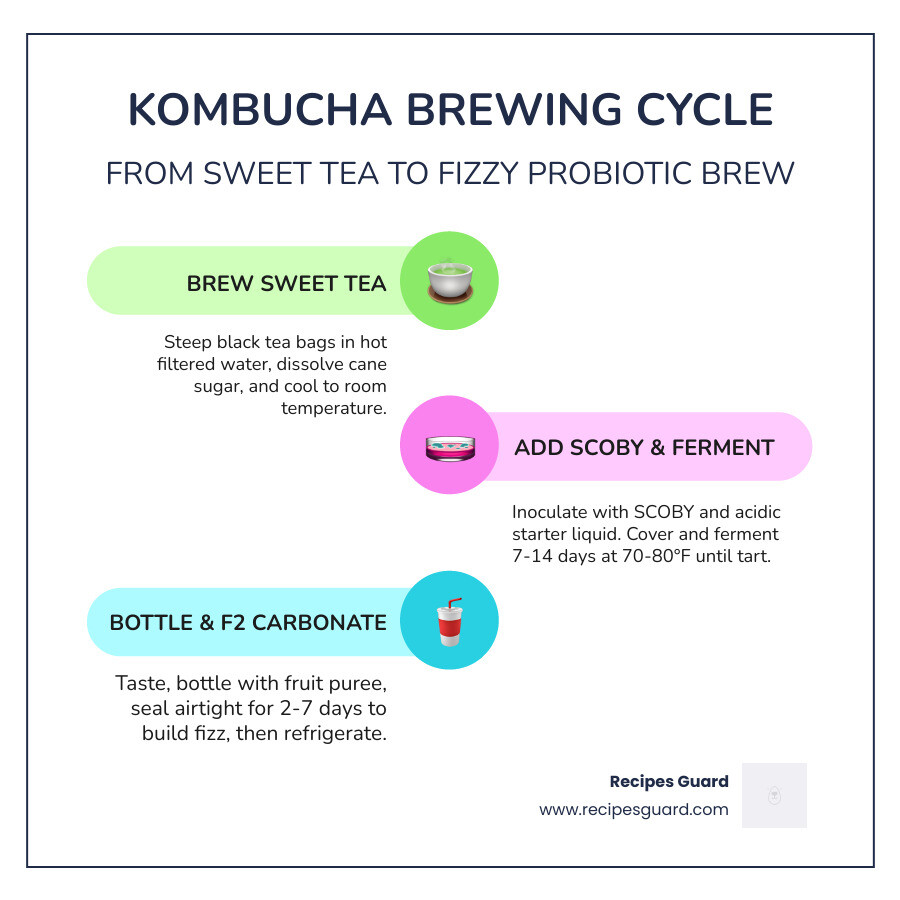
Here’s a quick overview of how to brew your first batch:
- Brew sweet tea — steep black tea, dissolve cane sugar, and let it cool completely
- Add your SCOBY and starter liquid — this kickstarts fermentation and protects against mold
- Ferment for 7–14 days — cover with a breathable cloth at 70–80°F (21–27°C)
- Taste and bottle — once it’s pleasantly tart, bottle it for a second ferment
- Add flavor and carbonate — seal with fruit or juice for 2–7 days to build fizz
- Refrigerate and enjoy — cold storage halts fermentation and locks in carbonation
That’s the core process. Six steps, one gallon, and a living culture called a SCOBY.
Kombucha has gone from a niche health drink to one of the most popular fermented beverages in North America. Store-bought bottles can run $4 or more each. A homemade gallon costs roughly $2.50 — after your initial equipment investment of around $20–$30.
But beyond the savings, there’s something genuinely satisfying about brewing it yourself. You control the sweetness, the flavor, and the fizz. You learn how fermentation actually works. And once you have a healthy SCOBY, it keeps producing batch after batch indefinitely.
This guide walks you through the entire process — from understanding what a SCOBY is to troubleshooting your first batch — so you can brew with confidence from day one.
Understanding the Basics: What is Kombucha and the SCOBY?
At its simplest, kombucha is an effervescent tea elixir with a dynamic probiotic profile. It is a fermented beverage made from sweetened tea that has been transformed by a very special guest: the SCOBY.
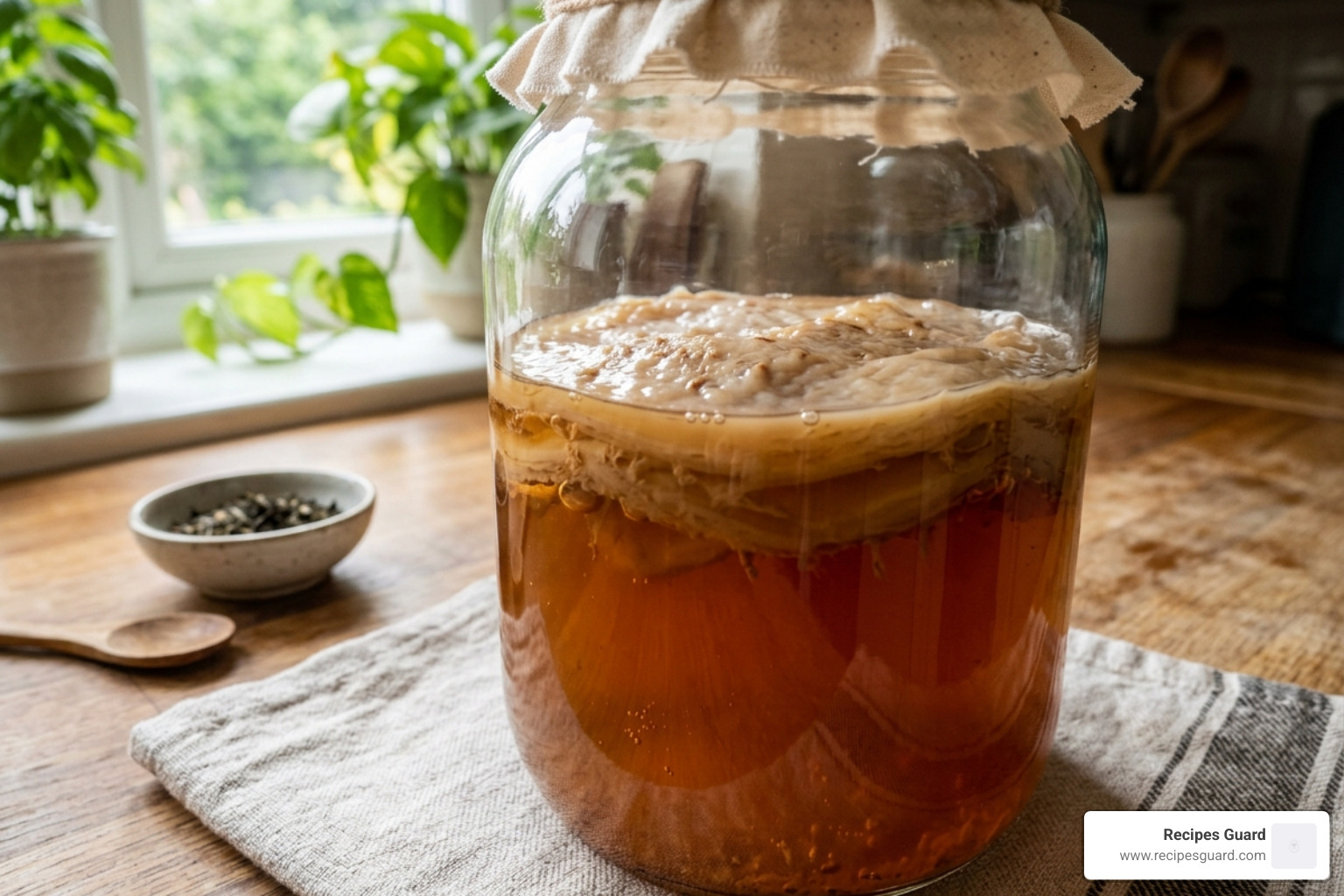
SCOBY stands for Symbiotic Culture Of Bacteria and Yeast. While it might look like a rubbery, beige pancake or a “blobby mushroom,” it isn’t actually a fungus. It is a living cellulose pellicle—a bustling city where beneficial yeast and bacteria live in harmony. The yeast consumes the sugar in your tea to produce ethanol and CO2, while the bacteria (specifically Acetobacter xylinum and its cousins) convert that alcohol into healthy organic acids like acetic acid and gluconic acid.
Scientific research into the probiotic benefits of fermented tea suggests that these organic acids, along with the live cultures, support gut health and aid digestion. For example, gluconic acid is known to attach to toxins in the body to help the liver flush them out.
While kombucha became a North American health sensation in the last decade, its origins trace back to Manchuria (northeast China) around 220 BCE. It was later brought to Japan by a doctor named Kombu in 414 CE to treat the Emperor’s digestive issues. Today, in April 2026, we are still using these ancient techniques to craft the perfect “mushroom tea” right in our kitchens.
Essential Equipment and Ingredients for Your First Batch
Before you start your beginners guide to kombucha journey, you need to gather your tools. We recommend investing in glass and high-quality stainless steel, as the acidic nature of kombucha can react with low-grade metals or leach chemicals from plastic.
The Hardware
- 1-Gallon Glass Jar: This is your primary brewing vessel. Avoid plastic, which can harbor “nasty” bacteria in scratches.
- Breathable Cover: A coffee filter, tight-weave tea towel, or a clean piece of an old t-shirt. Do not use cheesecloth, as the holes are large enough for fruit flies to crawl through!
- Rubber Band: To secure your cover.
- Stockpot: For boiling your water and steeping tea.
- Thermometer: Crucial for ensuring you don’t kill your SCOBY with heat.
- pH Strips: Ideal for ensuring your brew starts at a safe baseline of 4.5 and finishes around 3.6.
- Pressure-Rated Bottles: Use flip-top (Grolsch-style) bottles or recycled heavy-duty plastic PET bottles. Standard mason jars are not designed for pressure and can explode during carbonation!
The Ingredients
- Tea: Black tea is the gold standard for SCOBY health because it provides the necessary nitrogen and minerals.
- Cane Sugar: Plain white granulated sugar is the easiest for the SCOBY to digest. Avoid honey in your first few batches, as it can carry a risk of botulism if the pH isn’t controlled perfectly.
- Filtered Water: Dechlorinated water is best; chlorine can harm the delicate microbial balance.
- Starter Liquid: This is simply unflavored, raw kombucha from a previous batch. It lowers the pH immediately, creating an acidic environment that prevents mold.
| Tea Type | SCOBY Health Rating | Flavor Profile |
|---|---|---|
| Black Tea | Excellent | Bold, traditional, robust |
| Green Tea | Good | Lighter, grassy, floral |
| Oolong Tea | Great | Toasty, complex, fruity |
| Herbal Tea | Poor | Risks mold; lacks essential nutrients |
Step-by-Step Beginners Guide to Kombucha: The First Fermentation (F1)
The First Fermentation, or F1, is where the “magic” happens. This is the stage where your sweet tea transforms into a tart, probiotic beverage.
1. The Sweet Tea Base
Boil 4 cups of filtered water. Once boiling, remove from heat and add 2–3 tablespoons of loose-leaf black tea (or 5–8 tea bags). Stir in 1 cup of cane sugar until dissolved. Let it steep for 10–15 minutes.
2. Dilute and Cool
Pour your concentrated tea into your gallon jar and add 8 cups of cool, filtered water. Crucial Step: Wait until the liquid is between 70–85°F (21–29°C). If the tea is above 90°F, you will cook and kill your SCOBY. Patience is the key ingredient here!
3. Inoculation
With clean, soap-rinsed hands, gently slide your SCOBY into the jar. Pour in 2 cups of starter liquid. This should bring your pH down to roughly 4.5. Don’t worry if your SCOBY sinks, floats, or hovers sideways—buoyancy is not a health indicator. A new “baby” SCOBY will likely form on the surface regardless.
4. The Wait
Cover the jar and secure it with a rubber band. Place it in a warm, dark spot (like a kitchen pantry) away from direct sunlight. The ideal temperature range is 70–80°F. If your kitchen is cooler than 68°F, fermentation will slow to a crawl; if it’s hotter than 85°F, you risk mold growth.
5. Tasting for Tartness
After 7 days, start tasting. Insert a clean straw beneath the SCOBY to take a sip. After 7 days, about 65% of the sucrose has been metabolized; by day 21, it’s about 80%. We usually find the “sweet spot” is between 10 and 14 days. It should taste pleasantly tart but still have a tiny hint of sweetness to fuel the next step.
Flavoring and Carbonation: A Beginners Guide to Kombucha F2
Once your F1 is complete, you have unflavored kombucha. The Second Fermentation (F2) is where you add flavors and create that signature fizz.
- Remove the SCOBY: With clean hands, take out the SCOBY and 2 cups of the liquid. Set these aside for your next batch.
- Flavor: Add your flavoring to your pressure-rated bottles. A good rule of thumb is 10–20% juice or fruit and 80–90% kombucha. We love using pomegranate juice, ginger, or even a strawberry-basil mash.
- Bottle: Use a funnel to pour the kombucha into the bottles, leaving about an inch of headspace at the top.
- Carbonate: Seal the bottles tightly and leave them at room temperature for 2–7 days. The yeast will eat the new sugars from the fruit, producing CO2. Since the bottle is sealed, the gas dissolves into the liquid, creating bubbles.
- Refrigerate: Once the bottles feel firm (if using PET) or after a few days, move them to the fridge. Cold temperatures lock in the carbonation and stop the fermentation process.
For more inspiration, check out More info about fermentation recipes to see our favorite flavor combinations!
Safety First: A Beginners Guide to Kombucha Troubleshooting
Safety is a common concern for new brewers. Is it mold? Is it alcohol? Is it a volcano? Let’s break it down.
Identifying Mold vs. Yeast: Beginners often mistake brown, stringy yeast strands or dark sediment for mold. Mold is always dry, fuzzy, and sits on the surface. It can be white, green, or black. If you see fuzzy growth, discard the entire batch and the SCOBY. If you see slimy, brown, alien-looking strings, congratulations! That’s just healthy yeast.
Alcohol Content: Homemade kombucha typically contains 0.5% to 1.5% alcohol by volume (ABV). It usually peaks around the sixth day of fermentation before the bacteria convert the ethanol into organic acids. While this is a low amount, it is not “alcohol-free.” For more details, you can read Scientific research on homebrew alcohol levels to understand how it impacts your health.
Preventing “Bottle Bombs”: To avoid messy explosions, “burp” your bottles daily during F2 to release excess pressure, especially if you are using high-sugar fruits like pineapple. Always open bottles slowly over a sink!
Maintaining Your Brew: SCOBY Care and Storage
Your SCOBY is a living legacy. Every time you brew, a new layer (a “baby”) forms on top of the old “mother.” You can peel these layers apart to share with friends or compost the older, darker layers.
The SCOBY Hotel
If you want to take a break from brewing, you need a SCOBY Hotel. This is simply a smaller glass jar filled with extra SCOBYs and plenty of starter tea.
- Store it at room temperature in a dark spot.
- Every 4–6 weeks, “feed” it by replacing some of the liquid with fresh, cold sweet tea.
- Avoid the fridge for long-term storage if possible, as it can make the SCOBY dormant and more susceptible to mold when you try to wake it up.
As of April 2026, the best maintenance tip we can give is to keep your SCOBY submerged. If the top dries out, it becomes a landing pad for mold.
Frequently Asked Questions about Brewing Kombucha
Why did my SCOBY sink to the bottom of the jar?
Don’t panic! Sinking is completely normal. Sometimes the SCOBY is heavy, or there isn’t enough CO2 production yet to make it buoyant. A new, thin pellicle will eventually form on the surface. Your “sunken” mother is still hard at work fermenting the tea from the bottom.
How can I tell the difference between mold and yeast?
Think of it this way: Yeast is “down and dirty” (slimy, brown, submerged, or stringy). Mold is “high and dry” (fuzzy, colorful, and strictly on top). If you aren’t sure, wait three days. Mold will grow rapidly and become undeniably fuzzy, while yeast will just stay weird-looking.
Is homemade kombucha safe for children and pregnant women?
Because homemade kombucha is unpasteurized and contains trace amounts of alcohol and caffeine, we recommend consulting a healthcare professional. Many families enjoy it in small 4-5 ounce servings, but individual tolerance varies.
Conclusion
At Recipes Guard, we believe that fermentation is more than just a food preservation method—it’s a lifestyle that connects us to our food in a meaningful way. Mastering the beginners guide to kombucha is the perfect entry point into the wild world of ferments. It is cost-effective, incredibly healthy, and allows for endless creative expression through flavors.
Whether you’re brewing for the probiotics or just for the love of a fizzy, tart drink, your first batch is the start of a rewarding journey. Ready to dive deeper into fermented foods? Start your fermentation journey today and explore our extensive library of guides and recipes. Happy fermenting!