How to Fermented Foods Recipes: 5 Easy Methods
The Basics of Fermented Foods Recipes (And Why They’re Worth Making)
fermented foods recipes are one of the best ways to boost flavor, preserve ingredients, and support gut health — all from your own kitchen.
Here are 5 easy fermented foods recipes to get you started:
- Sauerkraut — shredded cabbage + 2% salt by weight, packed in a jar, fermented 5-14 days at 65-70°F
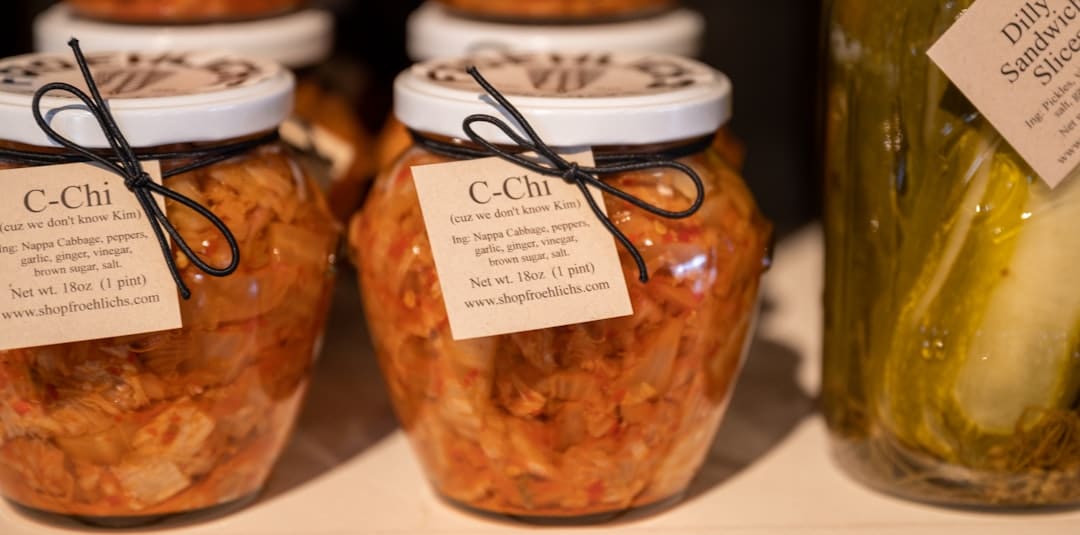
- Kimchi — napa cabbage, gochugaru, garlic, ginger, and fish sauce; ferment 2-3 days at room temp, then refrigerate
- Lacto-fermented dill pickles — cucumbers in saltwater brine with dill and spices; half-sour in ~3 weeks, full-sour in ~6 weeks
- Kombucha — sweetened tea + a SCOBY culture; ferment 7-14 days until tangy
- Fermented hot sauce — chiles + salt + water; one of the simplest fermentation projects you can try
Fermentation is older than most cooking techniques. Cultures on nearly every continent have used it to preserve food, develop deep flavors, and make nutrients more available to the body. And the best part? You don’t need fancy equipment or special skills to start.
Unlike store-bought options — which are often pasteurized and stripped of live bacteria — homemade ferments keep their probiotic cultures intact. That means more variety of beneficial bacteria than you’d find in most supplements, and a richer, more complex flavor.
Whether you’re looking to stretch your grocery budget, preserve a garden harvest, or just try something new, fermented foods are a surprisingly approachable place to start.
Understanding Fermentation and Its Health Benefits
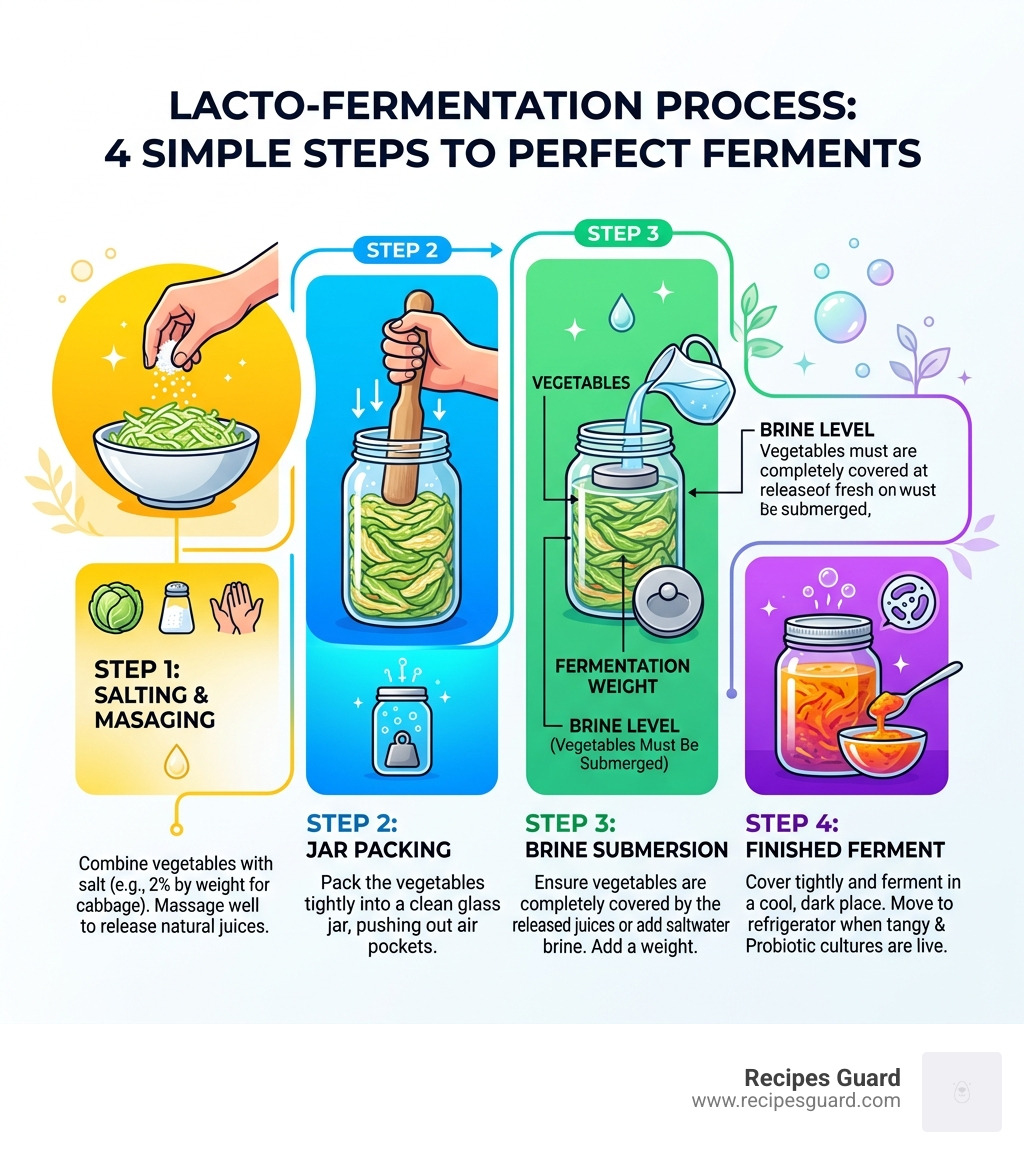
At its core, fermentation is a biological process where microorganisms like bacteria, yeast, or fungi convert starches and sugars into alcohol or acids. In fermented foods recipes, we usually focus on lacto-fermentation. This is where Lactobacillus bacteria (which are naturally present on the surface of plants) convert sugars into lactic acid. This acid acts as a natural preservative and gives ferments their signature “funk” and tang.
The Nutritional Powerhouse
One of the most exciting things about fermentation in April 2026 is how much more we understand the “biological circuitry” of food. Fermentation doesn’t just preserve food; it transforms it.
- Probiotic Diversity: Unlike a supplement pill that might only have two or three strains of bacteria, a single jar of homemade sauerkraut can contain dozens of different probiotic species.
- Bioavailability: Bacteria break down destructive natural barriers in food, freeing up nutrients like minerals and vitamins that would otherwise be “locked away.”
- Vitamin Boost: Fermentation can actually increase the levels of Vitamin K, Vitamin C, and various B vitamins in your food.
- Immune Support: Since a huge portion of our immune system resides in our gut, introducing these beneficial bacteria helps support our overall defenses.
DIY vs. Store-Bought: Is There a Difference?
In short: Yes. Many “pickled” items at the grocery store are made with vinegar and then heat-processed (pasteurized). While they taste great, the heat kills the very bacteria we’re looking for. To get the real benefits, you want “live and active cultures.”
| Feature | Homemade Ferments | Typical Store-Bought (Pasteurized) |
|---|---|---|
| Live Probiotics | Abundant and diverse | Usually none |
| Flavor Profile | Complex, evolving, umami | Consistent, vinegar-heavy |
| Cost | Pennies per serving | $7 – $12 per jar |
| Customization | Infinite (add ginger, turmeric, etc.) | None |
| Preservatives | Natural lactic acid | Often contains sodium benzoate or EDTA |
If you want to try a classic to see the difference, check out this Sauerkraut Recipe. It’s a great baseline for understanding how salt and time create magic.
Essential Equipment for Your Home Fermentation Lab
We often get asked if you need to spend hundreds of dollars on specialized crocks to start making fermented foods recipes. The answer is a resounding no! While fancy gear exists, we can achieve professional results with a few basics.
- Glass Mason Jars: Wide-mouth quart or half-gallon jars are the gold standard. They are easy to clean and let you see exactly what’s happening inside.
- Glass Weights: These are essential. In fermentation, “below the brine is fine.” If a piece of cabbage floats to the top and touches the air, it can grow mold. Weights keep everything submerged.
- Airlock Lids: While you can “burp” your jars (opening them daily to release CO2), airlock lids allow gas to escape without letting oxygen in, which significantly reduces the risk of mold.
- Digital Scale: We highly recommend weighing your ingredients. Most successful fermented foods recipes rely on a “2% salt rule.” This means the salt should weigh 2% of the total weight of your vegetables and water.
- Non-Iodized Salt: Use sea salt or kosher salt. Avoid table salt with iodine, as iodine can inhibit the growth of the beneficial bacteria we want.
For a deeper dive into the tools of the trade, visit our guide on Preserving Basics.
5 Beginner-Friendly Fermented Foods Recipes
Ready to get your hands salty? Here are five methods that we consider “no-fail” for beginners.
1. The 2% Sauerkraut Method
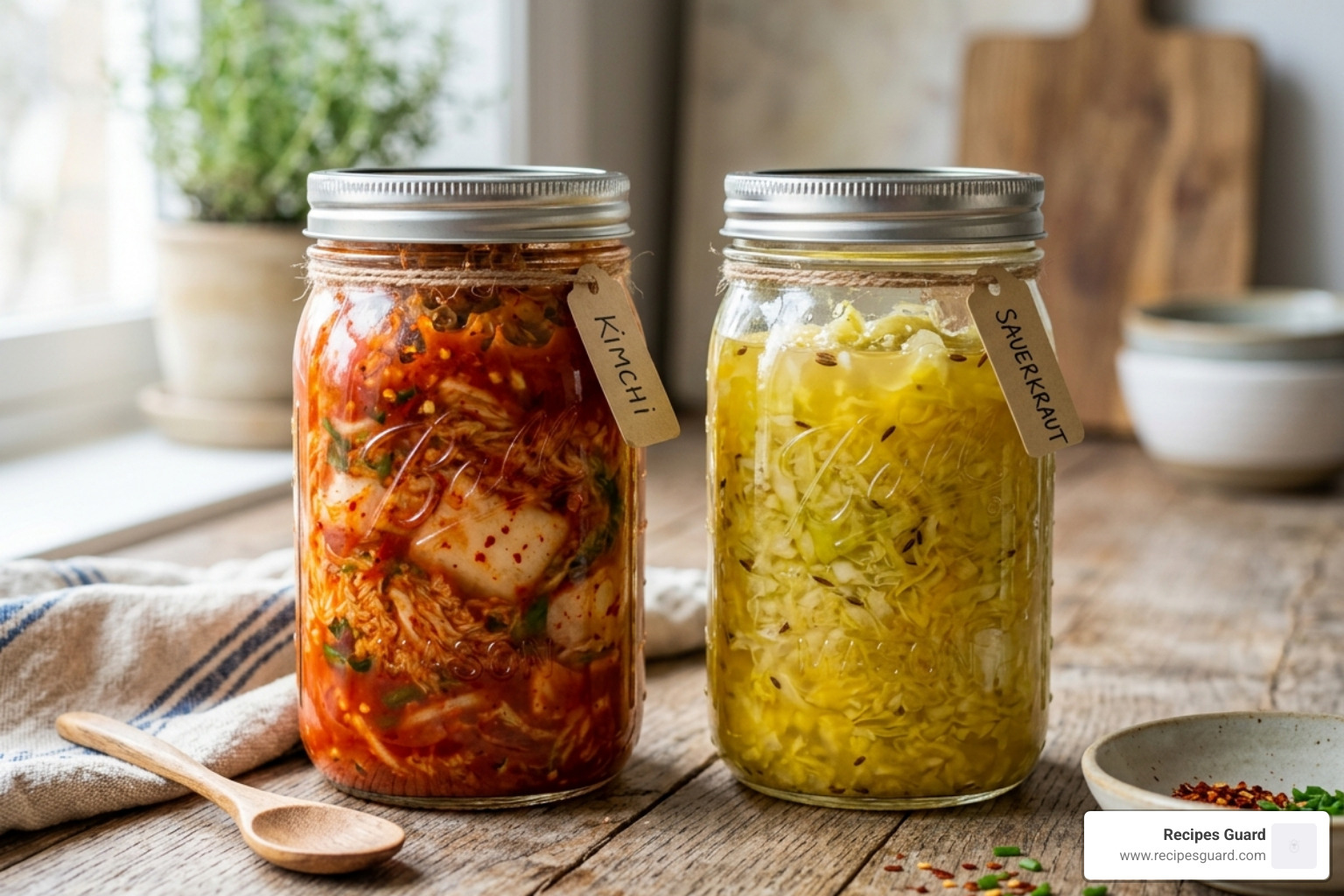
Sauerkraut is the perfect “gateway” ferment. All you need is cabbage and salt.
- The Secret: Weigh your shredded cabbage in grams. Multiply that weight by 0.02. That is the exact amount of salt you need.
- The Process: Massage the salt into the cabbage for about 5-10 minutes. You’ll be amazed at how much liquid (brine) is released. Pack it tightly into a jar, ensure the liquid covers the cabbage, and wait.
2. Easy “Mak” Kimchi
Traditional kimchi can be intimidating, but “mak” (simple) kimchi is like dressing a salad.
- The Ingredients: Napa cabbage, radish, carrots, and scallions.
- The Paste: A blend of garlic, ginger, onion, fish sauce (or soy sauce for vegans), and gochugaru (Korean red chili flakes).
- The Tip: Don’t use standard chili flakes; gochugaru has a fruity, smoky heat that is essential for the right flavor.
3. Lacto-Fermented Dill Pickles
Forget the vinegar. These pickles get their sourness from lactic acid.
- The Brine: Usually a 3.5% salt-to-water ratio.
- The Crunch: Add a grape leaf or a black tea bag to the jar. The tannins help keep the cucumbers crunchy!
4. Ginger Bug for Homemade Soda
A “ginger bug” is a starter made of fermented ginger, sugar, and water. Once it’s bubbly, you can add it to fruit juice or tea to create a naturally carbonated, probiotic soda.
5. Fermented Carrots
Kids actually love these! Slice carrots into sticks, add some ginger or dill, and cover with a 2% brine. They stay crunchy and take on a pleasant, mild tang after about a week.
Explore more ideas in our Fermented Recipes section.
Master the Traditional Sourdough Starter
Sourdough is perhaps the most famous of all fermented foods recipes. Instead of buying yeast at the store, you are “capturing” wild yeast and beneficial bacteria from the flour and the air.
To start, you simply mix equal parts flour and water. Over the course of a week, you “feed” it more flour and water daily. You’ll eventually see bubbles and smell a fruity, yeasty aroma. This living culture is what makes bread rise and gives it that incomparable sourdough tang.
If you’re worried about the complexity, we’ve got you covered. Check out our guide on How to Master the Traditional Sourdough Bread Recipe Without Losing Your Mind.
Customizing Your Fermented Foods Recipes
Once you master the basic brine, the world is your oyster. You can infuse your ferments with seasonal vegetables and bold spices.
- Golden Sauerkraut: Add turmeric and black pepper to your cabbage.
- Spicy Carrots: Add jalapeños and garlic to your carrot sticks.
- Latin American Curtido: This is a zippy version of sauerkraut with oregano, onions, and carrots — perfect for tacos.
For quick inspiration on smaller batches, see our Quick and Easy Pickled Vegetables for Every Meal.
Fermented Garlic and Probiotic Hot Sauce
Making your own hot sauce sounds industrial, but it’s one of the simplest fermented foods recipes out there. By fermenting your chiles and garlic before blending them, you create a depth of flavor (umami) that store-bought sauces just can’t match.
Fermented garlic is another “set it and forget it” miracle. The garlic cloves mellow out, becoming sweet and savory, while the honey or brine they sit in becomes a potent probiotic tonic.
- Learn the ropes here: Don’t Be Afraid of the Funk with This Easy Fermented Garlic Recipe.
- Level up your spice game here: Mastering the Art of Lacto-Fermented Hot Sauce.
Safety First: Troubleshooting and Success Tips
We understand that leaving food on the counter for weeks can feel a bit counter-intuitive. However, fermentation is remarkably safe if you follow a few basic rules.
- Keep it Submerged: This is the most important rule. Harmful molds need oxygen to grow. Beneficial lactic acid bacteria do not. As long as your vegetables stay under the brine, they are safe.
- Trust Your Senses: A ferment should smell sour, tangy, or even “funky” (like blue cheese or beer). If it smells like rotting garbage or putrid, something has gone wrong. Throw it out and try again.
- Kahm Yeast vs. Mold: Sometimes you’ll see a thin, white, wavy film on the surface. This is usually Kahm yeast. It’s harmless, though it can affect flavor if left too long. Scrape it off. If you see fuzzy, colorful (black, green, or pink) growth, that’s mold — discard the batch.
- Temperature Control: Most ferments prefer a cool, dark corner. In April 2026, with shifting seasonal temperatures, try to keep your jars between 65°F and 70°F. If it’s too hot, the food will turn mushy; too cold, and fermentation will stall.
For more safety protocols, read our Safety First: A Guide to Preserving Fermented Foods.
Frequently Asked Questions about Fermented Foods Recipes
Why does my ferment smell like old gym socks?
This is a common concern, especially with sourdough or certain cabbage ferments. Often, this “cheesy” or “sock-like” smell is caused by specific bacteria that are active in the early stages of fermentation. Usually, as the acidity increases, these smells mellow out into a pleasant tang. However, if the smell is overwhelming and doesn’t improve, your starter might be out of balance.
Find out more here: Why Does My Sourdough Smell Like Old Gym Socks?
How do I fix overly salty fermented snacks?
It happens to the best of us! If you accidentally added too much salt to your pickles or kraut, don’t toss them. You can often save them by rinsing the vegetables under cold water before serving, or by diluting the brine with a little bit of filtered water (though this can slow down fermentation).
Check out these tips: How to Save Your Salty Snacks
What is the ideal temperature for home fermentation in 2026?
While the world is getting warmer, the “goldilocks zone” for fermentation remains 65-70°F (18-21°C). If your kitchen is consistently warmer than 75°F, your ferments will happen much faster, but you risk them becoming soft or developing off-flavors. In the summer of 2026, consider moving your jars to a basement or the lowest cabinet in your kitchen to keep them cool.
Conclusion
At Recipes Guard, we believe that everyone should feel empowered to experiment with fermented foods recipes. It’s a beautiful blend of science, history, and culinary art. Not only are you creating delicious condiments and staples, but you’re also taking a proactive step toward better health.
From the crunch of a New York deli-style pickle to the spicy kick of homemade kimchi, the flavors you can create at home are 10 times better than anything you’ll find on a standard grocery shelf. So, grab a jar, some salt, and a head of cabbage, and start your journey into the wonderful world of the funk!
Start Your Fermentation Journey with us today and explore hundreds of tested recipes and guides.