
Mastering the reimbursement process for student insurance
Why the reimbursement process for student insurance catches so many students off guard
The reimbursement process student insurance involves is often more complicated than students expect — especially when you’re dealing with a medical emergency far from home.
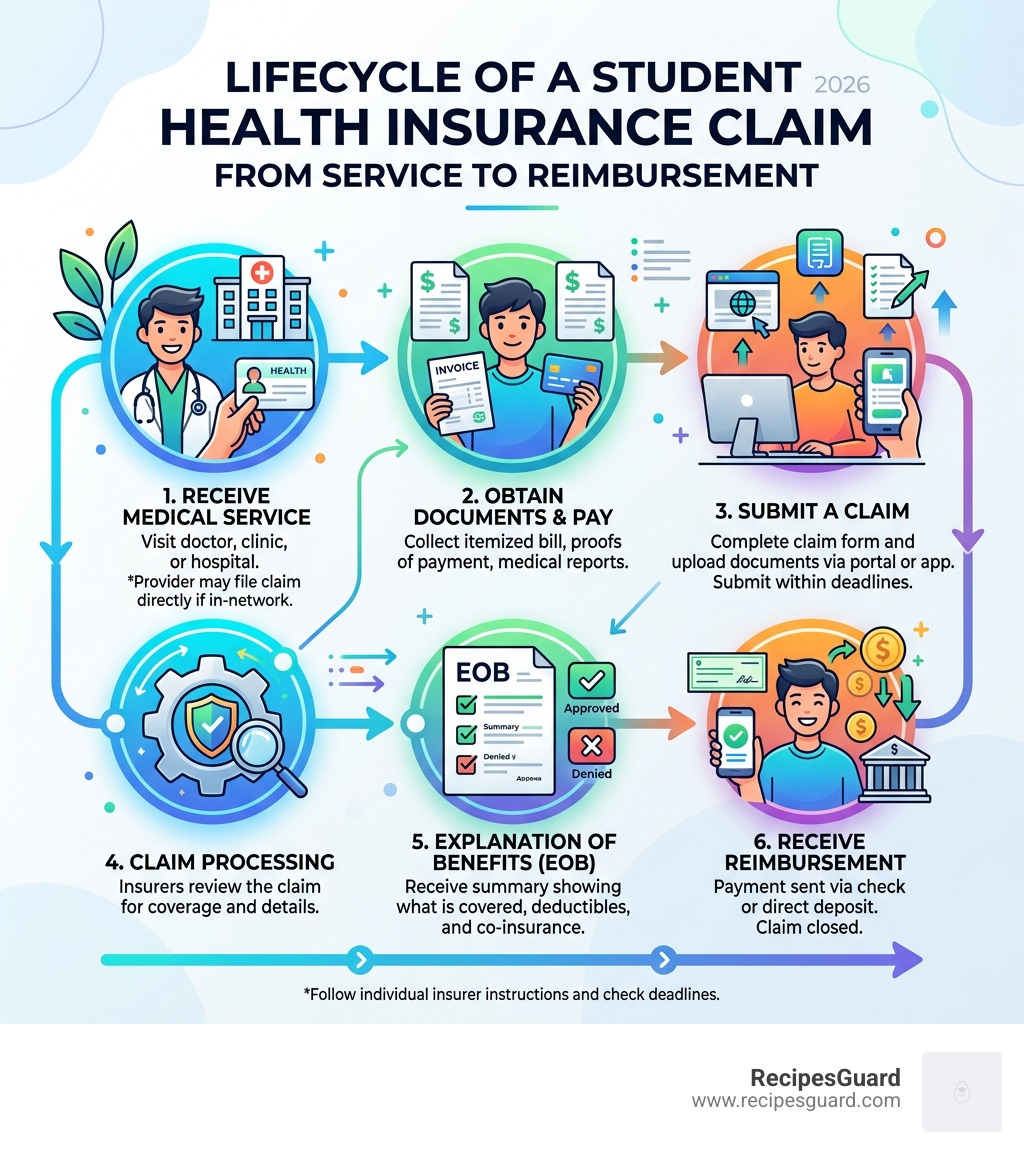
Here’s the quick version of how it works:
- Receive care from a doctor or hospital
- Pay out-of-pocket if the provider doesn’t bill your insurer directly
- Gather documents — itemized bill, proof of payment, insurance ID
- Submit a claim via online portal, mobile app, mail, or fax
- Wait for your Explanation of Benefits (EOB) to confirm what’s covered
- Receive reimbursement by check or direct deposit
Most in-network providers will file the claim for you automatically. But when you’re studying abroad or visiting an out-of-network provider, the process falls entirely on you.
The stakes are real. Deadlines can be as short as 90 days from the date of service (common with UHCSR plans), or up to 120 days (as with Columbia University’s Aetna Student Health plan). Miss that window, and you may get nothing back — even for a legitimate claim.
For international students especially, this process can feel overwhelming. Different insurers, different portals, different forms. This guide breaks it all down in plain language so you know exactly what to do.
Key terms for reimbursement process student insurance:
Understanding the reimbursement process for student insurance
Navigating the reimbursement process student insurance requires more than just keeping a few receipts in a shoebox. It requires a bit of “insurance literacy.” When we talk about medical billing, we aren’t just talking about a total price tag; we are talking about a highly coded language used by doctors and insurers to communicate exactly what happened during your visit.
In Australia, for instance, if you are an international student on Overseas Student Health Cover (OSHC), your doctor will use specific Medicare Benefits Schedule (MBS) item numbers. In other regions, you might see CPT (Current Procedural Terminology) codes for the services rendered and ICD-10 (International Classification of Diseases) codes for your diagnosis.
If your bill doesn’t have these codes, your insurance company’s computer system will likely look at it, get confused, and spit it back out. That’s why we always tell students: an “itemized bill” is your best friend. A simple credit card receipt that says “Doctor’s Visit: $200” is rarely enough. You need the document that lists the provider’s Tax ID, the specific medical codes, and the date of service.
For a deeper dive into the basics, check out The Ultimate Student Guide To Navigating Insurance Claims.
Step-by-step guide to the reimbursement process student insurance
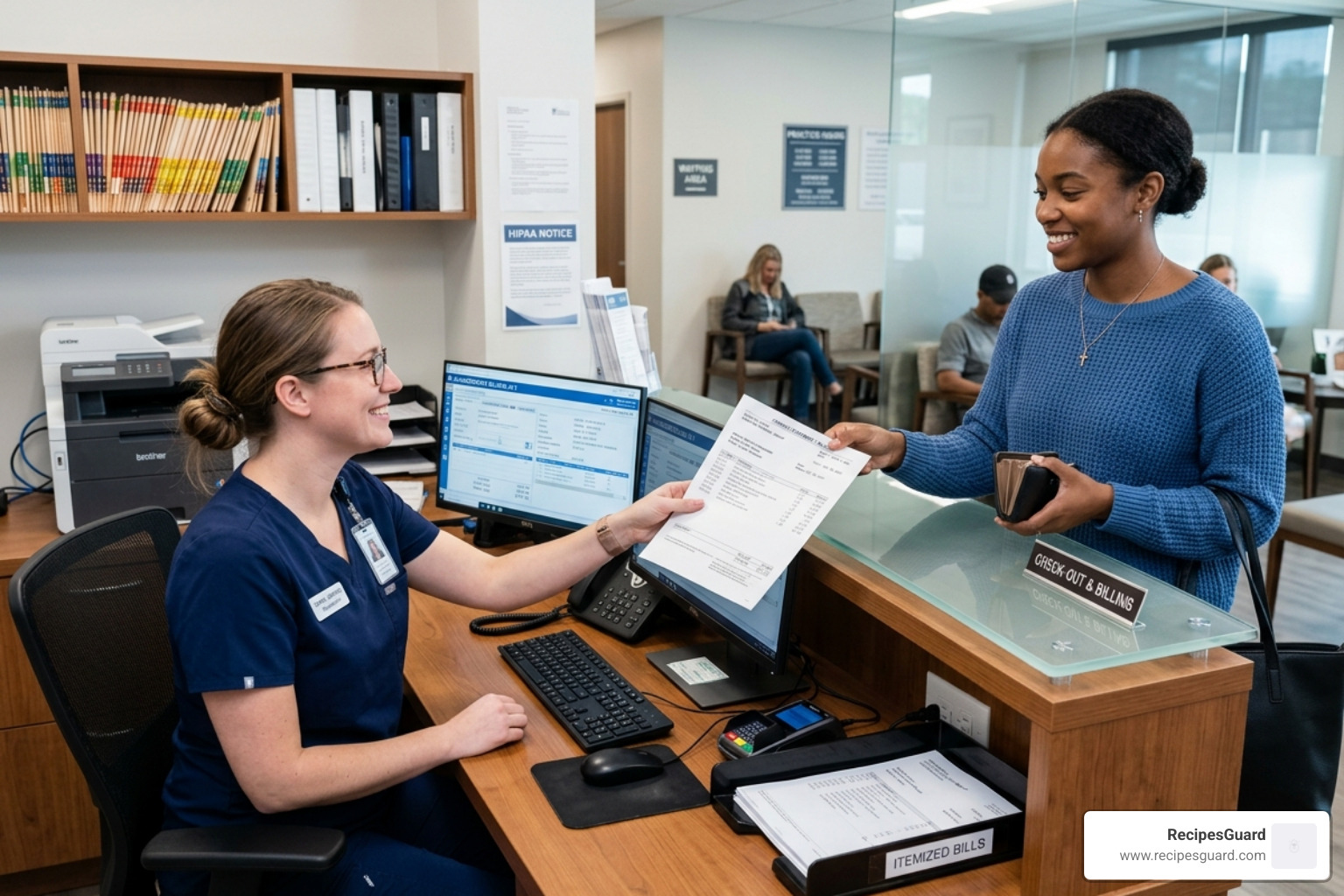
If you’ve found yourself at a clinic that doesn’t offer “bulk billing” (where they bill the insurer directly), don’t panic. Following these steps will ensure you get your money back without the headache:
- Request the Right Paperwork: Before leaving the clinic, ask for an itemized statement. This should include the provider’s name, address, and provider number.
- Verify Your Details: Ensure your name on the bill matches the name on your insurance card exactly. If your name is “Christopher” on your ID but the doctor wrote “Chris,” it could cause a digital mismatch.
- Complete the Claim Form: Most insurers require a specific claim form. Whether it’s a claim form student travel or a standard medical form, fill out every section. Leaving a box blank is the fastest way to get a “Request for More Information” letter.
- Attach Proof of Payment: If you paid by card, a bank statement screenshot or a “Paid” stamp on the itemized bill is necessary.
- Submit and Track: Use the insurer’s app or portal whenever possible. It’s faster than mail and gives you a digital paper trail.
For those studying in Australia or abroad, mastering this flow is essential. You can learn more in our guide on How To Successfully Claim Your Overseas Student Insurance.
The role of university health services
Your university’s health center is often the “hub” for your medical needs. In many student plans, you are actually required to visit the campus health service first. If they can’t treat you, they will issue a referral.
Warning: In many plans (like the UC SHIP or similar Australian university models), seeking specialist care without a referral from the campus clinic can lead to a total claim denial.
University health services also have business offices that can help you navigate campus-specific billing. If you had a visit on campus and it was charged to your student account, you’ll need to grab a screenshot of that ledger showing the payment was cleared before you can file for reimbursement. Most campus portals have a “secure health portal” where you can download these itemized statements the next business day.
Essential documentation and submission methods
We live in 2026, so thankfully, the days of licking stamps and hunting for mailboxes are mostly over. However, the reimbursement process student insurance still offers multiple ways to get your documents to the right people.
| Submission Method | Pros | Cons |
|---|---|---|
| Mobile App | Instant, uses phone camera for receipts, easy tracking. | Requires stable internet; some apps are buggy. |
| Online Portal | Best for complex claims with many attachments. | Requires account setup and password management. |
| Good for “old school” providers or thick files. | Slowest; documents can get lost; no instant confirmation. | |
| Fax | Secure; provides a transmission receipt. | Who owns a fax machine anymore? (Usually only schools/hospitals). |
Regardless of the method, your “Golden Trio” of documents remains:
- Insurance ID Card: A copy or scan of the front and back.
- Itemized Bill: The one with the codes (CMS 1500 or UB04 in some regions).
- Proof of Payment: To prove you were the one who lost the money.
For a full checklist, see The Essential List Of Student Travel Insurance Forms.
Digital vs manual submission channels
Most major Australian providers like Allianz Care or Medibank (for OSHC) have robust mobile apps. These apps allow you to snap a photo of your receipt and submit it in seconds. This is the “Gold Standard” for the reimbursement process student insurance.
However, if you are filing a claim for something complex—like a multi-day hospital stay or an accident involving third parties—the online portal is often better. It allows you to upload PDFs and write a detailed description of the event.
Manual submissions (mail) are generally reserved for when you have a mountain of physical paperwork or if the insurer’s digital system is undergoing a “blackout period” (often seen at the start of a new semester). If you must mail, always keep copies. Never send your only original receipt!
To get the hang of the digital flow, read How To Master The Student Travel Claim Process.
Deadlines for the reimbursement process student insurance
Time is your enemy here. Every insurance policy has a “timely filing” requirement.
- 90 Days: This is a very common deadline for many student plans. You have 90 days from the date of service to get that claim in.
- 120 Days: Some plans are more generous, giving you about four months.
- End of Policy Year: Some student plans (like those in Canada or specific Australian OSHC providers) allow claims up to 90 days after the policy year ends.
If you received treatment on May 1st, 2026, and your deadline is 90 days, you need to have that claim submitted by late July. If you wait until August, the insurer can legally say “No,” even if the claim is 100% valid.

Navigating in-network vs out-of-network claims
This is where the reimbursement process student insurance gets tricky.
In-Network (The Easy Way): These providers have a contract with your insurance. You show your card, pay your small “copay” or “gap fee,” and walk away. The doctor bills the insurance company, and you never have to fill out a claim form.
Out-of-Network (The Hard Way): These providers don’t have a contract. They might charge $300 for a visit that your insurance thinks should only cost $150. In this case, you pay the full $300 upfront. You then file for reimbursement. The insurance company pays you $150 (the “allowable amount”), and you are stuck with the remaining $150. This is called balance billing.
Before you book an appointment, always use the “Find a Provider” tool on your insurer’s website to stay in-network (often part of a PPO network). For international students, this is even more critical. Check out Mastering Your Medical Receipt Claims As An International Student for more tips.
Handling out-of-pocket expenses and prescriptions
Prescriptions are a frequent source of out-of-pocket spending. Most student plans use a pharmacy formulary—a list of drugs they agree to cover.
- Direct Pay: Use your “Pay-Direct Card” at the pharmacy. You only pay your portion.
- Reimbursement: If you have to pay the full price (maybe the pharmacy system was down), keep the receipt and the “pharmacy narrative” (the printout that shows the drug name and dosage).
- 30-Day Rule: Most plans will only reimburse a 30-day supply at a time. If you try to buy six months of birth control at once, they might deny the claim unless you have “pre-authorization.”
Note: Over-the-counter (OTC) meds like basic aspirin or cough syrup are almost never reimbursable.
Special considerations for international students
If you are an international student in Australia, your OSHC (Overseas Student Health Cover) is mandatory. It’s designed to mirror Medicare. However, there are extras you need to know about:
- Medical Evacuation: If you are seriously injured and need to be flown back to your home country, your insurance might cover it—but only if it’s pre-approved.
- Repatriation: This covers the costs if, tragically, a student passes away and needs to be returned home.
- Waiting Periods: Be aware that “pre-existing conditions” (like asthma or a chronic back issue) often have a 12-month waiting period before you can claim for them.
For a specific look at the Australian system, see Getting Your Money Back And How To Claim Student Insurance Australia.
Managing denials, appeals, and coordination of benefits
Getting a “Denied” notice is not the end of the world. It’s usually just a request for more information.
Sometimes, if you have two insurance plans (maybe your own student plan and coverage through a parent), you have to deal with Coordination of Benefits (COB). This is a fancy way of saying the two companies need to decide who pays first. Usually, the plan you are the “primary” on (your student plan) pays first, and the other plan pays the remaining balance.
Interpreting your Explanation of Benefits (EOB)
An EOB is not a bill. It is a document that explains what the insurance company did with your claim.
- Billed Amount: What the doctor asked for.
- Allowed Amount: What the insurance company thinks is fair.
- Paid to Provider/Member: What the insurance actually sent out.
- Patient Responsibility: What you still owe the doctor (deductibles, coinsurance, or copays).
Always compare your EOB to any bill you receive from a doctor. If the doctor asks for $100 but the EOB says you only owe $20, show that EOB to the doctor’s billing office!
For help reading these confusing documents, visit The Waiting Room What To Expect During The Travel Insurance Claim Process.
How to successfully appeal a denied claim
If your claim was denied because the insurer thinks the treatment wasn’t “medically necessary,” you have the right to appeal.
- Read the Denial Reason: It will have a code. Look it up.
- Gather Evidence: Ask your doctor for a letter explaining why the treatment was needed.
- Submit a Formal Appeal: Most insurers have a “Request for Review” form. Attach your evidence and a polite letter.
- Be Persistent: Sometimes it takes a second look by a human adjuster to get a claim approved.
We have a specialized guide on How To Successfully Appeal A Denied Insurance Claim that can walk you through the wording to use.
Frequently Asked Questions about student insurance claims
What is the maximum benefit for tuition insurance?
Tuition insurance is a “hidden gem” in some student policies. If you have to withdraw from your semester due to a serious medical emergency or mental health crisis, this insurance can reimburse your non-refundable tuition fees.
- Maximum Benefit: Most plans, like those managed by Studentcare, have a lifetime maximum of $10,000.
- Requirements: You usually need a “Physician’s Statement” confirming you were medically unable to continue your studies.
How long does the reimbursement process take?
In May 2026, digital processing is fairly fast.
- Direct Deposit: Usually 7 to 10 business days after the claim is approved.
- Check by Mail: Can take 3 to 6 weeks.
- Blackout Periods: Be careful during the first few weeks of a new semester. Insurance companies are flooded with new enrollments, and processing can slow down significantly.
What documents are needed for accident-related claims?
If you’re claiming for an injury—like a broken leg from a fall or a scooter accident—the insurer will want “Accident Details.”
- The “How, When, Where”: You’ll need to provide a statement explaining exactly how the injury happened.
- Third-Party Info: If it was a car accident, they will want the police report or the other driver’s insurance info to see if someone else should be paying.
- Physician Statement: A report from the ER or your doctor detailing the extent of the injury.
Learn more about injury claims here: The Step By Step Guide To Getting Your Injury Claim Paid.
Conclusion
Mastering the reimbursement process student insurance doesn’t have to be a full-time job, but it does require attention to detail. By staying in-network, keeping itemized bills, and respecting those 90-day deadlines, you can ensure that a medical mishap doesn’t become a financial disaster.
At RecipesGuard, we specialize in providing student-focused, step-by-step claim filing tutorials. Whether you’re studying in Australia or heading overseas, our goal is to make sure you spend less time worrying about paperwork and more time focusing on your studies.
If you’re ever in doubt, keep your receipts, take a deep breath, and check back with our guides. For more expert advice, visit Mastering the reimbursement process for student insurance.

My name is Bianca, and my journey into the world of fermentation and food safety began with a costly mistake. I once lost an entire season’s harvest of chili peppers because I relied on guesswork instead of science. That failure was my turning point.
