
Student Insurance Tips: Refunds, Renewals, and Adjusters
Why Tracking Your Claim Status Student Insurance Matters More Than You Think
Checking your claim status student insurance is something most students don’t think about until they’re staring at an unexpected bill — or waiting weeks for a reimbursement that never seems to arrive.
Here’s the quickest way to check your student insurance claim status:
- Log in to your insurer’s online portal or mobile app (such as UHCSR MyAccount, Pacific Blue Cross, Aetna Health, or Desjardins Omni app)
- Enter your student ID and policy/group number to access your account
- Navigate to “Claims History” or “My Claims” to view current status
- Allow 10–20 business days for standard processing after your claim is received
- Contact your claims department directly if your status hasn’t updated after that window
If you paid out of pocket, remember: claims must be submitted within 90 days of your medical service date or you risk losing your right to reimbursement entirely.
As an international student, dealing with insurance paperwork in a foreign country — often in a second language — is genuinely stressful. You visit a doctor, pay upfront, submit a claim, and then… silence. You’re not sure if it went through. You’re not sure what an EOB is. You’re not sure if that bill you just received means your insurer didn’t pay.
You’re not alone. This is one of the most common pain points for students on health plans worldwide.
The good news: most major student insurance providers now offer mobile apps and self-service portals that make tracking your claim far easier than it used to be. You just need to know where to look — and what to do when something goes wrong.
This guide walks you through everything, step by step.
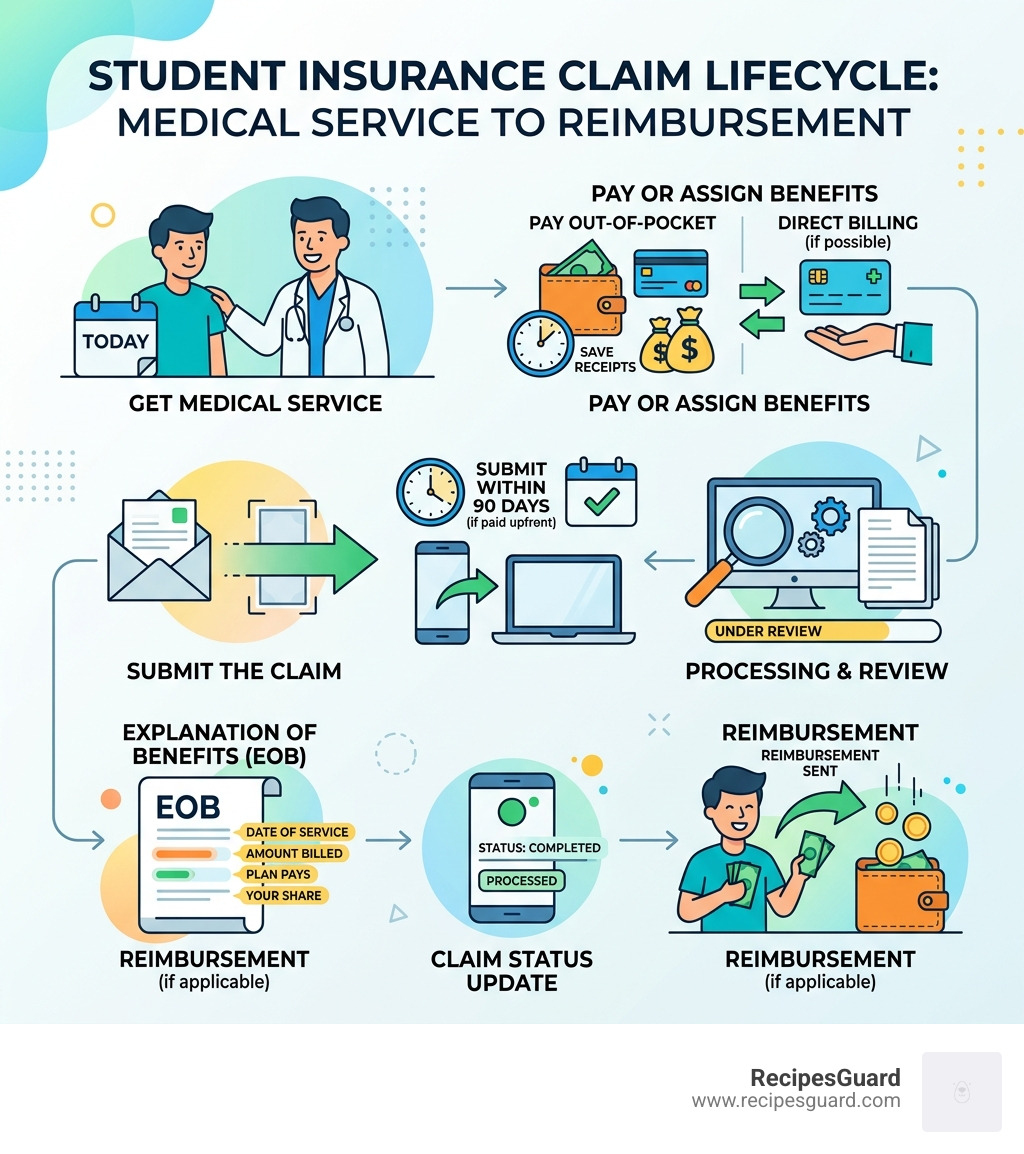
Must-know claim status student insurance terms:
How to Check Your Claim Status Student Insurance Online
In April 2026, the days of mailing a paper form and crossing your fingers are largely behind us. Most modern student health plans provide a dedicated member portal designed to give you instant visibility into your benefits. Whether you are studying at a major university or attending a smaller college, the process for checking your claim status student insurance usually starts at your insurer’s website.
To get started, you will typically need two pieces of information: your Student ID number and your Policy or Group Number. For many students, your Student ID acts as your unique member identifier. Once logged in, look for a dashboard titled “My Claims,” “Claims History,” or “Activity.” Here, you can see every claim submitted by your doctor or by you personally.
If you are a student at a major institution, you can often find direct links to these portals through your student union or health plan administrator. For instance, students can Check your claim’s status or Check your claim’s status via dedicated university-specific portals that streamline the login process.
Using Mobile Apps to Track Your Claim Status Student Insurance
We highly recommend downloading your provider’s mobile app as soon as you enroll. Apps like the Omni app (used by Desjardins) or the Pacific Blue Cross app allow you to receive real-time push notifications the moment your claim status student insurance changes from “Pending” to “Processed.”
These apps do more than just track money; they often house a digital version of your insurance ID card. This is a lifesaver if you show up at a clinic and realize you left your physical card in your dorm room. For a deeper dive into making the most of these digital tools, check out our guide on Mastering The Student Medical Claim Process In 5 Easy Steps/.
Registration Requirements for New Users
If this is your first time checking your status, you’ll need to register your account. This usually involves “activating” your profile using your certificate number and group number. Some providers, like Sun Life, may require a quick phone call to their customer care center to verify your identity before you can access the online portal.
Don’t let this initial hurdle stop you. Setting up your account early ensures that when you actually need to file a claim, the digital infrastructure is already in place. If you’re struggling with the initial setup, our tutorial on How To Submit Claim Paperwork And Actually Get Paid/ can help you navigate the technical jargon.

Decoding the Explanation of Benefits (EOB)
Once your claim is processed, you will receive a document called an Explanation of Benefits (EOB). It is important to remember: An EOB is not a bill. It is a report showing what the provider charged, what the insurance covered, and what portion (if any) you are responsible for paying.
Reading an EOB can feel like deciphering a secret code. Here is a breakdown of the terms you’ll likely see:
| Term | What It Actually Means |
|---|---|
| CPT Code | A five-digit code describing the specific medical service or procedure you received. |
| Deductible | The fixed amount you must pay out of pocket before your insurance starts chipping in. |
| Co-insurance | Your share of the costs of a covered service, calculated as a percentage (e.g., 20%). |
| Patient Responsibility | The final amount you actually owe the doctor or hospital. |
If you receive a bill from a doctor that is higher than the “Patient Responsibility” listed on your EOB, do not pay it immediately. Contact your provider to ensure they have applied the insurance payment correctly. For more tips on managing these documents, see Claim For Medical Expenses Without The Headache/.
Understanding Financial Responsibilities
Most student plans are designed to be cost-effective but involve some cost-sharing. A typical plan might feature a $250 deductible and then offer 80% coverage of eligible expenses. This means if you have a $1,000 bill, you pay the first $250, and then 20% of the remaining $750. However, “essential benefits”—like annual check-ups or certain vaccinations—are often covered at 100%, meaning you pay nothing.
Understanding these nuances helps you estimate your costs before you even step into the doctor’s office. You can learn more about these calculations in our guide on Claiming Medical Expenses As A Student Made Easy/.
Submission Deadlines and Required Documentation
Timing is everything when it comes to insurance. Most student policies have a strict 90-day deadline for submitting claims. If you wait until the end of the semester to file for a doctor’s visit that happened in the first week, your claim might be automatically denied.
To ensure your claim status student insurance moves quickly from “Submitted” to “Paid,” you must provide the right paperwork. A simple credit card receipt is rarely enough. You typically need an itemized bill that includes:
- The provider’s name and Tax ID
- The date of service
- Specific diagnosis codes (ICD-10) and procedure codes (CPT)
- The total charge for each service
Keeping these documents organized in a digital folder can save you hours of frustration. For a checklist of what to keep, visit How To File A Travel Insurance Claim As A Student/.
In-Network vs. Out-of-Network Procedures
The easiest way to avoid the claims process entirely is to visit an in-network provider. When you stay within the network, the doctor usually bills the insurance company directly. You might only have to pay a small co-pay at the desk, and you won’t have to worry about tracking the claim status student insurance for reimbursement because you never paid the full amount upfront.
If you go out-of-network, be prepared to pay the full bill at the time of service. You will then need to submit a reimbursement form along with your itemized receipts. This is common for “adrenaline seekers” or students traveling far from campus. If you find yourself in this boat, our Adrenaline Junkies Guide To Filing An Injury Claim/ offers specific advice for out-of-network scenarios.
Troubleshooting Delays and Denials
It is normal for a claim to take 10–20 business days to process. However, if you see a “Pending” or “Information Requested” status for longer than three weeks, something might be wrong. Common reasons for delays include:
- Coordination of Benefits (COB): The insurer wants to know if you have another health plan (like through a parent or employer).
- Accident Details: If you were treated for an injury (like a broken arm), the insurer may send a form asking how and where the accident happened to see if another party (like an auto insurer) should pay.
- Missing Codes: The doctor forgot to include a diagnosis code on the bill.
If you’re wondering why your money is stuck in limbo, check out Why Your Student Claim Might Get Rejected And How To Fix It/.
What to Do if Your Claim Status Student Insurance is Denied
A denial isn’t the end of the road. Sometimes it’s a simple clerical error. If your claim is denied, read the EOB carefully to find the “Reason Code.” You have the right to appeal the decision. This usually involves writing a letter, providing additional medical records, or having your doctor submit a “Letter of Medical Necessity.”
Don’t let the insurance company have the last word if you believe the service should be covered. We’ve put together a strategy guide on Claim Denied Here Is How Students Can Fight Back And Win/ to help you navigate the appeals process with confidence.
Specialized Claims: International, Dental, and Mental Health
Student insurance isn’t just for the flu. Many plans include specialized coverage that requires a different approach:
- International Students (OSHC): If you are studying in Australia, you likely have Overseas Student Health Cover. Navigating these claims requires specific knowledge of the Australian healthcare system. You can find official guidance at Overseas Student Health Cover (OSHC) – Study Australia .
- Dental Care: With access to over 262,000 dental practices nationwide in many networks, dental claims are common. Big-ticket items like braces (orthodontics) often require a “pre-determination” of benefits before you start treatment to see how much will be covered.
- Mental Health: In April 2026, mental health support is more accessible than ever. Many plans offer 100% coverage for initial counseling sessions. If you are in a crisis, remember you can dial 988 for immediate mental health support.
For those traveling abroad, we recommend reading Your Overseas Student Claim Guide For Stress Free Travel/ to understand how international coverage differs from your home plan.
Frequently Asked Questions about Claim Status Student Insurance
How long does it take to receive a reimbursement check?
Typically, once a claim is approved, it takes about 15 business days for the review and processing to complete. If you requested a physical check, allow another 7–10 business days for delivery via mail. Pro tip: Register for direct deposit in your member portal to get your money up to a week faster. Also, keep in mind that reimbursement checks are usually only valid for 120 days—don’t let them sit on your desk!
What documents are needed for international student claims?
For international or OSHC claims, you will need your itemized medical bill, proof of payment (like a bank statement if you paid by card), and a copy of your passport or visa details to confirm your eligibility. For specific steps on Australian policies, see How To Claim on Your OSHC Policy – Allianz Care Australia .
Why is my claim still showing as “Pending” after two weeks?
The most common reason is “Coordination of Benefits.” The insurance company needs you to confirm that they are your primary insurer. Check your email or the “Messages” section of your portal for any outstanding requests for information. You can find more details on these delays in our guide: Why Is My Student Claim Delayed A Guide To Borrower Defense/.
Conclusion
Navigating claim status student insurance doesn’t have to be a headache. By using mobile apps, keeping your documentation organized, and understanding your EOB, you can ensure you get the benefits you’re paying for.
At RecipesGuard, we are dedicated to providing students with the tools they need to manage their health and travel insurance with ease. From step-by-step filing tutorials to advice on fighting denied claims, we’ve got your back so you can focus on what really matters: your studies.
For more expert advice and detailed tutorials, Visit RecipesGuard for more student claim guides.

My name is Bianca, and my journey into the world of fermentation and food safety began with a costly mistake. I once lost an entire season’s harvest of chili peppers because I relied on guesswork instead of science. That failure was my turning point.
