
Why Health Insurance for Graduate Students Is More Complicated Than You Think
Health insurance for graduate students comes in several forms — and the right choice depends heavily on your student status, funding source, and visa type.
Here is a quick overview of your main options:
| Option | Best For | Typical Cost |
|---|---|---|
| University SHIP | Most grad students | $0–$300/semester (with subsidy) |
| Employer-sponsored (GTA/GRA/GA) | Graduate assistants | 75–80% covered by university |
| Parent’s plan | Students under 26 | Varies by parent’s plan |
| ACA Marketplace | Independent students | Varies; subsidies based on income |
| Medicaid | Low-income students | Free or very low cost |
Graduate school is already stressful. Then you add the maze of health insurance decisions on top of it.
Unlike undergrads, graduate students face a much more complex insurance landscape. Your coverage options can change based on whether you hold a teaching assistantship, a research fellowship, or no funding at all. International students on F-1 or J-1 visas often have no choice — many universities automatically enroll them and set strict waiver standards that most foreign plans simply cannot meet.
And the financial stakes are real. Without a subsidy, a university student health plan can cost over $5,000 per year. With the right assistantship, that same coverage might cost you less than $300 per semester.
This guide breaks down every major option, compares costs and subsidies side by side, and helps you figure out exactly what you need — whether you are a domestic student, an international student, a funded assistant, or somewhere in between.
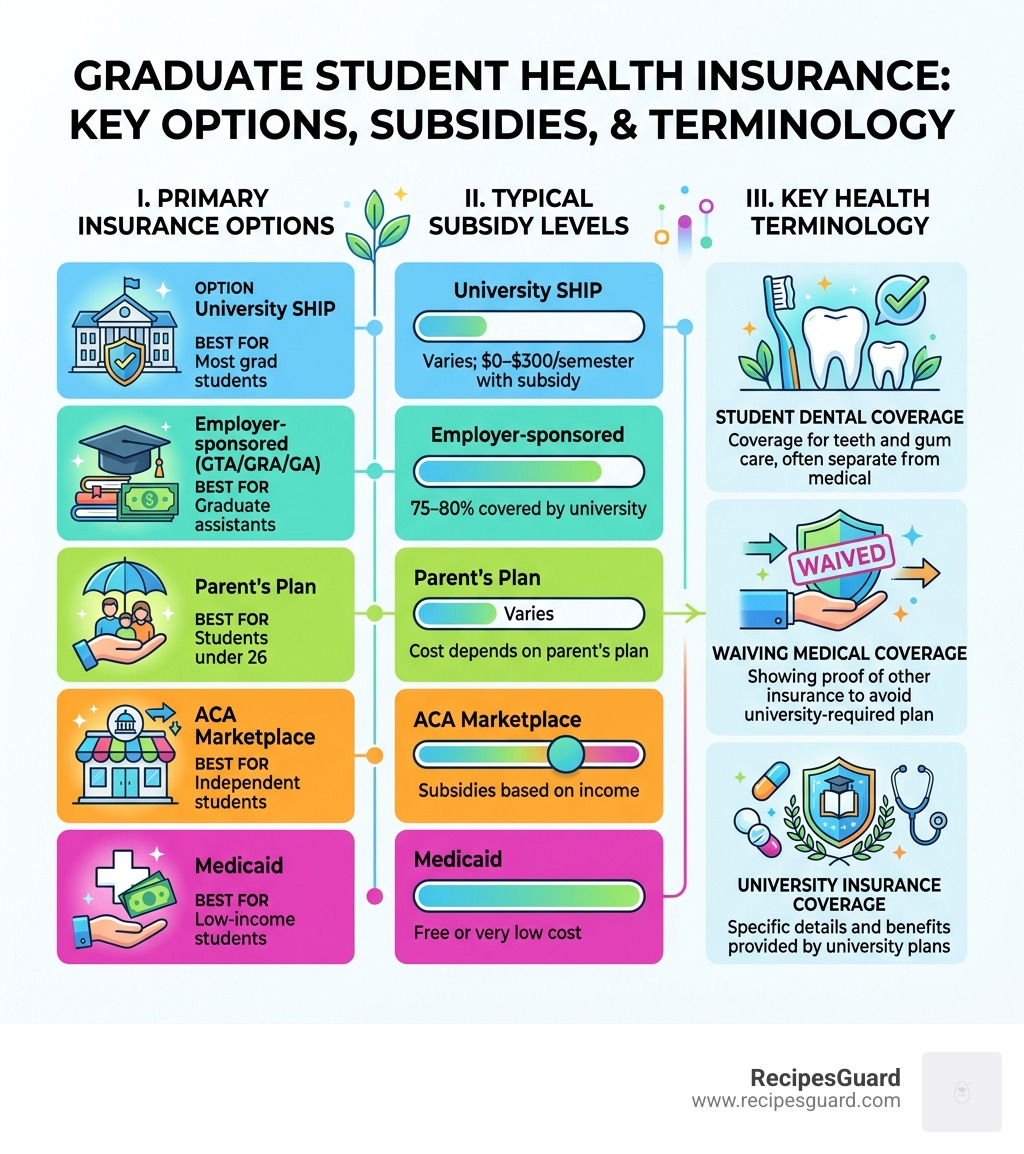
Quick health insurance for graduate students definitions:
- student dental coverage
- waiving medical coverage
- university insurance coverage
Navigating Health Insurance for Graduate Students Requirements
When you enter a graduate program, you aren’t just a student; you are often part-staff, part-researcher, and full-time budgeter. Most universities operate on an “automatic enrollment” basis. This means the university assumes you want their Student Health Insurance Plan (SHIP) and will tack the premium onto your tuition bill unless you prove you have something better.
Automatic Enrollment and the Waiver Maze
For many, the first hurdle is the waiver process. If you already have coverage—perhaps through a spouse’s employer or a lingering spot on your parents’ plan—you must submit a waiver request by the university’s deadline. However, “comparable coverage” is a high bar. To successfully waive your university health insurance, your private plan usually must provide:
- Unlimited lifetime maximums.
- Coverage for pre-existing conditions.
- Local providers within a certain radius of the campus.
- Mental health and prescription drug benefits.

International Student Mandates (F-1 and J-1 Visas)
If you are an international student, the rules are even stricter. At institutions like UT Austin or UC Irvine, students on F or J visas are automatically enrolled in the university plan as a condition of their visa status. This isn’t just a university whim; it’s often tied to federal requirements for medical evacuation and repatriation coverage.
International plans from home countries rarely meet these specific U.S. standards. If you’re looking for ways to manage these costs, check out your guide to finding affordable international student insurance USA to see how you can navigate these mandatory requirements without breaking the bank.
Primary Health Insurance for Graduate Students Options
Graduate students generally fall into one of four buckets when it comes to finding a plan. Understanding where you fit is the key to navigating the maze of student health insurance plans in the USA.
- University SHIP: These are group plans negotiated by the school (often with carriers like Aetna or UnitedHealthcare). They are convenient because they usually integrate perfectly with the on-campus health center. At UT Austin, for example, most students are eligible for the AcademicBlue SHIP plan.
- Parental Coverage: Under the Affordable Care Act (ACA), you can stay on your parents’ health insurance until you turn 26. This is often the cheapest route, but be careful—if your parents live in another state, their “in-network” providers might be hundreds of miles away from your lab.
- Medicaid Expansion: In states that have expanded Medicaid, low-income graduate students (which, let’s face it, is most of us) may qualify for free or very low-cost state insurance. This is a “perfect solution” for many while job hunting or during years with low stipend support.
- Employer-Sponsored Plans: If you are a Graduate Teaching Assistant (GTA) or Graduate Research Assistant (GRA), your university acts as your employer. This is where the real savings hide.
Comparing Health Insurance for Graduate Students: SHIP vs. Marketplace
Should you stick with the school plan or venture into the Federal Marketplace (Healthcare.gov)?
The ultimate guide to student health coverage and costs suggests that the Marketplace is best for students who don’t have access to a university subsidy. If you are an independent student with no university funding, you might qualify for “premium tax credits” on the Marketplace that make private insurance cheaper than the school’s SHIP.
However, if you are looking at Overseas Student Health Cover (OSHC) in Australia, the system is entirely different. In Australia, international students must maintain OSHC for the duration of their stay, which provides a specific level of cover for hospital and medical treatments.
Subsidies and Costs for Graduate Assistants
If you’ve landed a coveted assistantship, your health insurance costs are about to plummet. Universities value their graduate workers, and they show it by footing most of the insurance bill.
The Power of the 80% Subsidy
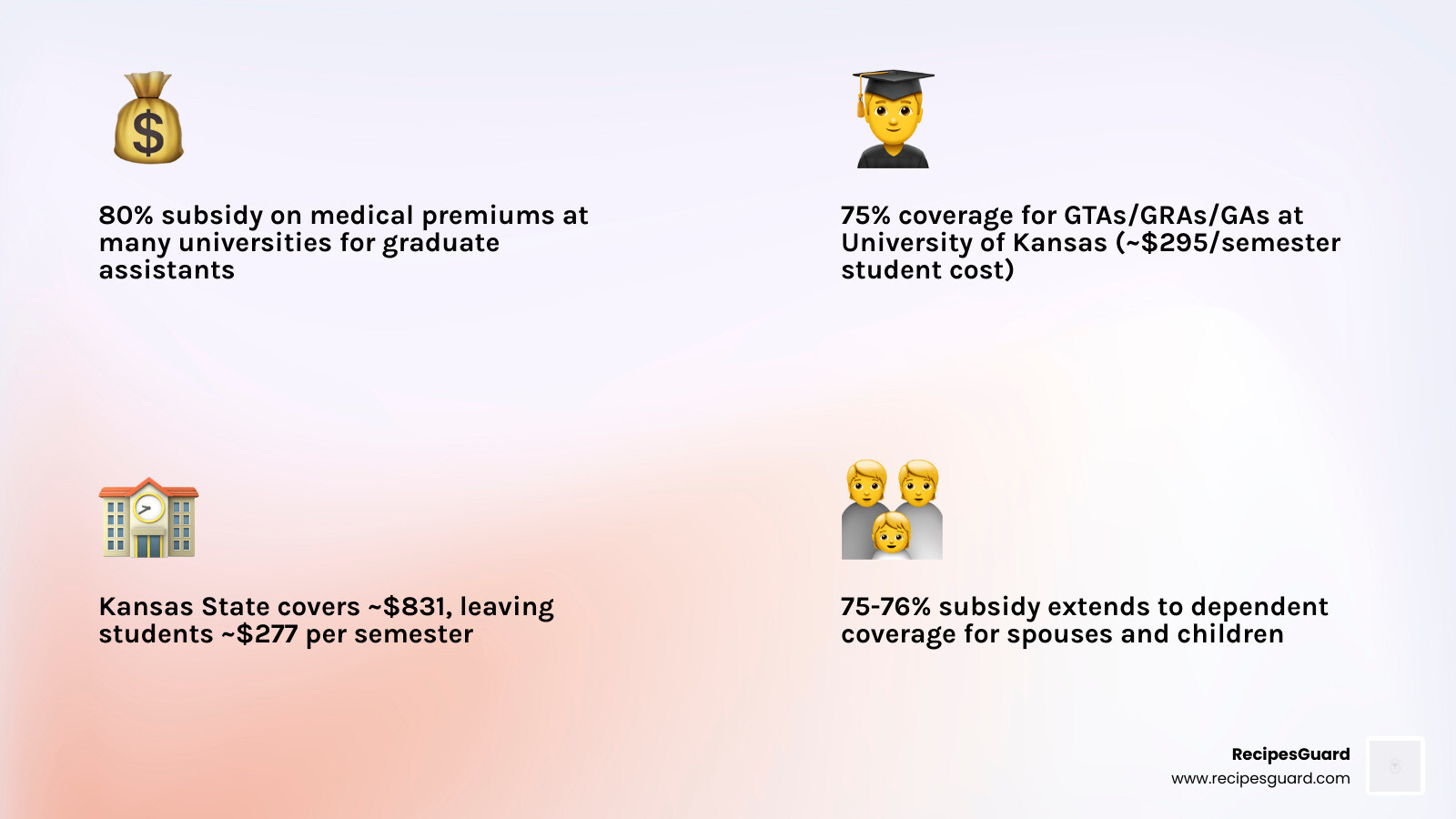
Many top-tier research universities offer massive subsidies for graduate assistants (GAs), fellows, and trainees. Let’s look at the numbers for the 2025-2026 academic year:
| University | Subsidy Amount | Student Responsibility |
|---|---|---|
| Penn State | 80% of medical premium | ~20% of annual cost |
| University of Kansas (KU) | 75% for GTAs/GRAs/GAs | ~$294.88 per semester |
| Kansas State (K-State) | ~75% ($831 covered by uni) | $277 per semester |
At Penn State, the university doesn’t just stop at the student; they also subsidize 75-76% of dependent coverage for spouses and children. This is a game-changer for graduate students with families.
Eligibility for Incentivized Plans
To get these rates, you usually have to meet “FTE” (Full-Time Equivalent) requirements. At many schools, a 0.50 FTE appointment—which usually means working about 20 hours a week for the department—is the magic number.
At the University of Minnesota, the Graduate Assistant Health Plan (GAHP) is specifically designed for these student-employees. If you fall below the required credit hours or work hours, you might be moved to a “Voluntary Plan,” which can cost significantly more. For example, at KU, the “Incentivized Plan” for assistants was $2,831 annually (before subsidy), while the “Voluntary Plan” for general students jumped to over $5,400.
Coverage Scope and Provider Networks
What does health insurance for graduate students actually cover? In May 2026, most SHIP plans are “Platinum” or “Gold” tier under ACA standards, meaning they cover about 80-90% of your medical costs.
Medical, Dental, and Vision
While medical is usually mandatory, dental and vision are often “add-ons.”
- Medical: Includes doctor visits, hospital stays, and emergency room trips.
- Mental Health: Most SHIP plans now include robust mental health support, often with $0 copays if you use the university’s counseling center.
- Dental/Vision: These are usually separate enrollments. For instance, the UIGRADCare Plan at the University of Iowa offers a four-tier prescription drug plan but requires students to use specific UI Health Care providers for medical services.
Accessing In-Network Care
One of the most important things we’ve learned at RecipesGuard is that where you go for care matters as much as what plan you have.
Many university plans are “HMO-style,” meaning they want you to start at the campus health center. If you need a specialist, you may need a formal referral. At Penn State, if you seek care more than 25 miles away from campus without a referral, your claim could be denied. Learning how to navigate your university health insurance plan means understanding these boundaries before you get sick.
Managing Transitions: Summer and Post-Graduation
The “coverage gap” is a terrifying reality for many graduates. Your eligibility for SHIP usually ends the day you graduate or shortly thereafter.
Summer Coverage
If you are enrolled in the spring, most universities will cover you through the summer (until August 31), even if you aren’t taking classes. However, you must check your specific policy. At the University of Minnesota, GAHP coverage for the spring semester typically extends through the end of August.
The Graduation Gap
What happens when you walk across the stage in May 2026?
- Marketplace Special Enrollment: Graduation is a “qualifying life event,” giving you 60 days to sign up for a Marketplace plan outside of the standard open enrollment period.
- Short-Term Plans: These are “gap fillers” for students waiting for a job’s insurance to kick in. Be careful, though—as we mention in our STEM OPT health insurance complete guide, short-term plans often don’t cover pre-existing conditions.
- COBRA: If you were a university employee (GTA/GRA), you might be eligible to keep your plan for up to 18 months via COBRA, though you will have to pay the full premium yourself, including the portion the university used to cover.
Frequently Asked Questions
Can I add my spouse and children to my graduate health plan?
Yes, most university SHIP plans allow for dependent enrollment. However, be prepared for the cost. While the university might subsidize your premium by 80%, they might only cover a smaller portion (or none) of your spouse’s premium. Enrollment for dependents usually happens during the same open enrollment window as the student—typically in August or January.
What happens to my insurance if I graduate in May 2026?
Typically, your coverage will continue until the end of the “plan year,” which is often August 31, 2026. After that, you must transition to an employer plan, a Marketplace plan, or Medicaid. Don’t wait until August to look; start researching your options in June to avoid a gap.
Are international graduate students required to use the university plan?
In almost all cases, yes. U.S. universities have a legal responsibility to ensure international students have insurance that meets federal visa requirements. This includes specific dollar amounts for “Medical Evacuation and Repatriation”—essentially the cost of flying you home in a medical emergency. Most private or “travel” plans do not meet these standards.
Conclusion
Securing health insurance for graduate students is a marathon, not a sprint. Whether you are navigating the subsidized world of a Graduate Assistantship or looking for a plan on the Marketplace, the key is to act early.
At RecipesGuard, we specialize in helping students navigate the administrative hurdles of insurance. From understanding why your claim was denied to finding the right forms for a waiver, our goal is to ensure you spend more time in the library and less time on hold with insurance companies.
If you are feeling overwhelmed by the paperwork, most universities have a dedicated Student Health Insurance office. Use them! And for more tips on filing claims or managing your coverage, check out our more info about student coverage section. Your health is your most important asset during your doctoral journey—don’t leave it to chance.

My name is Bianca, and my journey into the world of fermentation and food safety began with a costly mistake. I once lost an entire season’s harvest of chili peppers because I relied on guesswork instead of science. That failure was my turning point.
