
Affordable Health Insurance Options for Students on OPT
Why Health Insurance for STEM OPT Students Is a Critical First Step After Graduation
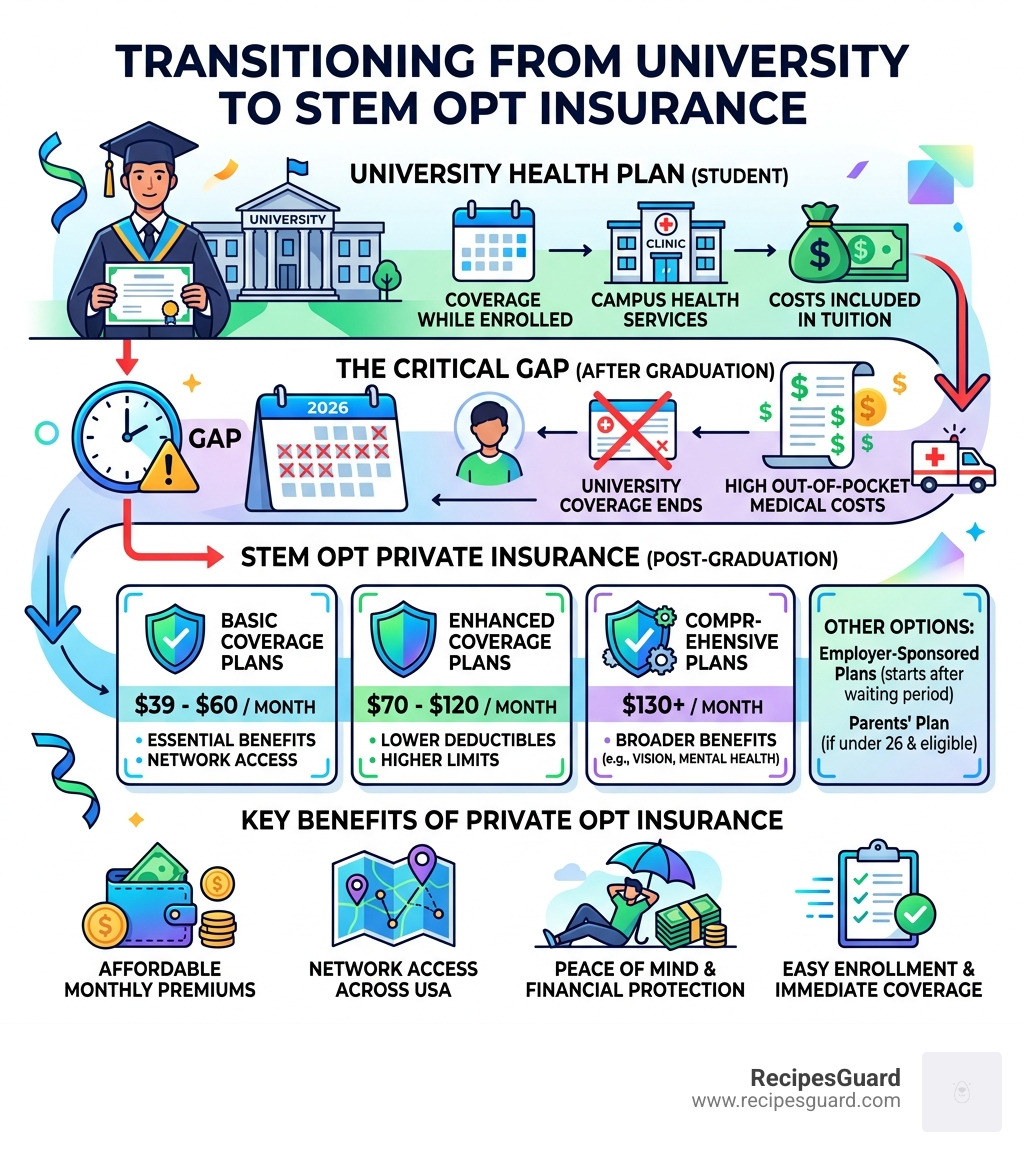
Health insurance for stem opt students is one of the most urgent financial decisions you’ll face right after graduating — and most students don’t realize their university coverage ends the moment their academic program does.
Here are the best health insurance options for STEM OPT students in 2026:
- Basic Private OPT Plans — from ~$39/month, Aetna PPO network, nationwide coverage
- Enhanced Coverage Plans — from ~$79/month, lower deductible, higher coverage limits
- Comprehensive Student Plans — from ~$2.27/day, UHC Choice Plus PPO, vision and mental health included
- Short-term Bridge Coverage — flexible plans for OPT transitions
- Employer-sponsored insurance — if your employer offers it; may not start on day one
- Parents’ plan — eligible if you are under 26 and listed as a dependent
Quick answer: No federal law requires F-1 OPT students to have health insurance, but U.S. medical costs are extremely high. A single hospital stay can exceed $20,000 per day. Private OPT plans from specialized providers are the most practical and affordable solution for most STEM OPT students.
So here is the situation many students find themselves in. You’ve just completed your degree. Your F-1 visa is still valid. You have — or are applying for — your Employment Authorization Document (EAD). And you’re about to start up to 24 months of STEM OPT work authorization.
But your university health plan? Already gone.
This gap between university coverage and employer benefits is where things get expensive — fast. One appendectomy, one allergic reaction, one urgent care visit can cost thousands of dollars out of pocket without a plan in place.
The good news is that specialized OPT health insurance plans exist exactly for this transition, and many start at under $70 per month.
Key health insurance for stem opt students vocabulary:
Understanding Health Insurance for STEM OPT Students
Navigating the transition from a full-time student to a working professional on a STEM OPT extension is like leveling up in a video game where the monsters (medical bills) suddenly hit much harder. As of April 2026, the rules for maintaining your status remain strict, but your safety net—university-sponsored health insurance—usually vanishes the moment you toss your cap in the air.
F-1 Visa Regulations vs. J-1 Mandates
For those of us on an F-1 visa, the U.S. government doesn’t technically “force” us to carry health insurance during our OPT or STEM OPT period. However, “legal” doesn’t mean “smart.” Without coverage, you are one slip-and-fall away from a financial disaster that could derail your entire career in the U.S.
In contrast, if you are among the few on a J-1 visa, the Department of State is much more demanding. You are legally required to maintain insurance that meets specific minimums:
- Medical benefits of at least $100,000 per accident or illness.
- Repatriation of remains: $25,000.
- Medical evacuation: $50,000.
- A deductible not exceeding $500 per accident or illness.
Whether you are F-1 or J-1, the The Ultimate Guide To Student Health Coverage And Costs highlights that the “sticker price” of U.S. healthcare is designed for insurance companies to negotiate, not for individuals to pay out of pocket.
Why Your University Coverage Ends
Most university health plans are tied to your enrollment status. Once you graduate, you are no longer a “registered student,” even if your I-20 is still valid for your STEM OPT extension. Some schools might allow you to extend coverage for one semester, but this is often the most expensive option available.
We’ve seen students assume they are covered until their EAD card arrives. This is a dangerous myth. The “coverage gap” is real, and it’s where most horror stories begin. If you’re looking for ways to transition smoothly, understanding How To Successfully Waive Your University Health Insurance can sometimes provide insights into when that coverage officially terminates.
Essential Coverage Features for Post-Graduation Plans
When you’re shopping for health insurance for stem opt students, don’t just look at the monthly premium. A $30/month plan sounds great until you realize it doesn’t cover the doctor’s office across the street.
The Power of PPO Networks
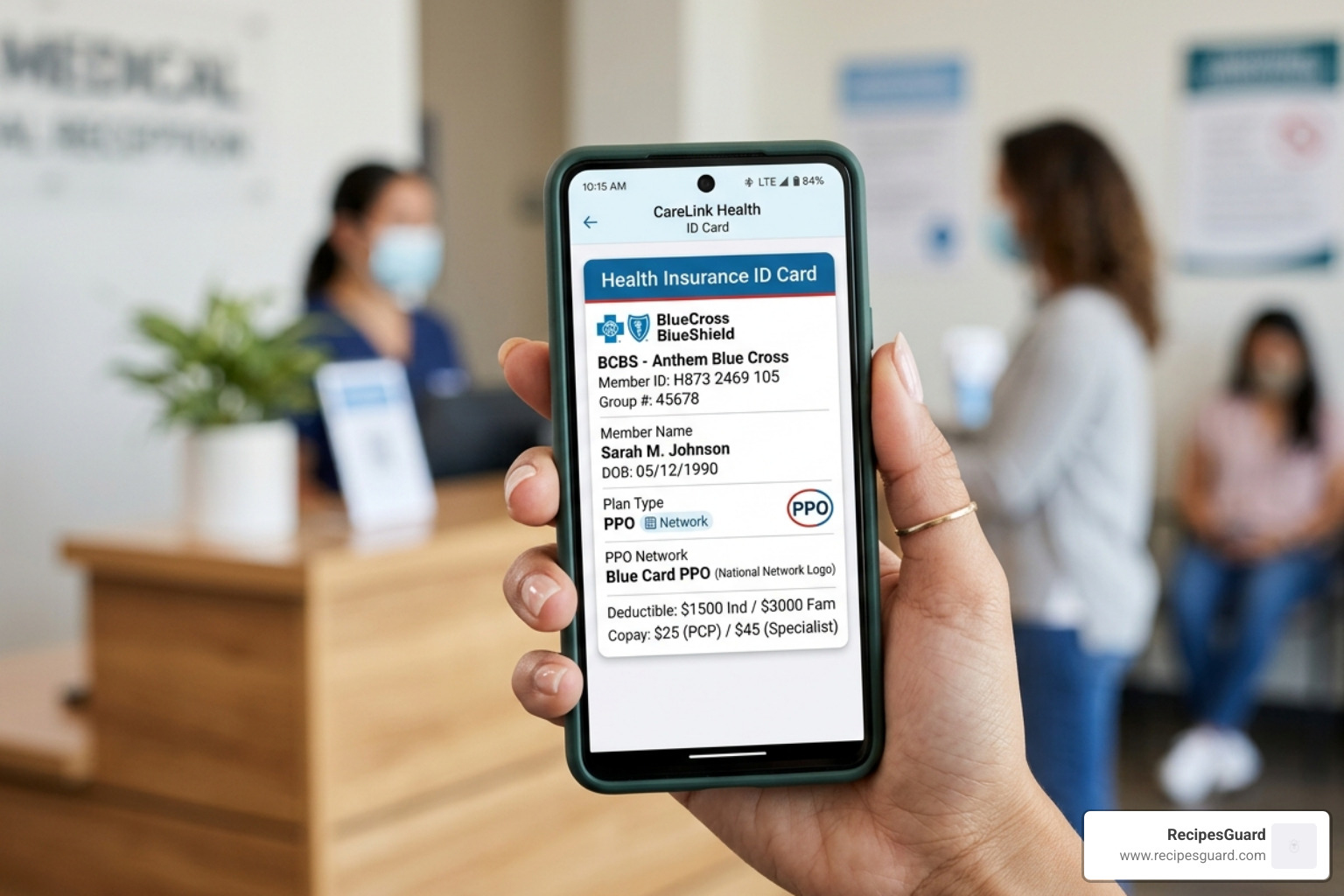
In the U.S., “Network is King.” You want a plan that utilizes a major Preferred Provider Organization (PPO) network.
- Aetna PPO: Used by many specialized providers, giving you access to over 1 million providers across all 50 states.
- UnitedHealthcare (UHC) Choice Plus: Used by comprehensive student plans, featuring over 5,700 hospitals and 30,000+ pharmacies.
Using an in-network doctor means the insurance company has already negotiated lower rates. If you go out-of-network, you might be stuck paying the “rack rate,” which is often 5x to 10x higher.
Decoding the Financial Jargon
- Deductible: The amount you pay before the insurance kicks in. For OPT plans, these typically range from $0 to $500.
- Co-insurance: The percentage you pay after meeting your deductible (e.g., 20% while the insurance pays 80%).
- Out-of-Pocket Maximum: The most you’ll have to pay in a year. This is your ultimate safety net.
Basic vs. Enhanced Plans
| Feature | Basic Bridge Plan | Comprehensive Enhanced Plan |
|---|---|---|
| Monthly Cost | $35 – $55 | $75 – $110 |
| Deductible | $400 – $500 | $0 – $250 |
| Max Coverage | ~$100,000 | Unlimited or $500,000+ |
| Mental Health | Limited | Often included |
| Pre-existing | 12-month wait | 6-12 month wait |
Selecting the Right Plan for Your Career Stage
Choosing a plan depends heavily on where you are in your STEM OPT journey. Are you waiting for your EAD? Have you started your job but are in a 90-day waiting period for company benefits? Or are you working for a startup that doesn’t offer insurance at all?
Key Benefits to Look For
Since you are an international resident, your needs are different from a local’s. Look for:
- Medical Evacuation & Repatriation: These are often missing from standard “local” plans but are vital for international students. If something catastrophic happens, these benefits cover the cost of returning you to your home country (often $50,000+).
- Mental Health Support: The transition from school to a high-stakes STEM job can be stressful. Many comprehensive plans often include mental health benefits and even telehealth apps.
- Telehealth: In 2026, waiting three weeks for a doctor’s appointment is old news. Many OPT plans offer 24/7 virtual visits with a $0 copay.
Comparing Private Health Insurance for STEM OPT Students
For many of us, the goal is to find Affordable Travel Insurance Solutions For Graduate Students In The Usa that bridge the gap.
- Specialized International Organizations: Many have served over 1 million students and offer tiered OPT series. Their basic plans are a favorite for those on a tight budget, while enhanced versions provide more robust protection.
- Student-Focused Providers: Often founded by former international students, they understand the struggle. Their top-tier plans are highly effective—one user reportedly had $11,000 in claims but only paid $1,700 out-of-pocket.
- Budget-Friendly Series: Offers plans that can be as low as $32/month for younger graduates, provided you are in good health.
Enrollment Deadlines for Health Insurance for STEM OPT Students
Timing is everything. You can apply for your STEM OPT extension up to 90 days before your current OPT expires. Similarly, you should look for insurance at least 30 days before your university plan ends.
Don’t wait for the EAD card to arrive in the mail to buy insurance! Most providers allow you to enroll as soon as you have your OPT I-20 and have submitted your application to USCIS. If you wait until you’re sick, it’s too late—that’s a “pre-existing condition.”
Understanding the Student Travel Insurance Vs Health Insurance Key Differences Explained is crucial here. Travel insurance is for short trips; health insurance is for living your life and working your 40-hour weeks.
Managing Medical Costs and Claims on OPT
At RecipesGuard, we specialize in helping students navigate the often-confusing world of insurance claims. In the U.S., the “claim” is the process where the doctor asks the insurance company for money. If handled poorly, you get the bill instead.
Our Step-by-Step Claim Success Strategy
We’ve helped thousands of students through our step-by-step tutorials. Here is the “Golden Rule” for OPT students:
- Always stay in-network: Use your provider’s “Find a Doctor” tool before booking.
- Present your ID card immediately: Whether it’s a physical card or a digital one on your phone, make sure the front desk scans it.
- Ask for an “Itemized Bill”: If you receive a bill at home, don’t panic. Contact us or your insurer. Often, the doctor simply hasn’t processed the insurance yet.
- Use Telehealth for minor issues: Got a cold or a rash? A virtual visit is usually free and saves you a $200 urgent care bill.
Real Savings Example
Consider “Aubrey,” a STEM OPT student in New York. She used a comprehensive PPO-based student plan. When she needed unexpected surgery, the total bill was $11,000. Because she stayed in-network and had a low deductible, she only paid $1,700. That is an 85% savings! Without health insurance for stem opt students, that $11,000 would have been a personal debt that could have affected her credit score or even her ability to renew her visa later.
Frequently Asked Questions about STEM OPT Insurance
Can I stay on my parents’ or employer’s health insurance?
If you are under 26 and your parents live and work in the U.S., you can absolutely stay on their plan! This is often the best and most comprehensive option.
If you’ve already started your STEM OPT job, check your employment contract. Some employers offer health insurance starting on day one, while others have a 60 or 90-day “probationary period.” If you have a gap, you must buy a private bridge plan from a specialized provider to cover those first few months.
Is health insurance required during the 60-day grace period?
The 60-day grace period occurs after your OPT or STEM OPT ends. While you are legally allowed to stay in the U.S. to prepare for departure or change status, you are no longer “working.” Most OPT-specific insurance plans will cover you during this grace period if you purchased the coverage while you were still on active OPT. However, you usually cannot start a new OPT insurance policy once you have entered your grace period.
Can dependents be covered under these plans?
Yes! Most major specialized providers offer “Dependent Coverage” for F-2 visa holders (your spouse or children). Adding dependents will significantly increase the monthly premium, but it is much cheaper than paying for a family’s emergency room visit out of pocket.
Conclusion
The 24-month STEM OPT extension is a golden opportunity to build your career and gain invaluable experience in the U.S. market. Don’t let a single medical mishap turn this dream into a financial nightmare.
By securing health insurance for stem opt students early, you ensure that your focus remains on your code, your research, or your engineering projects—not on how you’re going to pay for an $800 ER visit. Whether you choose a budget-friendly bridge plan or a comprehensive PPO option, the most important step is to avoid any gaps in coverage.
At RecipesGuard, we are here to make sure that if you do have to use your insurance, the claim process is the least of your worries. We provide the guides and tutorials you need to handle medical costs like a pro.
Ready to protect your future? Secure your future with RecipesGuard and breathe easy knowing you’re covered for the road ahead.
Disclaimer: This guide is for informational purposes based on 2026 data. Always check with your DSO and insurance provider for the most current policy details.

My name is Bianca, and my journey into the world of fermentation and food safety began with a costly mistake. I once lost an entire season’s harvest of chili peppers because I relied on guesswork instead of science. That failure was my turning point.
