
What Pre-Existing Conditions Insurance Covers (And Where to Find It)
Pre-existing conditions insurance is health coverage that includes treatment for medical issues you had before your new plan started — and knowing your options can make a real difference when you need care most.
Quick answer: Where can you get coverage for pre-existing conditions?
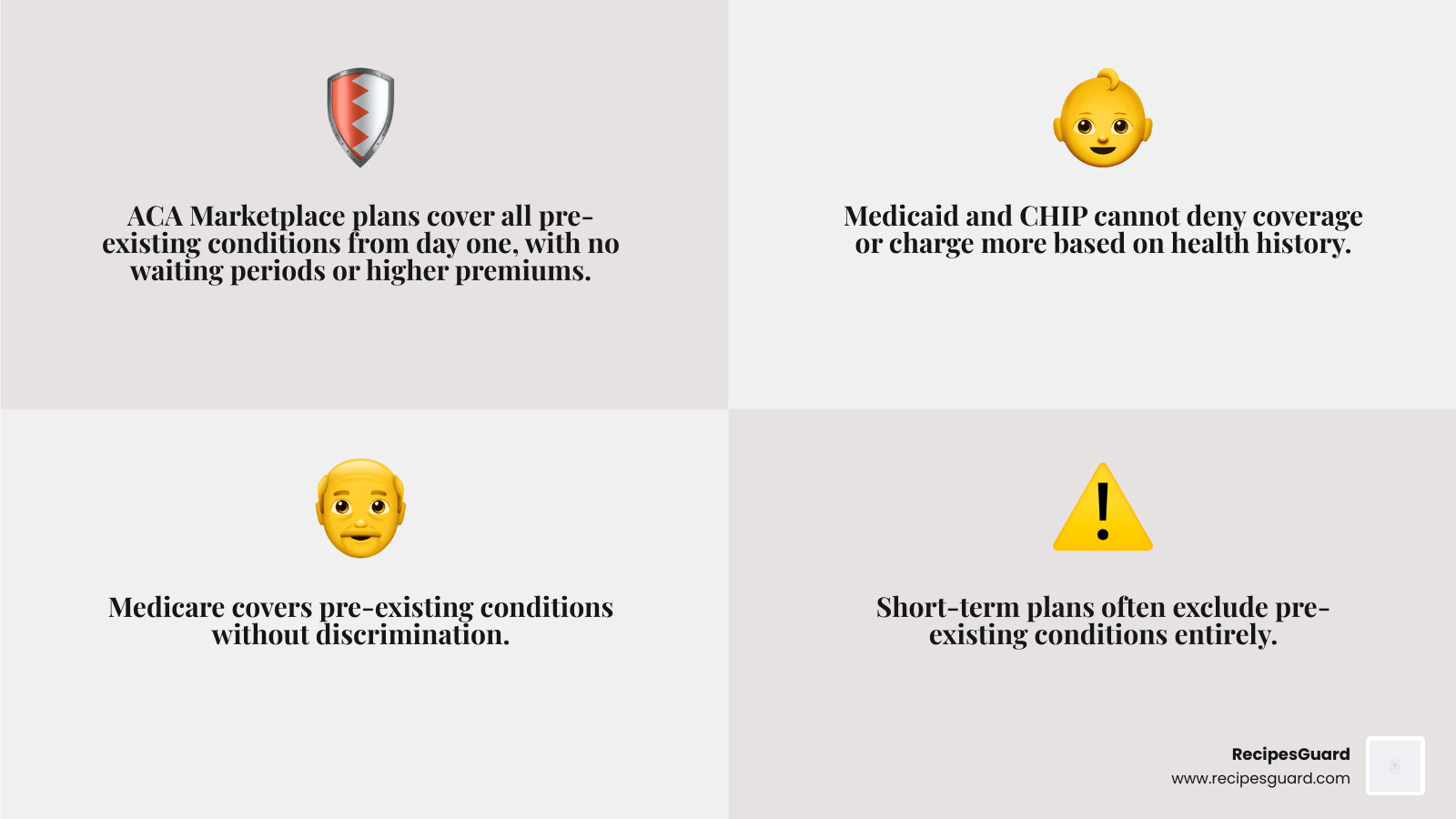
- ACA Marketplace plans — Must cover all pre-existing conditions from day one, no waiting periods, no higher premiums
- Medicaid and CHIP — Cannot deny coverage or charge more based on health history
- Medicare — Covers pre-existing conditions without discrimination
- Employer-sponsored (job-based) plans — Generally ACA-compliant and cover pre-existing conditions
- Grandfathered plans (caution) — Created before 2010; may still deny or limit coverage
- Short-term health plans (caution) — Not ACA-compliant; often exclude pre-existing conditions entirely
If you have a chronic illness, a past injury, or any ongoing medical condition, the fear of being denied coverage — or hit with unaffordable costs — is very real. You are not alone.
Nearly 54 million Americans under age 65 — roughly 27% of all non-elderly adults — have a health condition that would have made them uninsurable in the individual market before current federal protections existed.
For international students navigating an unfamiliar healthcare system, the stakes feel even higher. Understanding which plans protect you, which ones don’t, and exactly how to enroll is the difference between getting the care you need and facing enormous out-of-pocket costs.
This guide breaks it all down in plain language.
Basic pre-existing conditions insurance terms:
- disability insurance that covers pre existing conditions
- family health insurance pre existing condition
- medical aid that covers pre existing pregnancy
Defining Medical History in 2026

In insurance, your medical history isn’t just a list of past doctor visits; it’s a living record that insurers used to use to decide if you were “worth the risk.” As of May 2026, the definition of a pre-existing condition remains broad: it is any health problem, injury, or illness that existed before the date your new health insurance coverage began.
This includes obvious chronic illnesses like asthma, diabetes, heart disease, or cancer. However, it also includes less obvious things like high blood pressure, sleep apnea, or even a past surgery for a broken leg. Even mental health conditions like anxiety and depression fall under this umbrella.
According to data from the Kaiser Family Foundation, approximately 54 million non-elderly adults in the U.S. have a condition that would have resulted in a denial of coverage or “premium loading” (charging you a lot more) in the pre-ACA era. That is 27% of the adult population under 65. Today, thanks to evolving regulations, why your family’s medical history won’t break the bank anymore is a story of legal protections rather than luck.
Determining Eligibility for Pre-Existing Conditions Insurance
How do insurance companies actually find out about these conditions? They don’t just take your word for it. Insurers typically use several methods to determine your medical history:
- Medical Record Reviews: They may look at your clinical notes and hospital records.
- Prescription History: This is a huge one. If you’ve been prescribed insulin or inhalers, it’s a clear indicator of an underlying condition.
- Look-back Periods: In some non-ACA plans (like travel insurance or short-term plans), insurers look back a specific number of years (often 5 to 10) to see if you received treatment or even just showed symptoms.
- Undiagnosed Symptoms: This is the tricky part. A condition can be considered pre-existing even if you weren’t officially diagnosed, provided you sought medical advice or had symptoms that would cause a “reasonable person” to seek care.
If you find yourself in a situation where you feel sick but don’t have a name for it yet, check out our guide on how to get health insurance when your doctor is still guessing.
Navigating the Landscape of Pre-Existing Conditions Insurance

The primary reason pre-existing conditions insurance is accessible today is the Affordable Care Act (ACA). Under this law, it is illegal for Marketplace plans to deny you coverage, charge you more, or refuse to pay for “essential health benefits” just because you have a health problem.
These plans are “guaranteed issue,” meaning they must take you regardless of your health status. They are also prohibited from “premium loading,” which is the practice of charging a person with diabetes more than a person without it for the exact same plan. You can find more details on these protections at HealthCare.gov.
For those specifically looking for healthcare that covers pre existing conditions, the Marketplace is generally the safest harbor.
Choosing the Right Pre-Existing Conditions Insurance Plan
When you have a known medical issue, picking the cheapest monthly premium isn’t always the smartest move. We often advise students and families to look at the “Total Cost of Care.”
- Deductible Trade-offs: If you have a chronic condition like Lupus or Epilepsy that requires regular specialist visits and expensive meds, a plan with a higher premium but a lower deductible might save you thousands over the year.
- Network Adequacy: Make sure your current specialists and the hospitals that treat your condition are “in-network.” Out-of-network care can be devastatingly expensive.
- Chronic Care Management: Some plans offer specialized programs for asthma or diabetes management, including lower copays for supplies.
Understanding these nuances is vital so you don’t let your medical history stop your future disability coverage or your health security. You can also review official guidelines at HHS.gov.
Exceptions and Plans with Limited Protections
Not every piece of paper that says “Insurance” offers the same protections. In Australia and the US alike, there are “waiting periods” and “exclusions” to watch out for.
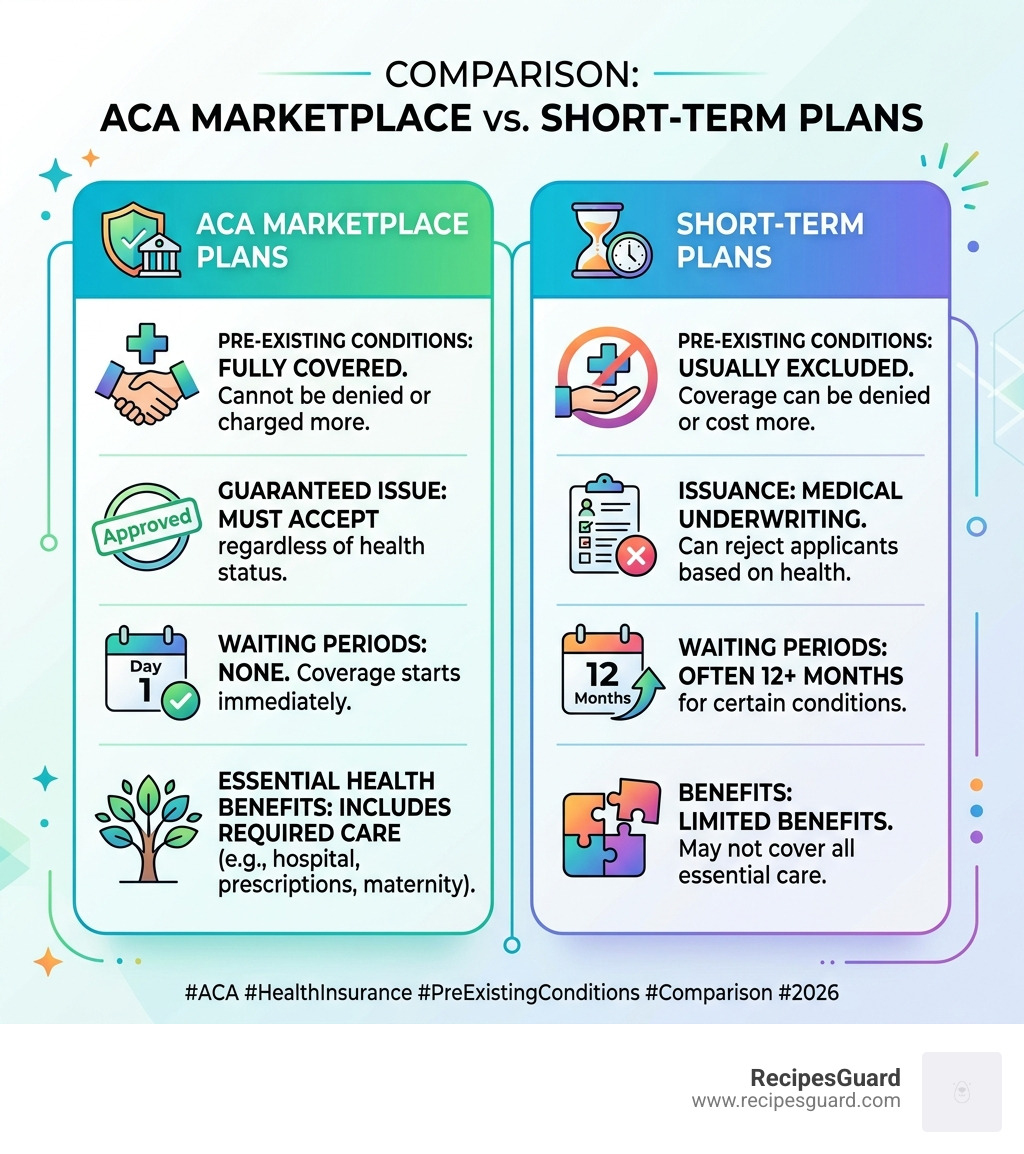
| Plan Type | Pre-Existing Coverage | Waiting Periods |
|---|---|---|
| ACA Marketplace | Full Coverage from Day 1 | None |
| Short-Term Plans | Usually Excluded | Often 12+ Months |
| Grandfathered Plans | May Exclude | Varies |
| Travel Insurance | Limited/Needs Waiver | Varies by “Stability” |
Grandfathered Plans: These are plans that existed before March 23, 2010. Because they are “old,” they don’t have to follow all the ACA rules. They can still deny coverage for pre-existing conditions or charge higher rates. If you’re on one of these, we usually recommend switching to a Marketplace plan during Open Enrollment.
Short-term and Limited Benefit Plans: These are often marketed as “affordable alternatives,” but they are risky for anyone with a medical history. They often use “medical underwriting” to screen you out or include “waiting periods” where they won’t pay for your condition for the first year.
For students traveling abroad, this is especially relevant. You might need holiday insurance for people without a diagnosis yet if you are experiencing symptoms but haven’t seen a specialist. In Australia, the Commonwealth Ombudsman outlines specific rules for waiting periods that can last up to 12 months for pre-existing conditions.
Enrollment Windows and Government Programs
You can’t just buy pre-existing conditions insurance the moment you feel a chest pain; you usually have to wait for an enrollment window.
- Open Enrollment: For 2026/2027, this usually begins November 1st. This is the time to sign up for Marketplace coverage.
- Special Enrollment Periods (SEP): If you miss the window, you can still enroll if you have a “qualifying life event,” such as getting married, having a baby, or losing other health coverage.
- Medicaid and CHIP: These programs are open year-round. If your income is below a certain threshold (roughly $20,782 for an individual in many areas), you can get coverage that fully protects your pre-existing conditions.
- Medicare: For those over 65 or with certain disabilities, Medicare provides robust protections. You can learn more at the CMS website.
As we say at RecipesGuard, don’t let old aches break your travel bank—make sure you understand your enrollment rights before you head overseas or start a new semester.
Frequently Asked Questions about Medical Coverage
Is pregnancy considered a pre-existing condition?
Yes, technically, if you are pregnant before your insurance starts, it is a pre-existing condition. However, under the ACA, Marketplace plans must cover pregnancy and childbirth from day one. They cannot charge you more or deny you. Furthermore, giving birth or adopting a child triggers a Special Enrollment Period, allowing you to change plans or add your new family member within 60 days of the event. More info is available at Healthcare.gov.
What happens if I miss Open Enrollment with a chronic condition?
If you miss the window and don’t qualify for an SEP, your options are limited but exist:
- Check Medicaid eligibility: You can apply any time.
- Short-term plans: Use with extreme caution, as they likely won’t cover your chronic condition.
- COBRA: If you recently lost a job, you can continue your previous employer’s coverage (though it is expensive).
- Community Health Centers: They provide care on a sliding scale based on income, regardless of insurance status.
Do all health insurance plans cover pre-existing conditions?
No. While ACA-compliant, Medicaid, and Medicare plans do, there are several exceptions:
- Short-term health insurance
- Fixed indemnity plans
- Grandfathered individual health plans
- Travel insurance (unless you purchase a specific “pre-existing condition waiver” and meet stability requirements).
Conclusion
At RecipesGuard, we believe that your medical history shouldn’t be a barrier to your future. Whether you are an international student in Australia trying to understand OSHC or a family looking for the best Marketplace plan in 2026, the key is literacy.
We specialize in providing student-focused advisory services and step-by-step claim filing tutorials. We know that the paperwork can be more painful than the condition itself, and we are here to help you navigate it. Don’t let a past diagnosis stop you from exploring the world or pursuing your education.
Learn more about our student insurance guides and let us help you find the coverage you deserve.

My name is Bianca, and my journey into the world of fermentation and food safety began with a costly mistake. I once lost an entire season’s harvest of chili peppers because I relied on guesswork instead of science. That failure was my turning point.
