
International Student Insurance Claims 101: A Step-by-Step Guide
Why Every International Student Needs to Know How to File an Insurance Claim
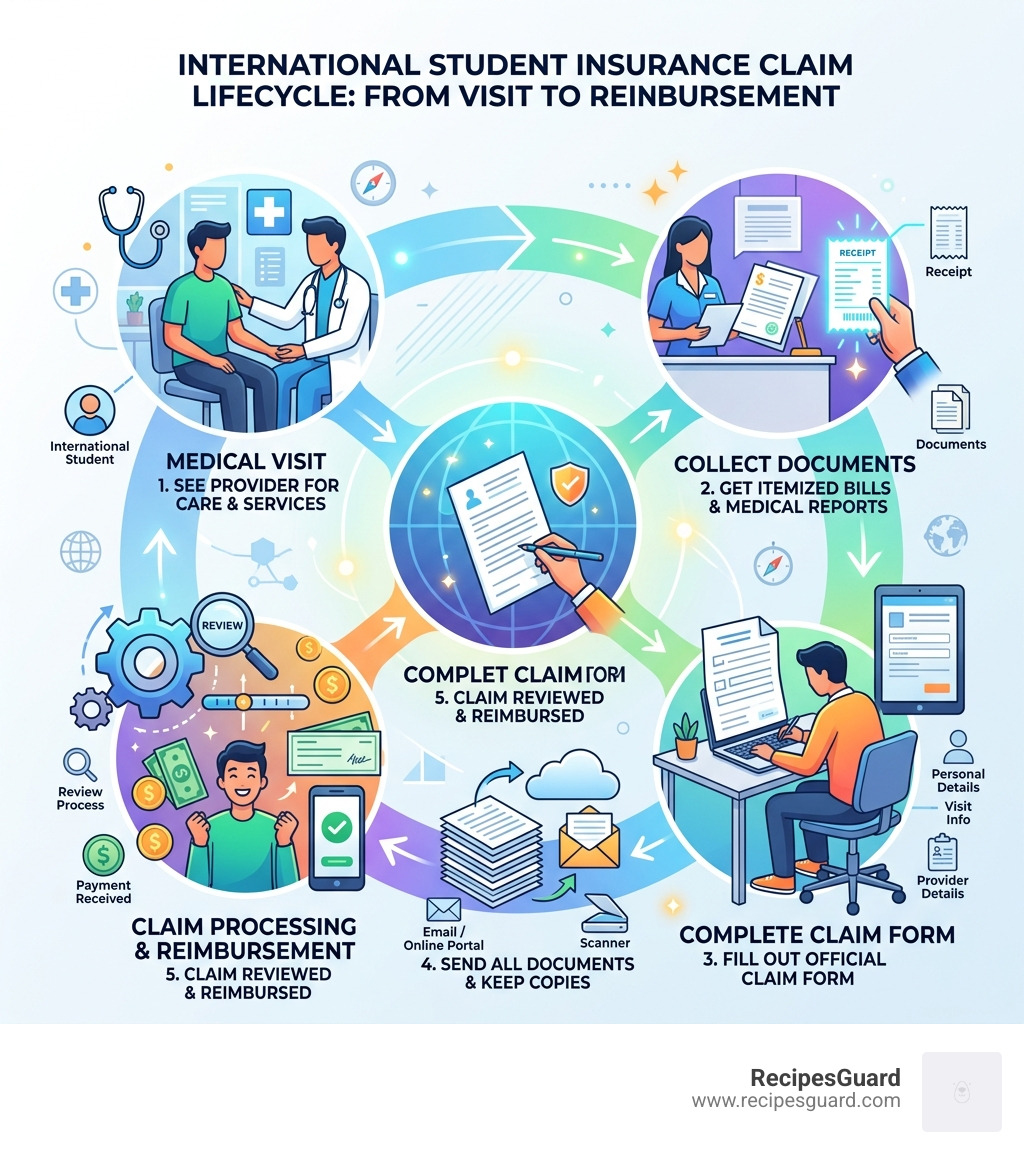
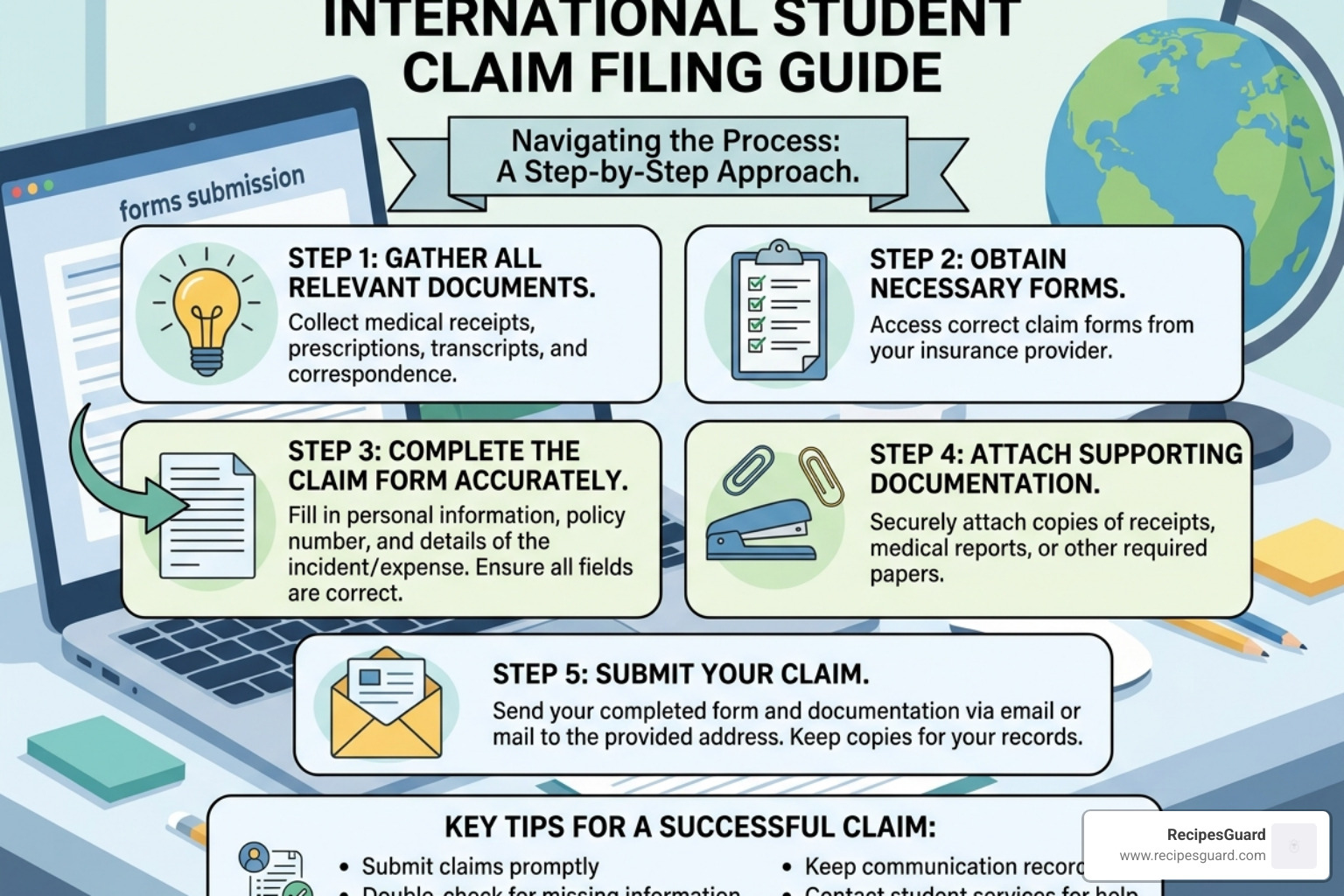
The international student claim filing guide you need comes down to five core steps:
- Collect itemized receipts and medical documents from your provider
- Complete your insurance claim form with personal, visit, and provider details
- Copy every document before you send anything
- Submit your claim by email, fax, or online portal within 90 days
- Follow up after 30 business days if you haven’t heard back
Getting sick or injured while studying abroad is stressful enough. Then you find out that showing your insurance card doesn’t always guarantee the provider will bill your insurer directly.
That’s when you need to file a claim yourself — and if you’ve never done it before, it can feel overwhelming.
The U.S. healthcare system alone works very differently from most students’ home countries. Terms like Explanation of Benefits, itemized bill, and in-network provider can be confusing for anyone new to the system.
The good news? The process is simpler than it looks. Most student insurance claims — when filed correctly with the right documents — are reimbursed within 10 to 30 business days.
This guide walks you through every step, from collecting the right paperwork to appealing a denied claim.
International student claim filing guide word guide:
Understanding the International Student Claim Filing Guide
At its heart, a health insurance claim is a formal request for payment sent to your insurance company. Think of it as telling your insurer, “Hey, I received medical care, and based on my policy, you need to pay for this.” While we all hope for a seamless experience where we never see a bill, the reality of studying in Australia or the U.S. often involves a bit of paperwork.
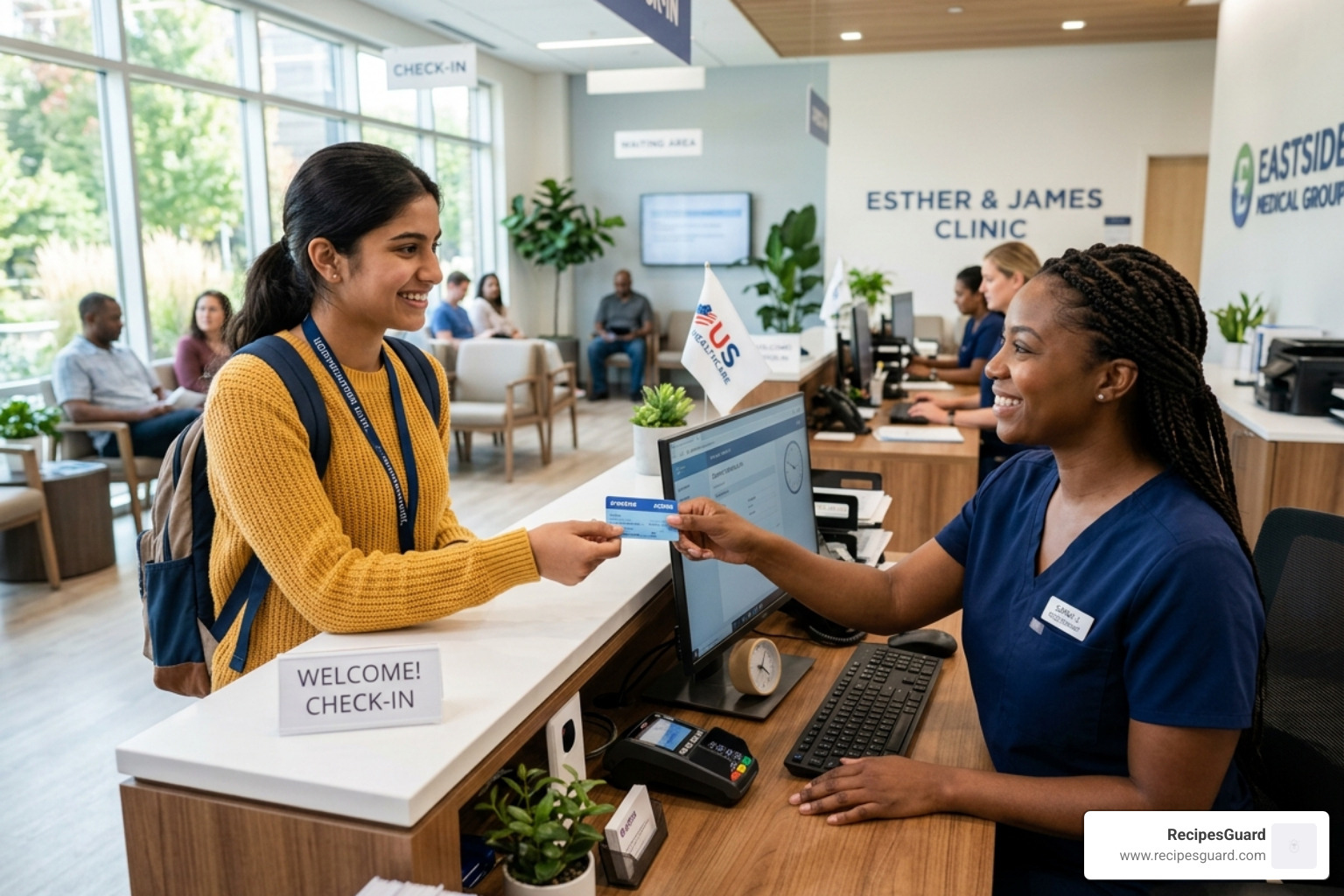
When you go to a clinic, the first thing you do is present your insurance ID card. This card is your golden ticket, but it doesn’t always mean the doctor will bill the insurance company directly. Whether or not you have to file a claim depends largely on whether the provider is “in-network” or “out-of-network.”
In-network providers have a pre-existing agreement with your insurance company to accept specific rates. Out-of-network providers do not, which often leads to higher costs and the need for you to pay upfront and seek reimbursement later. Understanding this distinction is the first step in The Ultimate Student Guide to Navigating Insurance Claims. If you find yourself holding a receipt instead of a “zero balance” statement, don’t panic. You just need to follow The Simple Student Tutorial for Filing Any Insurance Claim.
Using Your International Student Claim Filing Guide for In-Network Care
In an ideal world, you will always find a “Preferred Provider” or an in-network clinic. In Australia, many Overseas Student Health Cover (OSHC) providers have “direct billing” clinics. At these locations, you show your card, pay your “copayment” (the small portion you are responsible for, like $20 or $30), and the clinic sends the rest of the bill to the insurer.
This is the “Easy Mode” of healthcare. To ensure you stay in this lane, always use your insurance company’s online provider search tool before making an appointment. By choosing a doctor who already works with your insurer, you are Mastering the Student Medical Claim Process in 5 Easy Steps before you even walk through the clinic doors.
When to File a Reimbursement Claim Manually
Sometimes, life happens. You might be in a remote area, or your specialist might not accept direct billing. In these cases, you will face “out-of-pocket” expenses. This means you pay the full bill at the time of service.
To get your money back, you must “self-file.” This involves gathering your receipts and submitting a formal request. It’s a slightly longer path, but by following our international student claim filing guide, you can transition From Forms to Funds: A Student Guide to Insurance Reimbursement without the headache.
Essential Documentation for a Successful Claim
If there is one thing insurance companies love, it’s documentation. If there is one thing they hate, it’s a vague receipt that just says “Medical Service: $500.” To get reimbursed, you need an itemized bill.
An itemized bill is a detailed list of every single thing the doctor did. In the U.S., these are often called HCFA-1500 forms (for doctors) or UB-04 forms (for hospitals). In Australia, you’ll need a tax invoice that clearly shows the provider’s details and the services rendered.
Key details your insurer will look for include:
- ICD-10 Codes: These are international codes for your diagnosis (e.g., “J01.90” for an acute sinus infection).
- CPT Codes: These codes describe the procedure or treatment you received.
- Provider Tax ID: The legal identification number of the clinic or hospital.
Without these codes, your insurer won’t know if the treatment was medically necessary. For more details on what your specific school might require, you can check resources like Making a claim | International Student Services – McGill University. Also, keep The Essential List of Student Travel Insurance Forms handy if your claim involves travel-related mishaps.
Proof of Student Status and Visa Details
Because student insurance plans are specifically priced for students, the insurer needs to verify that you are actually enrolled in school. This is especially true for those on an F-1 or J-1 visa in the U.S., or a Subclass 500 visa in Australia.
You may be asked to provide:
- A copy of your I-20 form or CoE (Confirmation of Enrolment).
- A copy of your passport and visa page.
- Proof of full-time registration for the current semester.
Providing these upfront prevents the “We need more information” email that can delay your check by weeks. We cover these visa-specific nuances in The International Students Guide to Navigating an Insurance Claim Student Visa.
Avoiding Mistakes with Your International Student Claim Filing Guide
The fastest way to get a claim rejected is to make a silly mistake. We’ve seen it all: missing signatures, dates written in the wrong format (remember, May 2026 in the U.S. is 05/15/2026, but in Australia, it might be 15/05/2026!), and vague descriptions of the illness.
Always double-check that your member ID number is correct on every page. If you are claiming for an accident, be very specific about how, when, and where it happened. By being thorough, you are Claiming Medical Expenses as a Student Made Easy.
Step-by-Step Instructions for Submitting Your Claim
Once you have your mountain of paperwork, it’s time to send it off. Most modern insurers offer several ways to submit.
| Method | Speed | Reliability | Pro Tip |
|---|---|---|---|
| Online Portal | Fastest | High | Take clear photos; don’t use blurry scans. |
| Mobile App | Very Fast | High | Great for quick pharmacy receipts. |
| Fast | Medium | Request a “Read Receipt” if possible. | |
| Slow | Low | Always send via registered mail with tracking. |
For the quickest results, we recommend The Fast Track to Easy Online Student Claim Submission. It allows you to upload documents directly into the insurer’s system, often shaving a week off the processing time. If you prefer a more traditional route, follow The Ultimate Student Guide to Insurance Claim Steps to ensure nothing gets lost in the mail.
Reviewing and Copying Your Documents
Before you click “submit” or drop that envelope in the mail, make copies of everything. We cannot stress this enough. Documents get lost, emails go to spam, and servers crash.
Having a “paper trail” (even if it’s a digital folder on your laptop) is your safety net. If an insurer claims they never received your receipt, you can resend it in seconds. This habit is a cornerstone of learning How to Master the Student Travel Claim Process.
Following Up and Tracking Claim Status
Don’t just submit and forget. Most claims are processed within 30 business days. Mark your calendar for 30 days from the date of submission. If you haven’t received an update or a check by then, it’s time to follow up.
When you call, have your reference number or member ID ready. Keep a communication log: write down the date, the name of the person you spoke to, and what they told you. This proactive approach is what makes Your Overseas Student Claim Guide for Stress-Free Travel so effective.
Managing Denials and the Explanation of Benefits (EOB)
After your claim is processed, you will receive an Explanation of Benefits (EOB). This is NOT a bill. It is a document that explains what the insurance company paid and what (if anything) you still owe the doctor.
The EOB will show:
- Charged Amount: What the doctor billed.
- Allowed Amount: The maximum the insurer pays for that service.
- Deductible: The amount you must pay before insurance kicks in.
- Co-insurance: Your percentage of the cost.
If the EOB shows “Claim Denied,” don’t panic. Claims are often denied for simple reasons like a missing diagnosis code or because the insurer needs your medical history. Understanding Why Your Student Claim Might Get Rejected and How to Fix It is key to staying calm.
How to Appeal a Denied Claim
If you believe a claim was denied unfairly, you have the right to appeal. This usually involves writing a letter explaining why the service should be covered and providing additional evidence, such as a letter from your doctor.
In Australia, if you have issues with your OSHC provider, you can also look into resources provided by the Studying in Australia – Australian Taxation Office or the Private Health Insurance Ombudsman. An appeal is a formal process, so be sure to follow the insurer’s specific deadlines—usually within 60 to 180 days of the denial.
Frequently Asked Questions about Student Claims
How long does it take to process an international student claim?
Typically, you should expect a processing window of 10 to 30 business days. During peak times (like the start of a new semester in May 2026), it might take a bit longer. If you are also dealing with tax-related refunds, the Australia Tax Return Steps | Study in Australia – International Student guide can help you manage those separate timelines.
Do I need to file a claim for prescription medications?
Yes, if you pay for your medicine at the pharmacy, you will need to file a claim for reimbursement. You’ll need the pharmacy receipt (which is different from the cash register receipt) and a copy of the prescription. Most student plans cover a significant portion of prescription costs after a small copay.
What is the deadline for filing a claim in 2026?
Most policies have a 90-day filing limit from the date of service. If you wait longer than three months to submit your paperwork, the insurer can legally deny the claim simply for being late. As of May 2026, many insurers have moved to purely digital submissions to help students meet these deadlines more easily.
Conclusion
Navigating insurance as an international student can feel like learning a whole new language. However, by using this international student claim filing guide, you’ve already taken the biggest step toward financial literacy and peace of mind.
Remember:
- Always try to stay in-network.
- Get itemized bills with those all-important codes.
- Keep copies of everything.
- Follow up if you don’t hear back within 30 days.
At RecipesGuard, we are dedicated to making the lives of international students easier by providing clear, step-by-step tutorials for all your insurance needs. Whether you are studying in the sunny cities of Australia or elsewhere, we’ve got your back.
For More info about student claim services, visit our homepage and let us help you stay covered and stress-free!

My name is Bianca, and my journey into the world of fermentation and food safety began with a costly mistake. I once lost an entire season’s harvest of chili peppers because I relied on guesswork instead of science. That failure was my turning point.
