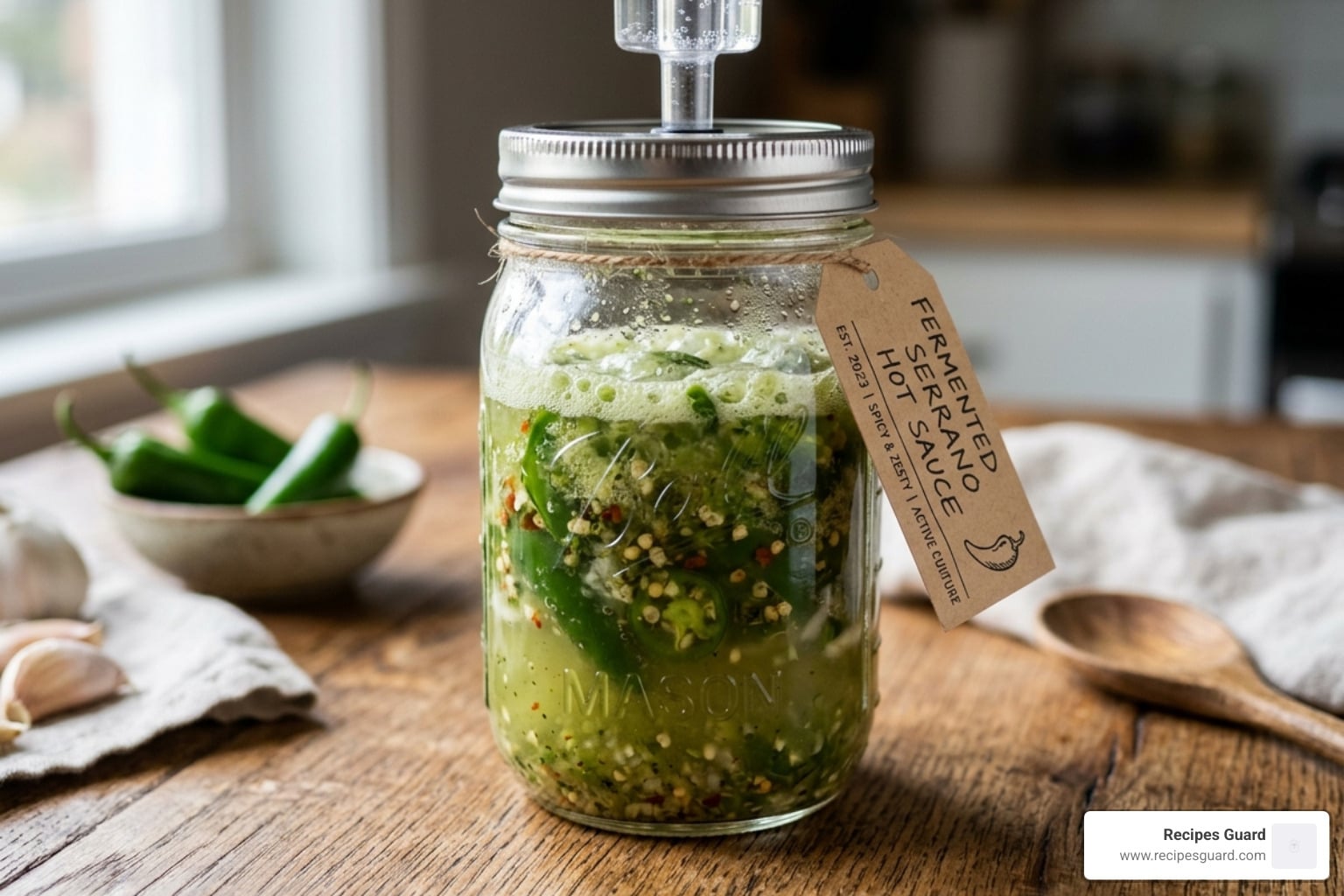
How to Make the Best Fermented Serrano Hot Sauce
What Is Fermented Serrano Hot Sauce (and Why You’ll Want to Make It)
Fermented serrano hot sauce is one of the most rewarding condiments you can make at home. It’s spicy, complex, and packed with living cultures that develop over days of natural lacto-fermentation.
Quick answer for the search intent:
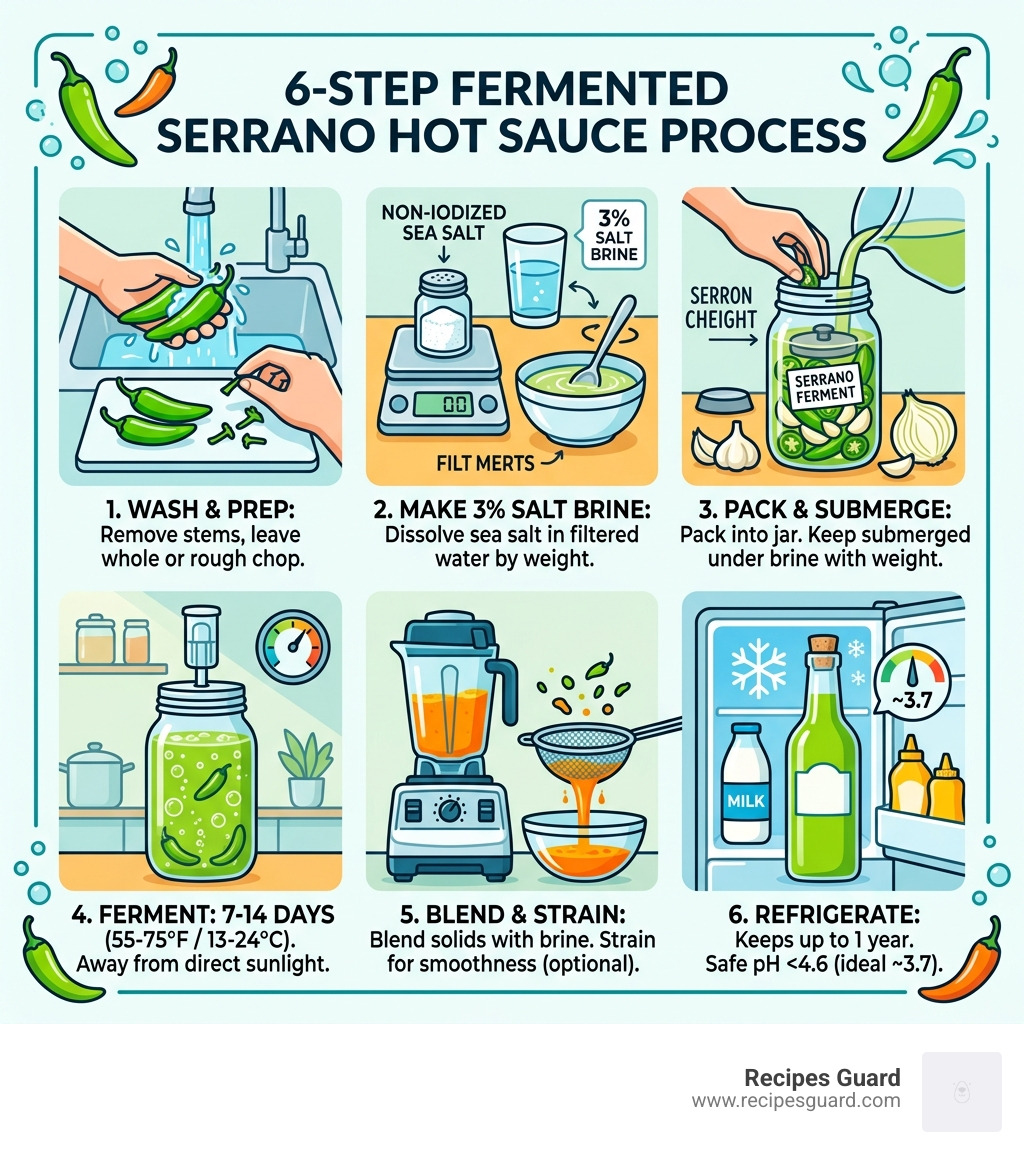
- Wash and prep serrano peppers (stems removed, optionally roasted)
- Make a 3% salt brine by weight using non-iodized salt and filtered water
- Pack peppers into a mason jar, keep fully submerged under brine
- Ferment for 7-14 days at 55-75°F (13-24°C), away from direct sunlight
- Blend with reserved brine, strain if desired, and refrigerate
- Keeps up to 1 year in the fridge at a safe pH of around 3.7
Serrano peppers range from 10,000 to 23,000 Scoville Heat Units — roughly three times hotter than the hottest jalapeño. Fermentation doesn’t just preserve that heat; it transforms it into something mellower, deeper, and far more interesting than any fresh or vinegar-based sauce can deliver.
The process is simple. The results are outstanding. And once you understand the basics, you can customize the flavor endlessly.
Why Ferment Serrano Peppers for Your Hot Sauce?
When we talk about hot sauce, most people think of the sharp, acidic bite of vinegar-based staples. While those have their place, fermented serrano hot sauce occupies a different culinary tier. By using the power of lactic acid bacteria (LAB), we are essentially “pre-digesting” the sugars in the peppers, which creates a complex array of flavor compounds that vinegar simply cannot replicate.
Serrano peppers are the ideal candidate for this process. Measuring between 10,000 and 23,000 Scoville Heat Units (SHU), they provide a significant “kick” without being as overwhelming as a habanero or a ghost pepper. During fermentation, the raw, “green” heat of the serrano is rounded out. The capsaicinoids—the compounds responsible for the heat—interact with the developing acids, resulting in a sauce that glows with a steady, warm heat rather than a sharp sting.
| Feature | Fresh Sauce | Vinegar-Based Sauce | Fermented Sauce |
|---|---|---|---|
| Flavor Profile | Bright, grassy, raw | Sharp, acidic, punchy | Complex, tangy, “funky,” deep |
| Shelf Life | 1-2 weeks (refrigerated) | 6-12 months | 1 year+ (refrigerated) |
| Probiotics | None | None (usually pasteurized) | High (living beneficial bacteria) |
| Heat Perception | Sharp and immediate | Acid-driven | Mellowed and lingering |
Beyond the flavor, there is the health aspect. According to Scientific research on the benefits of lacto-fermentation, the fermentation process increases the bioavailability of nutrients and introduces beneficial probiotics to your gut. At Recipes Guard, we believe that food preservation should be as good for your body as it is for your palate. If you are new to this world, explore our Fermented Recipes Category for more inspiration.
Essential Equipment and Ingredients for Success
To make a truly great fermented serrano hot sauce, you don’t need a laboratory, but you do need precision. Fermentation is a controlled biological process, and the right tools ensure that the “good” bacteria thrive while the “bad” microbes stay out.
The Gear
- Mason Jars: Wide-mouth quart jars are our go-to. They are easy to pack and easy to clean.
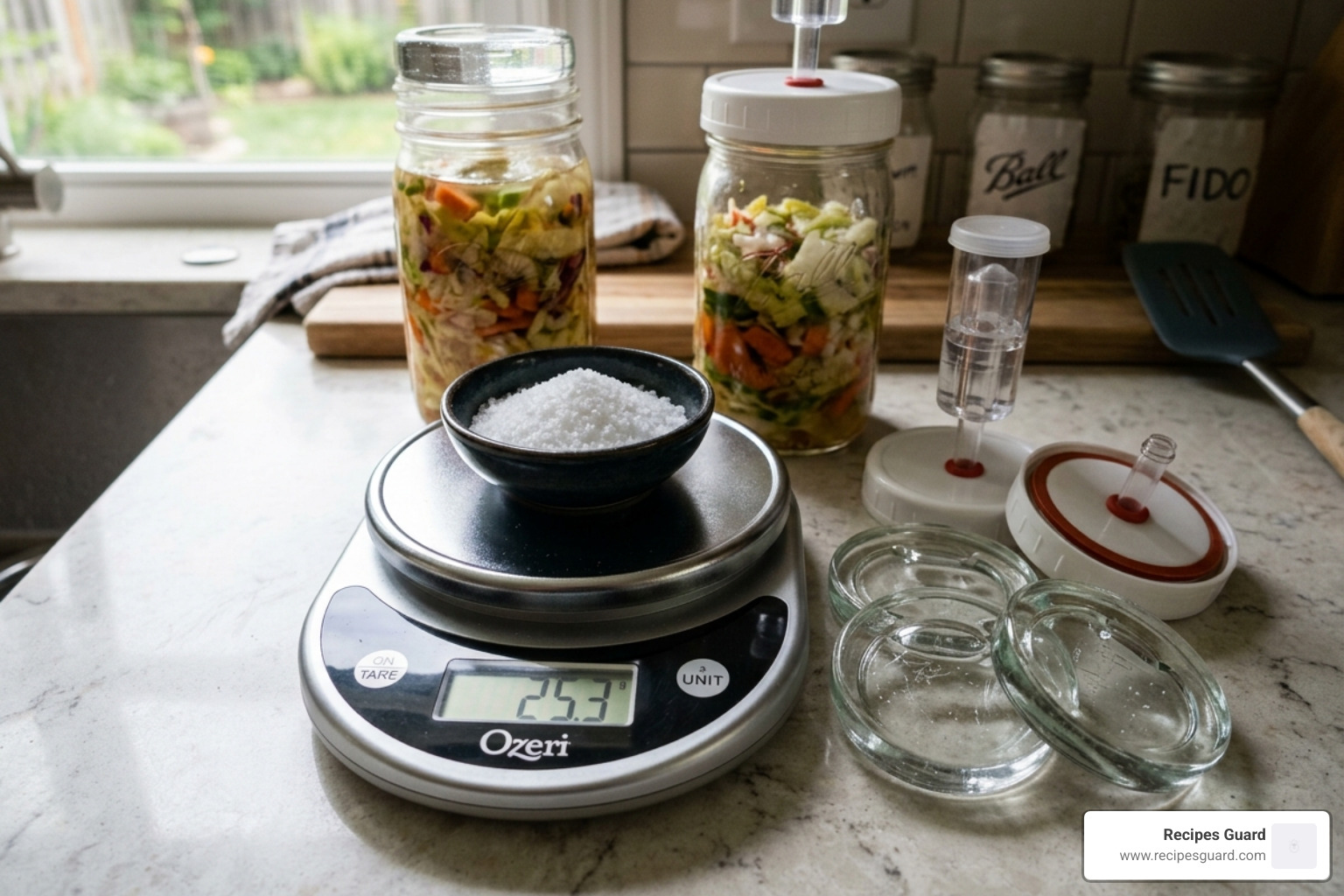
- Fermentation Weights: These are non-negotiable. Whether you use glass weights or a “Pickle Helix” spring, the goal is to keep every piece of pepper submerged. If it hits the air, it can grow mold.
- Airlock Lids: These allow carbon dioxide to escape while preventing oxygen from entering. This creates the anaerobic environment necessary for lacto-fermentation and prevents the need for “burping” the jar.
- Digital Scale: For a consistent 3% brine, you must weigh your ingredients in grams. Volume measurements (like tablespoons) are too variable depending on the grain size of your salt.
The Ingredients
- Serrano Peppers: Look for firm, vibrant peppers. You can use green ones for a classic “verde” style or wait for them to turn red for a slightly sweeter, fruitier sauce.
- Non-Iodized Sea Salt: Avoid table salt with iodine or anti-caking agents, as these can turn your brine cloudy or give the sauce a metallic aftertaste.
- Filtered Water: Chlorine in tap water can inhibit the growth of the very bacteria we want to encourage.
- Aromatics: Garlic cloves, white onion, and cumin seeds are classic additions that ferment beautifully alongside the peppers.
For a deeper dive into the mechanics of this process, check out our guide on Mastering the Art of Lacto-Fermented Hot Sauce.
Step-by-Step Guide to Making Fermented Serrano Hot Sauce
Ready to get started? This recipe yields approximately 17 oz of finished sauce from 1.5 lbs of peppers. In 2026 home cooking, this is the gold standard for a small-batch ferment. You can find more foundational tips in our Preserving Basics Category.
Preparing and Roasting the Peppers
While you can certainly ferment raw peppers for a bright, grassy flavor, we highly recommend fire-roasting at least a portion of them.
- Wash and Stem: Rinse your peppers thoroughly. Remove the woody stems. You can leave the peppers whole or slice them lengthwise to expose the interior to the brine.
- The Roast: Place about 20 serrano peppers on a cast-iron skillet or under a broiler. Roast until the skins are blistered and charred. This adds a smoky depth that is absolutely addictive.
- Cooling and Microbes: Let the roasted peppers cool. Important Tip: Heat kills the natural bacteria on the pepper skins. If you roast all your peppers, you might stall the fermentation. Always include a few raw peppers or some fresh garlic to ensure there are enough “starter” microbes to get the party going.
- Pack the Jar: Place your garlic, onions, and cumin seeds at the bottom, then pack the serranos tightly on top. Leave about 1-2 inches of headspace at the top of the jar.
Calculating the Perfect Brine for Fermented Serrano Hot Sauce
The “magic number” for hot sauce is a 3% salt concentration. This is high enough to ward off spoilage but low enough to allow the lactic acid bacteria to flourish.
How to calculate it accurately:
- Place your jar (filled with peppers and aromatics) on your digital scale and tare it to zero.
- Pour filtered water into the jar until the peppers are covered.
- Note the total weight of the water and the ingredients in grams.
- Multiply that number by 0.03. For example, if your total weight is 870g, you need 26.1g of salt (870 x 0.03 = 26.1).
- Pour the water back out into a bowl, whisk in the calculated salt until dissolved, and pour the brine back into the jar.
- Place your fermentation weight on top to ensure everything is submerged.
Monitoring and Troubleshooting the Fermentation Process
Once the jar is sealed with an airlock, the biological transformation begins. For the first 24-48 hours, you might not see much. But soon, the brine will turn cloudy, and tiny bubbles will begin to rise to the surface. This is a sign that the bacteria are consuming the sugars and releasing CO2.
Ideal fermentation happens between 55-75°F (13-24°C). If it’s too cold, the process will be sluggish; if it’s too hot, the peppers can become mushy or develop “off” flavors. We recommend a duration of 7 to 14 days, though some enthusiasts let their ferments go for a month or more for maximum “funk.”
For more on managing the unique environment of a ferment, read Don’t Be Afraid of the Funk: With This Easy Fermented Garlic Recipe.
Recognizing Successful Fermentation and Handling Kahm Yeast
The most common concern for beginners is seeing a white film on the surface of the brine. In most cases, this is Kahm yeast. It is a non-pathogenic yeast that forms when the pH drops and the sugars are depleted. It isn’t harmful, but it can impart a soapy or overly sour taste if left too long. Simply scrape it off and ensure your weights are keeping the vegetables submerged.
Signs of Success:
- Cloudy Brine: This is a hallmark of active lactic acid bacteria.
- Acidic Aroma: It should smell tangy and bright, similar to a pickle or sauerkraut.
- pH Level: If you have a pH meter, your target is 3.7 or below. The FDA considers any “acidified food” safe if the pH is below 4.6, so 3.7 gives us a healthy margin of safety.
When to Worry: If you see fuzzy growth that is green, black, or pink, that is mold. Mold requires oxygen to grow, which is why keeping the peppers submerged is the most important step. If you find mold, we recommend discarding the batch and starting over—safety first!
Finishing, Customizing, and Storing Your Sauce
After 10 days, taste the brine. If it has a pleasant tang and the peppers have softened, you are ready to finish the sauce.
- Blend: Pour the contents of the jar (peppers and brine) into a high-speed blender. Start with half the brine and add more until you reach your desired consistency.
- Strain (Optional): For a thin, “Louisiana-style” sauce, pass the mixture through a fine-mesh sieve. If you prefer a thicker, “Sriracha-style” sauce, keep the pulp.
- Repurpose the Pulp: If you do strain the sauce, don’t throw away the solids! You can dehydrate the pulp and grind it into a fermented pepper salt that is incredible on popcorn or grilled meats.
- Storage: Transfer the sauce to sterilized glass bottles. Store them in the refrigerator. Because of the high acidity, fermented serrano hot sauce can last for up to a year in the fridge.
For more storage tips, see our guide: Safety First: A Guide to Preserving Fermented Foods.
Customizing the Flavor of Your Fermented Serrano Hot Sauce
One of the best parts of making your own sauce is the ability to tweak the flavor profile. Here are a few of our favorite additions to stir in after fermentation but before the final blend:
- The “Tequila Twist”: Add 1-2 tablespoons of reposado tequila and a squeeze of fresh lime juice for a vibrant, Mexican-inspired sauce.
- The Sweetener: A teaspoon of honey or agave can balance the intense acidity of a long ferment.
- The Vinegar Punch: If you miss that classic sharp bite, blend in 1/4 cup of apple cider vinegar. This also helps lower the pH even further for long-term stability.
- Heat Scaling: If you want more fire, swap 5 of the serranos for habaneros. If you want it milder, use half jalapeños and half serranos.
Frequently Asked Questions
How spicy is fermented serrano hot sauce compared to jalapeño?
Serrano peppers are significantly hotter than jalapeños. While a jalapeño usually tops out at 8,000 SHU, a serrano can reach 23,000 SHU. However, the fermentation process tends to “mellow” the initial sting, replacing it with a slow-building, savory heat.
Why should I avoid canning my fermented hot sauce?
Canning involves high heat (boiling water baths), which kills the beneficial probiotic bacteria created during fermentation. The beauty of a fermented sauce is that it is “alive.” Because the pH is naturally low (around 3.7), the sauce is shelf-stable in the refrigerator without the need for heat processing.
How do I know if my ferment has gone bad?
Trust your nose. A healthy ferment smells sour, tangy, and “pickley.” A bad ferment will smell putrid, like rotting garbage or sulfur. Additionally, any fuzzy mold (especially dark colors) is a sign to toss it. Kahm yeast (flat, white, non-fuzzy) is fine to scrape off.
Conclusion
Mastering the art of fermented serrano hot sauce is a journey into the heart of food preservation. It’s a process that rewards patience with a depth of flavor that store-bought sauces simply can’t match. By understanding the science of the 3% brine and the importance of an anaerobic environment, you can safely turn a garden harvest into a year-long supply of spicy, probiotic goodness.
At Recipes Guard, we are dedicated to helping you rediscover the “funk” and the flavor of traditional preservation. Whether you’re fire-roasting your peppers for smoke or adding a splash of tequila for a modern twist, your kitchen is now a laboratory of taste.
Ready to start your next batch? Visit RecipesGuard Home for more guides, or check out our Quick and Easy Pickled Vegetables for Every Meal to keep the fermentation momentum going!