
How to File a Student Accident Claim Without Tripping
What to Do After a Student Accident: A Quick Claims Guide
The student accident claim steps you need to follow after an injury at school can feel overwhelming — especially if you’ve never dealt with insurance paperwork before.
Here’s a quick overview so you know what to expect:
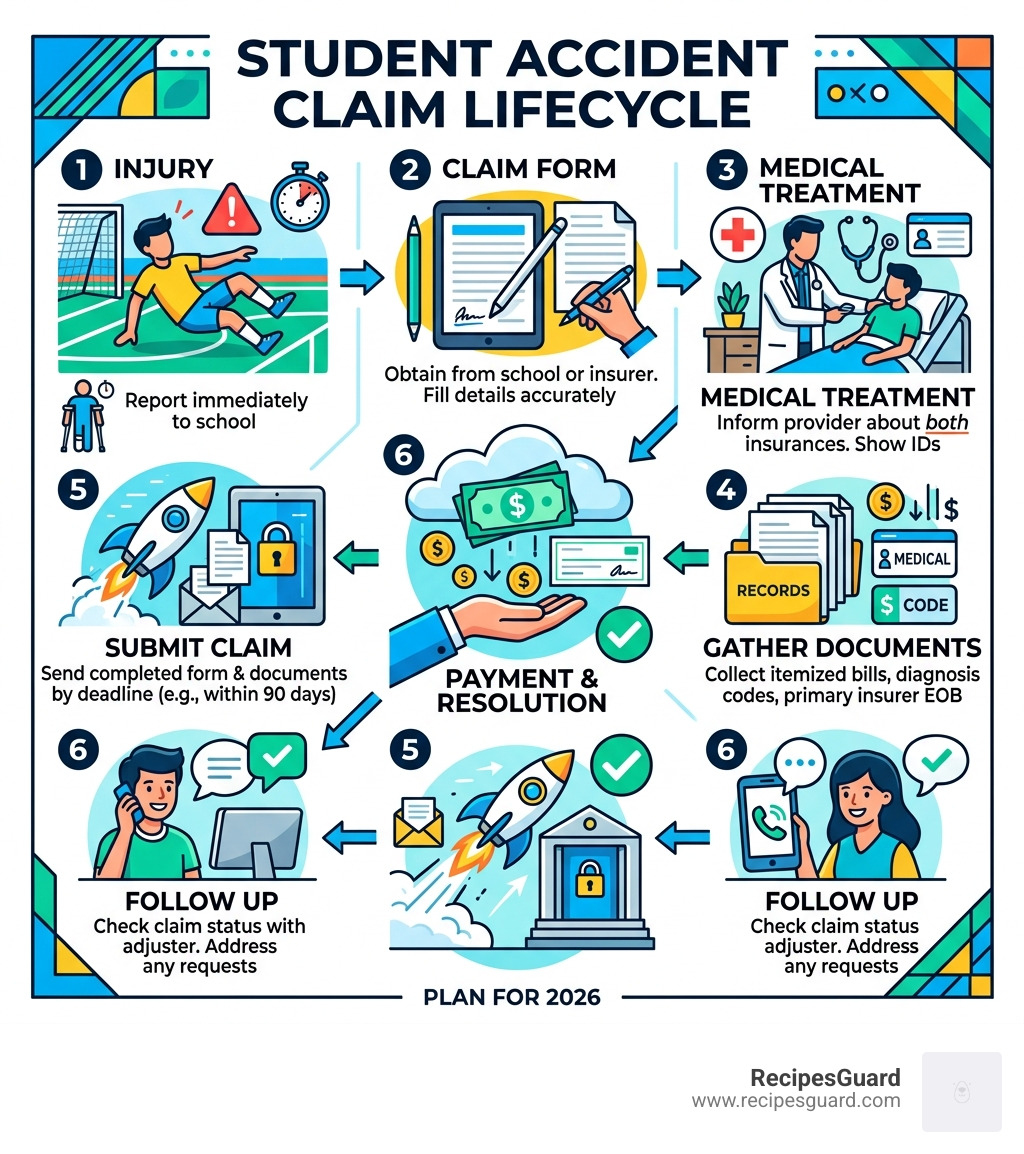
- Report the accident to the school as soon as possible (most policies require notice within 60-90 days)
- Get a claim form from the school or insurer
- Seek medical treatment and inform providers of both your primary and student accident insurance details
- Gather documents — itemized bills, diagnosis codes, and Explanation of Benefits (EOB) from your primary insurer
- Submit the completed claim form with all supporting documents within the required deadline (typically 90 days from the date of injury)
- Follow up with the insurance adjuster until the claim is resolved
These steps apply whether you’re a K-12 student, a college student, or an international student studying abroad.
A student gets hurt during a school sports game. An ambulance ride, an ER visit, and a follow-up appointment later — and suddenly there’s a stack of medical bills with no clear path forward. Sound familiar?
Student accident insurance exists to act as a financial safety net for exactly these moments. It typically works as secondary (or “excess”) coverage, meaning it steps in after your primary health insurance pays its share — covering leftover costs like co-pays, deductibles, and coinsurance.
But the coverage only kicks in if you file correctly and on time. Miss a deadline or skip a required document, and your claim could be delayed or denied entirely.
This guide walks you through every step clearly and simply, so you don’t leave money on the table.
Student accident claim steps glossary:
- file travel insurance claim
- student health coverage
- university insurance coverage
Understanding Student Accident Insurance Coverage
Before we dive into the nitty-gritty of the paperwork, we need to understand what this insurance actually does. In Australia, schools often carry student accident insurance to mitigate risks and provide peace of mind for families. Think of it as a backup plan that catches the costs your regular Medicare or private health fund might drop.
Most of these policies are secondary insurance. This means if you have private health cover, you must use that first. The student accident policy then covers the “excess” benefits—the gap that’s left over.
When are you covered?
Coverage isn’t just for when a student is sitting at a desk. It typically triggers during:
- Normal school hours: Accidents on the playground or in the classroom.
- Sports injuries: School-sanctioned games and supervised training sessions.
- Field trips: Excursions away from the school grounds.
- Work placements: Vocational training or work experience organized by the school.
For a deeper dive into the “whoops” moments of student life, check out The Klutzs Guide To Student Accident Medical Claims/.
K-12 vs. University Claims
The process can look slightly different depending on the level of education. In New South Wales and other parts of Australia, schools have specific protocols for Accident reports – preparation and use in school.
| Feature | K-12 Process | College/University Process |
|---|---|---|
| Initiation | Parent usually starts the claim. | Student often initiates with Risk Management. |
| Validation | School principal or admin must sign off. | Campus staff or department head validates. |
| Primary Contact | School office or registrar. | Risk & Insurance office. |
| Form Source | Usually available at the school front desk. | Often downloaded from the student portal. |
Essential Student Accident Claim Steps for Parents and Students
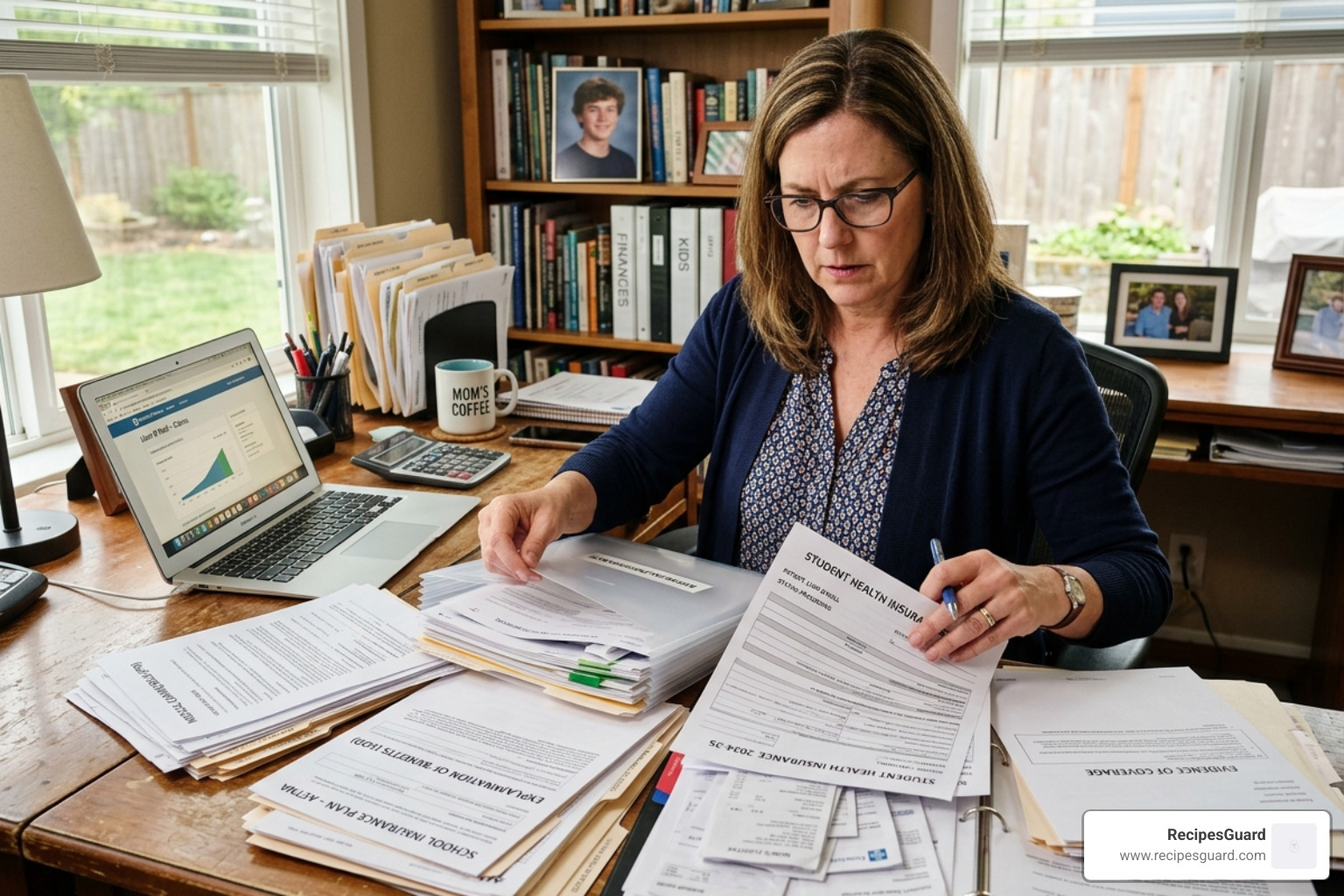
When an accident happens, your first instinct is (rightfully) to focus on the student’s health. However, once the dust settles, you need to act fast to ensure the financial side is handled. Following the correct student accident claim steps ensures you don’t end up paying for a school-related injury out of your own pocket.
Step 1: Immediate Reporting
Don’t wait! You should report the injury to the school authorities immediately. Most policies require the company to be notified within 60 days, but some Australian providers prefer notice within 30 days. An official incident report created by the school is often the primary piece of evidence used to validate your claim.
Step 2: Obtain and Complete the Claim Form
You can usually File a Claim – Student Accident Insurance by requesting a form directly from the school’s administration office.
- For Minors: A parent or legal guardian must sign the form.
- Validation: A school representative (like a coach or principal) must often sign a section of the form to confirm the accident happened during a sanctioned activity.
Step 3: Seek Treatment and Notify Providers
When you visit the doctor or hospital, tell them this is a school-related accident. Provide them with your primary insurance details AND the student accident insurance information. This helps the billing department code the invoices correctly from the start. For more tips on getting paid, see The Step By Step Guide To Getting Your Injury Claim Paid/.
Documentation and Deadlines You Can’t Miss
Insurance companies love deadlines. If you miss one, they have a legal reason to say “no thanks” to your claim. In May 2026, the standard industry timelines remain strict:
- The 30-Day Expense Rule: The first medical expense for the injury must typically be incurred no later than 30 days after the accident.
- The 90-Day Filing Limit: You generally have 90 days from the date of the injury to submit your initial claim form.
- The 180-Day EOB Window: If you are waiting for an Explanation of Benefits (EOB) from your primary insurer, you usually have 180 days from the date of treatment to get that to the accident insurer.
Gathering Paperwork for Student Accident Claim Steps
To keep your claim moving, you’ll need a “paper trail.” We recommend keeping a dedicated folder for the following:
- Itemized Bills: You need more than just a receipt. You need the official forms (often called CMS1500 for doctors or UB04 for hospitals) that include the provider’s Tax ID, diagnosis codes, and procedure codes.
- Attending Physician Statement: A form filled out by the doctor describing the nature of the injury.
- Other Insurance Questionnaire: Even if you don’t have other insurance, you must complete this form to prove it.
- Dental Claim Forms: If the accident involved teeth, there is usually a specific dental version of the claim form. See How to Claim for specific dental requirements.

If you’re a bit of a risk-taker, you might find The Adrenaline Junkies Guide To Filing An Injury Claim/ helpful for managing the aftermath of sports mishaps.
Navigating the Secondary Insurance Coordination Process
This is where many people get “tripped up.” Because student accident insurance is secondary, it coordinates with your primary health insurance.
When your primary insurer processes a bill, they send you an Explanation of Benefits (EOB). This document shows what they paid and what you still owe (your “out-of-pocket” costs). You must send this EOB to the student accident insurer so they know exactly what balance is left for them to pay.
Dealing with Balance Billing
If you receive a bill from a medical provider for a balance, don’t panic. Call the provider and ensure they have the secondary insurance information on file. Sometimes, providers only bill the primary insurance and then send the rest to the patient, forgetting there is a secondary policy in place.
For those studying away from home, Your Essential Guide To Overseas Student Accident Claims/ covers how this works across borders. You can also see how specific institutions handle this at Student Accident Process Steps | Risk Management | Austin Community College District.
Avoiding Delays in Your Student Accident Claim Steps
We’ve seen many claims get stuck in “insurance limbo.” To avoid this, watch out for these common pitfalls:
- Missing Signatures: Ensure both the parent and the school official have signed the form.
- Incomplete Codes: If a bill is missing a diagnosis or procedure code, the insurer can’t process it.
- Lack of Communication: Keep in touch with your claims adjuster. If they ask for a document, send it immediately.
If you are traveling when the accident occurs, check out How To Handle A Travel Injury Without Breaking The Bank/.
Frequently Asked Questions about Student Injuries
What are common exclusions in student accident policies?
While these policies are broad, they don’t cover everything. Common exclusions include:
- High-risk sports: Scuba diving, motor sports, and sometimes competitive “licensed” sports aren’t covered unless specifically added.
- Pre-existing conditions: Injuries that existed before the policy started.
- Non-sanctioned activities: If a student gets hurt at a private party that wasn’t a school event, the policy won’t trigger.
- Intentional acts: Self-inflicted injuries are excluded.
Is the insurance primary or secondary?
In almost all cases involving Australian schools, it is secondary (excess) coverage. It is designed to reimburse you for out-of-pocket expenses like deductibles and co-pays after your primary health fund has paid its portion.
What if the accident happened during a summer session?
Good news! Most annual policies cover students year-round, including supervised summer school activities and sanctioned summer sports camps. As long as the event is school-supervised, you should be able to follow the standard student accident claim steps.
Conclusion
Filing an insurance claim isn’t anyone’s idea of a fun afternoon, but following these student accident claim steps can save you thousands of dollars in medical debt. By reporting the incident early, gathering itemized bills, and coordinating with your primary insurance, you ensure that the “financial safety net” actually works when you need it.
At RecipesGuard, we specialize in making these complex processes simple for students and parents across Australia. Before you hit “submit” on that claim form, do a final check:
- Did the school sign the form?
- Do you have the itemized bills (not just receipts)?
- Are you within the 90-day filing window?
For more step-by-step tutorials and insurance advice, Visit RecipesGuard for more student insurance guides. We are here to help you navigate the paperwork so you can focus on getting back to class!

My name is Bianca, and my journey into the world of fermentation and food safety began with a costly mistake. I once lost an entire season’s harvest of chili peppers because I relied on guesswork instead of science. That failure was my turning point.
