
Why Every International Student Needs to Understand a Repatriation Flight Claim
A repatriation flight claim student situation can happen fast — a serious accident, a sudden illness, or a family tragedy abroad can force you to navigate a complex insurance process at the worst possible moment.
Here is a quick overview of how a student repatriation flight claim works:
- Emergency occurs — illness, injury, or death while studying abroad
- Contact your insurer or assistance provider immediately — most have a 24/7 helpline
- Get medical authorization — a physician must confirm the medical necessity of transport
- Insurer arranges or approves transport — either medical evacuation (living) or return of remains
- Submit documentation — medical reports, receipts, boarding passes, and claim forms
- Receive reimbursement or direct payment — depending on your policy terms
The stakes are high. A single medical evacuation can cost $100,000 or more out of pocket. Yet repatriation coverage remains one of the most overlooked parts of any student insurance plan.
More than 300,000 American students study abroad each year — and most of them don’t think about what happens if something goes seriously wrong. The good news is that with the right coverage and a clear process, a repatriation claim doesn’t have to be overwhelming.
This guide walks you through everything: what repatriation coverage actually is, how to file a claim step by step, what documents you need, and how to avoid the mistakes that get claims denied.
Repatriation flight claim student terms simplified:
What is Repatriation Coverage for International Students?
When we talk about repatriation in the context of international education, we are essentially talking about the “way home” when things go sideways. In the insurance world, repatriation coverage is a specialized benefit designed to cover the astronomical expenses of transporting a student back to their home country for medical reasons or in the event of a tragedy.
It is more than just a plane ticket. The Importance of Repatriation Coverage in International Student Insurance lies in its ability to provide logistical support during a crisis. If you are injured in a remote area or a country where the local medical facilities cannot provide the care you need, this coverage kicks in to ensure you are moved to a facility that can—or sent back home where you have the support of your family and familiar medical professionals.
According to Repatriation guidelines, this benefit is often categorized under “Accidents & Emergencies.” It is a safety net that ensures that no matter where you are in the world, you aren’t stuck there if a medical emergency makes it impossible to continue your studies.

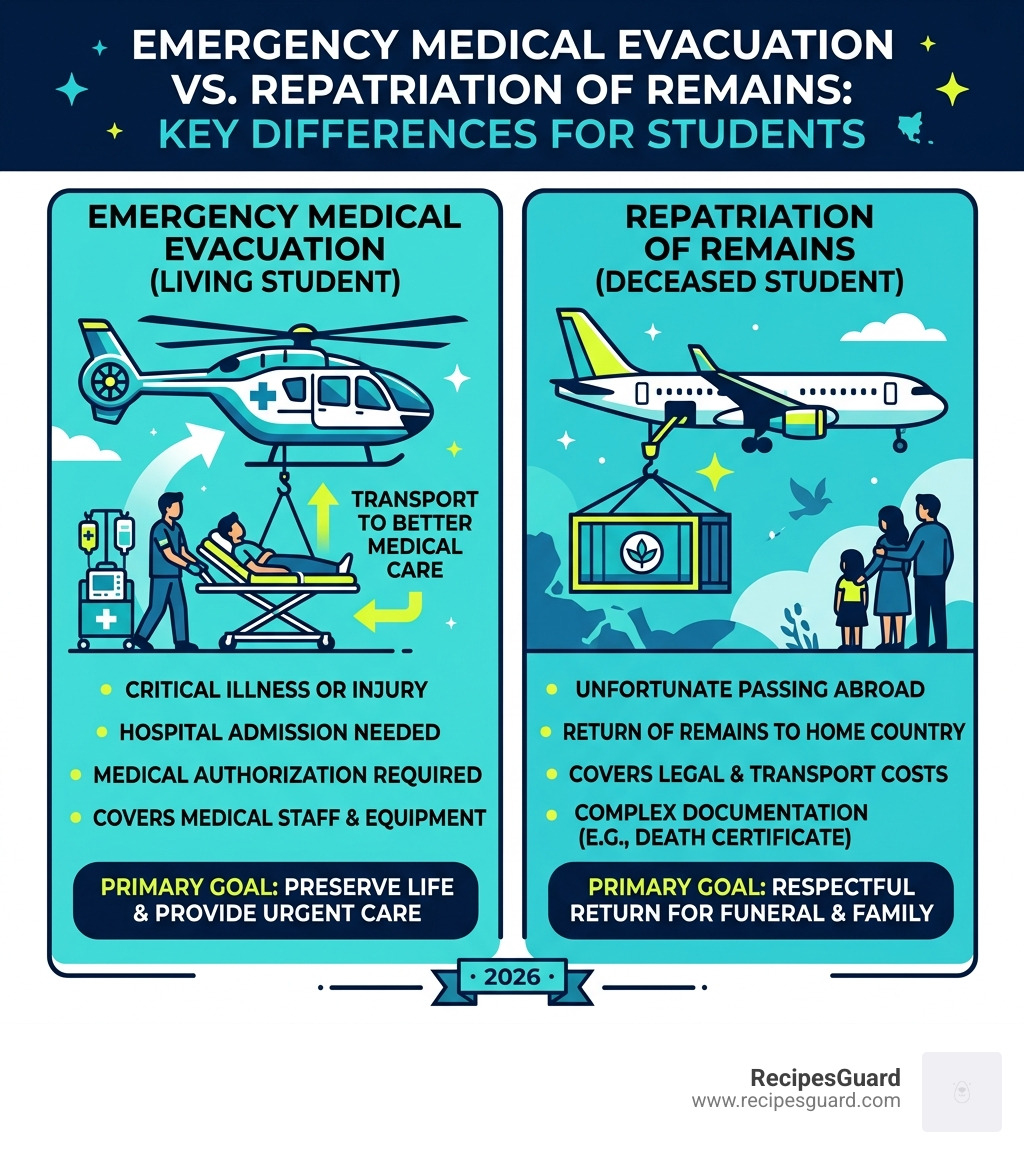
Emergency Medical Evacuation vs. Return of Remains
It’s a bit of a heavy topic, but we need to distinguish between the two main types of repatriation benefits. At RecipesGuard, we want you to be prepared for both scenarios.
- Emergency Medical Evacuation: This is for the living. If you suffer a serious injury or illness, the insurance company coordinates your transport to the nearest qualified medical facility. In some cases, once you are stabilized, they will arrange for you to be flown back to your home country to continue recovery. As we noted in The International Student Guide to Emergency Claims and Evacuations, medical evacuations can easily exceed $100,000, especially if a private medical jet or specialized equipment is required.
- Repatriation of Remains (Return of Mortal Remains): This covers the costs associated with returning a student’s body to their home country if they pass away while abroad. This typically includes embalming, funeral director services, required legal documentation, and air transportation. While it is a somber thought, having this coverage (which often has a limit of $25,000 to $50,000) prevents a grieving family from facing a massive financial burden on top of their loss.
Why Standalone Plans Differ from Comprehensive Insurance
You might be wondering if you should get a standalone evacuation plan or just stick with comprehensive travel medical insurance. We’ve broken down the differences in the table below to help you decide.
| Feature | Standalone Evacuation Plan | Comprehensive Student Insurance |
|---|---|---|
| Primary Focus | Transport & Repatriation only | Medical, Baggage, Travel, & Repatriation |
| Medical Coverage | None (requires separate major medical) | Included (doctor visits, hospital stays) |
| Typical Cost | $85 – $100 per year | 5% to 10% of total trip cost |
| Visa Compliance | Often meets J1/F1 requirements | Usually meets all visa requirements |
| Best For | Students with existing high-quality health care | Students who need all-in-one protection |
As we discuss in Everything You Need for a Student Medical Evacuation Claim, standalone plans are often used by students who already have a major medical plan (like a university-provided health plan) but need to “top up” their coverage to meet specific visa requirements. These plans are surprisingly affordable, with annual premiums for a 20-year-old student sometimes starting as low as $85 for a $50,000 limit.
Filing a Repatriation Flight Claim Student: A Step-by-Step Guide
If you find yourself in a situation where you need to file a repatriation flight claim student, the most important thing to remember is: Do not book anything yourself without talking to the insurance company first.
Here is our step-by-step breakdown of the process:
- Immediate Notification: Call the 24-hour emergency assistance number on your insurance card. Most providers, like On Call International or Trawick, require you to contact them before any arrangements are made. They often act as the “command center,” coordinating with doctors and airlines.
- Medical Monitoring: Once you call, the assistance provider will begin medical monitoring. They will speak with the local attending physician to determine if evacuation is medically necessary.
- Authorization: The insurer must officially authorize the flight. If you fly home on your own and try to claim it later, there is a very high chance the claim will be denied because it wasn’t “pre-approved” as a medical necessity.
- Logistics Coordination: The insurance company usually handles the booking of the medical flight or the upgrade to business class (if you need to keep your leg elevated, for example).
- Submit the Formal Claim: Even if they arranged the flight, you will still need to fill out a claim form to close the file and ensure any out-of-pocket incidentals are reimbursed. Check out How to Manage the Medical Evacuation Claim Process for more details on the paperwork side.
Essential Documentation for Your Repatriation Flight Claim Student
Documentation is the “homework” of the insurance world. If you don’t have the right papers, the claim won’t pass. To ensure a successful repatriation flight claim student, you will generally need:
- Physician’s Statement: A written report from the doctor abroad explaining your diagnosis and why you are “unfit to travel” by standard means or why you must return home for treatment.
- Original Receipts: If you had to pay for any transport-related costs upfront, keep every single receipt.
- Proof of Enrollment: A letter from your university confirming you were a full-time student at the time of the incident.
- Itinerary and Boarding Passes: Even for the flight that was interrupted.
- Policy Certificate: Have your insurance ID and policy number ready.
We’ve seen many students struggle because they threw away a “useless” receipt at the airport. Don’t be that student! As we explain in The Great Escape Filing an Emergency Evacuation Claim as a Student, digital copies are your best friend. Scan everything.
Common Pitfalls When Submitting a Repatriation Flight Claim Student
Why do claims get rejected? Usually, it’s one of these three culprits:
- Pre-existing Conditions: If you are being repatriated for a condition you had before you bought the insurance, and you didn’t have a “waiver” for it, the claim might be denied. Most student plans have a 6 to 12-month look-back period.
- Alcohol and Substances: This is a big one. If your injury occurred while you were under the influence of alcohol or non-prescription drugs, almost every insurance policy will exclude the claim.
- Unauthorized Travel: If you decided to take a weekend trip to a country that is currently under a government travel warning, your repatriation coverage might be voided for that specific leg of the trip.
In Flight Cancelled Here is Your Student Insurance Survival Guide, we emphasize that reading the “exclusions” section of your policy is just as important as reading the “benefits” section.

Costs and Visa Compliance for F1 and J1 Holders
For students heading to the United States, insurance isn’t just a good idea—it’s often a legal requirement. F1 and J1 visa holders must meet specific standards set by the U.S. Department of State.
Specifically, J1 visa holders are required to have:
- Medical evacuation coverage of at least $50,000.
- Repatriation of remains coverage of at least $25,000.
If your plan doesn’t meet these minimums, you could be in violation of your visa status. Fortunately, many plans designed for international students automatically include these limits. As noted in Am I covered for Repatriation? – Fast Cover FAQs, it is vital to verify that your specific policy aligns with these government mandates before you leave home.
Eligibility and Age Factors
Most student repatriation plans are designed for non-citizens of the host country who are between the ages of 12 and 64. However, some specialized plans extend eligibility up to age 90, though the premiums increase significantly as you get older.
For a typical 20-year-old student, the cost of adding a repatriation benefit to a health plan is quite low—sometimes as little as $6 per month. This covers F1, J1, and M1 visa holders, as well as those on OPT (Optional Practical Training). If you’re a student in Australia, your Overseas Student Health Cover (OSHC) is the primary medical plan, but you may need a supplemental travel policy to cover the full cost of a flight home, as OSHC focuses primarily on in-hospital costs within Australia. We discuss this further in The Ultimate Student Guide to Navigating Insurance Claims.
Additional Assistance: Family Reunion and Bedside Visit
One of the best “hidden” benefits in a repatriation flight claim student policy is the Emergency Reunion or Bedside Visit benefit.
If you are hospitalized for more than 3 to 7 days (depending on the policy), the insurance company will often pay for a family member to fly to your bedside. This typically includes:
- A round-trip economy airfare for one person.
- A daily allowance for their meals and hotel (often up to $100-$150/day).
- A total benefit limit around $2,500 to $5,000.
This is incredibly helpful because it ensures you aren’t alone during a medical crisis. We cover the logistics of these “reunion” claims in our guide, From Ambulances to Rx Navigating Emergency Claims Overseas.
University and Government Travel Reimbursement Programs
Sometimes, the “claim” isn’t with an insurance company, but with your university or a government grant program.
For example, some Caribbean students attending the University of the West Indies (UWI) are eligible for a Eligibility of Refund of Passage. This is essentially a reimbursement for their flight to and from the university at the start and end of their degree.
Similarly, some elite colleges like Swarthmore provide a Free Round Trip Home for students on financial aid. These aren’t “insurance claims” in the traditional sense, but they require similar documentation—receipts, itineraries, and proof of academic standing.
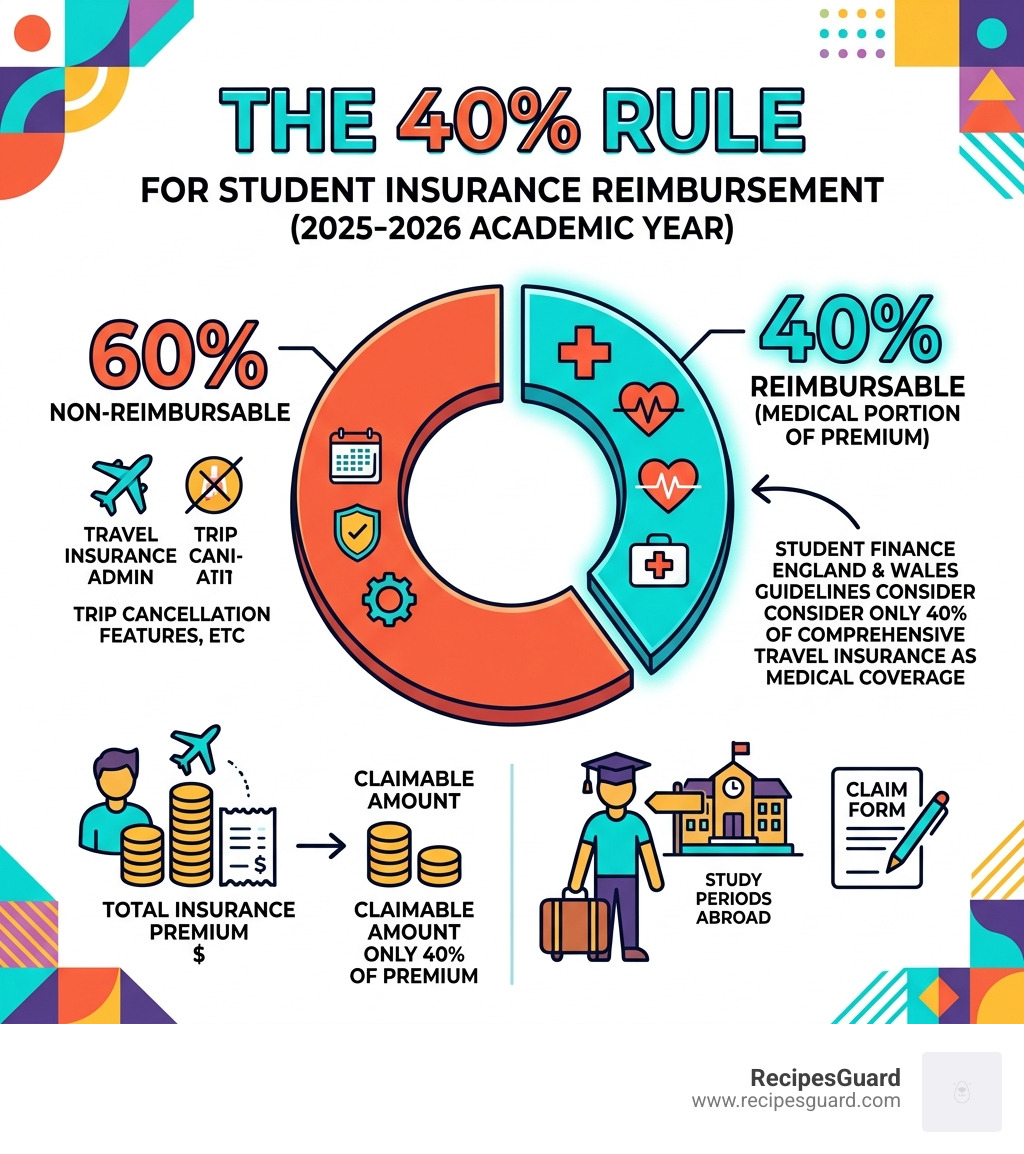
The 40% Rule: Student Finance England and Wales Guidelines
If you are a student from the UK studying abroad (perhaps here in Australia), you might be familiar with the Student Finance travel grants. For the 2025-2026 academic year, students can claim back travel expenses, but there are strict rules.
The Claim for reimbursement of travelling expenses for study periods abroad 2025-2026 form highlights a few key points:
- The £303 Deductible: You usually have to pay the first £303 of your travel costs yourself before the grant kicks in.
- The 40% Rule for Insurance: When you buy a comprehensive travel insurance policy, the government often only considers 40% of the premium to be “medical,” and therefore reimbursable.
- Cheapest Route: You must use the most economical public transport available. If you book a first-class flight, don’t expect them to pay the full bill!
For those returning home to Australia, it’s also worth checking Going overseas – When you’re returning home – Services Australia to see how your student payments (like Youth Allowance) might be affected by your time abroad and your return flight.
Frequently Asked Questions about Repatriation Claims
Can I claim a repatriation flight if I just want to go home?
No. Repatriation coverage is not “I’m homesick” insurance. To trigger a repatriation flight claim student benefit, there must be a medical necessity. This means a licensed physician must certify that you are unable to continue your studies or that the necessary treatment is not available where you are. Voluntary returns are almost never covered.
Does repatriation insurance cover my family to fly to me?
As mentioned earlier, yes—but usually only if you are hospitalized for a significant period (typically 3 days or more). This is known as the “Emergency Reunion” benefit. It covers the flight and some living expenses for one person, usually up to a limit of $2,500.
How long does it take to process a student repatriation claim?
If the insurance company coordinates the flight, they pay the provider directly, so there is no “wait” for you. However, if you are claiming reimbursement for out-of-pocket costs, it typically takes 30 to 45 days once all documentation is submitted. The biggest delay is usually waiting for medical records from foreign hospitals.
Conclusion
Navigating a repatriation flight claim student situation is likely the last thing you want to think about while packing your bags for a semester abroad. However, understanding how these benefits work—and how to document them—is the ultimate “extra credit” that can save you or your family from financial ruin.
At RecipesGuard, we specialize in making the complex world of insurance claims simple. We provide step-by-step advisory services and tutorials to help international students get the most out of their coverage. Whether you are dealing with a cancelled flight, a medical emergency, or just trying to figure out which policy meets your visa requirements, we are here to help.
Don’t let the paperwork scare you. With a little preparation and the right “homework” done in advance, you can focus on what really matters: your education and your adventure.
For more guides and student-focused insurance advice, visit us at https://www.recipesguard.com/. Safe travels!

My name is Bianca, and my journey into the world of fermentation and food safety began with a costly mistake. I once lost an entire season’s harvest of chili peppers because I relied on guesswork instead of science. That failure was my turning point.
