
Everything You Need for a Student Medical Evacuation Claim
Why Every International Student Needs to Understand a Medical Evacuation Claim
A student medical evacuation claim is the formal process of requesting reimbursement or direct payment from your insurer after being transported to a qualified medical facility during an emergency abroad.
Here’s what you need to know at a glance:
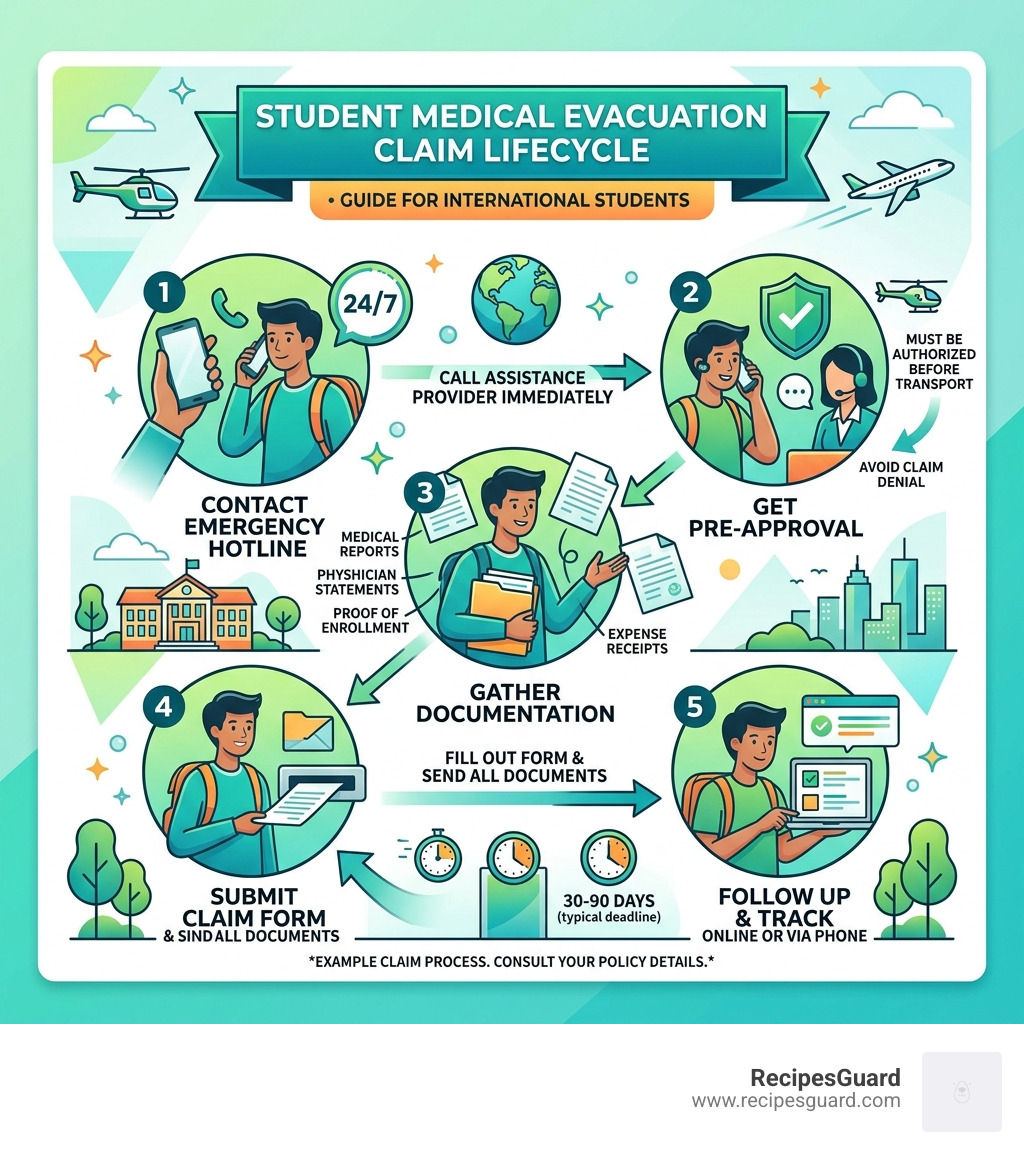
- Contact your assistance provider first — call their 24/7 emergency hotline immediately. Do not arrange transport yourself.
- Get pre-approval — evacuation transport must be authorized by the insurer or assistance provider before it happens, or your claim may be denied.
- Gather documentation — medical reports, physician statements, proof of enrollment, and expense receipts are all required.
- Submit your claim form — within the timeframe stated in your policy, usually 30-90 days after the event.
- Follow up — track your claim status through your insurer’s portal or by contacting them directly.
If you’re an international student studying abroad, a medical emergency can happen at any time. A sudden illness, a serious injury, or a condition that local hospitals can’t treat — any of these can trigger the need for emergency medical evacuation.
The problem? Most students have no idea how the process works until they’re already in crisis.
Medical evacuation is not the same as calling an ambulance. It can involve air transport, specialist coordination, multilingual medical staff, and costs that easily reach tens of thousands of dollars. Without the right insurance — and without following the correct steps — you could be left with an unpaid claim and a massive bill.
This is especially important if you’re on an F1 or J1 visa, where US government requirements mandate minimum evacuation coverage. Many school-sponsored or employer health plans don’t include this coverage at all, making a standalone or supplemental evacuation plan essential.
Understanding Medical Evacuation and Visa Requirements
When we talk about a student medical evacuation claim, we aren’t just talking about a ride to the hospital. We are talking about a highly coordinated logistics operation. For many of our students traveling from Australia to the United States or elsewhere, understanding the “why” behind these claims starts with the law.
Visa Mandates and Compliance
If you are studying in the US as of April 2026, you are likely holding an F1 or J1 visa. While F1 students are often guided by their specific university requirements, J1 visa holders (exchange visitors and scholars) are legally required by the US Department of State to carry specific levels of insurance.
If your insurance doesn’t meet these standards, you aren’t just risking a denied student medical evacuation claim – you’re risking your visa status. Most institutions require proof of coverage before you can even register for classes.
Minimum Coverage for J1 and F1 Visas
The US government sets strict floors for what your policy must cover. As we sit here in April 2026, these standards remain the benchmark for international student safety:
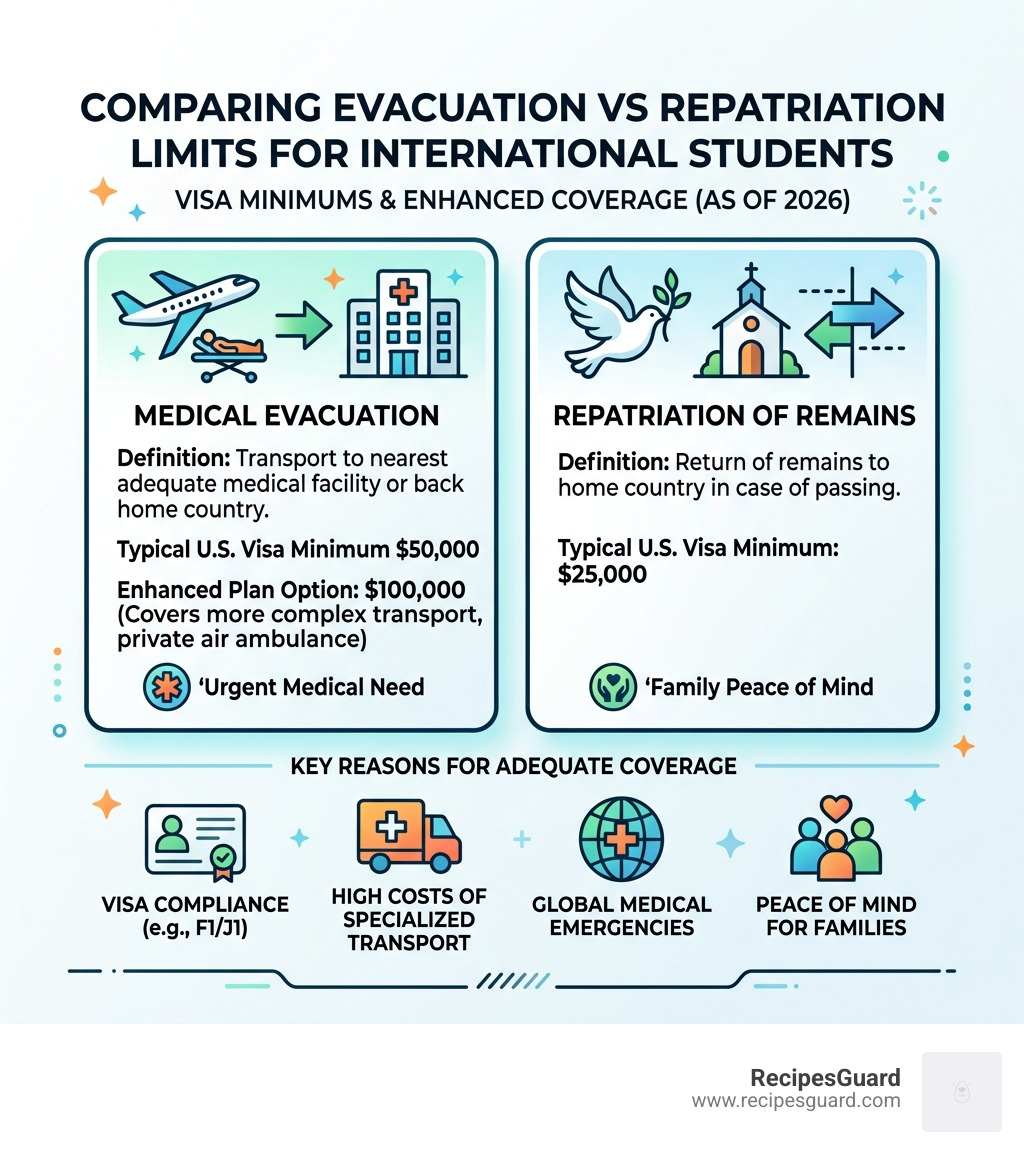
- Medical Evacuation: A minimum of $50,000. This covers the cost of transporting you to the nearest adequate medical facility or back to your home country.
- Repatriation of Remains: A minimum of $25,000. In the tragic event of a student’s passing, this covers the costs of returning remains to their home country.
Many high-quality plans offer higher limits, such as $100,000, to ensure that even the most complex transport (like a private air ambulance from a remote area) is fully covered.
Evacuation vs. Comprehensive Medical Insurance
One of the biggest points of confusion we see at RecipesGuard is the difference between “major medical” and “evacuation coverage.”
- Comprehensive Medical Insurance: This pays for the doctors, the hospital bed, the X-rays, and the medicine.
- Medical Evacuation Insurance: This pays for the transportation and the logistics.
Some students have great medical insurance through an employer or a school plan that, surprisingly, has zero coverage for evacuation. In these cases, you need a “standalone” or “supplemental” plan. Specialized insurance providers offer these specifically to fill the gaps. Without it, you might have your surgery covered, but you’ll be stuck with a $40,000 bill for the helicopter that got you to the surgeon.
How to File a Student Medical Evacuation Claim Step-by-Step
Filing a student medical evacuation claim is a bit like a high-stakes dance. If you miss a step, the whole thing can fall apart. Because these claims involve such high dollar amounts, insurance companies are very strict about their procedures.
Step 1: Contact the 24/7 Assistance Provider
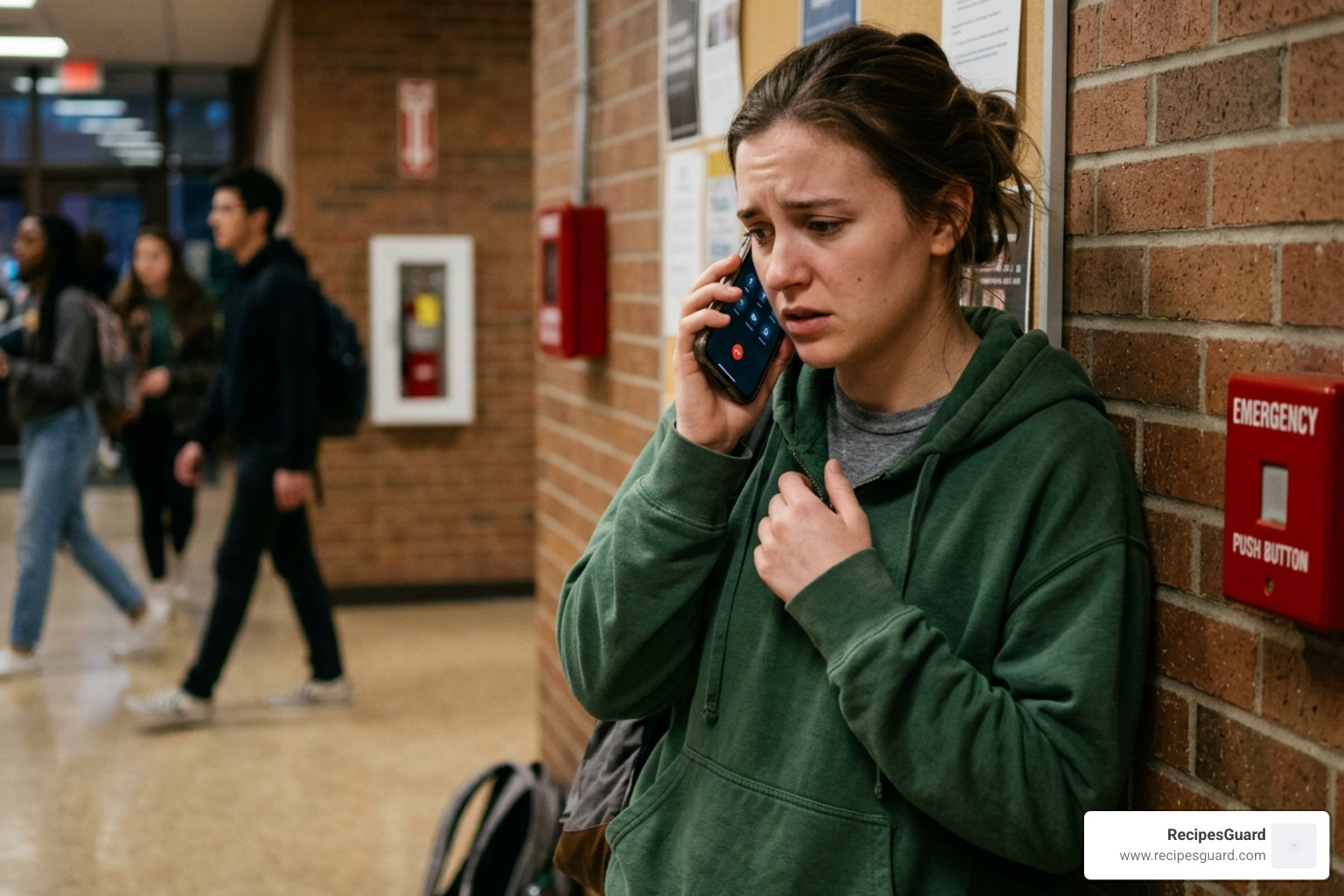
This is the golden rule: Do not call a private jet company yourself. Every student policy comes with a 24/7 emergency assistance partner.
You (or a friend/hospital staff member) must call the number on the back of your insurance ID card immediately. They will ask for:
- Your name and policy ID number.
- Your exact location and the phone number of the hospital.
- The name of the attending physician.
The assistance provider coordinates the move. If you arrange your own transport and try to file a student medical evacuation claim later, it is almost guaranteed to be denied.
Step 2: Medical Necessity Verification
The insurance company won’t pay for an evacuation just because you’d prefer to be treated at a different hospital. It must be “medically necessary.”
The assistance provider’s medical team will speak with the local doctors to determine if the current facility can provide the life-saving care you need. If they can’t, the provider will authorize the evacuation. This “pre-approval” is the most critical part of a successful student medical evacuation claim.
Step 3: Submitting the Formal Claim
Once the emergency has stabilized, the paperwork begins. Even if the insurance company paid the transport company directly, you often still need to submit a formal claim to close the file.
As of April 2026, most providers allow for electronic submission through a student portal. You will need to fill out a “Claim Form,” which asks for a detailed description of what happened. Be honest, be clear, and don’t leave any sections blank!
Essential Documentation for Your Student Medical Evacuation Claim
If your claim were a court case, the documentation would be your evidence. Insurance adjusters love paper—the more detailed, the better.

Required Paperwork for Your Student Medical Evacuation Claim
To ensure your student medical evacuation claim is processed without a hitch, keep a folder (digital or physical) with the following:
- Medical Reports: A full report from the facility where you were first treated.
- Physician Statement: A note from the doctor explaining why the evacuation was necessary (e.g., “Local facility lacks the neurology equipment required for this injury”).
- Proof of Enrollment: A copy of your I-20 (for F1) or DS-2019 (for J1) to prove you are a student in good standing.
- Passport and Visa Copies: To verify your identity and your status as an international traveler.
- Discharge Summaries: The paperwork from both the sending and receiving hospitals.
Coordination of Benefits Documentation
If you have more than one insurance policy (for example, a school plan and a supplemental evacuation plan), you need to show how they work together. This is called “Coordination of Benefits.”
You may also need receipts for “incidental” expenses. If your plan includes a “Bedside Visit” benefit, you’ll need the flight receipts and hotel bills for the family member who came to stay with you.
Coordination and Assistance Services
One of the best things about these plans is that you aren’t just buying money; you’re buying a team of experts.
The Role of the Assistance Service Provider
When a student medical evacuation claim is initiated, the assistance provider takes over the “heavy lifting.” They handle:
- Logistics: Booking the air ambulance or the commercial flight with a medical escort.
- Hospital Admissions: Finding a bed at a receiving hospital that can actually treat your condition.
- Translation: Helping you understand what the doctors are saying if you are in a country where you don’t speak the language.
- Medical Monitoring: Checking in on your progress and updating your family back home in Australia.
Additional Benefits: Bedside Visits and Family Return
Many students don’t realize their evacuation plan might cover more than just the transport. High-quality plans often include:
- Emergency Reunion (Bedside Visit): If you are hospitalized for more than a few days, the plan may pay (often up to $2,500 or $5,000) to fly a parent or sibling to your side.
- Return of Dependent Children: If you are a student traveling with children and you are incapacitated, the plan will pay to get your children safely home.
- Repatriation of Remains: As mentioned, this covers the return of a deceased student to their home country, which can cost upwards of $15,000 without insurance.
Common Reasons for a Student Medical Evacuation Claim Denial
Nothing is more stressful than receiving a “Claim Denied” letter after a medical crisis. At RecipesGuard, we want to help you avoid the common pitfalls that lead to these heartbreaks.
Avoiding Denials on Your Student Medical Evacuation Claim
The primary reason for denial is unauthorized transport. We cannot stress this enough: if you book your own flight home because you feel sick, the insurance company will not reimburse you. It must be coordinated by their assistance team.
Other common denial reasons include:
- Pre-existing Conditions: Many plans have a waiting period (e.g., 6 months for students) before they will cover an evacuation related to a condition you already had.
- War Zones and Sanctions: If you travel to a country that is currently under international sanctions or is an active war zone, your coverage may be void. As of early 2026, many plans have added specific “Sanctions Clauses” to comply with global regulations.
- Non-Emergency Situations: If the local hospital is perfectly capable of treating you, but you just “want to go home,” the claim will be denied. Evacuation is for medical need, not medical preference.
Eligibility Gaps for OPT and Dependents
Be careful with your status! If you have graduated and are on F1 OPT (Optional Practical Training), some student-only plans may no longer cover you. You might need to switch to a scholar or professional plan. Similarly, dependents (spouses and children) often have different waiting periods—sometimes up to 24 months for pre-existing conditions—compared to the student. Always check the “Eligibility” section of your policy brochure.
Frequently Asked Questions about Student Evacuation
What should I do immediately in a medical emergency?
First, get to the nearest safety or emergency room. Once you are in stable hands, call your insurance provider’s 24/7 assistance line. Give them your location and let them talk to your doctors. Also, notify your school’s international student office; they often have staff dedicated to helping students through these crises.
How much does a standalone evacuation plan cost in 2026?
Fortunately, these plans are quite affordable because they only cover “low-frequency, high-cost” events. In April 2026, you can find standalone evacuation and repatriation plans for as little as $8 to $15 USD per month. If you buy a 3-month “Emergency Evacuation” plan, it might cost around $43. Most of these plans have a $0 deductible, meaning you don’t pay anything out of pocket for the transport itself once it’s approved.
Does evacuation insurance cover pre-existing conditions?
This depends on the “Waiting Period.” Many student plans require you to be on the plan for 6 months before they will cover an evacuation for a pre-existing condition. However, some plans offer coverage for the “Acute Onset” of a pre-existing condition—meaning a sudden, unexpected flare-up of a stable condition. Always read the fine print regarding waiting periods for both students and dependents.
Conclusion
Navigating a student medical evacuation claim can feel like trying to solve a puzzle while you’re at your most vulnerable. But remember, you don’t have to do it alone. By choosing a plan that meets visa requirements, keeping your documentation organized, and—most importantly—always calling your assistance provider before taking action, you can ensure that you are protected.
At RecipesGuard, we are committed to providing students with the step-by-step tutorials they need to handle insurance with confidence. Whether you are an Australian student headed to the US or an international scholar arriving on our shores, your focus should be on your studies, not on how you’ll pay for a medical flight.
For more detailed guides and support on managing your student insurance, visit us at RecipesGuard. Stay safe, stay covered, and enjoy your international adventure!

My name is Bianca, and my journey into the world of fermentation and food safety began with a costly mistake. I once lost an entire season’s harvest of chili peppers because I relied on guesswork instead of science. That failure was my turning point.
