
When Your Travel Plans Fall Apart: What a Trip Cancellation & Interruption Plan Actually Does
A trip cancellation & interruption plan is a type of travel insurance that reimburses your non-refundable, prepaid travel costs when something unexpected forces you to cancel before you leave — or cut your trip short after it’s already started.
Here’s a quick breakdown of what these plans typically cover:
| Benefit | When It Applies | Typical Reimbursement |
|---|---|---|
| Trip Cancellation | Before departure | Up to 100% of trip cost |
| Trip Interruption | After departure | Up to 100%–150% of trip cost |
| Cancel for Any Reason (CFAR) | Before departure, any reason | Up to 75% of trip cost |
| Interruption for Any Reason (IFAR) | 72+ hours after departure | Up to 75% of trip cost |
Think of it as a financial safety net for your travel investment. Hotels, tours, and flights often won’t refund you — but the right plan can.
You’ve saved up, booked your flights, paid for accommodation, maybe even pre-paid a tour or two. Then something goes wrong. A medical emergency. A family crisis. A natural disaster. Suddenly, hundreds or thousands of dollars are at risk.
This is exactly the scenario a trip cancellation & interruption plan is designed for. In 2026, with travel costs continuing to climb and disruptions still common, protecting your prepaid expenses isn’t just smart — it’s essential.
Whether you’re a student heading abroad for a semester, a first-time international traveler, or someone who’s just been burned by a non-refundable booking before, this guide walks you through the top plan options and what to look for.
Simple guide to trip cancellation & interruption plan terms:
- cancel for any reason plan
- hotel cancelation insurance
- covid trip interruption insurance
Understanding Your Trip Cancellation & Interruption Plan
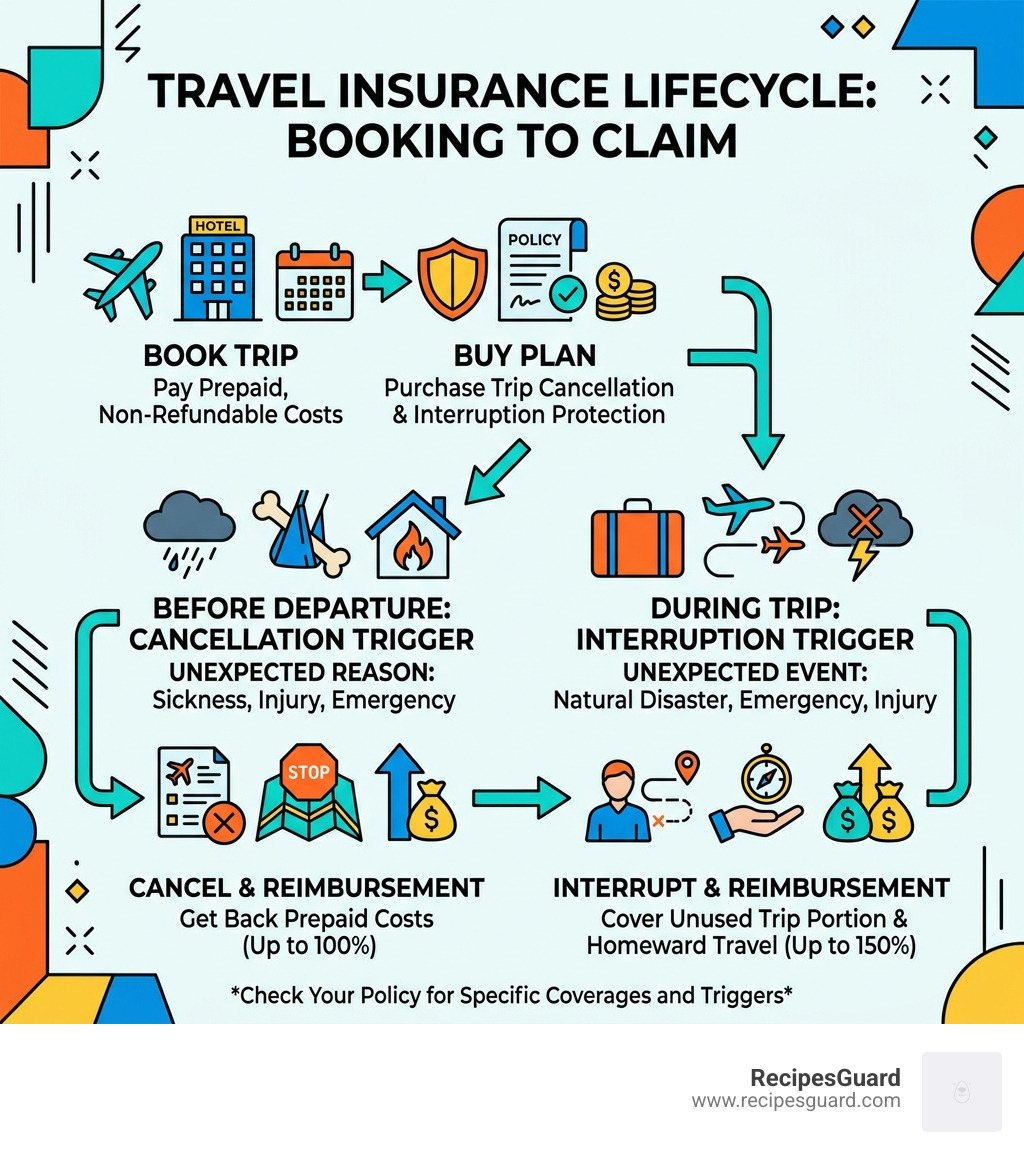
When we talk about a trip cancellation & interruption plan, we are looking at two distinct phases of your journey. The first phase is “pre-departure.” If you wake up two days before your flight to Australia with a high fever and a doctor tells you that you cannot fly, trip cancellation kicks in. It protects the money you’ve already spent on flights, hotels, and tours that you can no longer use.
The second phase is “post-departure.” This is where trip interruption takes the lead. Imagine you are halfway through a beautiful tour of the Great Barrier Reef when you receive news that a family member back home has been hospitalized. You need to leave immediately. Not only have you lost the remaining week of your prepaid accommodation, but you also have to buy a last-minute, one-way flight home—which, as we know, can be eye-wateringly expensive.
A robust trip cancellation & interruption plan doesn’t just pay back what you lost; it often helps you get home. Many premium plans provide up to 150% of the insured trip cost for interruption. That extra 50% is specifically there to cover the surged cost of emergency transportation. To see this in action, check out How Trip Cancellation Interruption Saves Your Vacation/.
Key Differences: Trip Cancellation vs. Interruption vs. Delay
It is easy to get these terms mixed up, but for the sake of your wallet, we need to distinguish them clearly.
- Trip Cancellation: Triggers before you leave. It covers 100% of your non-refundable costs for “covered reasons” (like illness or jury duty).
- Trip Interruption: Triggers after your trip begins. It covers the unused portion of your trip plus extra transport costs. Most policies require you to notify your travel providers and the insurer within a strict 72-hour window of the event occurring to receive full benefits.
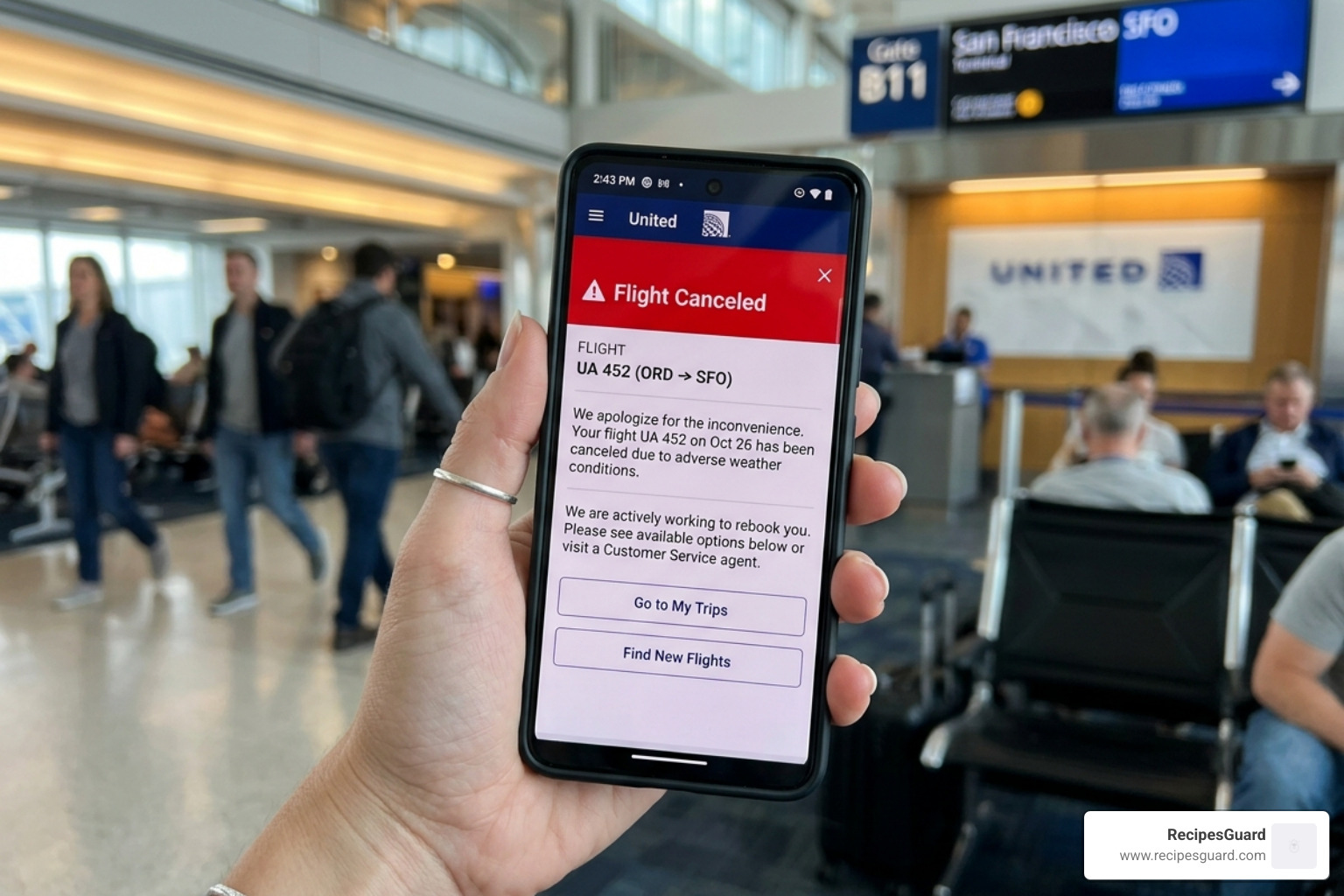
- Trip Delay: This is for the “in-between” moments. If your flight is grounded for 6+ hours due to weather, this benefit pays for your airport sushi, a hotel for the night, and a change of clothes. If a delay is severe enough (often more than 50% of the trip length), it may escalate into an interruption claim.
To master the nuances of getting reimbursed for these smaller hiccups, see our guide on The Art Of The Claim Getting Paid For Your Travel Delays/.
Coverage Limits and Annual Multi-Trip Benefits
How much coverage is enough? For a single trip, many travelers opt for plans that cover the exact amount of their prepaid expenses, often ranging from $2,000 to $10,000 per person. However, if you are a frequent traveler, an annual multi-trip plan might be the smarter play.
Many major insurance providers offer annual multi-trip plans that provide a pool of coverage—for example, $15,000 per year—that applies to every trip you take within those 12 months. This is especially beneficial for households, as these plans often extend benefits to everyone living under your roof. Instead of buying a new trip cancellation & interruption plan every time you book a weekend away, you have a constant safety net in place.
Common Covered Reasons and Policy Exclusions
Not every reason for canceling is a “covered reason.” If you simply decide you’d rather stay home and watch a new series, a standard trip cancellation & interruption plan won’t pay out. You need a documented, unforeseen event.
| Common Covered Reasons | Standard Exclusions |
|---|---|
| Sudden Sickness or Injury (with doctor’s note) | Changing your mind about the trip |
| Death of an immediate family member | Normal pregnancy or childbirth |
| Severe weather grounding all flights | High-risk adventure sports (unless added) |
| Financial insolvency of the travel provider | Mental health issues (unless specifically included) |
| Jury duty or subpoena | Traveling against medical advice |
| Military obligations | Alcohol or substance-related incidents |
Understanding these triggers is vital so you Dont Get Stuck With A Non Refundable Nightmare/. For a deeper dive into the fine print, read our breakdown of Covered Trip Cancellation Reasons You Need To Know/.
Navigating Pre-existing Conditions and Medical Emergencies
One of the biggest “gotchas” in travel insurance is the pre-existing condition exclusion. Most insurers use a 60-day look-back period. If you had symptoms, took medication, or saw a doctor for a specific condition in the 60 days before you bought the policy, that condition is usually excluded from coverage.
However, there is a way around this: the Pre-existing Medical Condition Waiver. To get this, you usually must:
- Purchase your trip cancellation & interruption plan within 14 to 21 days of making your first trip deposit.
- Insure 100% of your non-refundable costs.
- Be medically fit to travel on the day you buy the plan.
If you have to interrupt your trip due to a medical emergency, you will need physician verification. The insurance company will want to see a report from a licensed doctor at your destination confirming that your condition was severe enough to require ending the trip. We’ve detailed the steps for this in The Ultimate Guide To Trip Interruption And Illness Claims/.
Maximizing Flexibility with CFAR and IFAR Upgrades

If you want the ultimate “get out of jail free” card, you need to look at Cancel for Any Reason (CFAR) and Interruption for Any Reason (IFAR) upgrades.
Cancel for Any Reason (CFAR) does exactly what it says. You can cancel because you’re tired, because you’re worried about local politics, or because your cat looks sad.
- The Catch: You usually only get back 75% of your costs, not 100%.
- The Rule: You must cancel at least 48 hours before your scheduled departure.
Interruption for Any Reason (IFAR) is the mid-trip version. It allows you to end your trip and head home for reasons not listed in the standard policy. Most plans require you to be at least 72 hours into your trip before this benefit can be used. These upgrades are perfect for travelers who value freedom over the rigid definitions of standard insurance. Learn more about how to use these for a Cancel For Any Reason Your Ticket To A Stress Free Refund/.
Credit Card Benefits vs. Standalone Insurance
Many of us carry premium credit cards which offer “free” travel insurance. While these are great perks, they have limitations compared to a dedicated trip cancellation & interruption plan.
- Limits: Credit card coverage is often capped at $10,000 per trip or $20,000 per year. For a luxury honeymoon or a year-long study abroad program, this might not be enough.
- Requirements: You must usually pay for the entire trip with that specific card to qualify.
- Secondary Coverage: Most card insurance is “secondary,” meaning you have to claim from the airline or other insurance first.
- Definitions: Cards often have very strict definitions of “Common Carriers” (licensed planes, trains, or buses) and “Immediate Family.”
If you are flying on a major carrier, our American Airlines Covered Trip Cancellation Guide/ can help you understand how airline policies and card benefits interact.
Choosing the Right Trip Cancellation & Interruption Plan for Students
For students, the stakes are different. You aren’t just losing a vacation; you might be losing tuition fees or the cost of a specialized study abroad program. We recommend budget-friendly plans that specifically address student risks, such as exam rescheduling or the need to return home if a study program is suddenly canceled.
If you are a student, don’t rely on general advice. Check out The Student Guide To Getting Your Money Back After A Cancelled Trip/ and our Flight Cancelled Here Is Your Student Insurance Survival Guide/ to ensure your specific needs are covered.
Frequently Asked Questions about Trip Protection
When is the best time to purchase a plan?
The best time is immediately after you make your first trip payment (like booking your flight). Buying within the first 14-21 days of your initial deposit is the only way to qualify for the pre-existing condition waiver and certain upgrades like CFAR. If you wait until the week before you leave, you lose out on these crucial protections. For a roadmap on timing, see our Step By Step Guide How To Successfully Claim Your Trip Cancellation Refund/.
What documentation is required for a successful claim?
Insurance companies don’t take your word for it—they need a paper trail. You will typically need:
- Proof of Payment: Receipts and credit card statements showing the non-refundable costs.
- Physician Statement: A signed form from a doctor if the claim is medical.
- Carrier Letter: A formal notice from the airline or tour operator confirming the cancellation and stating how much (if anything) was refunded.
- Unused Vouchers: If the airline gave you a credit that later expired, you may need to show proof of that expiration.
Does insurance cover COVID-19 or other epidemics?
In 2026, most comprehensive plans include Epidemic Endorsements. This means if you, your traveling companion, or a family member is diagnosed with a disease like COVID-19, it is treated as any other “covered sickness.” This includes coverage for cancellations, interruptions, and even local quarantine costs in some cases. For more details, read The Essential Guide To Covid Trip Interruption Insurance/.
Conclusion
At RecipesGuard, we know that travel is one of the biggest investments you’ll make, especially as a student or a young professional starting your journey. A trip cancellation & interruption plan isn’t just about the money; it’s about the peace of mind that comes with knowing a single bad break won’t derail your financial future.
We specialize in student-focused advisory, providing step-by-step tutorials to help you navigate the often-confusing world of insurance claims. Don’t let a canceled flight or a mid-trip emergency leave you stranded and out of pocket.
Start your claim journey today and let us help you protect your next adventure.

My name is Bianca, and my journey into the world of fermentation and food safety began with a costly mistake. I once lost an entire season’s harvest of chili peppers because I relied on guesswork instead of science. That failure was my turning point.
