
What You Need to Know Before Filing a Study Abroad Insurance Claim
The student study abroad insurance claim process can feel overwhelming when you’re already dealing with a medical issue or travel disruption far from home. Between unfamiliar healthcare systems, foreign-language receipts, and tight filing deadlines, it’s easy to make a mistake that costs you money.
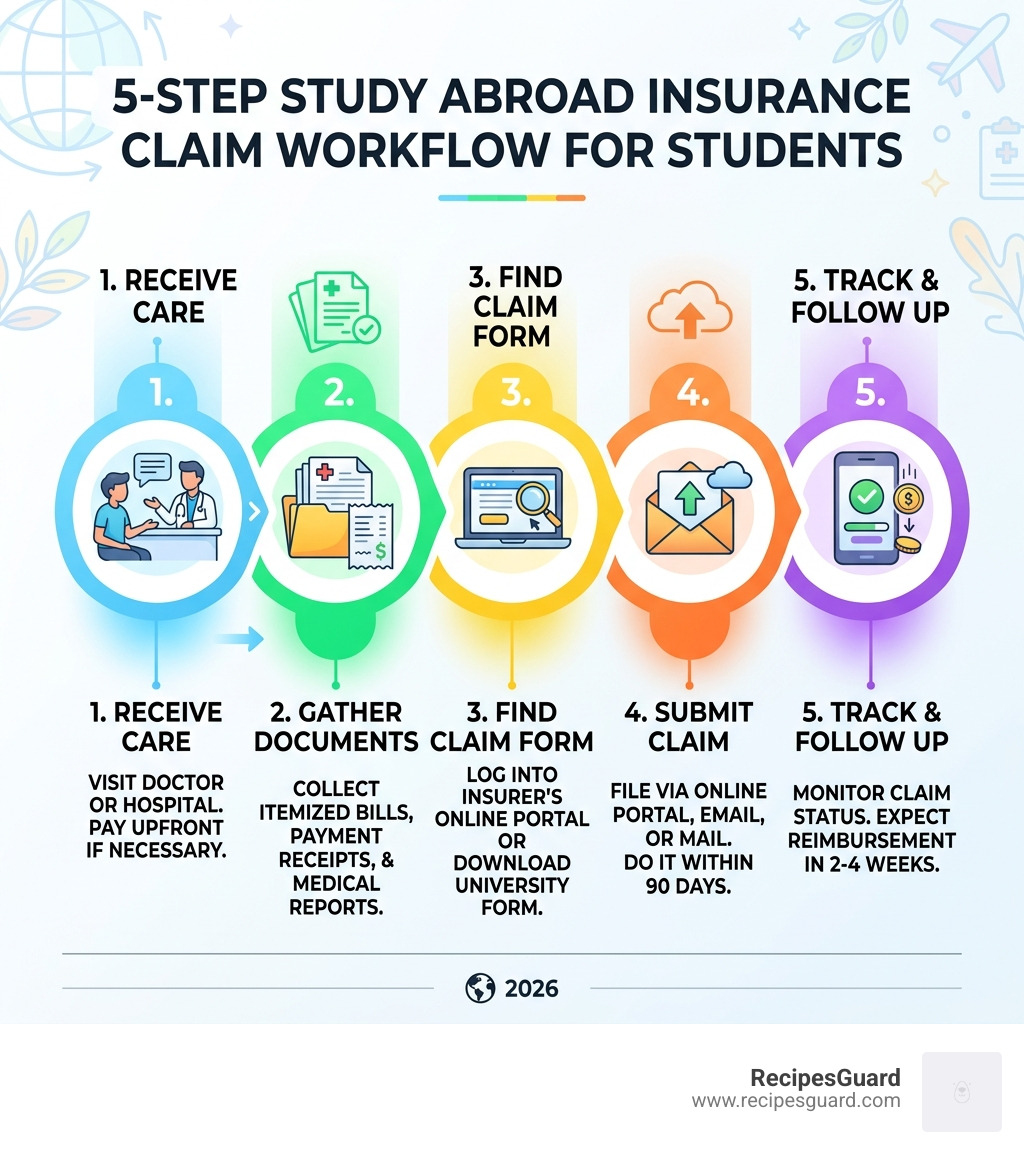
Here’s a quick overview of how the process typically works:
- Receive care – Pay upfront if the provider doesn’t bill your insurer directly
- Gather documents – Collect itemized bills, payment receipts, and any medical reports
- Find your claim form – Log into your insurer’s online portal or download a form from your university’s study abroad office
- Submit your claim – File via online portal, email, fax, or mail within 90 days of receiving care
- Track and follow up – Monitor your claim status and expect reimbursement within 2-4 weeks of submission
Most study abroad students are automatically enrolled in a group insurance policy through their university or program provider. However, this coverage usually acts as secondary insurance – meaning your primary health plan pays first if you have one.
The good news: once you know the steps, filing a claim is straightforward. This guide walks you through everything – from emergency protocols to denied claims – so you don’t lose money on a technicality.
Easy student study abroad insurance claim process glossary:
- easy online student claim submission
- student overseas accident claim process
- student trip interruption claim tips
Understanding the Student Study Abroad Insurance Claim Process
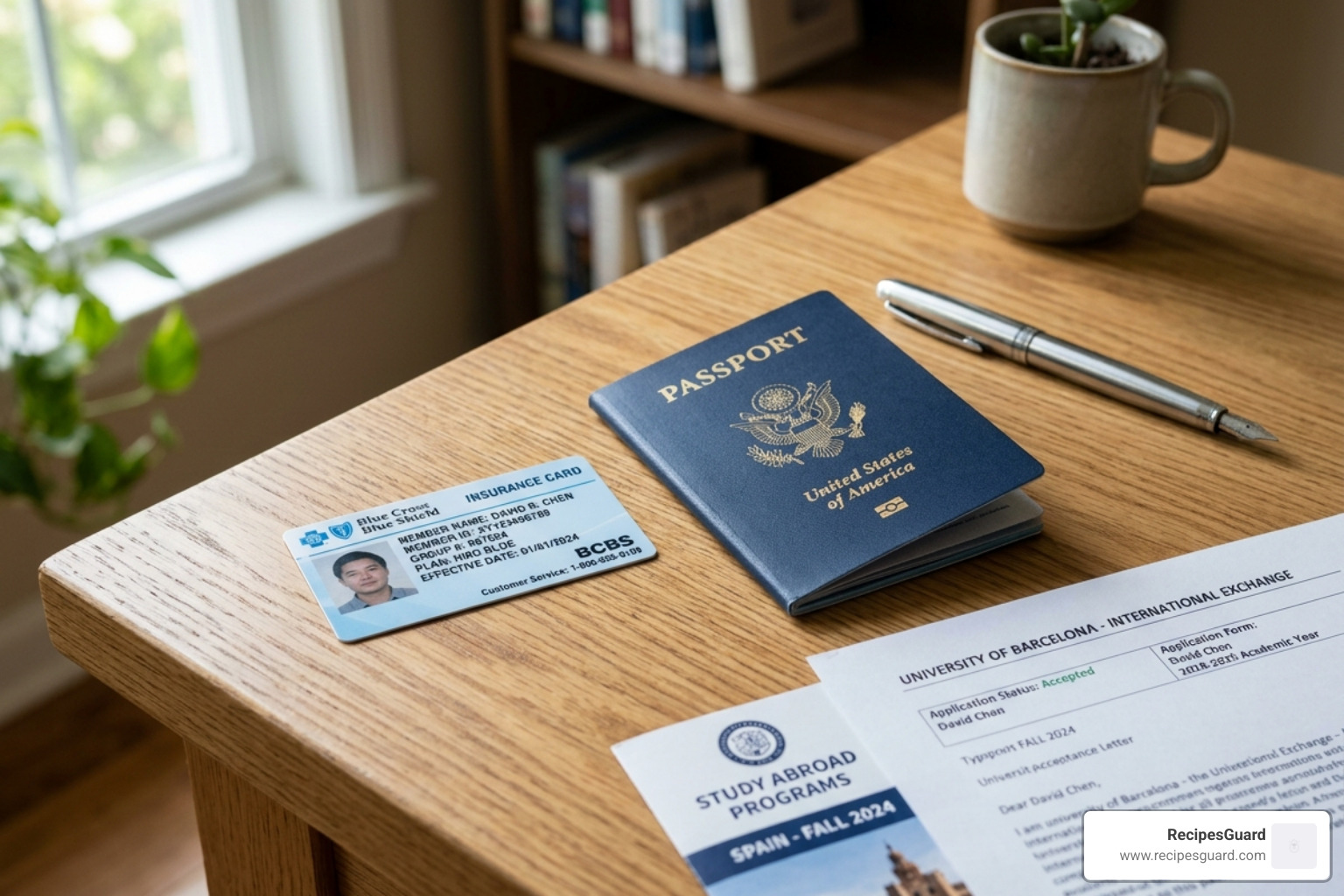
When we talk about the student study abroad insurance claim process, we are essentially talking about the bridge between your medical mishap and getting your money back. Most students studying in Australia or heading out from Australian universities are covered by specialized policies like Overseas Student Health Cover (OSHC) or comprehensive travel insurance.
The process generally falls into two categories: direct billing and reimbursement. In a perfect world, you walk into a clinic, flash your insurance ID card, and the doctor bills the insurance company directly. This is called “direct billing.” In Australia, many “direct billing” clinics exist specifically for students. However, if you visit a private specialist or a small clinic in a remote area, you might have to pay the full fee upfront. That is when the manual claim process kicks in.
It is also vital to understand that your study abroad insurance is often secondary coverage. If you are an Australian student traveling to Europe, your policy might kick in only after your primary health insurance or a reciprocal health care agreement has been exhausted. Understanding this hierarchy is the first step in Everything You Need To Know About Student Study Abroad Insurance/. If you haven’t picked a policy yet, check out our guide on The Best Student Insurance For Your Semester Abroad/ to ensure you have the right foundation.
When to File a Manual Claim vs. Direct Billing
We often get asked, “Why do I have to do all this paperwork if I have insurance?” The answer usually comes down to the provider’s network. If you use an “in-network” doctor, they usually handle the billing for you. But you will definitely need to file a manual claim for:
- Upfront payments: Any time a doctor says, “That will be $200, please,” and doesn’t ask for your insurance card.
- Prescription reimbursements: Most pharmacies require you to pay for your meds at the counter. You’ll then claim these back later.
- Minor clinic visits: Some small clinics aren’t set up for international insurance systems.
- Emergency hospitalization: While big hospitals often coordinate with insurers, you might still need to file paperwork to cover the “gap” or incidental costs.
Knowing the difference can save you a massive headache later. For a deeper dive into avoiding the stress of paperwork, read How To File A Study Abroad Medical Claim Without The Headache/.
Emergency Protocols and Assistance Services
If you find yourself in a true medical emergency—think “ambulance needed” or “immediate surgery”—the student study abroad insurance claim process starts with a phone call, not a form. Almost all student policies offer a 24/7 Emergency Assistance hotline.
These global support networks are staffed by people who can:
- Guarantee payment to the hospital so you don’t have to find thousands of dollars in the middle of the night.
- Coordinate medical evacuation if the local facility can’t treat you.
- Arrange for repatriation (sending you home) if the situation is dire.
In these moments, your priority is health. Let the assistance company handle the logistics. Just make sure you—or a friend—call them as soon as possible. For more on staying safe, see our guide: Dont Let A Medical Emergency Fail Your Semester Abroad/.
Step-by-Step Guide to Filing Your Claim

Ready to get your money back? Let’s walk through the actual “doing” part of the student study abroad insurance claim process. Most modern insurers have moved away from snail mail, but you should still be prepared for various submission methods.
- Log in to the Portal: Most providers have a “Student Zone” or participant portal. This is usually the fastest way to file.
- Upload Documents: Scan or take high-quality photos of your receipts and bills.
- Submit via Email/Fax: If the portal is down or doesn’t exist, email is the preferred secondary method. It creates a digital paper trail that mail simply can’t offer.
- Wait for Review: Most companies take about 15 business days to review your claim.
If you want to become a pro at this, check out How To Master The Student Travel Claim Process/.
Mastering the Student Study Abroad Insurance Claim Process Documentation
The number one reason claims are denied? Missing paperwork. To master the student study abroad insurance claim process, you need to be a bit of a “document hoarder.”
You will typically need:
- Itemized Bills: These aren’t just cash register receipts. They must show the date of service, the diagnosis codes (like HCFA or UB forms in some regions), and the specific treatment provided.
- Proof of Payment: A credit card statement or a receipt showing “Balance: $0.”
- Medical Reports: If you went to the ER, get a copy of the discharge summary.
- Passport and Visa Status: Insurers need to verify you are actually a student and were legally in the country at the time of the claim.
We recommend keeping a digital folder on your phone with all these scans. For more tips on organizing your paperwork, see How To Get Reimbursed For Your Semester Abroad Medical Mishaps/.
Locating and Completing the Correct Claim Form
Don’t just grab any random form from the internet. You need the one specific to your provider. You can usually find these on your university’s health and safety page or the insurer’s website. For example, The University of Sydney provides specific links for their students.
When filling out the form:
- Be Descriptive: Don’t just write “sick.” Write “Developed a high fever and persistent cough starting on Tuesday.”
- Double-Check Personal Info: A typo in your policy number or email address can delay your check by weeks.
- Payment Info: If you want a wire transfer (common for international students), make sure you include your BSB and account number (for Australia) or IBAN.
For a walkthrough on the form itself, visit The Simple Student Tutorial For Filing Any Insurance Claim/.
Navigating Deadlines, Tracking, and Denials
Timing is everything. If you wait until the end of the semester to file all your claims, you might find yourself out of luck.
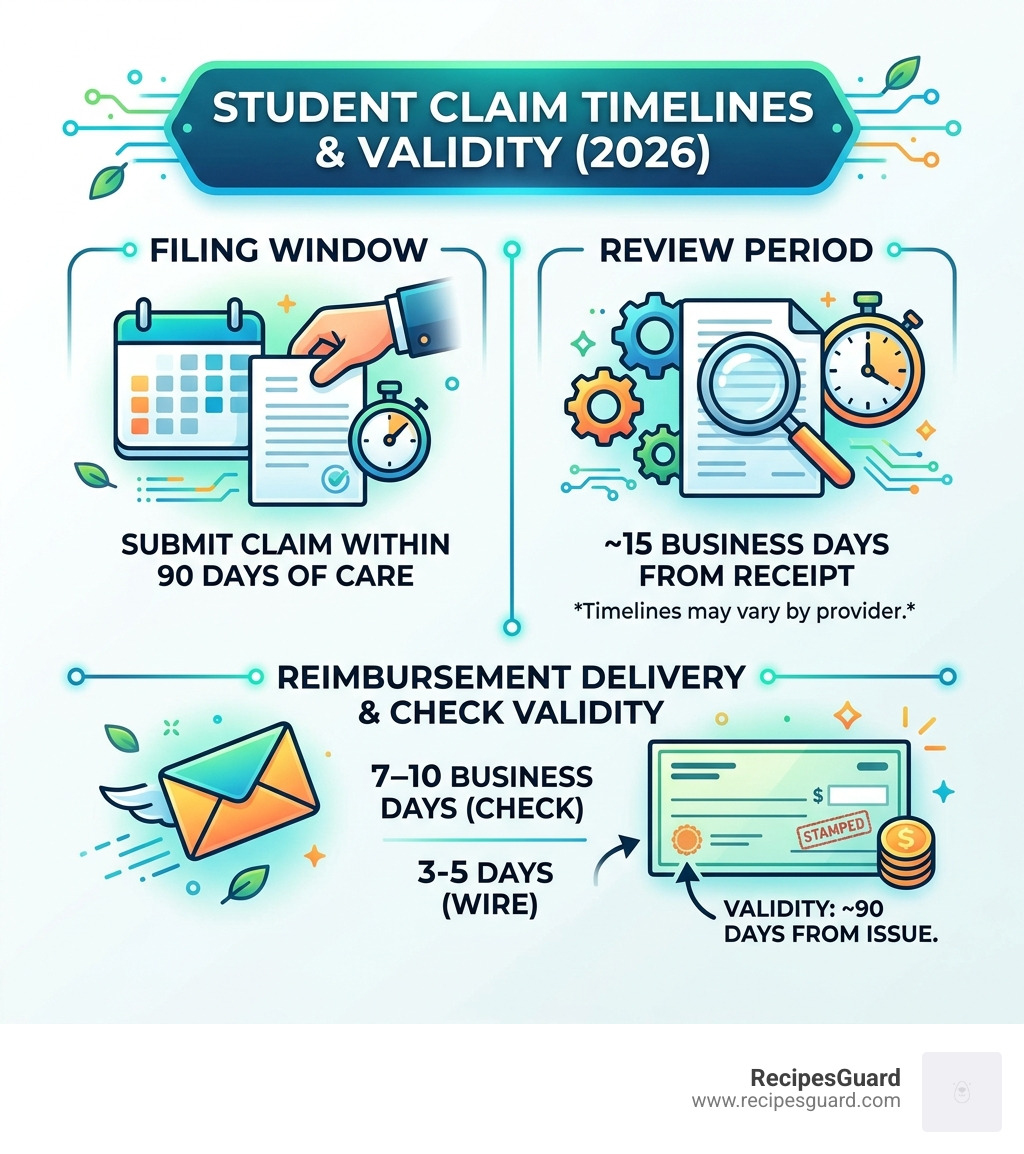
| Stage | Typical Timeline |
|---|---|
| Filing Window | Must submit within 90 days of care |
| Review Period | 15 business days from receipt |
| Reimbursement Delivery | 7-10 business days (check) or 3-5 days (wire) |
| Check Validity | Usually valid for 120 days |
For a comprehensive timeline guide, check The Ultimate Student Guide To Insurance Claim Steps/.
Deadlines in the Student Study Abroad Insurance Claim Process
Most policies have a strict 90-day deadline for filing. If you receive care in May 2026, you need to have that claim in by August 2026. Some providers are even stricter, requiring notification within 30 days.
There is one silver lining: if you have an ongoing condition that started abroad, some policies offer a 30-day extension for follow-up care once you return home. But don’t count on it—always check your specific policy wording. To stay on top of your schedule, read The Students Guide To Not Getting Stuck With The Bill Abroad/.
Tracking Status and Handling Denied Claims
Once you hit submit, don’t just disappear. Log back into your portal to track the status. You are looking for a document called the Explanation of Benefits (EOB). This tells you what they paid, what they didn’t, and why.
If your claim is denied, don’t panic. Common reasons include:
- Missing Information: They just need a clearer photo of your receipt.
- Exclusions: You were doing something “hazardous” (more on that below).
- Coding Errors: The doctor used the wrong code.
You have the right to appeal. Gather new evidence, write a polite letter, and resubmit. Learn more at Study Abroad Claims How To Get Your Credits And Cash Back/.
Common Exclusions and Special Coverage Scenarios
Not everything is covered. It’s a hard truth, but knowing the exclusions helps you avoid “un-reimbursable” expenses. Most student policies are designed for accidents and sudden illnesses, not routine maintenance.
Common exclusions include:
- Hazardous Activities: In Australia, this is a big one. Activities like scuba diving, surfing, or bungee jumping are often excluded unless you pay for a “sports rider.”
- Pre-existing Conditions: If you have a chronic illness, it may not be covered unless you’ve been symptom-free for a specific period (often 6 months).
- Routine Check-ups: Getting a standard physical or eye exam usually isn’t covered.
- Travel Outside Program Dates: If you arrive 2 weeks early to tour the Great Barrier Reef, your university insurance might not have started yet.
For students heading to the UK or Europe, check out Student Travel Insurance For Europe Your Safety Net Across The Pond/.
Claims for Baggage Loss and Trip Interruption
The student study abroad insurance claim process isn’t just for broken bones; it’s also for stolen laptops and canceled flights. However, the documentation requirements are different.
- Theft: You must file a police report within 24 hours. No report, no claim.
- Baggage Delay: Get a “Property Irregularity Report” from the airline before you leave the airport.
- Proof of Purchase: You might need to prove you actually owned that $2,000 MacBook. Keep your digital receipts!
For more on non-medical claims, see Your Overseas Student Claim Guide For Stress Free Travel/.
Frequently Asked Questions about Study Abroad Claims
How long does it take to receive my reimbursement?
Generally, it takes 15 business days for the insurance company to review a complete claim. If they approve it, a check can take another 7-10 business days to arrive via mail. If you’re in Australia, digital transfers are often much faster, sometimes arriving in your bank account within 3-5 days of approval. For a full breakdown, see The Ultimate Student Guide To Navigating Insurance Claims/.
What if I don’t have a U.S. address for my reimbursement check?
Many student policies are based in the U.S., but as an international student, you might not have a permanent U.S. mailing address. In this case, you should include a specific note on your claim form requesting a wire transfer. You will need to provide your international banking details (SWIFT/BIC). Be aware that some insurers may deny a claim if you use a temporary hostel address, so always use your permanent home address or university housing. More details can be found in The International Students Guide To Navigating An Insurance Claim Student Visa/.
Can I file a claim for a doctor visit that happened before my program started?
Usually, no. Your coverage typically begins on the official start date of your program. If you travel early, you are in a “coverage gap.” We highly recommend purchasing supplemental travel insurance for those extra weeks. If you try to file a claim for a pre-program injury, it will likely be denied based on the “effective date” of your policy. Don’t let a timing error leave you with a bill; read Dont Let A Hospital Bill Ruin Your Semester Abroad/.
Conclusion
Navigating the student study abroad insurance claim process doesn’t have to be a nightmare. By staying organized, keeping your receipts, and acting quickly, you can ensure that a medical mishap remains a minor footnote in your international adventure rather than a financial disaster.
At RecipesGuard, we specialize in providing student-focused advisory and step-by-step tutorials to make your semester as stress-free as possible. Whether you are studying in the sun-drenched campuses of Australia or exploring the historic streets of Europe, we are here to help you get your cash back.
Ready to secure your peace of mind? Start your stress-free journey at RecipesGuard today!

My name is Bianca, and my journey into the world of fermentation and food safety began with a costly mistake. I once lost an entire season’s harvest of chili peppers because I relied on guesswork instead of science. That failure was my turning point.
