
Don’t Let a Medical Emergency Fail Your Semester Abroad
Why a Travel Insurance Claim for Students Can Make or Break Your Semester Abroad
Making a travel insurance claim for students is simpler than most people think — if you know the steps before something goes wrong.
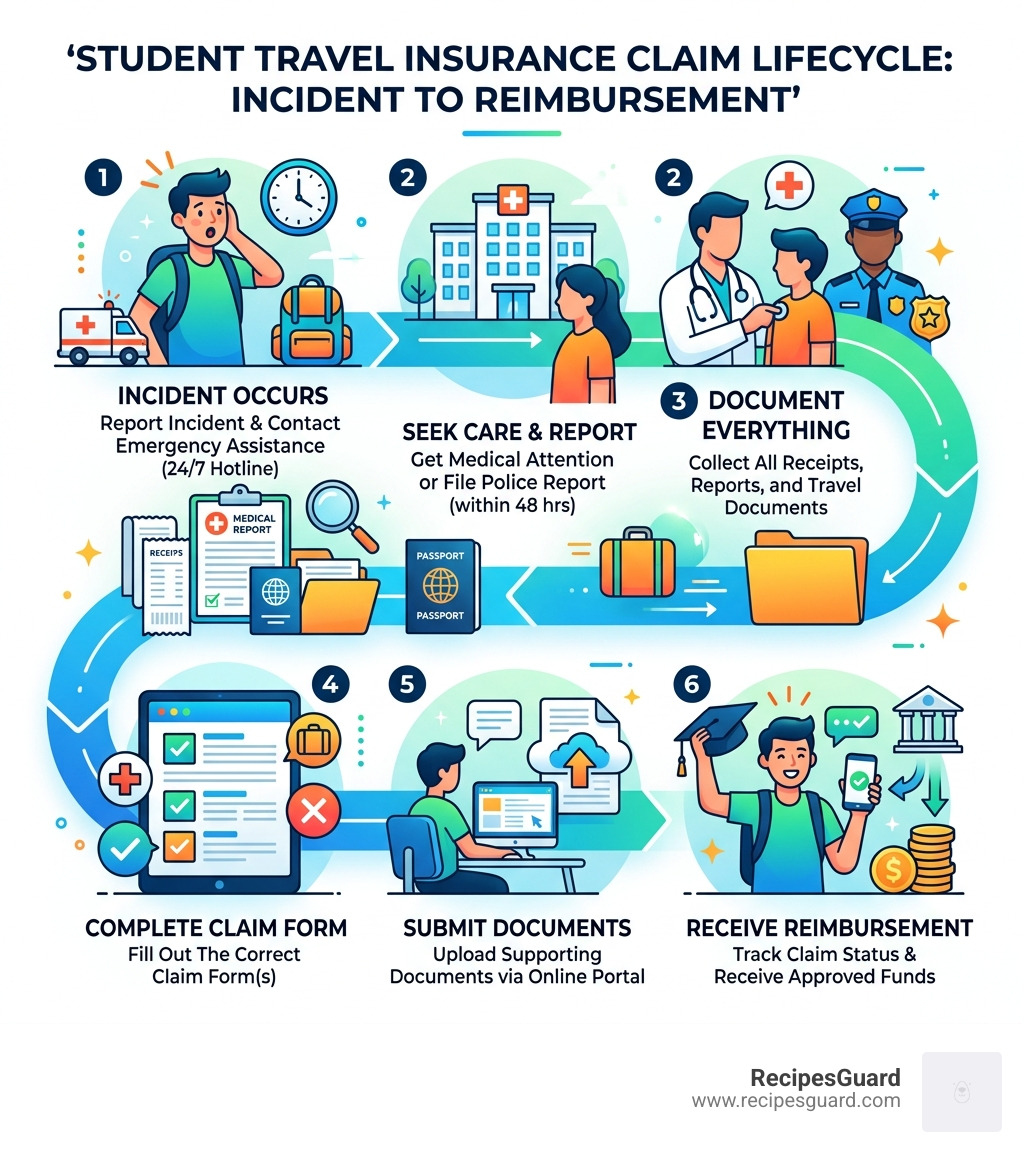
Here’s how to file a student travel insurance claim:
- Contact emergency assistance immediately — call your insurer’s 24/7 hotline as soon as an incident occurs
- Seek medical care or report the incident — go to the nearest hospital or report theft to local police within 48 hours
- Document everything — keep all receipts, medical reports, police reports, and travel documents
- Fill out the correct claim form — separate forms typically exist for medical, baggage, and trip cancellation claims
- Submit your claim with supporting documents — use your insurer’s online portal or email for fastest processing
- Track your claim status — log into your insurer’s portal to monitor progress and download your Explanation of Benefits (EOB)
Studying abroad is one of the most exciting things you can do as a student. But excitement fades fast when a broken arm in a foreign city leaves you scrambling for help — and cash.
Most students don’t think about their travel insurance until something goes wrong. That’s the worst time to figure out how claims work.
The reality is this: student travel insurance typically costs just 5–7% of your total trip cost. But when a medical emergency, lost bag, or cancelled flight hits, it can reimburse thousands of dollars — if you file correctly.
This guide walks you through exactly how to do that.
Glossary for travel insurance claim for students:
- adventure activity injury claim
- backpacker insurance claim tips
- working holiday insurance
Navigating Your Travel Insurance Claim for Students

When you are navigating a travel insurance claim for students in April 2026, the first thing to understand is that student-specific policies are built differently than standard holiday insurance. These policies are designed to cover the unique risks of living abroad for an extended period, such as semester-long medical needs, mental health support, and even the loss of tuition fees.
In Australia, many specialized providers offer tailored solutions that acknowledge a student’s budget while providing comprehensive protection. Whether you are dealing with a sudden illness or a stolen laptop, the “claim” is essentially your request for the insurance company to fulfill its promise of financial protection.
Typical coverage areas include:
- Medical Emergencies: Hospital stays, surgeries, and doctor visits.
- Medical Evacuation: The complex (and expensive) process of transporting you to a better facility or back to Australia.
- Trip Cancellation/Interruption: Reimbursing non-refundable costs if a family emergency forces you home early.
- Personal Property: Coverage for baggage, laptops, and study materials.
- Mental Health: Many modern 2026 policies now include counseling sessions, recognizing the stress of living in a new culture.
Immediate Steps for a Travel Insurance Claim for Students
The moment an incident occurs, time is of the essence. If you are hospitalized, we recommend notifying your insurance provider’s emergency assistance team as soon as possible. Most providers operate a 24/7 hotline specifically for this purpose.
Why the rush? For major medical events, the insurer can often arrange “Direct Billing.” This means they talk to the hospital and guarantee payment, so you don’t have to find thousands of dollars upfront. If you’ve had property stolen, you generally have a 48-hour window to report the theft to local police. Without a formal police report, your claim for that stolen iPhone is likely to be rejected.
Understanding Coverage Limits in 2026
Not all policies are created equal. Before you head to the registrar’s office, check your benefit caps. In 2026, high-quality student plans often provide medical expense limits ranging from $150,000 to $1,000,000.
However, keep an eye on:
- Deductibles: This is the “excess” or the amount you pay out of pocket before the insurance kicks in.
- Emergency Dental: Usually capped at a few hundred dollars and limited to pain relief, not routine cleaning.
- Repatriation: The cost of returning your remains or bringing you home for long-term care.
- Personal Liability: This protects you if you accidentally damage someone else’s property (like your dorm room) or cause an injury to another person.
Step-by-Step Guide to Filing a Successful Claim

Filing a travel insurance claim for students doesn’t have to be a bureaucratic nightmare. Most major insurers have moved to a 100% digital process by April 2026. If you are a student at a partner institution, such as Victoria University of Wellington, you may even have access to a dedicated university claims portal.
The reimbursement process generally follows this flow:
- Gather Proof: Collect every piece of paper. This includes medical reports, itemized bills, and flight itineraries.
- Currency Conversion: If you paid in Euros or Yen, don’t worry. Most insurers convert the amount to AUD based on the exchange rate on the date the expense was incurred.
- Submit Electronically: Upload scans or clear photos of your documents to the insurer’s portal.
Contacting Emergency Assistance
Think of the emergency assistance team as your “fixer.” They don’t just handle money; they provide:
- Medical Monitoring: Experts who talk to your local doctors to ensure you’re getting the right care.
- Payment Guarantees: Ensuring the hospital doesn’t hold your passport until you pay.
- Translation Services: Helping you understand what the doctor is saying in a language you might not speak fluently.
- Case Management: Coordinating travel for a parent to fly out and sit by your bedside if you are hospitalized for an extended period.
Tracking Your Claim Status
“Waiting by the mailbox” is a thing of the past. Modern digital-first providers often offer same-day digital payments via platforms like PayPal or direct bank transfer once a claim is approved. Many claims are now processed within 48 hours. Use your “Student Zone” or online account to track the status in real-time. Once processed, you’ll receive an Explanation of Benefits (EOB), which breaks down what was paid and why.
Essential Documentation for Medical and Property Claims
The biggest reason for claim delays is missing paperwork. To ensure your travel insurance claim for students goes through smoothly, use this checklist:
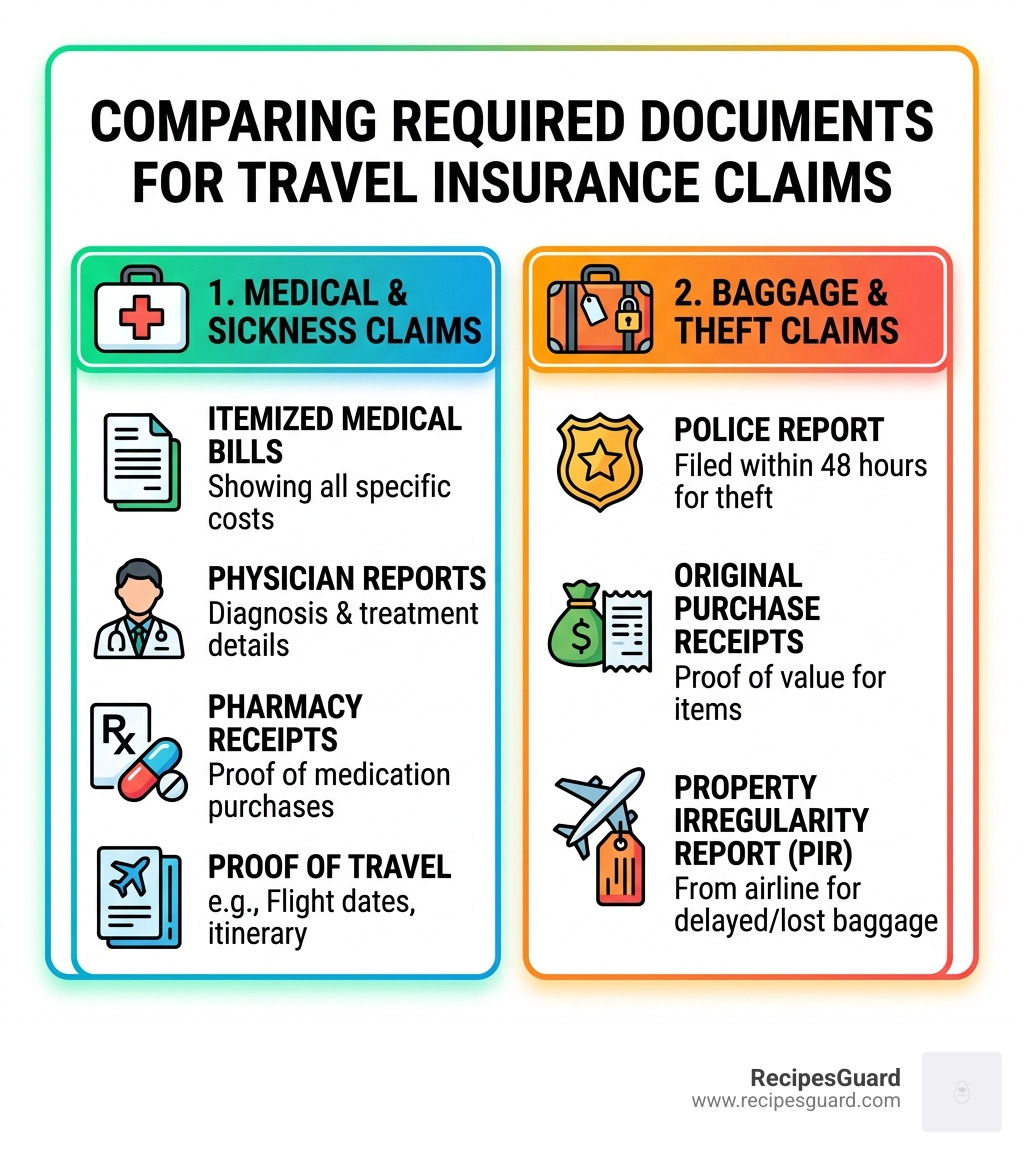
| Claim Type | Required Documents |
|---|---|
| Medical/Sickness | Itemized medical bills, physician reports, pharmacy receipts, and proof of travel (flight dates). |
| Baggage/Theft | Police report (within 48 hours), original purchase receipts for items, and “Property Irregularity Report” from the airline. |
| Trip Cancellation | Death certificate or doctor’s letter explaining why you can’t travel, plus proof of non-refundable expenses. |
| Visa Documents | Copies of your student visa and University enrollment confirmation (COE). |
How University Policies Impact a Travel Insurance Claim for Students
Many students are covered by a policy provided directly by their university. If you are under a plan like the one at the University of Kent, there are specific internal rules you must follow.
For instance, your claim form might require an authorized countersignature from a staff member in your department to prove the travel was university-sanctioned. Additionally, university policies often act as “Primary Coverage,” meaning they pay first before any personal health insurance you might have back in Australia. Failing to register your travel with the university’s insurance office beforehand can sometimes invalidate your right to claim.
Proving Loss and Theft
If your bag goes missing between Sydney and London, the “I lost it” excuse won’t cut it. You need written proof.
- Police Statements: If stolen, get a report number and a physical copy of the statement.
- Airline Reports: If the airline lost your bag, you must get a Property Irregularity Report (PIR) before leaving the airport.
- Original Receipts: Insurers want to see what the item was worth when you bought it. If you don’t have the receipt, a bank statement showing the purchase can sometimes suffice.
Avoiding Common Claim Denials and Delays
We see many students lose out on reimbursements because they didn’t read the “Exclusions” section. A travel insurance claim for students can be denied for several common reasons:
- Alcohol and Drugs: If you get injured while under the influence of alcohol or non-prescription drugs, most insurers will deny the claim entirely.
- Unapproved Repairs: Never authorize expensive repairs on a laptop or car without getting the insurer’s green light first.
- Pre-existing Conditions: If you have a chronic illness, you must disclose it when buying the policy. If you don’t, and you have a flare-up abroad, the claim will likely be rejected.
Navigating High-Risk Activities
Planning on bungee jumping in New Zealand or scuba diving in Thailand during your mid-semester break? Standard policies often exclude these “adventure sports.” To stay protected, you usually need to purchase a specific “Adventure Pack” add-on. If you participate in these activities without the proper coverage, any resulting injury claim will be denied.
Timely Submission and Communication
“Intimation” is just a fancy insurance word for “telling us what happened.” Most policies require you to notify them of a potential claim within 20 to 30 days of the incident. If you wait until the semester is over to file for a doctor’s visit that happened in February, you might find your claim timed out.
If a claim is denied, don’t panic. You have the right to an appeal process. This usually involves providing additional documentation or a letter from a specialist to clarify the situation.
Frequently Asked Questions about Student Insurance Claims
How long does it take to receive reimbursement?
In April 2026, the standard for digital-first companies is very fast. While traditional insurers might take 2 to 4 weeks, many student-focused providers process claims in 48 hours. If you are seeking “pre-approval” for a specialist appointment, expect a wait of 3 to 5 working days.
Does student insurance cover COVID-19?
Yes, in 2026, most policies treat COVID-19 like any other unexpected illness. If you become symptomatic and require medically necessary treatment, it is covered. However, asymptomatic testing (testing just to travel or because you were curious) and routine vaccinations are typically excluded.
What is the average cost of a student policy?
On average, a comprehensive plan costs between 5% and 7% of your total trip cost. For a semester abroad costing $10,000, you can expect to pay between $500 and $700 for high-quality coverage. Prices vary based on your destination (the USA is more expensive due to healthcare costs) and whether you add coverage for expensive gear or adventure sports.
Conclusion
At RecipesGuard, we believe that your focus should be on your grades and your new friends, not on how you’re going to pay for a surprise hospital bill. Navigating a travel insurance claim for students is all about preparation. By keeping your documents organized, reporting incidents immediately, and understanding your policy’s fine print, you ensure that a minor mishap doesn’t turn into a semester-ending disaster.
Ready to secure your study abroad journey? Get expert guidance on your student travel claim and ensure your semester is a success from orientation to graduation.

My name is Bianca, and my journey into the world of fermentation and food safety began with a costly mistake. I once lost an entire season’s harvest of chili peppers because I relied on guesswork instead of science. That failure was my turning point.
