
Why Millions of People Struggle to Cover Pre-Existing Conditions
Cover pre-existing conditions is one of the most searched insurance topics — and for good reason. Whether you’re a student studying abroad, a senior planning a holiday, or someone managing a chronic illness, understanding what your policy actually covers can save you thousands of dollars.
Here’s a quick answer to what you need to know:
| Question | Quick Answer |
|---|---|
| What is a pre-existing condition? | Any illness, injury, or diagnosis that existed before your insurance policy started |
| Can you get coverage with one? | Yes — through ACA plans, guaranteed-issue policies, or rated traditional plans |
| Will it cost more? | Often yes — premiums can be 40–75% higher depending on the condition |
| Are there waiting periods? | Yes — non-ACA plans may look back 6 to 24 months |
| Does the ACA protect you? | Yes — ACA-compliant plans cannot deny you or charge more based on health history |
The scale of this issue is enormous. Roughly 54 million non-elderly adults — about 27% of Americans under 65 — have a condition that would have led to denial or higher premiums before modern insurance protections took effect. That’s more than one in four people.
And if you’re an international student navigating insurance in a foreign country? The rules get even more complicated. Stability periods, look-back windows, exclusion clauses — these terms matter, and not knowing them can cost you.
This guide breaks it all down in plain language so you know exactly where you stand.
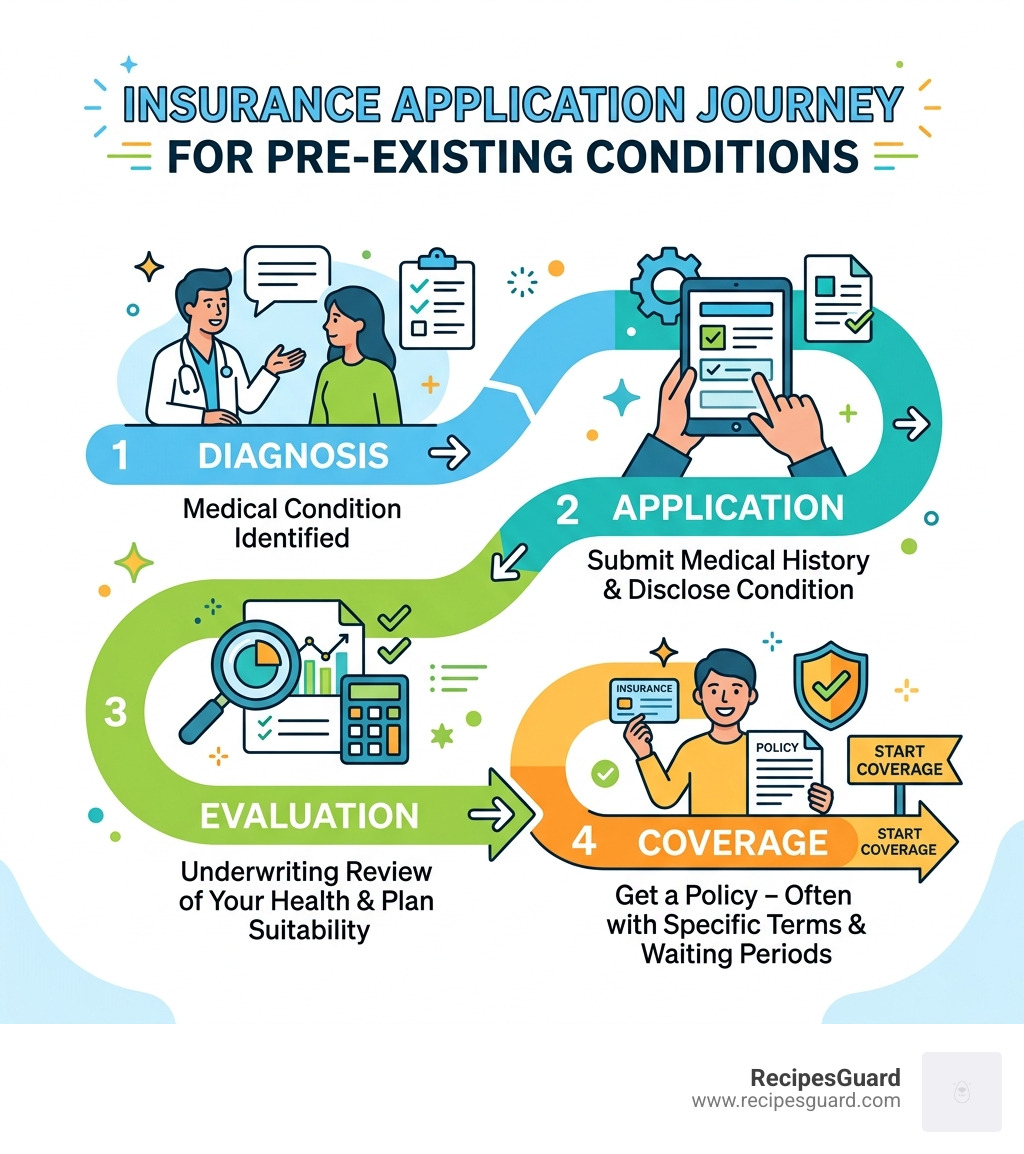
Handy cover pre existing conditions terms:
- Family Health Insurance
- Health Insurance Undiagnosed Condition
- Holiday Insurance for Undiagnosed Conditions
Defining What it Means to Cover Pre-Existing Conditions

When we talk about the need to cover pre-existing conditions, we first have to agree on what one actually is. In the simplest terms, it’s any health issue you had before you signed up for a new insurance policy. But “having” a condition is broader than you might think. It doesn’t just mean a formal diagnosis; it can include symptoms for which you haven’t even seen a doctor yet.
In the Australian context, for instance, a pre-existing condition is often defined as an ailment, illness, or condition where the signs or symptoms existed at any time in the six months ending on the day you joined the hospital cover or upgraded your cover. It’s not about what you knew; it’s about whether a doctor appointed by the health fund (not your own GP) believes the symptoms were present.
This includes:
- Chronic illnesses: Diabetes, asthma, or heart disease.
- Previous injuries: That knee surgery from three years ago or a chronic back issue.
- Mental health: Conditions like anxiety and depression are increasingly recognized as pre-existing conditions that require careful disclosure.
- Ongoing treatments: Even something as seemingly minor as high cholesterol or high blood pressure counts if you are taking medication for it.
Many people worry that their medical history is a “black mark” that will prevent them from ever getting affordable cover. However, as we explore in Why Your Family’s Medical History Won’t Break the Bank Anymore, modern underwriting has become much more nuanced. Insurers are now better at pricing risk rather than just issuing a flat rejection.
How Insurers Define a “Stable” Condition
If you are looking at travel insurance, the word “stable” is going to become your new best friend (or your most annoying hurdle). For an insurer to cover pre-existing conditions during a trip, the condition usually must be “stable” for a specific period before you depart.
What does “stable” mean in insurance-speak? It generally means:
- There have been no new symptoms.
- There has been no change in medication (this includes dosage increases or decreases).
- There are no pending tests, investigations, or referrals to specialists.
- You haven’t been hospitalized for the condition recently.
The “stability window” varies. For younger travelers (typically 0–54), insurers might require a 3-month stability window. Once you hit 55, that requirement often doubles to 6 months. If your doctor changes your blood pressure medication two weeks before your flight, your condition is no longer “stable” in the eyes of the insurer, and any claims related to it could be denied. We dive deeper into this in our guide Don’t Let Old Aches Break Your Travel Bank.
Common Exclusions and Look-Back Periods
A “look-back period” is the timeframe the insurance company investigates to see if a condition existed before your coverage started. This can range from 6 months to 24 months depending on the plan. If you had a “niggle” in your shoulder 18 months ago and it flares up after you buy your policy, the insurer will check those medical records.
Common exclusions often include:
- Pending Surgeries: If you are on a waiting list for a hip replacement, your insurance won’t cover that specific surgery if you try to get it done privately right after joining.
- Undiagnosed Symptoms: This is a tricky one. If you have been experiencing chest pains but haven’t seen a doctor, and then you have a heart attack after the policy starts, the insurer may argue the condition was pre-existing because the symptoms were present.
- High-Risk Conditions: Some policies simply won’t cover specific terminal illnesses or very high-risk conditions without a significant waiting period.
For those currently experiencing symptoms but lacking a name for their ailment, The Ultimate Guide to Holiday Insurance for People Without a Diagnosis Yet offers a roadmap for navigating these murky waters.
Navigating Health and Life Insurance with Medical Histories
It is a common myth that you can’t get life or health insurance if you aren’t a perfect physical specimen. In reality, the “Shocking Truth” is that you can get Life Insurance With Pre-Existing Conditions in 2026, though the process is a bit different.
Insurers use a process called medical underwriting. This is essentially a deep dive into your health history, often involving a medical questionnaire and sometimes a physical exam (blood tests, urine samples, etc.). Based on this, they assign you a “risk class.”
If you have a pre-existing condition, you might receive a “rated” premium. This means you are approved, but you pay a “loading” (an extra fee) on top of the standard premium. These are often called “table ratings.”
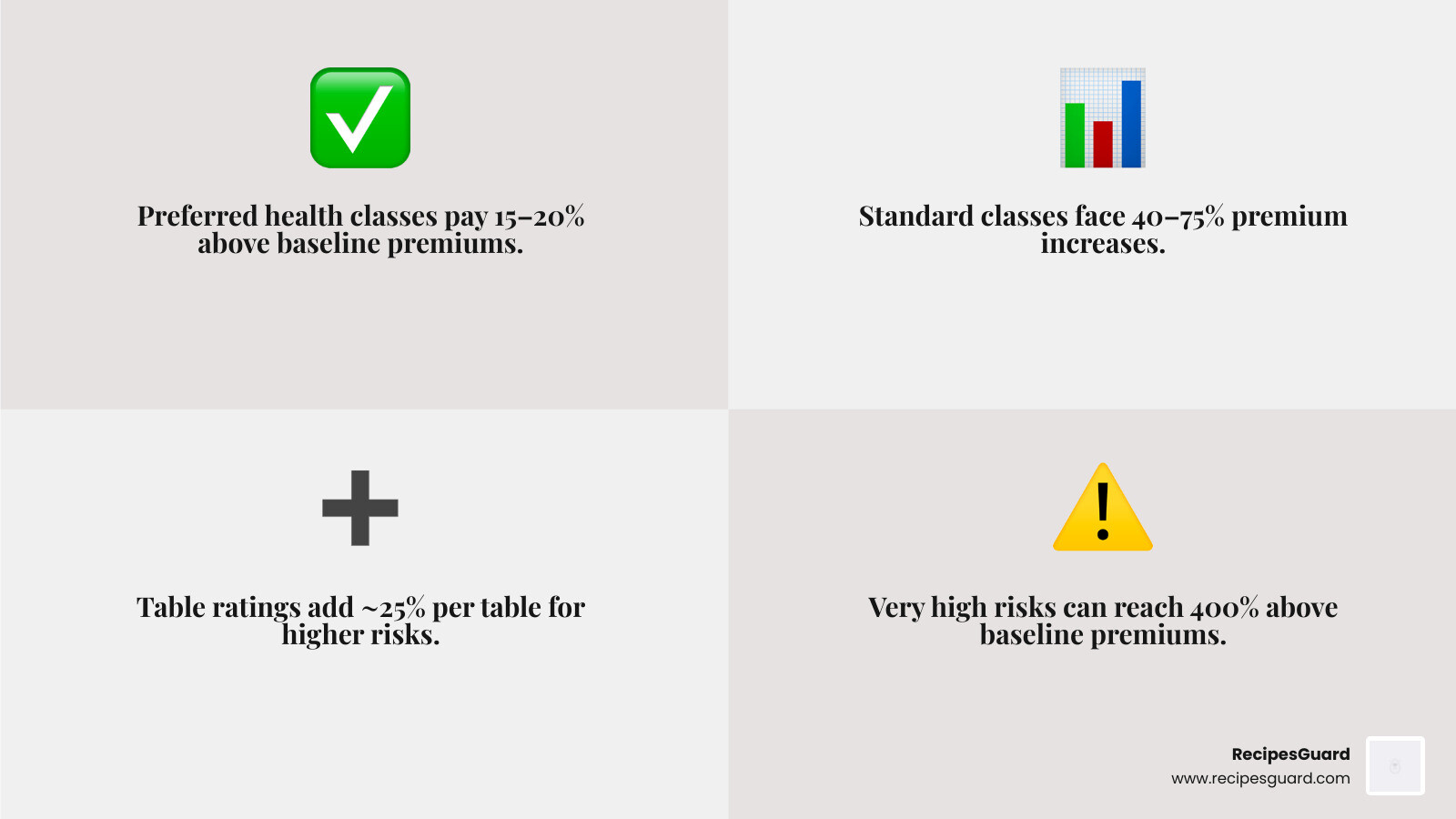
Note: Statistics show that ‘Preferred’ health classes typically see premiums 15–20% above the baseline, while ‘Standard’ classes can be 40–75% above baseline. Table ratings for high-risk applicants can add roughly 25% per table, sometimes reaching 400% above the baseline for very high risks.
Options to Cover Pre-Existing Conditions for Serious Illnesses
Can you get insurance with a history of cancer, heart disease, or diabetes? In 2026, the answer is often yes, but timing is everything.
- Cancer: Most insurers require a “waiting period” of 2 to 5 years of being cancer-free before they will offer standard or rated life insurance. The type of cancer and the stage at diagnosis play a huge role.
- Heart Disease: If you’ve had a heart attack, insurers typically want to see at least 12 to 24 months of stability. They will look closely at your cardiologist reports and your adherence to medication.
- Diabetes: This is one of the most common conditions. If your A1C levels are stable (usually below 7.0), you might even qualify for standard rates. If it’s poorly controlled, expect a rated policy.
As noted in Life Insurance with Pre-Existing Conditions: What’s Still Possible in 2026, the strategy matters more than the diagnosis. Working with a broker who understands which companies are “diabetes-friendly” or “heart-friendly” can save you a fortune.
Guaranteed-Issue vs. Traditional Underwriting
If the thought of a medical exam makes you break out in a cold sweat, you might look at guaranteed-issue insurance.
- Traditional Underwriting: You answer questions, give blood, and wait weeks for a decision. You get better rates if you’re healthy.
- Guaranteed-Issue: No medical questions. No needles. You are “guaranteed” to be accepted. The catch? The premiums are much higher, and the payout (the death benefit) is usually limited for the first two years.
This is a great option for people who have been denied elsewhere. If you’re in the middle of a diagnostic mystery, check out our advice on How to Get Health Insurance When Your Doctor Is Still Guessing.
Essential Steps to Prepare Your Application and Protect Your Coverage
Applying for insurance when you have a medical history requires a bit of homework. You want to present yourself as a “managed risk” rather than an “unknown danger.”
- Consult Your Doctor: Before applying, have a chat with your GP. Ensure your records are up to date and that any “stable” conditions are clearly noted as such.
- Gather Your Data: Know your medications, dosages, and the dates of any major procedures.
- Be Honestly Brutal: The worst thing you can do is lie. If you fail to disclose a condition and later make a claim related to it, the insurer can void your entire policy and refuse to pay a cent.
We cannot stress the “honesty” part enough. As we explain in Don’t Let Your Medical History Stop Your Future Disability Coverage, non-disclosure is the number one reason claims are denied.

Why You Still Need to Cover Pre-Existing Conditions While Traveling
You might think, “If they won’t cover my heart condition, why bother with travel insurance at all?”
This is a dangerous line of thinking! Even if your specific pre-existing condition is excluded because it’s “unstable,” you still need cover for:
- Unrelated Emergencies: If you have a heart condition but break your leg, you are still covered for the leg injury.
- Trip Cancellation: If your flight is canceled due to weather or a strike, you’re covered.
- Medical Evacuation: If you need to be flown home, that cost can reach six figures.
However, be careful with the rules. Many travel policies have a 20% co-pay penalty if you don’t contact their Assistance Centre before receiving treatment. Always keep that emergency number in your phone. For more details, see Healthcare That Covers Pre-Existing Conditions: What You Need to Know.
How Age and Status Changes Affect Your Ability to Cover Pre-Existing Conditions
As we get older, the insurance world gets a bit more suspicious of our “aches and pains.”
- The Age 55 Cliff: In many policies, once you turn 55, the stability period required for travel insurance jumps from 3 months to 6 months. This means you need half a year of “perfect” health records to be covered for your pre-existing conditions.
- Status Changes: If you buy insurance in January for a trip in June, but you get a new diagnosis in March, you must notify your insurer. Your coverage may need to be updated, or you might need to pay a small additional premium to ensure that new condition is covered.
Your domestic health cover (like Medicare in Australia) often doesn’t cover everything when you travel, especially if you’re an international student. There are limits on ambulance costs, dental, and private hospital stays that can leave you with a massive bill if you don’t have the right supplemental cover.
Frequently Asked Questions about Medical Coverage
What happens if my health status changes between application and departure?
If your health changes after you’ve bought a policy but before you leave, you are legally obligated to inform the insurer. This is called the “Duty of Disclosure.” If you develop a new condition or your medication changes, they may either cover it for an extra fee, exclude it, or in some cases, cancel the policy and refund you so you can find more appropriate cover. Ignoring the change is a recipe for a denied claim.
How do insurance companies evaluate mental health conditions like anxiety?
Mental health is handled much more fairly in 2026 than in previous decades. If your anxiety or depression is well-managed with consistent medication and you haven’t been hospitalized in the last 12–24 months, many insurers will offer you “standard” rates. However, if there have been recent changes in medication or any history of self-harm, the policy may be “rated” (more expensive) or have specific exclusions.
Can I get coverage if I have a BMI over 45 or chronic organ disease?
This is where it gets difficult. A BMI over 45 is often a threshold for “uninsurability” in standard personal health plans because it correlates with a high risk of multiple complications. Similarly, chronic organ diseases (like end-stage renal failure) are often excluded from standard plans. In these cases, your best bet is a Guaranteed-Issue plan, which doesn’t ask medical questions, or looking for group coverage through an employer or university, which often bypasses individual medical underwriting.
Conclusion
Navigating insurance when you have a medical history can feel like walking through a minefield, but it doesn’t have to be. Whether you are looking to cover pre-existing conditions for a semester abroad or a well-deserved retirement cruise, the key is preparation, honesty, and understanding the “fine print” of stability.
At RecipesGuard, we specialize in making this process easy for students and travelers. We know that the last thing you want to do while studying for exams is worry about whether your asthma is “stable” enough for your flight. That’s why we provide student-focused, step-by-step claim filing tutorials to ensure you never get stuck with a bill you can’t pay.
Don’t let your medical history stop you from exploring the world. With the right advice and the right policy, you can travel with total peace of mind.
Learn more about our mission at RecipesGuard

My name is Bianca, and my journey into the world of fermentation and food safety began with a costly mistake. I once lost an entire season’s harvest of chili peppers because I relied on guesswork instead of science. That failure was my turning point.
