
The Student’s Guide to Appealing a Denied Health Claim
What a Denied Student Insurance Claim Really Means — and What You Can Do About It
A denied student insurance claim is more common than most students realize — and it doesn’t have to be the end of the road.
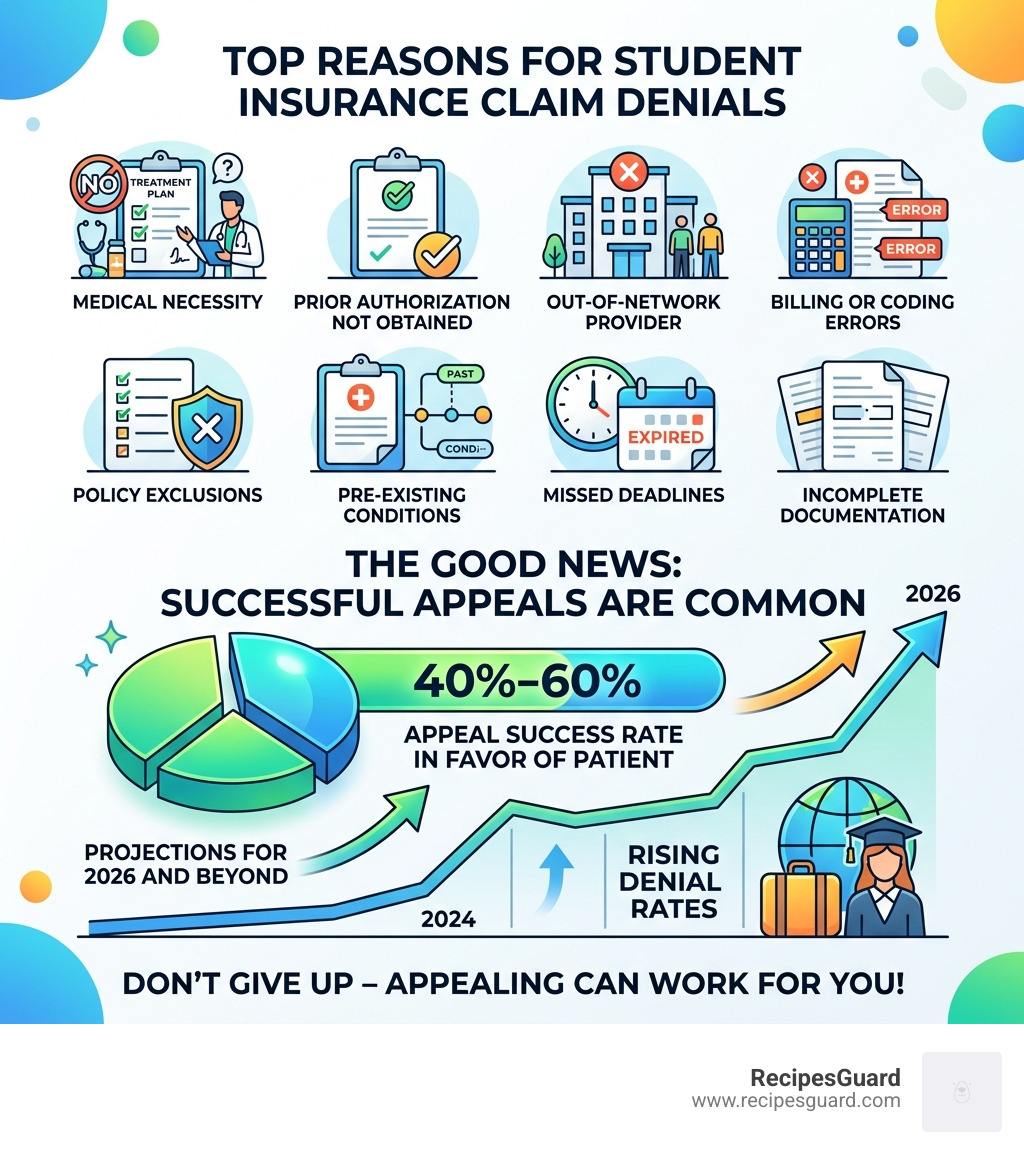
Here are the most common reasons student insurance claims get denied, at a glance:
- Medical necessity — the insurer decided the treatment wasn’t required
- Prior authorization not obtained — approval wasn’t requested before treatment
- Out-of-network provider — you saw a doctor outside your plan’s covered network
- Billing or coding errors — incorrect claim codes or wrong insurer details
- Policy exclusions — the treatment falls outside what your plan covers
- Pre-existing conditions — the insurer linked your health issue to a prior condition
- Missed deadlines — the claim was submitted after the insurer’s filing window
- Incomplete documentation — medical records or forms were missing
The good news? Between 40% and 60% of health insurance appeals are decided in favor of the patient. Yet fewer than 1% of people actually appeal. That means most students are leaving money on the table simply because they don’t know they can push back.
For international students already navigating a health issue far from home, a denial letter can feel like a gut punch. You’ve paid for coverage, you followed your doctor’s advice, and now you’re staring at a bill you thought was covered. It’s stressful — and it’s also, in many cases, fixable.
Denial rates have been climbing. Around 60% of medical group leaders reported that denial rates rose in 2024 compared to the year before. For student plans specifically, the problem is often made worse by administrative mix-ups — like a provider checking the wrong insurance database — rather than a genuine lack of coverage.
The key is knowing exactly what to do next.
Denied student insurance claim definitions:
Why Was Your Denied Student Insurance Claim Rejected?
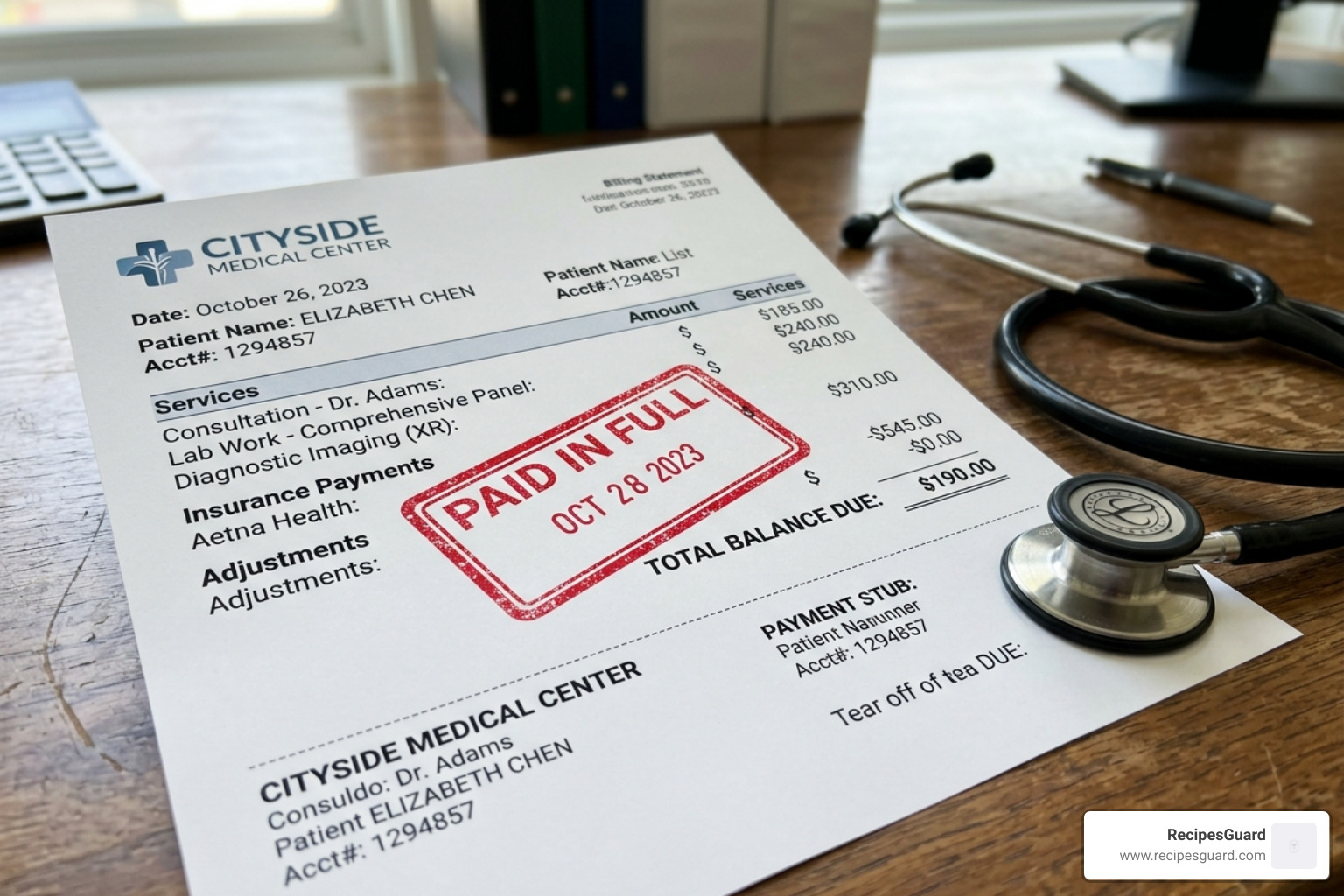
When we see a denied student insurance claim, it usually falls into one of two categories: administrative blunders or clinical disagreements. Understanding which one you’re dealing with is the first step toward winning your appeal.
Medical Necessity and Prior Authorization
The most common “clinical” reason for a denial is a lack of medical necessity. This is when the insurance company’s medical reviewers decide that the treatment you received wasn’t the standard of care or wasn’t “required” to treat your condition. For example, if you had an MRI for back pain but hadn’t tried physical therapy first, they might deem it unnecessary. Closely related to this is prior authorization. Many student plans require you to get “permission” before undergoing expensive tests or surgeries. If you skip this step, the claim is often automatically rejected.
Out-of-Network and Billing Errors
Sometimes, the issue is purely administrative. If you use an out-of-network provider, your insurer may refuse to pay the bill entirely or pay at a much lower rate. However, many “out-of-network” denials are actually billing errors. In Australia, for instance, if a provider’s office uses the wrong Electronic Payer ID or sends the bill to the parent company instead of the specific student division, the system will spit it back out as “not covered.”
Policy Exclusions and Pre-existing Conditions
Every policy has a “fine print” section. Policy exclusions are specific treatments the plan simply doesn’t cover, such as cosmetic procedures or certain elective surgeries. Pre-existing conditions are another major hurdle. If you seek treatment for an illness you had before the policy started, the insurer might try to deny coverage based on waiting periods.
To dig deeper into these specific hurdles, check out our guide on Why Your Student Claim Might Get Rejected And How To Fix It or learn What To Do If Your Student Travel Insurance Is Denied if you are currently studying abroad.
Decoding Your Denial Letter and EOB
Your “denial letter” is actually an intelligence report. It usually arrives as an Explanation of Benefits (EOB). Don’t throw this away! Look for the denial codes — these are short alphanumeric strings that tell you exactly why the computer rejected the claim.
Common codes might indicate “duplicate claim,” “missing information,” or “service not covered.” Often, clerical errors like a misspelled name, a wrong date of birth, or an incorrect policy number are the culprits. If you find an administrative mistake, you might not even need a formal appeal; a simple phone call to the provider to resubmit the claim with the correct info can solve it.
Common Pitfalls for International Students
International students in Australia face unique challenges with Overseas Student Health Cover (OSHC) or Overseas Visitor Health Cover (OVHC). These plans are designed to meet visa requirements, but they often have strict rules about which doctors you can see and what constitutes an “emergency.”
Language barriers can make navigating foreign policy terms even harder. We’ve seen many students get a denied student insurance claim simply because they didn’t understand the “waiting period” rules for pre-existing conditions under Australian law. If you’re an international student, ensuring your treatment complies with your student visa health mandates is non-negotiable.
Immediate Steps After Receiving a Denial Notice

The clock starts ticking the moment you receive that notice. In most cases, you have a 180-day deadline to file an internal appeal. If you miss this window, your right to challenge the decision usually evaporates.
The “Reconnaissance” Call
Before you start writing, pick up the phone. Perform what we call a reconnaissance call to the insurance company’s customer service line. Ask the representative to explain the denial in plain English.
- Get the representative’s name and their extension number.
- Keep a call log with the date, time, and a summary of what was said.
- Ask: “What specific information was missing that would have made this claim payable?”
Often, the rep will tell you that they just need a specific chart note or a corrected code from your doctor. Coordination with your healthcare provider is vital here; if it’s a billing error, ask the provider to resubmit the claim while you wait on the phone. For more on this initial phase, read How To Successfully Appeal A Denied Insurance Claim.
Gathering Evidence and the Letter of Medical Necessity
If the denial was based on “medical necessity,” you need ammunition. You’ll need to gather:
- Full medical records for the date of service.
- Clinical facts from peer-reviewed medical journals that support your treatment.
- A Letter of Medical Necessity: This is the “golden ticket” of appeals.
A Letter of Medical Necessity must be written by your treating physician on their official doctor’s letterhead. It shouldn’t just say “the student needed this.” It must explain the medical urgency, the symptoms you were experiencing, and why other, cheaper treatments wouldn’t have worked. This physician statement is the most powerful piece of evidence you can provide.
Writing an Effective Appeal Letter
Your appeal letter should be professional, factual, and devoid of emotion. Using a professional template helps keep the focus on the facts.
- Cite your policy: Refer to the specific page and paragraph in your policy brochure that says the service should be covered.
- Structure your argument: Start with your policy details, explain the treatment, and then systematically refute the insurer’s reason for denial using your evidence.
- Use a factual tone: Instead of saying “I’m angry you didn’t pay,” say “The clinical evidence provided by Dr. Smith demonstrates that this procedure was essential for the patient’s recovery.”
Always send your appeal via certified mail with a return receipt requested. This provides legal proof that the insurer received your documents before the deadline. For a deep dive into writing these, see The Art Of The Appeal Navigating Travel Insurance Claim Disputes.
The Step-by-Step Process for a Denied Student Insurance Claim Appeal
The appeals process generally follows a two-tier structure. Most students stop after the first rejection, but the second tier is where many wins actually happen.
| Feature | Internal Appeal | External Review |
|---|---|---|
| Who Reviews It? | The insurance company (different staff) | Independent third-party medical experts |
| Timeline | 30–60 days | Up to 4 months (faster for urgent cases) |
| Decision Status | Can be appealed further | Usually legally binding |
| Cost | Free | Usually free or a very small fee |
Filing an Internal Appeal for a Denied Student Insurance Claim
When you file an internal appeal, you are asking the insurance company to take a second look. By law, the person reviewing the appeal cannot be the same person who issued the original denial.
- Timeline: For services you’ve already received, the insurer typically has 60 days to respond. If you are appealing a treatment you haven’t had yet, they usually have 30 days.
- Expedited Requests: If your health is in immediate danger, you can request an “expedited appeal,” which requires a decision within 72 hours.
Don’t let the insurer’s first “no” discourage you. Claim Denied Here Is How Students Can Fight Back And Win.
Requesting an External Review for a Denied Student Insurance Claim
If the internal appeal fails, you have the right to an external review. This is a game-changer because the insurance company no longer has the final say. Instead, an independent third-party medical professional reviews the case.
- Window: You typically have 4 months after the final internal denial to request this.
- Legally Binding: If the external reviewer says the insurer must pay, the insurer must pay. They cannot ignore this decision.
- Process: This is often handled through your state insurance department or a dedicated independent medical review (IMR) process.
Advanced Strategies and Legal Options for Students
If you’ve exhausted the standard appeals and your denied student insurance claim still stands, don’t panic. There are advanced routes available to students that general policyholders might not know about.
University and Government Resources
Most universities have a student assistance office or a student insurance coordinator. These people deal with these insurers every day and often have a direct line to a supervisor who can fix “glitches” in the system.
In Australia, the Private Health Insurance Ombudsman is a free service that investigates complaints and helps resolve disputes between consumers and health funds. If you feel your insurer is acting in bad faith — such as ignoring your evidence or intentionally delaying your claim — the Ombudsman or the State Bureau of Insurance can intervene.
Financial Damage Control
If the appeal is truly dead, you still have options to protect your credit:
- Hospital Financial Assistance: Many hospitals have “charity care” programs that can wipe out or significantly reduce bills for students with low income.
- Payment Plans: Never ignore a bill. Ask the provider for a 0% interest payment plan while you work through the dispute.
- Debt Reduction: Sometimes, simply showing the provider the denial letter can lead them to “write down” the bill to the rate the insurance would have paid, which is often much lower than the “sticker price.”
For more tips on what to do when things go silent, read What To Do When Your Travel Insurance Ghosted Your Claim.
How to Prevent Future Claim Denials
The best way to handle a denied student insurance claim is to never get one in the first place.
- Network Verification: Always call the doctor’s office and ask, “Are you a contracted provider for [Your Specific Plan Name]?” Don’t just ask if they “take” your insurance.
- Pre-approval: If a procedure costs more than a few hundred dollars, get the pre-approval in writing.
- Timely Filing: Ensure your doctor has your correct insurance info on day one. Most plans have a 90-day window for the doctor to submit the bill.
- Monitor Your Portal: Log into your student portal monthly to check for “pending” claims. If a claim is sitting there for 30 days, call and ask why.
Frequently Asked Questions about Student Insurance Denials
How long does the insurance appeal process usually take?
The timeline varies. An internal review usually takes 30 to 60 days. If you escalate to an external review, it can take an additional 60 to 120 days. However, for life-threatening situations, 72-hour expedited reviews are available. We recommend a follow-up frequency of every two weeks to ensure your file hasn’t fallen through the cracks.
What is the success rate for appealing a denied claim?
The statistics are surprisingly in your favor. Between 40% and 60% of appeals result in a reversal of the denial. Despite rising denial rates (up to 21% in some networks), the fact that fewer than 1% of students actually appeal means that those who do persist have a very high chance of success.
What should I do if both internal and external appeals are denied?
If both levels fail, focus on debt reduction. Contact the hospital’s billing department to negotiate the total cost or apply for financial aid. If you believe the denial was a violation of law or “bad faith,” you can file a formal complaint with the state regulatory bodies or, in extreme cases, seek medical litigation through an insurance attorney.
Conclusion
Receiving a denied student insurance claim is a test of persistence, not a final judgment. By keeping meticulous documentation and understanding your student rights, you can navigate the complex world of insurance with confidence. The system is often automated and prone to simple errors — your job is to provide the human oversight that ensures you get the coverage you paid for.
At RecipesGuard, we believe no student should have their education derailed by a medical bill. Stay informed, stay persistent, and don’t be afraid to fight back.
Explore more student insurance guides:
- How To Successfully Appeal A Denied Insurance Claim
- Claim Denied Here Is How Students Can Fight Back And Win
- The Art Of The Appeal Navigating Travel Insurance Claim Disputes

My name is Bianca, and my journey into the world of fermentation and food safety began with a costly mistake. I once lost an entire season’s harvest of chili peppers because I relied on guesswork instead of science. That failure was my turning point.
