
When a Denied Claim Feels Like a Dead End for Students
Facing a denied claim appeal student situation is stressful — whether it’s a rejected financial aid package, a refused insurance claim, or an unexpected medical bill you thought was covered.
Here is a quick overview of how to appeal a denied claim as a student:
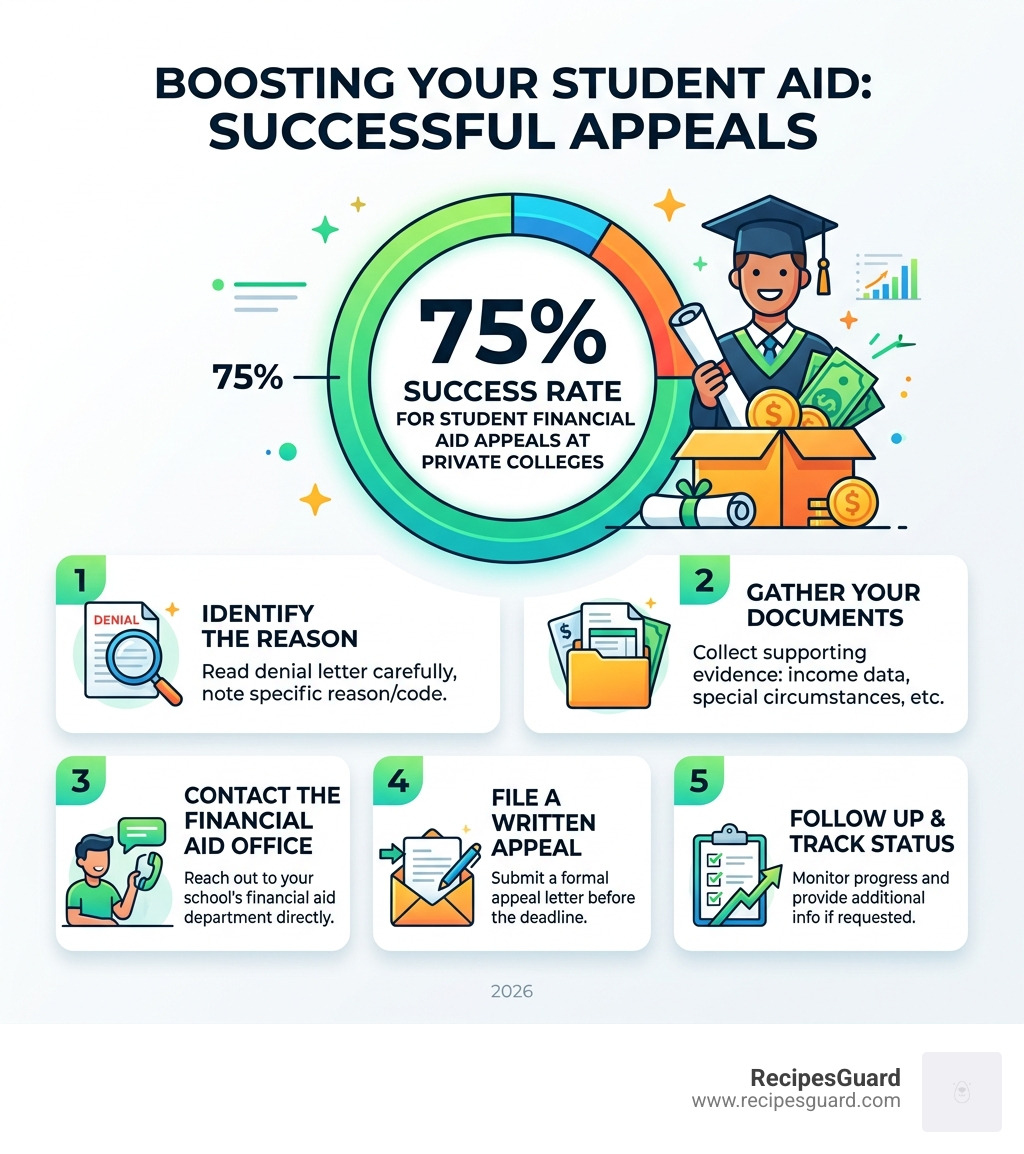
- Identify the reason — Read the denial letter carefully and note the specific reason or code given.
- Gather your documents — Collect supporting evidence such as medical records, pay stubs, denial letters, or third-party letters.
- Contact the right office — Reach out to your school’s financial aid office, your insurance provider, or the relevant authority depending on your claim type.
- File a written appeal — Submit a formal appeal letter within the required deadline (typically 90–180 days for insurance; as soon as possible for financial aid).
- Follow up — Track your appeal status and escalate to an external review if your internal appeal is denied.
Imagine opening your mail to find a surprise bill from a medical provider — or logging into your student portal to see your financial aid has been cut. For international students studying far from home, these moments can feel overwhelming.
But a denial is rarely the final word.
The appeal process exists precisely because initial decisions are often automated, incomplete, or based on missing information. In fact, 75% of students at private colleges who appeal their financial aid decisions succeed — often unlocking an extra $3,000–$5,000 per year.
Whether you’re dealing with a denied health insurance claim, a rejected PLUS Loan, or a financial aid package that doesn’t reflect your real situation, there is a structured path forward. This guide walks you through every step.
Quick look at denied claim appeal student:
- student insurance claim process
- how to submit claim
- travel insurance claim checklist
Navigating a Denied Claim Appeal Student Guide for Financial Aid

When the financial aid package you receive doesn’t match your family’s current reality, it’s time to look into “Professional Judgment.” This is the formal term for when a financial aid administrator adjusts your data to reflect your true circumstances.
It is important to distinguish between a FAFSA correction and an appeal. A correction is for fixing a simple mistake, like a typo in your Social Security number or an accidental extra zero in your bank balance. An appeal, however, is a request for the school to reconsider your award because of a significant change in your life.
Common triggers for an appeal include:
- Income Reduction: A parent losing a job or a significant pay cut.
- Medical Expenses: High out-of-pocket costs that exceed a certain percentage of your income.
- Death or Divorce: Changes in the household structure that affect who provides support.
- Natural Disasters: Unforeseen events that have damaged your home or family business.
If you find yourself in this position, we recommend reading Why Your Student Claim Might Get Rejected And How To Fix It/ to understand the common pitfalls in the application process.
Special vs. Unusual Circumstances
Financial aid offices categorize appeals into two main buckets. Understanding which one you fall into is crucial for your denied claim appeal student strategy.
| Feature | Special Circumstances | Unusual Circumstances |
|---|---|---|
| Definition | Financial changes (job loss, medical bills). | Dependency changes (homelessness, abuse). |
| Adjustment | Changes the Student Aid Index (SAI) numbers. | Changes dependency status to “Independent.” |
| Documentation | Tax returns, pay stubs, medical receipts. | Third-party letters (clergy, counselors, police). |
| Goal | To get more money based on lower income. | To remove parental info from the FAFSA. |
Understanding the Denied Claim Appeal Student Process for PLUS Loans
For graduate students or parents of undergraduates, a Direct PLUS Loan denial can be a major roadblock. In 2026, these denials are almost always tied to “adverse credit history.”
The government defines adverse credit as having accounts totaling $2,085 or more that are 90 days or more delinquent, in collection, or charged off within the last two years. It also includes major events like bankruptcy, foreclosure, or tax liens within the last five years.
If you are denied, you have two primary paths:
- Obtain an Endorser: This is like a co-signer who does not have adverse credit. They must complete an “Endorser Addendum.”
- File an Appeal: If there are extenuating circumstances—such as identity theft, errors on your credit report, or proof that the debt has been resolved—you can file an appeal online at studentaid.gov.
Regardless of which path you choose, you must also complete PLUS Credit Counseling before the loan can be disbursed.
Appealing for Dependency Status and Unusual Circumstances
For some students, providing parental information is impossible due to safety or abandonment. If you are an unaccompanied homeless youth or have experienced family estrangement, you can request a “Dependency Override.”
Under the McKinney-Vento Act, students who are homeless or at risk of homelessness can be classified as independent. You don’t need a permanent home address for the FAFSA; you can use a friend’s address or even your school’s address.
To prove these unusual circumstances, you will need third-party verification. This could be a letter from a high school homeless liaison, a shelter director, or a professional like a therapist or member of the clergy who can verify the breakdown of the family relationship.
How to Overturn Health and Travel Insurance Denials

Opening a “Claim Denied” letter can be terrifying, especially when you’re a student on a budget. However, we want you to remember that many denials are simply the result of automated systems flagging missing data.
The first step is to decode your Explanation of Benefits (EOB). This document isn’t a bill; it’s a report showing what the insurer paid and what they didn’t. Look for the denial code. It might be something as simple as a misspelled name or an incorrect diagnostic code from the doctor’s office.
If the issue isn’t a clerical error, you have a legal right under the Affordable Care Act (ACA) to an Internal Appeal. If the insurer still says no, you can escalate to an External Review, where an independent third party makes the final decision.
For more in-depth strategies, check out Claim Denied Here Is How Students Can Fight Back And Win/ and the official guide on Internal appeals | HealthCare.gov.
Steps to Win a Denied Claim Appeal Student Health Case
To win an insurance appeal, you need to treat it like a “battle plan.” You aren’t just asking for money; you are proving that the service was a Medical Necessity.
- The 180-Day Window: You generally have six months from the date of the denial to file your internal appeal. Don’t miss this deadline!
- The Letter of Medical Necessity: This is your most powerful tool. Ask your doctor to write a formal letter explaining, in clinical terms, why the treatment was essential for your health and why alternatives wouldn’t work.
- Gather Clinical Evidence: Include medical records, test results, and even peer-reviewed journal articles if the insurer claims a treatment is “experimental.”
- Keep a Log: Document every phone call. Write down the date, time, the name of the representative you spoke with, and a summary of what they said.
For a step-by-step walkthrough, see our guide on How To Successfully Appeal A Denied Insurance Claim/.
Navigating International Student Health Cover (OSHC) and Travel Disputes
For international students in Australia, Overseas Student Health Cover (OSHC) is mandatory. Disputes here often center on pre-existing conditions or waiting periods.
If your OSHC claim is rejected, check your policy certificate. Many students are surprised to find that emergency evacuations or certain elective treatments aren’t covered. However, if you believe the insurer has misclassified your condition as “pre-existing,” you can fight back with medical records from your home country proving you hadn’t sought treatment for the issue previously.
For those studying in the US, schools like Kalamazoo College have very strict rules regarding health insurance waivers. For instance, according to the Student Health Insurance Appeal Process – Student Health Center | Kalamazoo College, you cannot appeal if you have already used the college’s insurance or if you are an international student.
If you’re feeling stuck, don’t worry—we’ve got your back. Read Dont Panic If Your Oshc Claim Gets The Red Card/ for specific advice on Australian student insurance.
Appealing Student Visa Refusals and Release Decisions
A visa refusal can feel like your dreams are being put on hold, but in many cases, especially in Australia, you have the right to a review.
The most common reason for a refusal is failing to meet the Genuine Student (GS) requirement (formerly GTE). The Department of Home Affairs needs to be convinced that you truly intend to stay in Australia temporarily for study purposes.
If your visa is refused while you are in Australia, you can often apply for a review through the Administrative Appeals Tribunal (AAT). This is an independent body that looks at your case fresh. You must act quickly, as the deadline to apply for a review is usually very short (often 21 days).
For more details on this process, check out How to Appeal a Student Visa Rejection in Australia – IDP Education.
Reviewing International Student Release and Migration Decisions
Sometimes the “denial” isn’t from the government, but from your school. If you want to transfer to a different education provider before completing six months of your principal course, you need a “release” from your current school.
If your school refuses to release you, they must provide a reason. Common reasons for refusal include:
- The transfer would jeopardize your academic progress.
- You haven’t provided a valid enrollment offer from another school.
- The school believes you are trying to bypass migration rules.
You have the right to appeal this decision internally with your school. If that fails, you can take the matter to the Overseas Students Ombudsman. You can find more about these specific rights at Appeal a release refusal decision (International students).
Frequently Asked Questions about Student Appeals
What are the most common reasons for a PLUS Loan denial in 2026?
In May 2026, the primary reason for a PLUS Loan denial remains adverse credit history. This specifically includes having debts of $2,085 or more that are 90 days delinquent, or having a bankruptcy, foreclosure, or tax lien on your record within the last few years. It is not based on a traditional credit score, but on these specific negative events.
How much additional funding can a successful financial aid appeal yield?
While every case is different, successful appeals typically yield an additional $3,000 to $5,000 per year. In extreme cases involving significant job loss or high medical bills, some students have seen their awards increase by over $50,000. Success rates are generally higher at private colleges (75%) compared to public universities (25%).
What is the timeline for a health insurance internal appeal?
You generally have 180 days from the date you receive your denial notice to file an internal appeal. Once filed, the insurance company must make a decision within 30 days for services you haven’t received yet (pre-service) or 60 days for services you have already received (post-service). If your situation is an emergency, you can request an expedited review, which must be decided within 72 hours.
Conclusion
At RecipesGuard, we know that being a student is hard enough without having to fight through a mountain of paperwork. Whether you are dealing with a denied claim appeal student issue regarding your tuition, your health, or your right to stay in the country, the most important thing is to stay persistent.
Documentation is your best friend. Keep every letter, track every phone call, and never miss a deadline. The system is designed to handle these disputes, and more often than not, the “no” you received is just an invitation to provide more information.
If you need more help navigating student claims, we are here for you. For more expert guides and step-by-step tutorials, visit RecipesGuard. Stay savvy, stay organized, and don’t give up on the support you deserve!

My name is Bianca, and my journey into the world of fermentation and food safety began with a costly mistake. I once lost an entire season’s harvest of chili peppers because I relied on guesswork instead of science. That failure was my turning point.
