
Why Getting the Right Travel Insurance for a Year in Australia Can Save You Thousands
Travel insurance for a year in Australia is not a single product — it’s a choice between two very different types of cover, and picking the wrong one could leave you unprotected when it matters most.
Here’s a quick answer to help you decide:
| Your Situation | Best Policy Type |
|---|---|
| Taking multiple short trips (under 60 days each) over 12 months | Annual Multi-Trip policy |
| Staying in Australia continuously for a full year | Single-Trip (Long-Stay) policy |
| Studying or on a working holiday visa | Single-Trip or OSHC (check visa requirements) |
| Traveling frequently for business or leisure | Annual Multi-Trip policy |
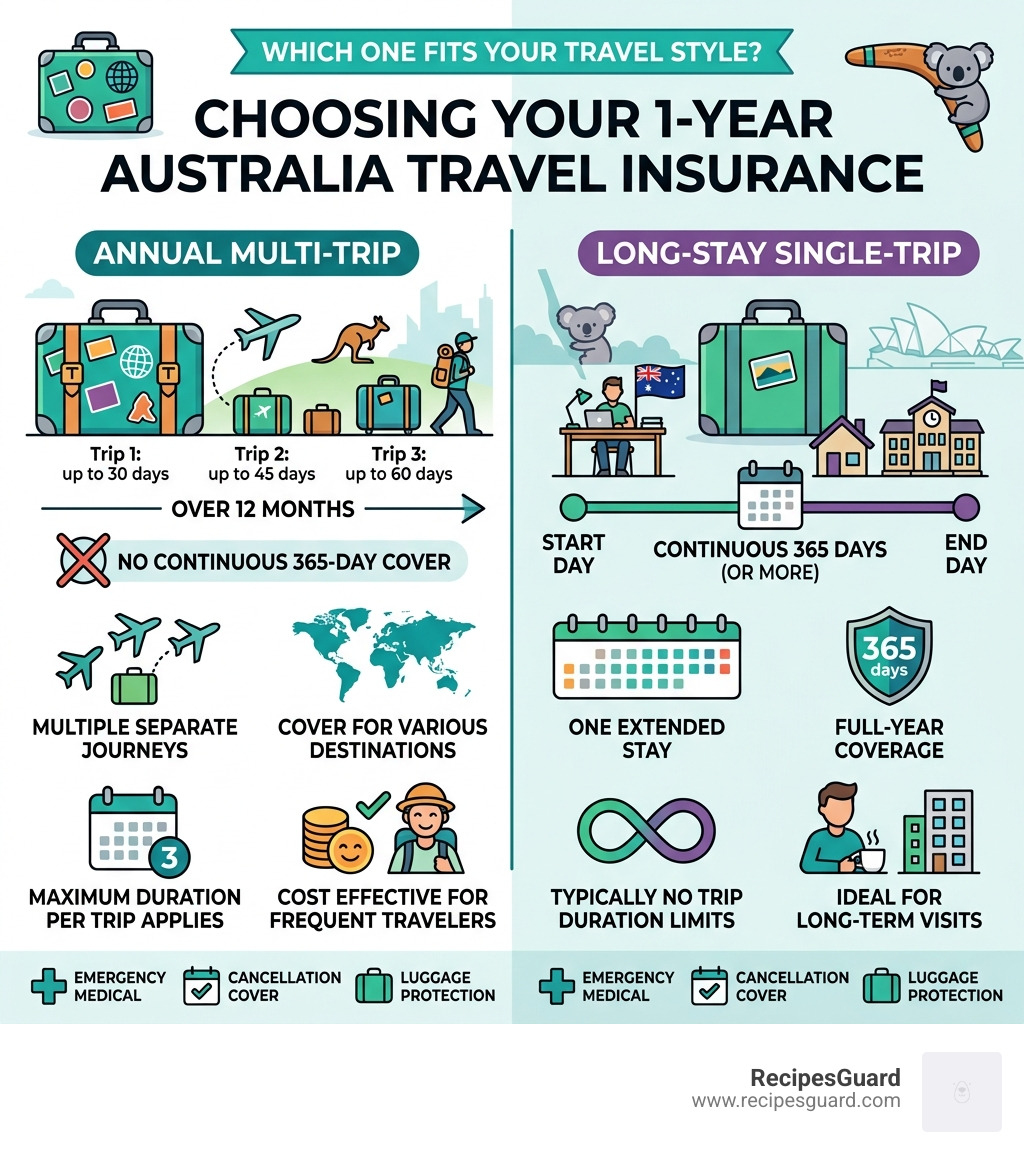
The key thing most people get wrong? Annual multi-trip policies do not cover one continuous 365-day stay. They are designed for multiple separate trips, each capped at 30, 45, or 60 days at a time.
If you’re an international student, a gap-year traveler, or someone planning a long stay, understanding this difference upfront can save you from a very costly mistake — especially if a medical emergency or trip cancellation hits mid-year.
In this guide, we compare the top Australian providers so you can find the right fit for your travel style and budget. For official safety advice and travel requirements, always consult the Australian Government’s Smartraveller website.
Travel insurance for a year in australia terms made easy:
- best insurance for working holiday visa australia
- claim for pet quarantine
- claim timeline extension guide
Understanding Travel Insurance for a Year in Australia

When we talk about staying “down under” for a full 12 months, we have to look at the reality of your lifestyle. Are you a digital nomad setting up a base in Sydney but flying home for Christmas? Or are you a backpacker on a Working Holiday Visa who won’t leave Australian soil for the entire year?
The Australian insurance market in May 2026 is highly specialized. For those of us who are international students, the rules are even stricter. You generally cannot rely on standard travel insurance to meet your visa requirements; instead, you’ll need Overseas Student Health Cover (OSHC). You can learn more about this in The International Student Guide to Staying Covered in Australia.
If you are here for a gap year, your needs shift toward protection for adventure activities and theft. We recommend checking out Everything You Need to Know About Gap Year Travel Cover to ensure your gear is protected while you’re fruit picking or surfing.
Annual Multi-Trip vs. Single-Trip Policies
The biggest point of confusion we see at RecipesGuard is the term “Annual.” In the insurance world, an Annual Multi-Trip (AMT) policy is like a subscription. It covers you for an unlimited number of trips within a 12-month window, but each trip has a “stopwatch” on it.
For example, most Australian providers will let you choose a maximum journey length of 30, 45, or 60 days. Once you hit that limit, you must return home for the “stopwatch” to reset. If you are planning a continuous 365-day stay without leaving Australia, an AMT policy will likely leave you uninsured after the first two months! In that case, you need a “Single-Trip” policy set for a 365-day duration.
Eligibility and Age Restrictions
Age plays a massive role in what you can buy. For frequent traveler plans, many providers cap eligibility at age 69. If you’re 70 or over, don’t worry—you can still get cover, but you’ll usually be directed toward a Comprehensive Single-Trip policy rather than an AMT.
For those traveling with family, many Australian policies allow you to add dependants (children or grandchildren) for free. Some insurers, for instance, cover children under 12 at no extra cost, while others extend this to dependants under 19 who aren’t working full-time.
Comparing Maximum Trip Durations and Domestic Coverage
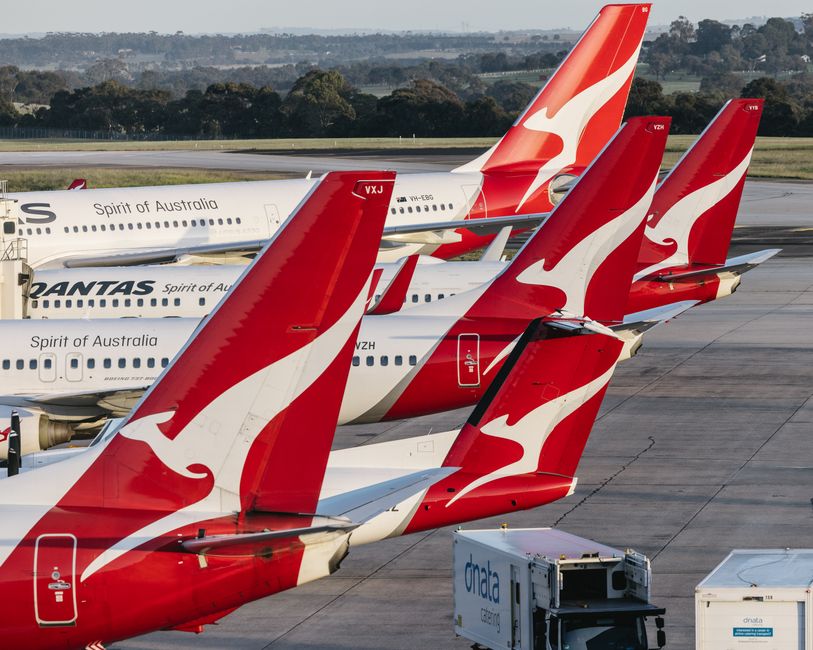
If you’ve decided that an Annual Multi-Trip policy fits your “fly-in, fly-out” lifestyle, you need to look at the journey limits. This is the maximum time you can spend away from home before the policy stops covering you.
- Major Banks: Often offer international limits of 30, 45, or 60 days.
- Postal Services: Match these limits (30, 45, or 60 days) for international travel.
- Specialist Insurers: Typically offer 21 or 45-day options for their Frequent Traveller plans.
Choosing the right limit is crucial. If you take a 50-day trip on a 45-day policy, those last five days are completely unprotected.
Domestic Travel Insurance for a Year in Australia
One of the best perks of travel insurance for a year in australia is that it often covers your local adventures too. However, there’s a catch: the “250km Rule.” Most providers only trigger domestic cover if you are traveling more than 250km from your home.
Some providers lower this threshold to 200km. If you’re staying closer to home, you might still be covered if you have at least one night of pre-paid accommodation (like an Airbnb or hotel). This is vital for those on a working holiday who might be moving between regional farms and cities. For more on this, see How to Pick the Best Insurance for Your Aussie Working Holiday.
Regional Selection and Worldwide Cover
When setting up your policy, you’ll be asked where you’re going. Most Australian insurers use a “Region” system:
- Region 1: Worldwide (including the USA, Canada, and Africa).
- Region 2: Worldwide (excluding the Americas and Africa).
- Region 3: New Zealand and Pacific Islands.
- Region 4: Domestic (Australia only).
A pro tip from our team: if you spend more than 20% of your total trip time in a higher-cost region (like the USA), you must select the Worldwide option to ensure your medical cover remains valid.
Maximizing Value: Rewards, Points, and Family Cover
Who doesn’t love a few extra perks? If you’re paying for a year’s worth of insurance, you might as well get something back. Policies linked to frequent flyer programs are famous for this—you can earn significant points if your premium meets a minimum spend (usually $1,500). You can even use your existing points to pay for the premium itself.
Cost-Effective Travel Insurance for a Year in Australia
Buying online is almost always cheaper. Many online providers often offer a 15% discount just for using their website. If you’re a member of certain health insurance funds, you can often snag an additional 15% discount on your travel policy.
For students, cost is a major factor. While travel insurance is great for luggage, OSHC is your primary medical safety net. We’ve broken down the costs in How Much Does OSHC Australia Cost and Is It Worth It? to help you budget for your year abroad.
Free Cover for Children and Dependants
If you’re a “Digital Nomad Parent,” look for policies that include children for free. Most major Australian insurers define dependants as children or grandchildren under 19. This can save a family hundreds of dollars over a year. If you’re a student with a family, check out The Best OSHC Deals for Long-Term International Students to see how family health cover stacks up.
Navigating Claims and Medical Emergencies
This is where we at RecipesGuard specialize. Buying the policy is the easy part; getting paid when things go wrong is where the work begins. Most top-tier providers now offer 24/7 emergency assistance. Whether you’ve had a scooter accident in Bali or a medical emergency in the Outback, these teams help coordinate hospital admissions and evacuations.
We always tell our readers: Keep your receipts! Whether it’s a $50 GP visit or a $5,000 hospital stay, you need documentation. For a step-by-step walkthrough, see The Aussie Student Tutorial for Travel Insurance Claims.
Handling Medical Bills and Evacuation
International travel insurance usually offers “unlimited” overseas medical cover. However, “unlimited” often has a time limit—usually 12 months from the date the injury or illness first occurred.
In Australia, travel insurance works differently because of Medicare. Your travel insurance generally cannot cover medical expenses incurred inside Australia if you are an Australian resident. For international visitors, the rules change based on your visa. Read How to Handle Medical Bills Down Under and The Students Survival Guide to Australian Medical Claims for the full breakdown of how to navigate the Aussie health system.
Luggage Protection and Rental Car Excess
If you’re traveling for a year, your luggage is your life. Comprehensive plans from leading providers offer up to $15,000 in luggage cover. Be aware of “sub-limits”—a policy might cover $15,000 total but only $750 for a single laptop unless you list it as a “specified item.”
Rental car excess is another big one. If you’re road-tripping the Great Ocean Road, a standard rental agreement might have a $5,000 excess. A good travel insurance for a year in australia policy will cover this excess (often up to $8,000), saving you from the expensive “daily insurance” the rental companies try to sell you. If your bags go missing during your move, don’t panic—read Where is My Bag? A Guide to Lost Bag Claims in Australia.
Frequently Asked Questions about Annual Travel Insurance
Can I use an annual multi-trip policy for a continuous 12-month holiday?
No, annual multi-trip policies are designed for multiple shorter journeys (typically 30-60 days each) rather than one single 365-day trip. If you stay in Australia for 365 days straight without leaving, an AMT policy will stop covering you after your chosen trip limit (e.g., 45 days) expires. For a continuous year-long stay, a long-stay or single-trip policy is required.
Does travel insurance for a year in Australia cover COVID-19?
Most comprehensive policies in May 2026 include cover for emergency overseas medical expenses and cancellation if you are diagnosed with COVID-19 by a qualified medical practitioner. However, “fear of travel” or government-imposed border closures and general pandemic restrictions are typically excluded. Always check the specific PDS for the “Coronavirus Travel Costs” section.
Are pre-existing medical conditions covered in annual plans?
Many providers offer automatic cover for a list of common conditions (e.g., well-controlled asthma, mild acne, or Type 2 diabetes), provided you haven’t been hospitalized recently. For other conditions, you must complete an online medical assessment. Failure to disclose conditions during the application can void your entire policy, meaning no payout for any claim, even if it’s unrelated to your condition.
Conclusion
Choosing the right travel insurance for a year in australia doesn’t have to be a headache. Whether you’re a frequent flyer looking for the convenience of an Annual Multi-Trip plan or a student needing long-stay protection, the key is to read the fine print regarding trip limits and medical exclusions.
At RecipesGuard, we’re here to make the “boring stuff” easy. From step-by-step claim filing tutorials to student-focused advice, we want to ensure that if something goes wrong, you aren’t left out of pocket. Before you hit “buy,” make sure to check out The Ultimate Guide to Buying Travel Insurance for Australia Online for our final checklist.
Safe travels, and enjoy everything the Land Down Under has to offer!
More info about student travel insurance
Disclaimer: This article is for informational purposes only. Always read the Product Disclosure Statement (PDS) and Target Market Determination (TMD) of any insurance provider before making a purchase. Rates and terms are based on market data as of May 2026.

My name is Bianca, and my journey into the world of fermentation and food safety began with a costly mistake. I once lost an entire season’s harvest of chili peppers because I relied on guesswork instead of science. That failure was my turning point.
