
One in 30 Trips Ends in a Medical Emergency — Are You Covered?
Emergency medical insurance abroad is a specialized policy that covers the cost of unexpected illness or injury when you’re traveling outside your home country — including hospital stays, emergency treatment, and medical evacuation.
Here are the top things to know before you buy:
- What it covers: Emergency hospital care, surgery, ambulance transport, medical evacuation, and sometimes emergency dental
- What it does NOT replace: Your regular health insurance — it works alongside it, not instead of it
- Who needs it: Anyone traveling internationally, especially students, frequent travelers, and people visiting remote areas
- How much it costs: Typically 4%–15% of your total trip cost, depending on your age, destination, and coverage level
- When to buy it: Before you leave — most plans cannot be purchased after you’ve already departed
If you’re a student studying abroad or a traveler heading overseas, here’s something that might surprise you: your regular health insurance almost certainly won’t help you if something goes wrong.
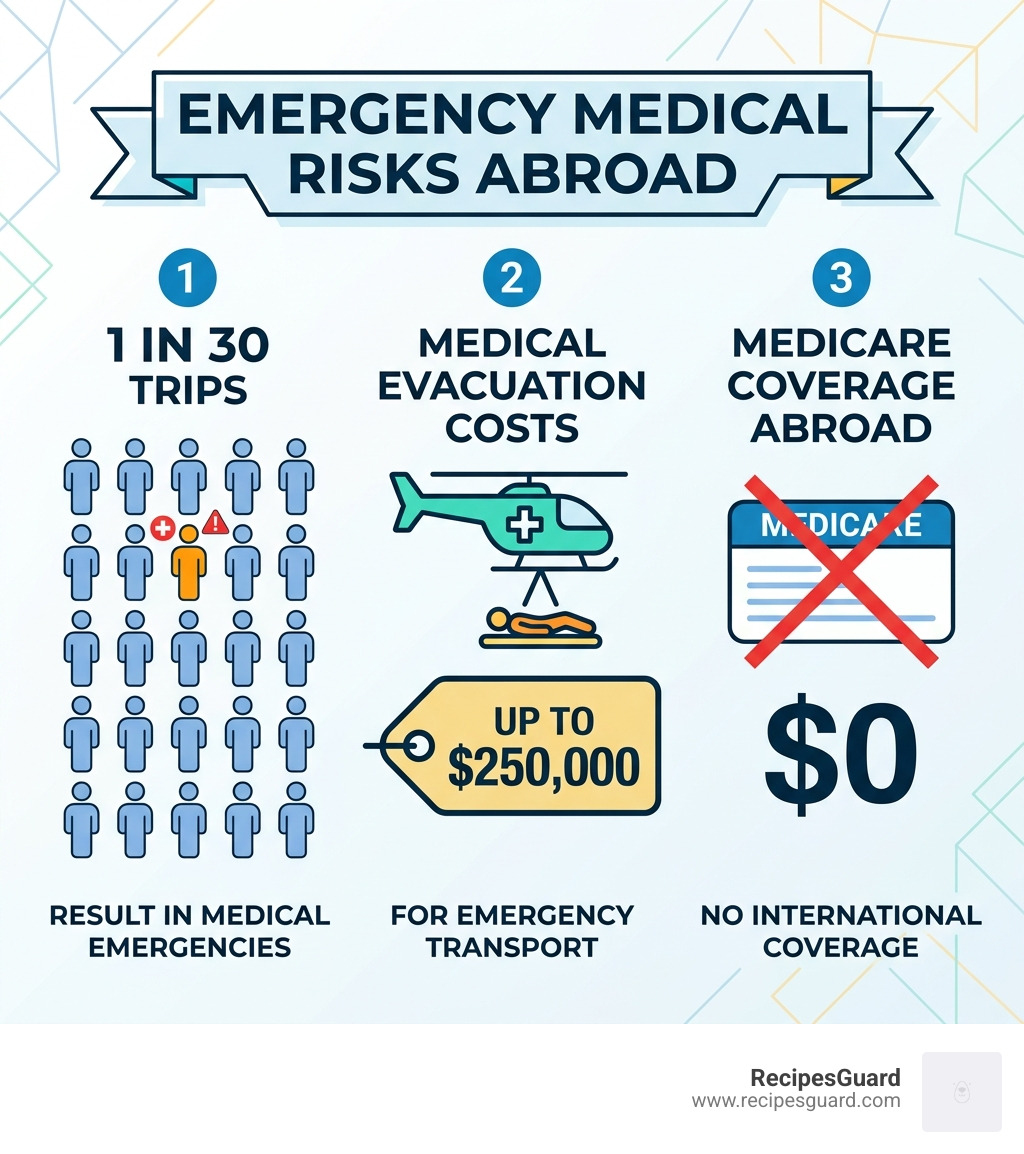
U.S. Medicare and Medicaid do not cover medical care outside the United States. Most standard domestic health plans offer little to no international coverage either. That means you are personally responsible for every dollar of a hospital bill abroad — and those bills can be enormous.
The numbers are stark. Over 10 million travelers are hospitalized abroad every year. More than 2 million require medical transport, which can cost anywhere from $30,000 to over $250,000. And statistically, 1 in every 30 trips involves a medical emergency or serious safety concern.
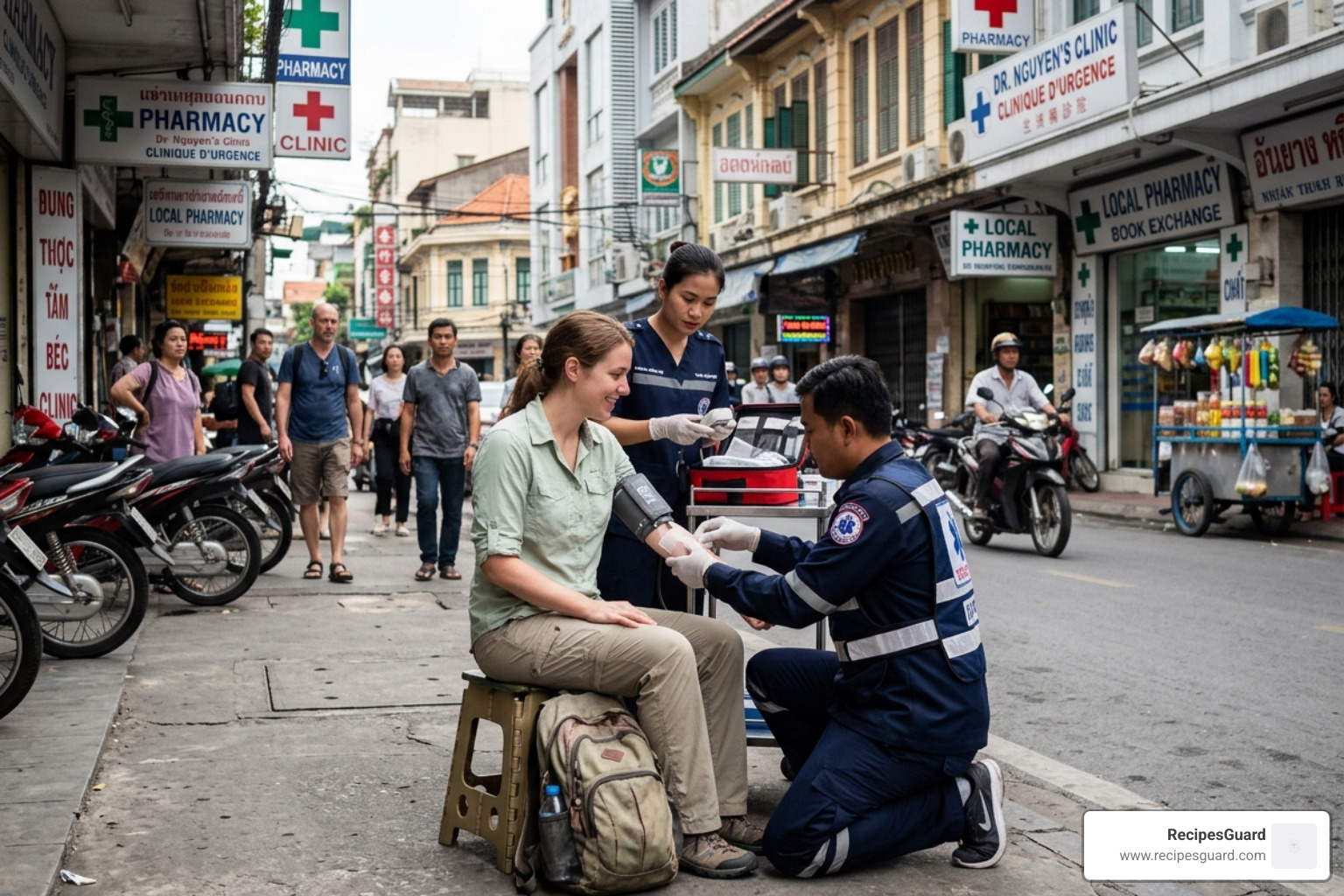
For an international student navigating an unfamiliar healthcare system in a foreign country — without knowing the language, the local billing process, or which hospitals to trust — that’s a genuinely frightening situation to face without a safety net.
That’s exactly what emergency medical insurance abroad is designed to solve.
Learn more about emergency medical insurance abroad:
Why You Need Emergency Medical Insurance Abroad in 2026
As we move through 2026, travel has become more accessible, but the financial risks associated with health have never been higher. Many travelers mistakenly believe that their government or their domestic health plan will “figure it out” if they break a leg in the Outback or catch a severe virus in Tokyo.
The reality is much colder. The U.S. government does not pay medical costs for citizens abroad. In fact, if the Department of State has to issue an emergency medical loan to get you home, they will likely hold your passport until that loan is paid back in full. Furthermore, most domestic plans treat international care as “out-of-network,” if they cover it at all. This is where Medical assistance overseas becomes a critical resource to understand before you board your flight.
Why You Need emergency medical insurance abroad in 2026
In 2026, 3 out of 4 travelers report being concerned about safety even in countries traditionally considered “safe.” With over 10 million hospitalizations occurring annually among international travelers, the “it won’t happen to me” mentality is a dangerous gamble.
When you are in a foreign country, you are navigating a landscape of roughly 7,000 languages and 180 different currencies. Finding a doctor who speaks your language and understands your medical history is hard enough; paying for it is another hurdle entirely. Private medical facilities in many popular destinations require a guarantee of payment or a massive cash deposit before they even admit you. Without emergency medical insurance abroad, you could be left stranded. For a deeper dive into staying safe, check out The Ultimate Survival Guide For Medical Emergencies Abroad.
Comparing Travel Health vs. Regular Health Insurance
It’s easy to confuse the two, but they serve very different masters. Your regular health insurance is built for routine care, wellness checks, and managing chronic conditions at home. Emergency medical insurance abroad is built for the “unexpected and acute.”
While your domestic plan might cover a flu shot, it won’t pay for a $100,000 air ambulance from a remote island. Travel medical insurance is often “secondary” coverage, meaning it pays out after any other insurance you have is exhausted. However, because most domestic plans pay $0 abroad, your travel policy effectively becomes your primary shield. You can learn more about these distinctions by Understanding Travel Medical Coverage vs. Standard Health Plans.
Critical Coverage: Medical Evacuation and Repatriation
If there is one part of a policy you should never skimp on, it’s medical evacuation. This isn’t just a fancy ambulance ride; it’s a logistically complex operation involving specialized aircraft, medical staff, and international flight clearances. We’ve seen cases where evacuation costs reached the quarter-million-dollar mark. Understanding How Evacuation Coverage Saves Travelers Thousands is the difference between a recovery and a lifelong debt.
The Importance of Medical Evacuation in Remote Areas
If you are hiking in a remote region or visiting an area with limited medical infrastructure, “nearest adequate facility” coverage is vital. Most insurance policies will transport you to the closest hospital that can stabilize you. However, “hospital of choice” memberships go a step further, allowing you to be moved to a hospital back in your home country once you are stable enough to fly.
Without this, you might be stuck in a hospital where you don’t speak the language and your family can’t reach you. For students, this is particularly stressful. We recommend reading How To Manage The Medical Evacuation Claim Process to understand how to trigger this benefit.
Repatriation of Remains and Crisis Support
It’s a somber topic, but repatriation of remains is a standard inclusion in quality policies. If the unthinkable happens, the cost and red tape involved in transporting a body across international borders are staggering. A good policy handles the legal requirements and family coordination.
Beyond medical issues, modern 2026 policies often include “Crisis Support.” This covers non-medical emergencies like natural disasters, political unrest, or even kidnapping. This holistic approach ensures that whether the threat is a virus or a violent protest, you have a way out. Explore Comprehensive Crisis Support for International Travelers to see what else might be covered.
Evaluating Costs and Pre-Existing Conditions
How much should you pay? Typically, comprehensive insurance costs between 8% and 15% of your total trip cost. Factors that influence the price include:
- Your Age: Prices rise significantly for travelers over 65.
- Destination: Countries with high healthcare costs (like the U.S. for incoming travelers) command higher premiums.
- Deductibles: Choosing a $0 deductible will raise your premium but save you from out-of-pocket stress during an emergency.
Key Exclusions in emergency medical insurance abroad
Insurance isn’t a blank check. Most policies have specific “deal-breakers.” If you are injured while under the influence of alcohol or drugs, your claim will likely be denied. The same applies to “high-risk” activities like skydiving or mountain climbing unless you’ve purchased a specific adventure sports rider.
Routine care, like a standard physical or elective surgery, is also excluded. These policies are for accidents and sudden illnesses only. To avoid a “claim denied” letter, see Er Visits And Travel Insurance A Match Made In Heaven.
Managing Pre-Existing Conditions and Look-Back Periods
A “pre-existing condition” is generally defined as any illness or injury for which you sought treatment, took medication, or experienced symptoms within a specific “look-back” period (usually 60 to 180 days) before buying the policy.
To get coverage for these conditions, many insurers require you to buy the policy within 14 to 21 days of making your first trip payment. If you’re an expat or student, you might be able to waive waiting periods by providing a “letter of creditable coverage” from your previous insurer. For more tips, read Navigating Pre-Existing Conditions Abroad.
Mastering the Claim Process for emergency medical insurance abroad
Filing a claim is where the rubber meets the road. Unfortunately, a study of international travelers showed that insurance companies fully paid only about two-thirds of claims. Why? Usually, it’s due to poor documentation or pre-existing condition disputes. This is why we focus so heavily on How To Claim Medical Expenses Abroad Without The Headache.
Step-by-Step Guide to Filing a Claim
If you find yourself in a hospital bed, follow these steps:
- Contact the Insurer Immediately: Most policies require “pre-authorization” for non-life-threatening procedures.
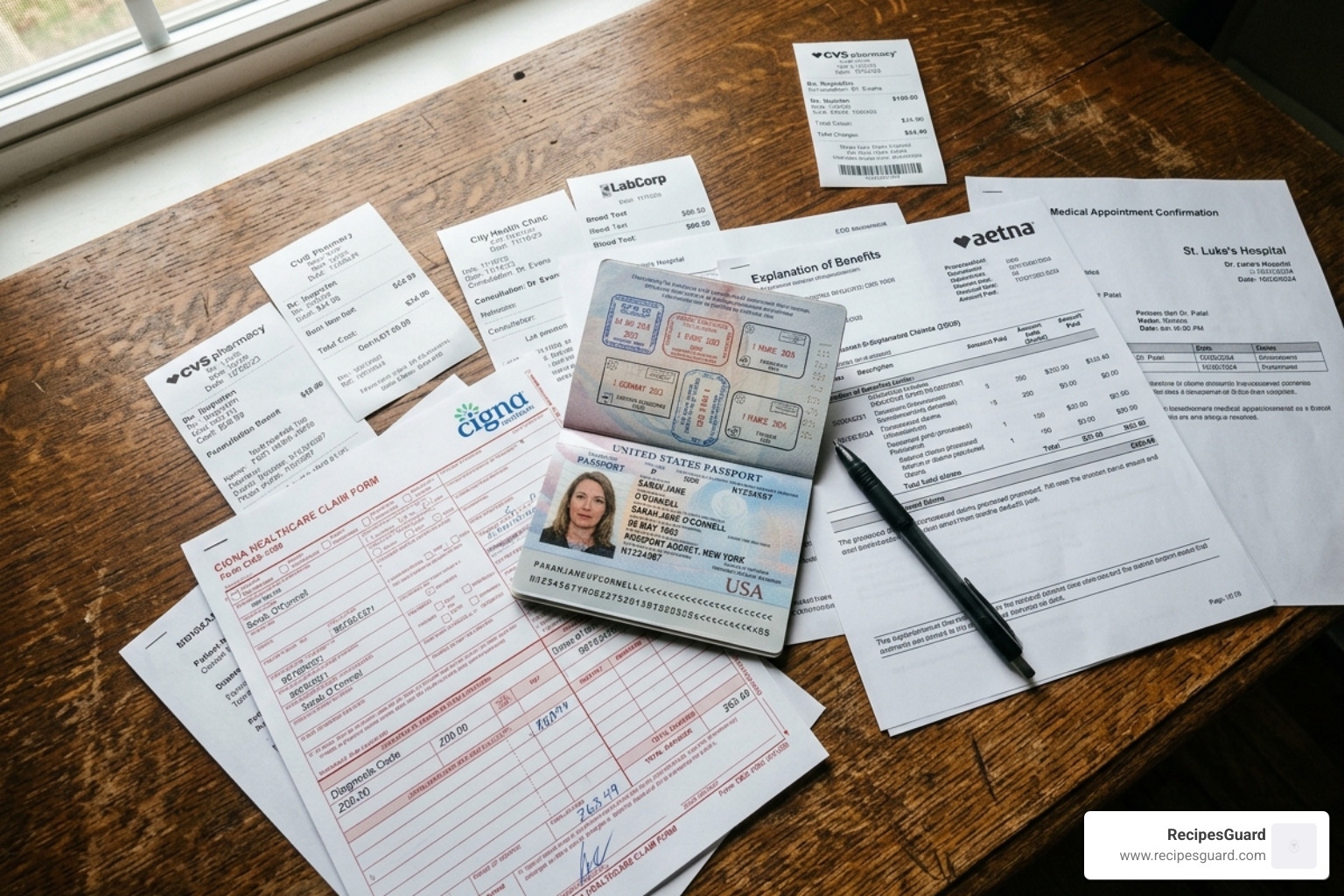
- Keep Everything: Every receipt, every itemized bill, and every discharge summary.
- Get it in English: If possible, ask the hospital for an English version of the bill. If not, your insurer may provide translation services.
- Submit Promptly: Don’t wait until you get home and lose the paperwork.
For a more detailed walkthrough, visit Claim For Medical Expenses Without The Headache.
Accessing 24/7 Support and In-Network Providers
The best providers in 2026 offer mobile apps that act as a “doctor finder.” These tools help you locate in-network facilities that accept “guarantee of payment” letters. This is a game-changer because it means the insurance company pays the hospital directly, and you don’t have to put $20,000 on your credit card.
Top-tier providers have massive networks with over 1 million doctors globally. Using these “in-network” providers often results in waived co-pays and smoother claim processing. For expert advice on this, check Expert Support for International Medical Claims.
Frequently Asked Questions about Medical Travel Insurance
Does Medicare or Medicaid cover me outside the U.S.?
No. U.S. Medicare and Medicaid do not provide coverage for medical care outside of the United States. Some Medigap plans (C, D, F, G, M, and N) offer limited emergency coverage (usually 80% after a deductible), but they are not a substitute for a dedicated travel medical policy.
Can I buy emergency medical insurance after I have already left?
Generally, no. Most policies must be purchased at least one day before you depart your home country. Some providers may allow extensions if you already have an active policy, but starting a new one while “on the road” is difficult and often excludes any incidents that happened before the purchase date.
What is the difference between primary and secondary coverage?
Primary coverage pays first, regardless of other insurance. Secondary coverage pays after your domestic health insurance has paid its share. Since most domestic plans pay nothing abroad, secondary coverage effectively acts as primary, but the paperwork process may require you to file a claim with your domestic provider first just to get a “denial letter.”
Conclusion
Traveling the world is one of life’s greatest adventures, but it shouldn’t be a financial gamble. Whether you’re a student heading off for a semester in Sydney or a family exploring the ruins of Rome, having emergency medical insurance abroad is the only way to ensure a medical mishap doesn’t turn into a lifelong financial burden.
At RecipesGuard, we specialize in helping students and travelers navigate the often-confusing world of insurance claims. We provide the step-by-step tutorials you need to ensure your claims are paid on time and in full. Don’t let a hospital stay ruin your memories—or your bank account.
Ready to secure your trip? Protect your journey with expert claim support and explore our specialized guides:
- Managing hospital stay claims
- Navigating emergency claims overseas
- Student guide to evacuations

My name is Bianca, and my journey into the world of fermentation and food safety began with a costly mistake. I once lost an entire season’s harvest of chili peppers because I relied on guesswork instead of science. That failure was my turning point.
