
The Ultimate Guide to Student Health Plans
Why Student Health Plans Matter for Every College Student
Student health plans are health insurance policies designed specifically for college and university students. They offer a practical way to get covered during your studies — often at lower cost than other options.
Here’s a quick breakdown of what you need to know:
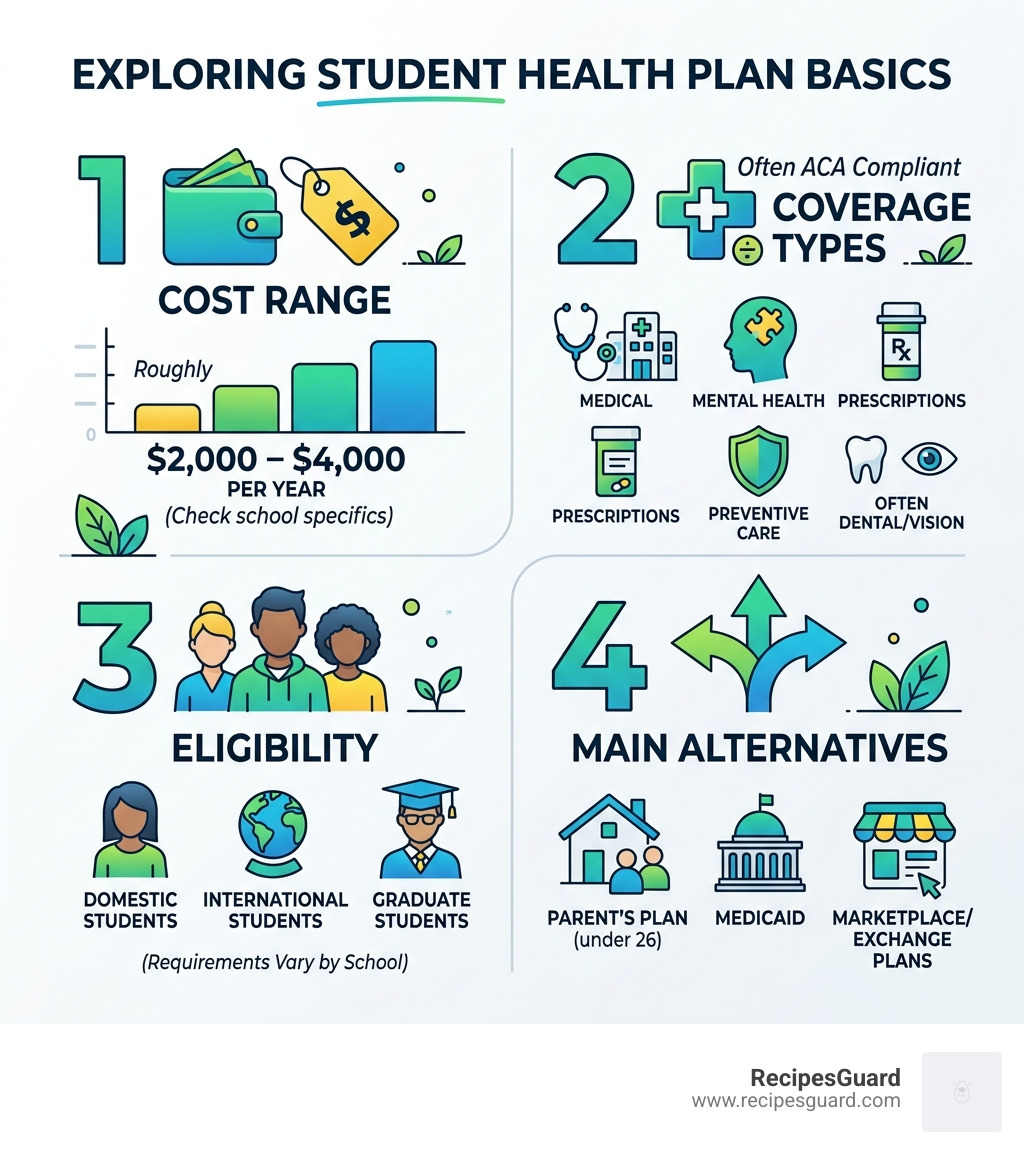
| Key Topic | Quick Answer |
|---|---|
| What are they? | Health insurance plans offered by colleges/universities for enrolled students |
| Who can enroll? | Domestic, international, and graduate students (eligibility varies by school) |
| How much do they cost? | Roughly $2,000–$4,000 per year |
| What do they cover? | Medical, mental health, prescriptions, preventive care, and often dental/vision |
| Main alternatives | Parent’s plan (under 26), Medicaid, Marketplace/exchange plans |
| ACA compliant? | Yes — most meet Minimum Essential Coverage standards |
As many as 3 million students in the U.S. are currently covered through school-sponsored health plans. Yet many students — especially those studying in a foreign country — find the whole system confusing.
If you’re an international student, the stakes are even higher. Without the right coverage, a single medical emergency abroad can result in thousands of dollars in unexpected bills. Understanding your options before something goes wrong is critical.
This guide breaks down everything clearly — from eligibility and costs to enrollment steps and alternatives.
Understanding Student Health Plans and Eligibility
When we talk about student health plans, we are referring to insurance products that are specifically negotiated by a college or university for its student body. Because these plans cover a younger, generally healthier population, they can often provide robust benefits at a lower price point than an individual plan you might find on the open market.

Eligibility usually hinges on your enrollment status. Most universities require a minimum credit threshold. For example, undergraduate students might need to be enrolled in at least six credits, while graduate students might only need three.
A major factor for many domestic students is the “Age 26” rule. Under the Affordable Care Act (ACA), you can typically stay on your parents’ health insurance plan until you turn 26. However, if your parents’ plan doesn’t have a local network where your school is located, a Student Health Insurance Benefits Plan might be a much better fit for your daily needs.
Eligibility for International Students
For those of us coming from abroad to study, health insurance isn’t just a good idea—it’s often a legal requirement of your visa. Most students on F-1 or J-1 visas are required by their host institution to maintain a certain level of coverage.
In Australia, for instance, international students must obtain Overseas Student Health Cover (OSHC). This is a mandatory requirement for the duration of your stay. OSHC helps cover the costs of medical and hospital care that you might need while in Australia. It’s important to compare different providers to find the best fit for your specific health needs and budget.
Coverage for Graduate and Professional Students
Graduate assistants, research assistants, and teaching assistants often have access to specialized versions of student health plans. Because these students are frequently considered employees of the university as well as scholars, their premiums are often subsidized or fully paid for by their department or a fellowship grant.
Plans like the Student Health Plan (SHP) Insurance are designed to provide “platinum-level” coverage, ensuring that those spending long hours in labs or libraries have access to top-tier medical care without the stress of high out-of-pocket costs.
Coverage Benefits and ACA Compliance
One of the best things about modern student health plans is that they are generally required to comply with the Affordable Care Act (ACA). This means they must cover “Essential Health Benefits” and cannot deny you coverage based on a pre-existing condition.

When you enroll in a school-sponsored plan, you are often getting a plan that is comparable to a “Platinum” or “Gold” level plan on the health insurance marketplace. These plans are designed to minimize your financial risk so you can focus on your exams rather than your medical bills. You can find detailed breakdowns of these benefits through resources like the Student Health Benefit Plan.
Essential Benefits in Student Health Plans
What exactly does “comprehensive” mean? Under the ACA, your plan should cover:
- Prescription drugs: Essential for managing chronic conditions or short-term illnesses.
- Emergency services: Coverage for those “oh no” moments that land you in the ER.
- Hospitalizations: Surgeries and overnight stays.
- Laboratory tests: Blood work and diagnostic imaging.
- Maternity and newborn care: Even if you don’t plan on needing this, ACA-compliant plans include it.
- Mental health services: This is a huge benefit for students, covering counseling and behavioral health treatments.
Dental and Vision Coverage for Students
While the ACA mandates pediatric dental and vision, adult dental and vision are often “add-ons” in the insurance world. However, many student health plans recognize that students need to see and smile!
Some university plans, like the Student Health Insurance Plan 2025-2026, offer integrated dental benefits or optional buy-up plans. Across the United States, there are approximately 262,000 dental practices, and many student plans provide access to a massive national network of these providers. This ensures that whether you’re on campus or home for the holidays, you can find a dentist who accepts your insurance.
Comparing Costs and Alternatives to Student Health Plans
Cost is usually the deciding factor for most of us. School-sponsored plans typically cost between $2,000 and $4,000 per year. While that might sound like a lot, it is often billed directly to your student account, meaning you can sometimes use financial aid or student loans to cover the premium.
| Plan Type | Typical Annual Cost | Best For… |
|---|---|---|
| Student Health Plan | $2,000 – $4,000 | Students who want on-campus care and simple billing. |
| Parent’s Plan | $0 (if already covered) | Students under 26 with a local network near school. |
| Marketplace Plan | Varies by income | Students with low income who qualify for subsidies. |
| Medicaid | $0 – Very Low | Students with little to no income in eligible states. |
Staying on a Parent’s Health Insurance
If you are under 26, staying on your parents’ plan is often the most cost-effective route. However, you must check the “network.” If your parents live in Sydney but you are going to school in Perth, or if they are in New York and you are in California, you might find that only “emergency” care is covered. For routine check-ups or mental health visits, you might be stuck paying out-of-network rates. This is why many students choose to supplement or replace their parents’ coverage with a school plan.
Marketplace and Medicaid Options
For students who are financially independent or those who don’t have access to a parent’s plan, the health insurance marketplace is a great resource. Depending on your income, you may qualify for significant subsidies that make these plans cheaper than the university’s option.
Furthermore, students with very low or no income may be eligible for Medicaid. This provides comprehensive coverage with almost no out-of-pocket costs. Just keep in mind that Medicaid is state-specific, so if you move across state lines for school, you’ll need to re-apply in your new state.
Enrollment, Waivers, and Special Considerations
Enrolling in student health plans is usually a “passive” process—meaning many schools automatically enroll you and bill you unless you “waive” the coverage by proving you have a comparable plan.
The Student Health Insurance Plan office at most universities handles these logistics. It is vital to pay attention to deadlines! If you miss the waiver deadline (often in early September for the fall semester), you might be stuck paying for a plan you don’t need.
How to Enroll in Student Health Plans
If you aren’t automatically enrolled, you can usually sign up through your university’s student portal. Premiums are typically added to your bursar’s bill. If you experience a “qualifying life event”—such as losing your previous coverage because you turned 26 or moved—you can often enroll mid-semester at a prorated cost.
Waiving School-Sponsored Coverage
To waive the school plan, you’ll need to fill out an online form and provide your current insurance member ID and group number. The school will then verify that your plan meets their minimum requirements (usually that it provides local coverage and meets ACA standards). International students often face stricter waiver requirements to ensure they aren’t left unprotected while far from home.
Accessing Care and Supplemental Options
Once you have your student health plans active, the next step is knowing how to use them. Most universities have an on-campus health clinic. These clinics are the “hub” of your care. In many cases, visiting the campus clinic results in a $0 copay.
For care outside of campus, most plans use a national PPO network. This gives you the freedom to see specialists or visit doctors in your hometown during breaks. Many plans also now include 24/7 telehealth services, which are perfect for when you wake up with the flu at 2:00 AM and don’t want to leave your dorm.
Supplemental Insurance for Coverage Gaps
Even with great insurance, a major accident or illness can leave you with “hidden” costs like high deductibles or non-medical expenses (like rent while you can’t work). Supplemental insurance—like accident or critical illness policies—can provide a cash payout to help cover these gaps. Think of it as a “safety net for your safety net.” It’s a smart way to manage a tight student budget and avoid debt.
Finding Providers and Managing Claims
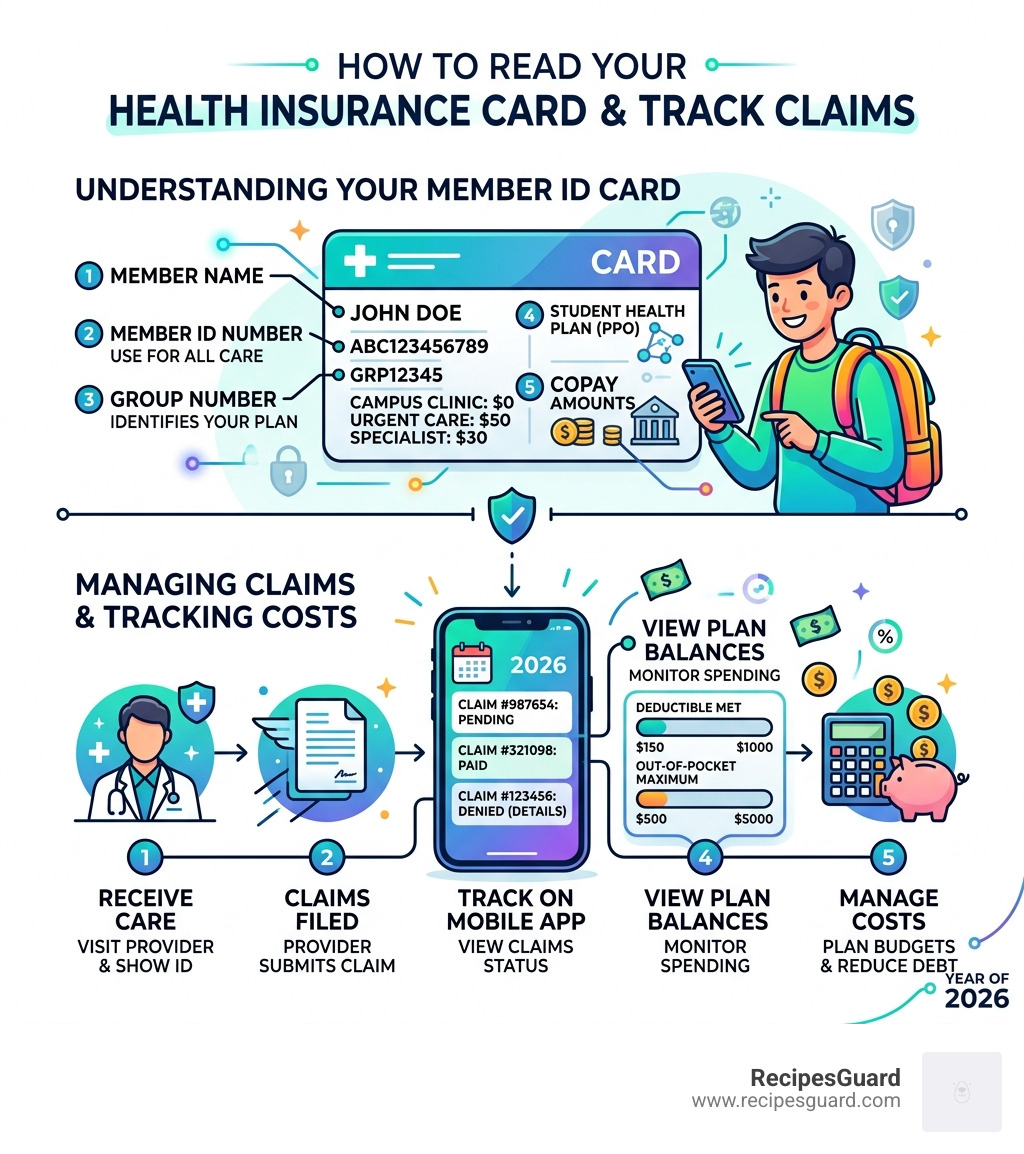
In 2026, managing your health is mostly digital. Most student health plans provide a mobile app where you can:
- Access a digital version of your Member ID card.
- Search for “in-network” doctors near you.
- Track how much you’ve paid toward your annual deductible.
- View the status of recent claims.
Frequently Asked Questions about Student Insurance
What happens to my coverage during summer break?
Most student health plans are annual. If you pay for the spring semester, your coverage usually extends through the summer months, even if you aren’t taking classes. Always check your specific plan’s end date (often August 14 or 15).
Can I keep my student health plan after I graduate?
Usually, no. Once you graduate and are no longer a “registered student,” your eligibility ends. However, graduation is considered a “qualifying life event,” which allows you to enroll in a Marketplace plan or an employer’s plan outside of the standard Open Enrollment period.
How do I find a doctor if I am studying abroad?
Many premium student health plans include “worldwide emergency assistance.” This doesn’t just cover medical bills; it can help you find English-speaking doctors or arrange for medical evacuation if necessary. If you’re an Australian student studying overseas, check if your plan has international partner networks.
Conclusion
Navigating student health plans might feel like a daunting task, but it’s one of the most important parts of your “adulting” journey. Having the right coverage ensures that a sudden illness or injury doesn’t derail your academic goals or your financial future.
At RecipesGuard, we believe in the power of preparation. Whether you are learning about Canning & Preserving Basics to keep your pantry stocked or researching the best health insurance to keep your body running, the goal is the same: safety and longevity. Just as you wouldn’t risk your health with unsafe food storage, don’t risk your future by going without proper health coverage.
Take the time to review your school’s options, compare them with your family’s plan, and choose the “shield” that best protects your health and your wallet.
For more tips on staying healthy and prepared, visit our About RecipesGuard page to learn more about our mission to keep you and your kitchen safe.

My name is Bianca, and my journey into the world of fermentation and food safety began with a costly mistake. I once lost an entire season’s harvest of chili peppers because I relied on guesswork instead of science. That failure was my turning point.
