
What You Need to Know Before You File an Overseas Health Claim
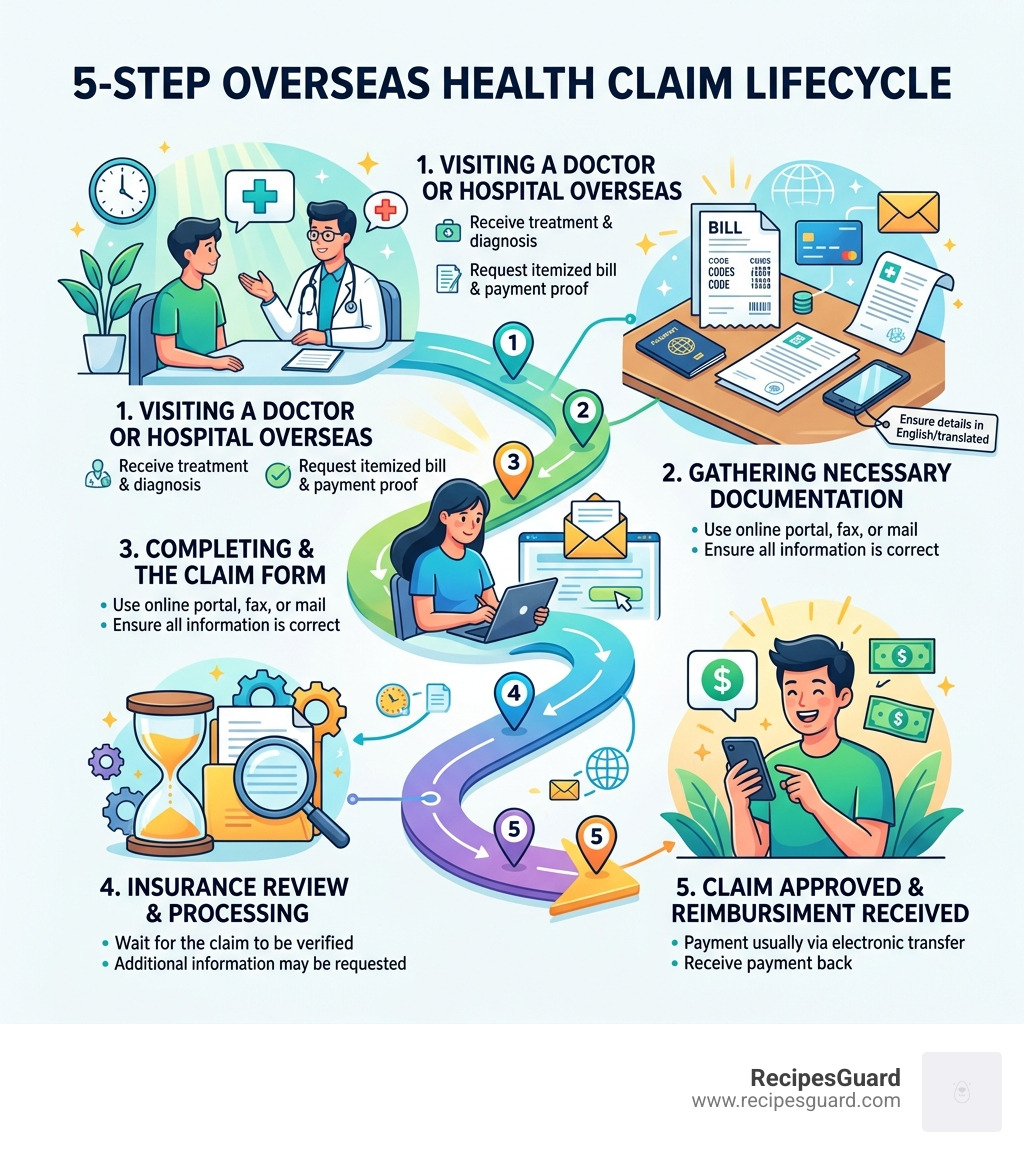
If you need to file an overseas health claim, here is the short version of how to do it:
- Gather your documents — itemized bill, proof of payment, diagnosis codes, and any Explanation of Benefits (EOB) from other insurance
- Complete the required claim form — such as DD Form 2642 (TRICARE), VA Form 10-7959f-2 (VA FMP), or your private insurer’s standard claim form
- Choose your submission method — online portal (fastest), fax, or mail
- Submit before your deadline — 3 years for TRICARE overseas, 2 years for VA FMP, or as little as 90 days for some private insurers
- Track your claim and confirm your payment method — electronic transfer is faster than a mailed check
Getting sick or injured abroad is stressful enough. Then comes the paperwork.
As an international student, you are likely dealing with an unfamiliar healthcare system, bills in a foreign language, and an insurance process you have never navigated before. You may have paid out of pocket on the spot — and now you need that money back.
The good news? Most overseas health claims follow a predictable process. Once you know the steps, it is far less overwhelming than it looks.
This guide walks you through everything: the documents you need, how to submit your claim, key deadlines for 2026, and what to do if something goes wrong.
File overseas health claim vocabulary:
Essential Documents to File Overseas Health Claim
The secret to a fast reimbursement is the quality of your paperwork. If you send an incomplete file, your insurer will put it at the bottom of the “pending” pile. To successfully file overseas health claim paperwork, you need more than just a credit card receipt.
Most insurers require a “final invoice.” This is different from a deposit or an advance payment receipt. As we have seen in our advisory work, many students mistakenly try to claim for the deposit they paid upon entering a hospital. However, insurers generally only process the final invoice issued after the treatment is completed.
Here is your essential checklist:
- Patient Information: Full name and date of birth (matching your policy).
- Provider Details: The doctor’s name, their medical specialism (e.g., Cardiology, General Practice), and the clinic’s contact info.
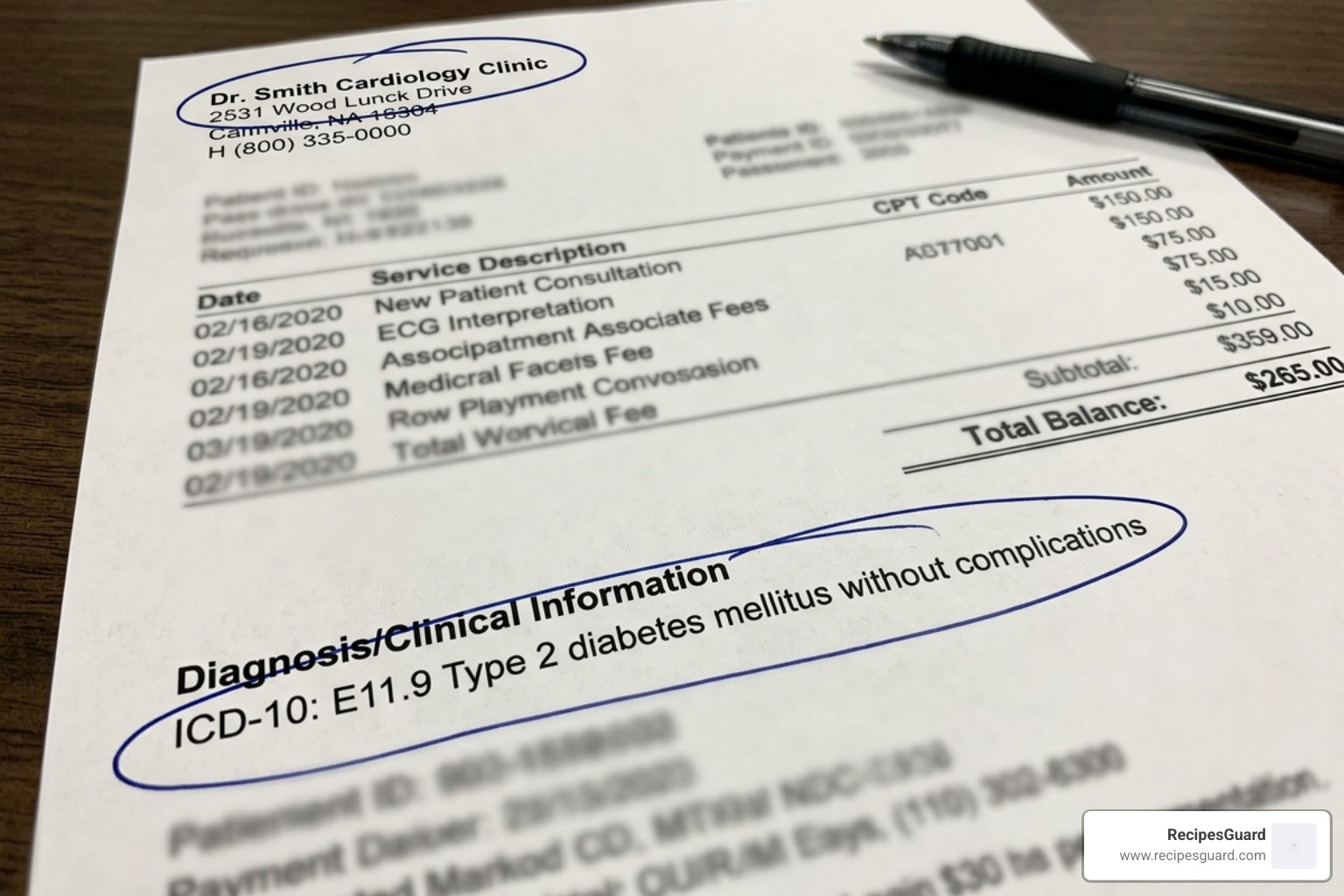
- Itemized Bill: A breakdown of every service provided, including consultation fees, lab tests, and medical supplies.
- Diagnosis Codes: Ask the provider for ICD-10 or ICD-11 codes. This tells the insurer exactly why you were treated.
- Medical Reports: For hospital stays, you will need a discharge summary.
- Proof of Payment: A receipt showing the balance is zero, or a bank statement showing the transaction.
For more detailed tips on organizing this, check out Steps To Submit Medical Expense Claims Without Losing Your Mind.
Proving Payment and Handling Itemized Bills
One of the trickiest parts of an international claim is currency conversion. When you file overseas health claim documents, the insurer will typically convert your costs into your home currency (like AUD or USD) based on the exchange rate from the date of service.
If your bill is in a language other than English, don’t panic. Many international insurers accept invoices in major languages like Spanish, French, German, or Dutch. However, if you are studying in Australia or using an Australian-based policy, we recommend requesting an English version of the bill from the provider. If that is not possible, you may need to provide a certified translation.
According to Submitting claims for costs incurred abroad | ONVZ, specific granularity is required. For example, pharmacy receipts should include the exact dosage (mg or ml) of the medicine. If there are multiple doctors listed on one invoice, we suggest circling the name of the specific doctor who treated you to avoid confusion.
For a deep dive into managing these receipts, see Mastering Your Medical Receipt Claims As An International Student.
Managing Other Health Insurance (OHI)
If you have more than one insurance policy—for example, a student policy in Australia and a secondary travel policy from your home country—you must navigate the “Other Health Insurance” (OHI) rules.
In most cases, one plan is designated as the “Primary Payer.” Programs like TRICARE are almost always the “last payer,” meaning they only cover costs after your other insurance has paid its share. When you file overseas health claim forms, you must include the “Explanation of Benefits” (EOB) from your primary insurer. This prevents “double-dipping,” which is illegal and can lead to claim denial.
Learn how to handle these complexities in our guide: Claim For Medical Expenses Without The Headache.
Step-by-Step Methods to Submit Your Claim
In May 2026, technology has made it easier than ever to get your money back. Gone are the days when you had to find a post office in a foreign city just to send a claim.
| Submission Method | Speed | Security | Best For… |
|---|---|---|---|
| Online Portal | Fastest (Instant) | High | Most claims; tracking status |
| Mobile App | Very Fast | High | Uploading photos of receipts on the go |
| Secure Fax | Moderate | Medium | When digital portals are down |
| Postal Mail | Slowest (Up to 28 days) | Low | Original documents if required |

How to File Overseas Health Claim via Secure Portals
We always recommend using an online portal if it is available. Digital uploads allow for real-time tracking, so you aren’t left wondering if your claim fell into a black hole.
For example, the Filing Claims Overseas | TRICARE portal uses a “wizard” for instant entry into the system. Similarly, UnitedHealthcare Global offers a “drag-and-drop” feature on their website.
Steps for Portal Submission:
- Log in to your member account.
- Select “Submit a Claim.”
- Enter the treatment date, country, and provider info.
- Upload clear photos or PDFs of your itemized bills and receipts.
- Double-check your bank details for Electronic Funds Transfer (EFT).
- Save your Submission ID number.
If you are a student studying abroad, our guide How To File A Study Abroad Medical Claim Without The Headache provides a visual walkthrough of these portals.
Filing Overseas Health Claim for Pharmacy vs. Medical Care
There is often a difference in how you file overseas health claim requests for medicine versus doctor visits.
- Medical Care: Many “Network” providers offer direct billing (cashless access). You show your card, pay your co-pay, and the provider bills the insurer.
- Pharmacy Care: This is almost always a “pay-and-claim” situation. You pay the full price at the pharmacy and submit the receipt later.
Be careful with pharmacy claims: you must include the prescription from the doctor and the receipt from the pharmacy. If you are claiming for maintenance medications (drugs you take every day), some insurers have a 12-month limit on how much they will reimburse at once.
For students dealing with dental emergencies abroad, see Filing Your Student Emergency Dental Claim Without The Headache.
Understanding Deadlines and Processing Timelines
Time is your enemy when it comes to insurance. Every policy has a “timely filing limit.” If you miss it, the insurer is legally allowed to refuse payment, no matter how legitimate the medical need was.
- TRICARE Overseas: You have a generous 3 years to file from the date of service.
- VA Foreign Medical Program (FMP): You must file within 2 years.
- Private Insurers (Cigna, BCBS, etc.): These can be much shorter, often ranging from 90 days to 1 year.
For veterans or those under specific programs, you can find the official forms at File A VA Foreign Medical Program Claim | Veterans Affairs.
Regional Requirements and Special Programs
Since we are based in Australia, we want to highlight the requirements for Overseas Student Health Cover (OSHC) and Overseas Visitor Health Cover (OVHC). Providers like Allianz Care Australia, Bupa, and Medibank have specific portals for students.
If you are an international student in Australia, the OSHC program is designed to mirror Medicare. Most claims can be submitted via the insurer’s app. If you go to a “Direct Billing” clinic, you may not have to file a claim at all—the clinic does it for you!
For more on this, read The Essential Guide To Managing Your Oshc Claims.
Expected Reimbursement Turnaround
How long until the money hits your bank account? It depends on how you submitted it.
- Digital Submission: Most modern insurers (like Cigna Global or Now Health) process complete claims within 5 to 7 working days. UnitedHealthcare typically takes about 14 business days.
- Mail Submission: This is the “slow lane.” Overseas mail can take up to 28 days to arrive. Add another 30 days for manual processing, and you could be waiting two months for your money.
Pro Tip: Always sign up for Electronic Funds Transfer (EFT). Receiving a physical check in the mail can add another 28 days of waiting time, and many banks charge high fees to cash foreign checks.
Avoiding Common Mistakes and Handling Denials
Even a small error can cause a claim to be rejected. Based on our experience, the most common mistakes include:
- Missing Signatures: Even on digital forms, there is usually an “attestation” box you must check.
- Incomplete Forms: Leaving “Diagnosis” or “Provider Address” blank.
- Pre-authorization Failures: For major surgeries or hospital stays, most insurers require you to call them first. If you don’t, they might only pay a portion of the bill.
- Non-Covered Services: Trying to claim for routine check-ups on an “Emergency Only” policy.
We have compiled a list of success stories and pitfalls here: How To Successfully Claim Your Overseas Student Insurance.
What to Do if Your Claim is Denied
If you receive a denial letter, don’t lose hope. It is often just a request for more information.
- Read the Denial Reason: It will usually have a code (e.g., “Missing medical records”).
- Gather Evidence: If they say the treatment wasn’t “medically necessary,” get a letter from your doctor explaining why it was an emergency.
- File an Appeal: Most insurers give you a 1-year window to appeal a decision.
For help navigating the “paperwork trail” of medical reports, see Doctor Visits And Medical Reports Navigating The Paperwork Trail.
Frequently Asked Questions about Overseas Claims
How long do I have to file a claim for care received in 2026?
As of May 2026, most private travel insurance policies require you to file within 90 to 180 days. However, if you are under the TRICARE Overseas program, you have until 2029 (three years) to file for care received today. Always check your specific policy Summary of Benefits.
What is the fastest way to receive my reimbursement?
The fastest method is submitting via a secure online portal or mobile app and selecting “Electronic Funds Transfer” (Direct Deposit) as your payment method. This can cut your wait time from 60 days down to just 5-10 days.
Do I need to translate my medical bills into English?
It depends on your insurer. While many global companies accept European languages, Australian-based OSHC providers almost always require English. If your bill is in a language like Japanese or Arabic, a certified translation is usually mandatory to file overseas health claim requests.
Conclusion
At RecipesGuard, we believe that being a student abroad should be about learning and adventure—not stressing over medical bills. While the process to file overseas health claim forms can seem daunting, staying organized is half the battle.
Keep a “Medical Folder” (digital or physical) for every trip. Save every receipt, even for small pharmacy purchases. Most importantly, don’t wait until you get home to start the process. Use your insurer’s app to upload documents while the details are still fresh in your mind.
For more student-focused advice, check out The Global Student Guide To Travel Health Claims. Safe travels, and stay healthy!

My name is Bianca, and my journey into the world of fermentation and food safety began with a costly mistake. I once lost an entire season’s harvest of chili peppers because I relied on guesswork instead of science. That failure was my turning point.
