Beet Kvass Benefits for Your Gut and Liver
Why Fermented Beet Kvass Benefits Your Body From the Inside Out
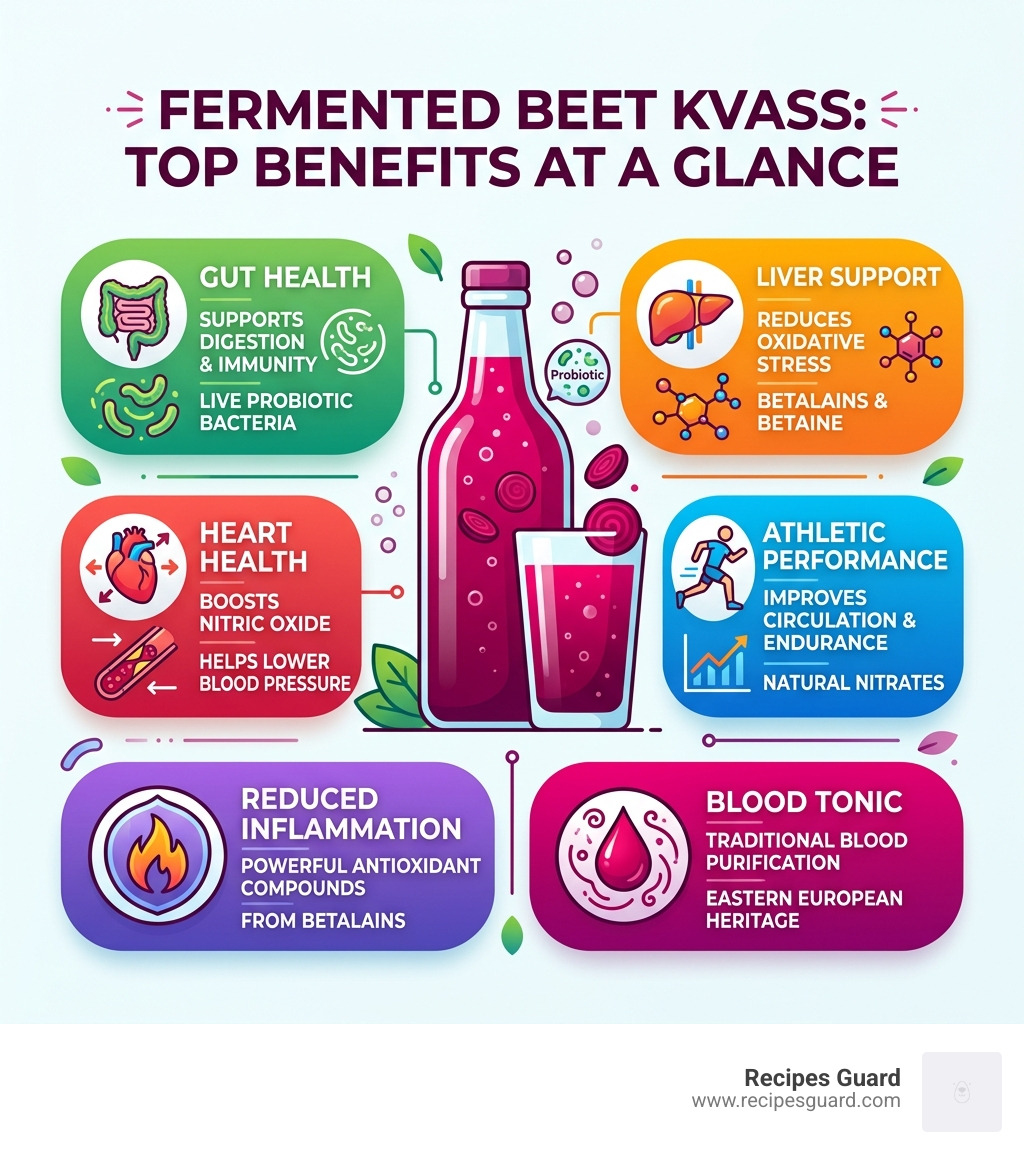
Fermented beet kvass benefits include improved gut health, liver support, better cardiovascular function, reduced inflammation, and enhanced athletic performance — all from a simple drink made with beets, water, and salt.
Here’s a quick summary:
- Gut health — Live probiotic bacteria support digestion and immune function
- Liver support — Betalains and betaine reduce oxidative stress and inflammation
- Heart health — Natural nitrates boost nitric oxide, lowering blood pressure
- Blood purification — Traditionally used as a blood tonic across Eastern Europe
- Athletic performance — Nitrates improve circulation and endurance
- Anti-inflammatory — Betalains are powerful antioxidant compounds
- Low sugar — Fermentation consumes sugars, leaving roughly 4g per 100ml
Beet kvass has been a staple tonic in Eastern European homes for over a thousand years — first recorded as far back as 996 A.D. It was said that no traditional home was without its bottle of beet kvass. And for good reason.
The fermentation process does something remarkable. It takes an already nutrient-dense vegetable and makes it even more bioavailable — while adding billions of beneficial bacteria in the process. Genuine fermented kvass can contain over 500 billion live bacteria from more than 100 varieties of beneficial microbes.
This isn’t beet juice. It’s something more powerful.
What is Beet Kvass and Why is it Unique?
To understand why we are so obsessed with this vibrant purple elixir, we have to look back at its roots—literally. Kvass is a traditional Slavic beverage that dates back over a millennium. While many people are familiar with the rye bread version (often called “bread soda” or “Russian cola”), beet kvass is the savory, earthy cousin that has been used medicinally for centuries.
In the year 996 A.D., kvass was already being documented in historical chronicles. Traditionally, it was safer to drink than the local water because the fermentation process lowered the pH, naturally killing off harmful pathogens. While the peasants drank it for hydration, the Czars enjoyed it for its refined, tangy flavor.
What makes beet kvass unique is the process of lacto-fermentation. Unlike modern “pickled” beets that use vinegar to achieve a sour taste, genuine kvass relies on Lactobacillus bacteria. These tiny workers consume the natural sugars in the beets and convert them into lactic acid. This doesn’t just preserve the drink; it transforms it into a living “probiotic powerhouse.”
Genuine Kvass vs. Commercial Beet Juice
If you walk into a grocery store in April 2026, you’ll see plenty of beet juices on the shelf. However, there is a massive difference between a processed juice and a traditionally fermented kvass. Commercial juices are often pasteurized (heated), which kills the beneficial bacteria. Furthermore, they are high in sugar.
| Feature | Genuine Beet Kvass | Commercial Beet Juice |
|---|---|---|
| Bacteria Count | 500+ Billion Live Bacteria | Zero (due to pasteurization) |
| Sugar Content | ~4g per 100ml | 8g – 12g per 100ml |
| Probiotic Strains | 100+ Varieties | None |
| Flavor Profile | Tangy, Salty, Earthy | Sweet, Sugary |
| Processing | Raw & Unfiltered | Heat-treated & Filtered |
As we explore in our guide on Quick and Easy Pickled Vegetables for Every Meal, the magic of fermentation lies in the “funk”—that complex flavor profile that only time and beneficial microbes can create.
Fermented Beet Kvass Benefits vs. Commercial Versions
Most commercial “kvass” drinks found on supermarket shelves are essentially sodas. They are often carbonated artificially and loaded with acidity regulators and preservatives. In contrast, genuine beet kvass is unpasteurized and teeming with life.
When we make kvass at home using a sourdough starter or a simple salt brine, we are inviting a rich community of over 100 varieties of beneficial bacteria and yeast into the jar. These microbes produce postbiotics—compounds that help fight harmful gut bacteria and may even reduce certain health risks. If you’ve enjoyed Mastering the Art of Lacto-Fermented Hot Sauce, you already know that raw, live ferments offer a depth of nutrition that store-bought, shelf-stable products simply cannot match.
Primary Health Benefits of Beet Kvass

The fermented beet kvass benefits extend far beyond just basic nutrition. Because beets are naturally rich in phytonutrients like betalains and betaine, they act as a potent biological tool for the body. Fermentation “unlocks” these nutrients, making them easier for your body to absorb.
According to Scientific research on fermented beetroot, the combination of nitric-oxide-supporting nitrates and live microbes makes this drink a triple threat for heart, gut, and liver health.
Liver Detoxification and Blood Purification
In folk medicine, beet kvass has long been hailed as a “liver tonic.” This isn’t just old-world superstition; modern science backs it up. Beets contain betalains, which are the pigments responsible for that deep red color. These compounds are known to reduce oxidative stress and inflammation in the liver.
By supporting the liver’s natural detoxification pathways, beet kvass helps the body process waste more efficiently. Many enthusiasts use it for:
- Organ Detox: Helping the liver and kidneys flush out toxins.
- Hangover Relief: Oxygenating the blood to clear the “fog” caused by stress, sugar, or alcohol.
- Mental Clarity: Improved blood flow means better oxygen delivery to the brain.
As noted in this article on how to Drink Beet Kvass for Inflammation and Digestion, the anti-inflammatory properties of fermented beets can be a game-changer for those dealing with chronic sluggishness.
Fermented Beet Kvass Benefits for Gut Health
Your gut is home to trillions of microbes, and beet kvass is like a “high-five” for your microbiome. One of the primary stars of the show is Lactobacillus plantarum. This specific strain of bacteria has been studied for its ability to support digestive health and even bolster the immune system.
The fermentation process also creates digestive enzymes. These enzymes help your body break down other foods more effectively, leading to better nutrient absorption. If you’re looking to diversify your fermented food intake, don’t stop at kvass; check out our guide: Don’t Be Afraid of the Funk with This Easy Fermented Garlic Recipe.
Cardiovascular Support and Athletic Performance
One of the most exciting fermented beet kvass benefits is its impact on the heart. Beets are naturally high in nitrates. When you drink kvass, your body converts these nitrates into nitric oxide.
Nitric oxide is a signaling molecule that tells your blood vessels to relax and dilate (vasodilation). This process:
- Lowers Blood Pressure: Reduces the strain on your heart.
- Reduces Arterial Stiffness: Keeps your blood vessels flexible.
- Enhances Endurance: More oxygen gets to your muscles during exercise.
In fact, research suggests that consuming beetroot-based drinks about 90 minutes before exercise can significantly enhance athletic performance and reduce post-workout muscle pain. You can read more about the nutritional specifics in this WebMD guide on Pickled Beets.
Nutritional Profile and Bioactive Compounds
Beet kvass is a “cocktail of nutrients” in the truest sense. Because the bacteria have “pre-digested” the beets, you get a concentrated dose of vitamins and minerals without the high sugar content of raw beet juice.
A 4-ounce serving of beet kvass typically contains:
- Vitamin A: Approximately 6,500 IU (130% of your Daily Value).
- Vitamin C: Supports immune function and skin health.
- B Vitamins & Folate: Essential for energy metabolism and DNA repair.
- Minerals: A rich source of manganese, potassium, iron, calcium, and magnesium.
- Dietary Fiber: About 2 grams per serving.
- Calories: A modest 35 calories per 4-ounce glass.
The presence of betaine is particularly noteworthy. Betaine helps protect cells from environmental stress and is a key player in cardiovascular health. When combined with the probiotics generated during fermentation, you have a drink that supports your body at a cellular level.
How to Make Homemade Beet Kvass: A Step-by-Step Guide
Making your own kvass is incredibly simple. You don’t need fancy equipment—just a jar, some organic beets, and a little bit of patience. At Recipes Guard, we always emphasize the importance of using high-quality ingredients to ensure a safe and successful ferment.
The Ingredients
- Organic Beets: 2-3 large beets. (Organic is best so you can leave the skins on, which house beneficial wild bacteria).
- Filtered Water: Use chemical-free water; chlorine can inhibit the fermentation process.
- Sea Salt: 1 tablespoon (avoid iodized table salt).
- Optional Flavors: A cinnamon stick or a few cloves can add a lovely warmth to the earthy flavor.
The Process
- Prep the Beets: Wash the beets thoroughly. Do not peel them unless they aren’t organic. Chop them into 1-2 inch chunks. Do not shred them, as this releases too much sugar too quickly, which can lead to alcohol production rather than lactic acid.
- Jar it Up: Place the beet chunks in a half-gallon glass jar.
- Add the Brine: Dissolve the salt in a small amount of water, then pour it over the beets. Fill the rest of the jar with filtered water, leaving at least 1 inch of “headspace” at the top.
- Ferment: Cover the jar with a breathable cloth or a fermentation lid. Let it sit on your counter at room temperature (ideally 65-70°F) for 4 to 7 days.
- Taste and Store: Once the liquid is deep purple and tastes tangy and slightly salty, strain the liquid into bottles and refrigerate.
Before you start, make sure to read our essential guide on Safety First: A Guide to Preserving Fermented Foods to ensure your kitchen environment is ready for fermenting.
Maximizing Fermented Beet Kvass Benefits Through Proper Technique
To get the most out of your ferment, “burp” your jars daily if you are using a standard airtight lid to release built-up gases. If you see a thin white film on top (called Kahm yeast), don’t panic! It’s harmless; just skim it off.
For more inspiration on what you can create in your kitchen, explore our full library of Fermented Recipes.
Usage, Dosage, and Safety Considerations
If you are new to fermented drinks, the “more is better” approach doesn’t apply here. Because kvass is so potent, you want to introduce it to your system gradually.
- Starting Dose: Begin with a 1-2 ounce “shot” in the morning or before a heavy meal.
- Optimal Dose: Once your gut has adjusted, you can work up to 1-2 cups daily.
- Culinary Uses: Don’t just drink it straight! Use it in salad dressings, add it to traditional soups like borscht, or mix it into sparkling water for a refreshing, savory seltzer.
Important Cautions
While fermented beet kvass benefits are numerous, there are a few things to keep in mind:
- Sodium Content: Since kvass is made with a salt brine, those on a strictly low-sodium diet should monitor their intake.
- Oxalates: Beets are high in oxalates. If you are prone to kidney stones, consult your doctor before making kvass a daily habit.
- Histamines: Like all fermented foods, kvass contains histamines. If you have a known histamine sensitivity, start with very small amounts.
- Mouthwash Interference: Interestingly, using antiseptic mouthwash can kill the beneficial bacteria in your mouth that help convert the nitrates in kvass into nitric oxide. Avoid using mouthwash for 2-3 hours before or after drinking your kvass to get the full heart-health benefits.
Frequently Asked Questions about Beet Kvass
How much beet kvass should I drink daily for the best results?
For most people, a daily dose of 4 to 8 ounces is plenty to enjoy the fermented beet kvass benefits. It is often best consumed before meals to aid digestion or post-workout to replenish electrolytes and reduce inflammation.
Does beet kvass contain alcohol?
Traditionally fermented beet kvass is considered non-alcoholic. It typically contains between 0.5% and 1% alcohol, which is a natural byproduct of the fermentation process—similar to what you would find in very ripe fruit or kombucha.
Can I reuse the beets for a second batch of kvass?
Yes! After you strain your first batch, you can fill the jar with water and salt again. The second batch will be slightly lighter in color and flavor, but it will still contain beneficial probiotics. After the second batch, we recommend eating the fermented beets in a salad or composting them.
Conclusion
At Recipes Guard, we believe that the oldest traditions often hold the key to modern wellness. Beet kvass is more than just a trend; it is a time-tested tonic that supports your body’s most vital systems. From the 1,000-year-old history of Eastern Europe to the modern science of nitric oxide and microbiome diversity, the evidence is clear: this humble beet drink is a nutritional powerhouse.
Whether you’re looking to support your liver, improve your gut health, or boost your athletic endurance, a jar of beets and a bit of salt can take you a long way.
Ready to dive deeper into food preservation? Start your fermentation journey with our Preserving Basics and discover how easy it is to transform your health, one jar at a time.