A Guide to Achieving the Perfect pH for Shelf Stable Hot Sauce
Why Fermented Hot Sauce pH Level Determines Whether Your Sauce Is Safe or Spoiled
Fermented hot sauce pH level is the single most important number you need to know to make a safe, shelf-stable sauce at home.
Here is the quick answer:
| pH Target | What It Means |
|---|---|
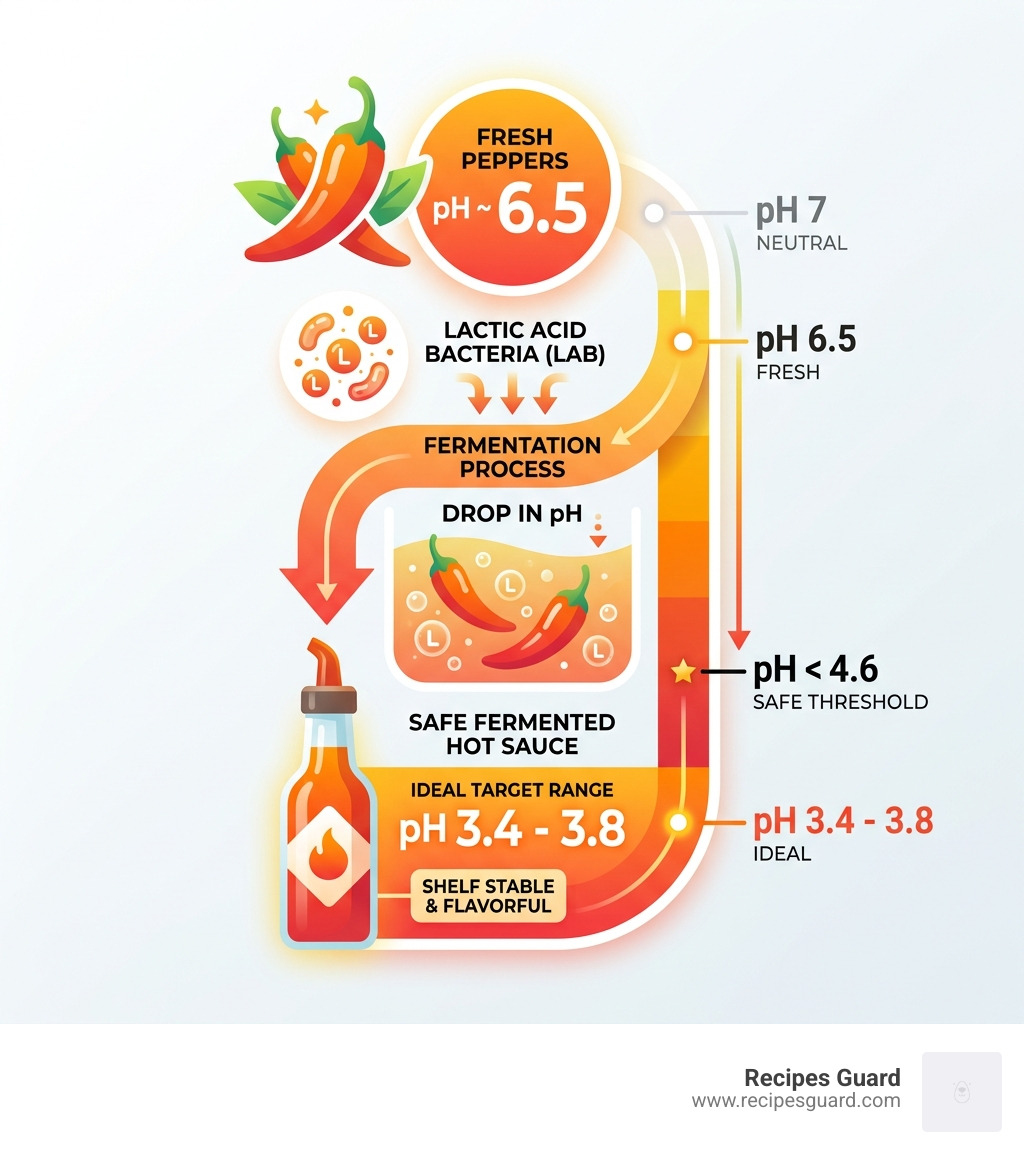
| Below 4.6 | Minimum safe threshold — prevents botulinum toxin formation (FDA requirement) |
| 4.0 or below | Recommended by most experienced fermenters for reliable safety |
| 3.4 to 3.8 | Ideal target range — safe, shelf-stable, and great flavor |
| 3.2 to 3.7 | Typical range for Louisiana-style fermented hot sauce |
The fermentation process works by encouraging lactic acid bacteria (LAB) to convert sugars into lactic acid. That acid drives the pH down — turning a batch of fresh peppers sitting at around pH 6.5 into a tangy, preserved sauce that can last well over a year when done right.
Get the pH wrong, and the consequences go beyond a flat-tasting sauce. Harmful bacteria like Clostridium botulinum thrive in low-oxygen, low-acid environments — exactly the conditions inside a sealed fermentation jar. Without sufficient acidity, your sauce could harbor dangerous toxins with no visible warning signs.
The good news? Achieving a safe fermented hot sauce pH level is straightforward once you understand the process, use the right tools, and know what to look for.
The Science of Fermented Hot Sauce pH Level and Food Safety
When we talk about the fermented hot sauce ph level, we aren’t just being picky about flavor; we are talking about creating a biological fortress. The “magic number” in food safety is 4.6. This is the critical threshold established by federal regulations, specifically the CFR Title 21 Part 114, which governs acidified foods.
Why 4.6? Because Clostridium botulinum, the bacteria responsible for botulism, cannot produce its deadly toxin in an environment with a pH below this level. In a typical pepper ferment, we create an anaerobic (oxygen-free) environment. While this is great for our friendly Lactic Acid Bacteria (LAB), it is also exactly what C. botulinum loves. The only thing standing between a delicious sauce and a dangerous one is the rapid production of lactic acid to drop that pH.
At Recipes Guard, we always emphasize that while 4.6 is the legal limit, aiming for a lower number provides a necessary “safety buffer.” Many pathogens like E. coli and C. perfringens are also inhibited as the acidity increases. For a deeper dive into these biological defenses, check out our Safety First: A Guide to Preserving Fermented Foods.
Understanding the Fermented Hot Sauce pH Level Progression
Fermentation is a relay race of bacteria, known as bacterial succession. When you first jar your peppers, the fermented hot sauce ph level usually sits around 6.5.
- Phase 1 (Days 1–3): Leuconostoc mesenteroides takes the lead. These bacteria are highly active early on, producing CO2 and starting the acidification process. You’ll see bubbles forming—this is a great sign!
- Phase 2 (Days 4–10): As the environment becomes too acidic for Leuconostoc, Lactobacillus plantarum takes over. These are the heavy lifters that drive the pH down into the 3.4–3.8 range.
- Phase 3 (Days 11+): Pediococcus species may join in, further refining the flavor and stabilizing the acidity.
In a healthy ferment, you can reach a safe pH of 4.0 or below in as little as 5 to 7 days, though we often let it go for 3 to 4 weeks to develop that signature “funk.” To learn how to manage this timeline like a pro, see our guide on Mastering the Art of Lacto-Fermented Hot Sauce.
How Salt and Temperature Affect Fermented Hot Sauce pH Level
Two main “knobs” control how fast and deep your pH drops: salt and temperature.
- Salt Concentration: We recommend a salt concentration of 2% to 3% by total weight of the ingredients. Salt acts as a selective barrier—it inhibits “bad” bacteria while allowing LAB to thrive. If you go below 2%, you risk spoilage or even botulism toxin formation before the pH can drop. If you go above 8%, you might stall the fermentation entirely because even the LAB can’t handle that much salinity.
- Temperature: The “Goldilocks zone” for pepper fermentation is 68–72°F (20–22°C).
- Too Cold: Fermentation slows down significantly, leaving a longer window for spoilage.
- Too Hot: Fermentation happens too fast, often resulting in “flat” flavors or soft, mushy peppers.
Maintaining these variables ensures that the fermented hot sauce ph level drops steadily and safely. For more foundational tips on salt and brine, browse our Preserving Basics Category.
Essential Tools for Measuring Acidity in Pepper Ferments
You cannot “taste” a pH of 4.6 versus 4.7. While your palate can tell if a sauce is tangy, it is not a scientific instrument. To ensure your sauce is shelf-stable, you need accurate tools.
The Limitations of pH Strips
While cheap and easy to find, pH strips (litmus paper) are notoriously difficult to read when dipped into bright red or orange hot sauce. The pigment of the peppers stains the paper, making it nearly impossible to distinguish between a safe 3.8 and a risky 4.8. Furthermore, the FDA only allows colorimetric strips for products with a pH below 4.0; anything higher requires a more precise method.
Digital pH Meters
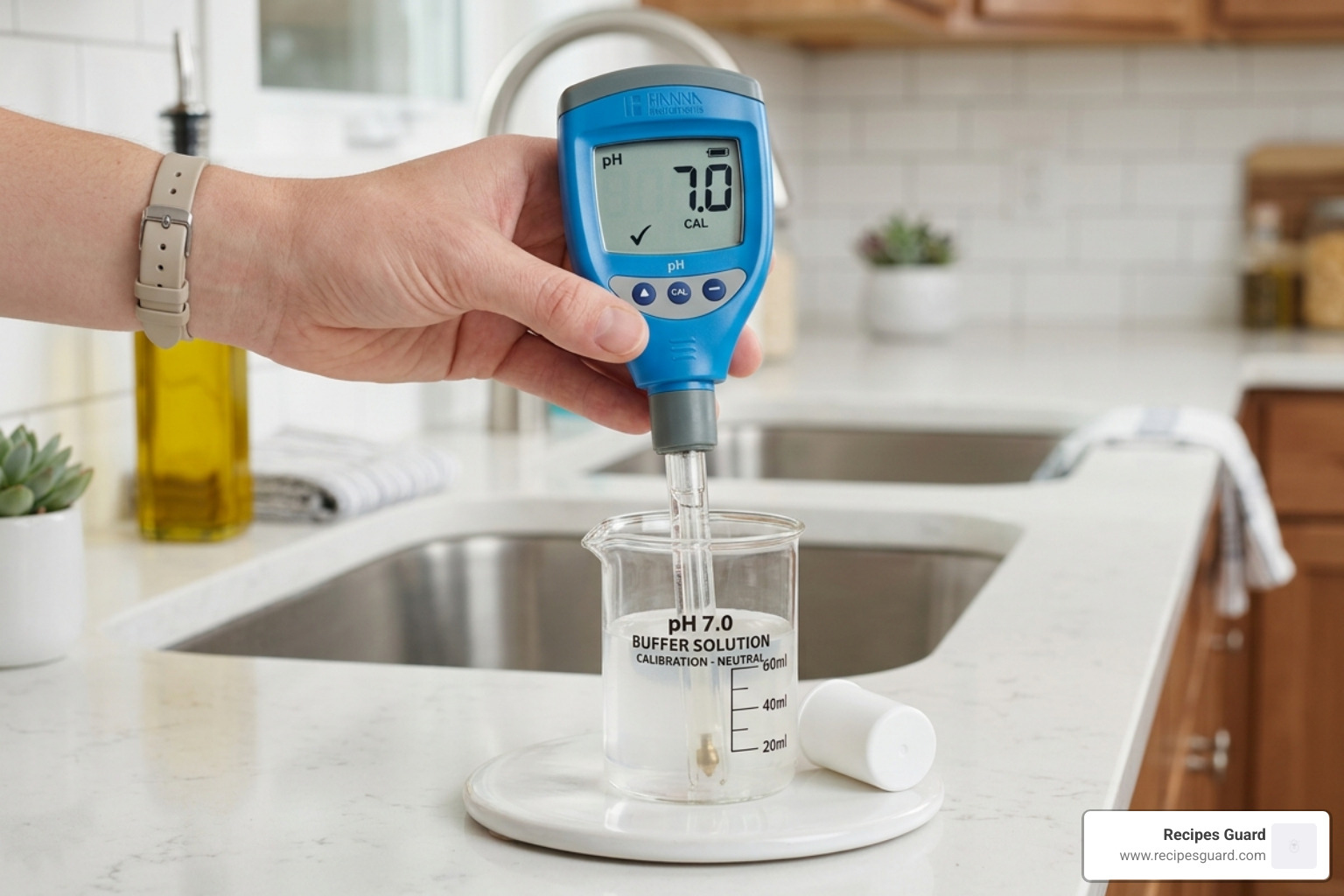
For serious hot sauce makers, an electrochemical digital pH meter is a must-have. We recommend meters like the HALO2, which offers +/-0.05 accuracy.
- Automatic Temperature Compensation (ATC): pH readings change based on temperature. A good meter will adjust for this automatically.
- Calibration: Always calibrate your meter using buffer solutions (usually pH 4.01 and 7.01) before testing a new batch.
- Maintenance: Keep the electrode moist with storage solution. A dry probe is an inaccurate probe!
Using a digital meter allows you to track the fermented hot sauce ph level from day one to the day you bottle, giving you total peace of mind. Explore more equipment tips in our Fermented Recipes Category.
Mash vs. Brine: pH Targets for Different Fermentation Methods
There are two primary ways to ferment peppers, and each affects the fermented hot sauce ph level slightly differently.
The Mash Method
In a mash, you grind the peppers (and often garlic or onions) into a thick paste and mix in the salt.
- Pros: Concentrated flavor; no added water to dilute the sauce.
- pH Dynamics: The salt draws out the pepper’s natural juices immediately. Because there is less “extra” liquid, the pH can often drop very quickly.
- Risk: Mashes are more prone to mold or yeast growth because it’s harder to keep the solids submerged. We often use a “salt cap” or a weight to keep oxygen out. If you’re adding garlic to your mash, be sure to follow our Easy Fermented Garlic Recipe for safety tips.
The Brine Method
Here, you submerge whole or chopped peppers in a salt-water solution.
- Pros: Very easy for beginners; the liquid brine makes it simple to keep everything submerged.
- pH Dynamics: The pH of the brine is what you test. It typically starts around 6.0–6.5 and should drop below 4.0 within the first week.
- The “Cayenne Problem”: Thin-walled peppers like Cayennes don’t have much juice, so they almost always require the brine method to ensure there is enough liquid for the LAB to move around.
| Feature | Mash Fermentation | Brine Fermentation |
|---|---|---|
| Texture | Thick, pulpy paste | Whole/chopped pieces in liquid |
| Flavor Intensity | High (undiluted) | Moderate (slightly diluted by water) |
| pH Testing | Test the paste directly | Test the liquid brine |
| Mold Risk | Higher (requires careful packing) | Lower (as long as submerged) |
| Typical pH Goal | 3.4–3.7 | 3.4–3.8 |
Troubleshooting: What to Do When pH Stalls
Sometimes, despite our best efforts, the fermented hot sauce ph level refuses to budge. If you find your ferment sitting at a pH of 5.0 after two weeks, don’t panic—but don’t eat it yet either.
Why Did it Stall?
- Chlorine in Water: If you used tap water, the chlorine might have killed the LAB. Always use filtered or distilled water.
- Too Much Salt: If you accidentally added 10% salt instead of 3%, the bacteria are likely “sleeping.”
- Old Produce: If your peppers were heavily waxed or very old, they might lack the natural bacteria needed to start the party.
How to Fix a High pH
If the fermentation has finished but the pH is still above 4.0 (for example, if you added a lot of alkaline ingredients like carrots or onions), you have two main options:
- Add Acid: You can reliably lower the pH by adding vinegar (white, apple cider, or rice) or lemon juice. Add a tablespoon at a time, blend, and re-test until you hit your target (ideally 3.5–3.7).
- Pasteurization: If you want to stop the fermentation and ensure safety, you can heat the sauce to 180–185°F (82–85°C) for 10 minutes. This kills any remaining active yeast or bacteria. If you do this while the sauce is still hot (the “hot-fill” method), it creates a vacuum seal in the bottle, making it shelf-stable for months.
Kahm Yeast vs. Mold
During the process, you might see a white, filmy layer on top. This is usually Kahm yeast. It’s harmless but can make the sauce taste “cheesy” or “yeasty.” Simply scrape it off. However, if you see fuzzy, colorful growth (black, green, or pink), that is mold. If mold appears, the safest move is to discard the batch, as mold can raise the pH and allow pathogens to grow. For more on quick preservation, see our guide on Quick and Easy Pickled Vegetables for Every Meal.
Frequently Asked Questions about Hot Sauce Acidity
Is a pH of 4.6 safe for long-term storage?
While 4.6 is the legal limit to prevent botulism, it is the “edge of the cliff.” Most home fermenters and commercial artisans aim for a fermented hot sauce ph level of 3.4 to 4.0. Not only is this safer, but the increased acidity provides that sharp, tangy “bite” that defines a great fermented sauce. Furthermore, if you plan to store your sauce at room temperature, a lower pH (below 4.0) is much more effective at preventing other types of spoilage over time.
When should I first test the pH of my ferment?
We recommend testing at three specific points:
- The Start: Establish a baseline (usually around 6.0–6.5).
- Day 7–14: This is when the most rapid acidification occurs. You want to see that the pH has dropped below 4.6 by this point.
- At Bottling: This is your final verification. If you’ve added any fresh ingredients (like fruit or extra vinegar) during the blending stage, this final test is the only one that counts for shelf stability.
Does adding fruit raise the pH of my sauce?
Yes, it certainly can. Fruits like mangoes, pineapples, and peaches are delicious in hot sauce, but they bring two things: sugar and a higher pH than a finished ferment. The sugar can trigger “secondary fermentation,” which might cause your bottles to explode if they aren’t refrigerated. The higher pH can push a safe sauce back into the “danger zone” above 4.6. If you add fruit at the end, always re-test the pH and consider pasteurizing the sauce to stabilize it.
Conclusion
Mastering the fermented hot sauce ph level is the difference between a kitchen experiment and a professional-grade condiment. By keeping your pH between 3.4 and 3.8, using a reliable digital meter, and maintaining a 2–3% salt concentration, you can create sauces that are as safe as they are delicious.
At Recipes Guard, we believe that understanding the science behind the “funk” empowers you to be more creative in the kitchen. Whether you are making a fiery habanero mash or a mild fermented jalapeño brine, safety always comes first.
Ready to start your next batch? Head over to RecipesGuard Home for more recipes, troubleshooting tips, and fermentation deep-dives. Happy fermenting!