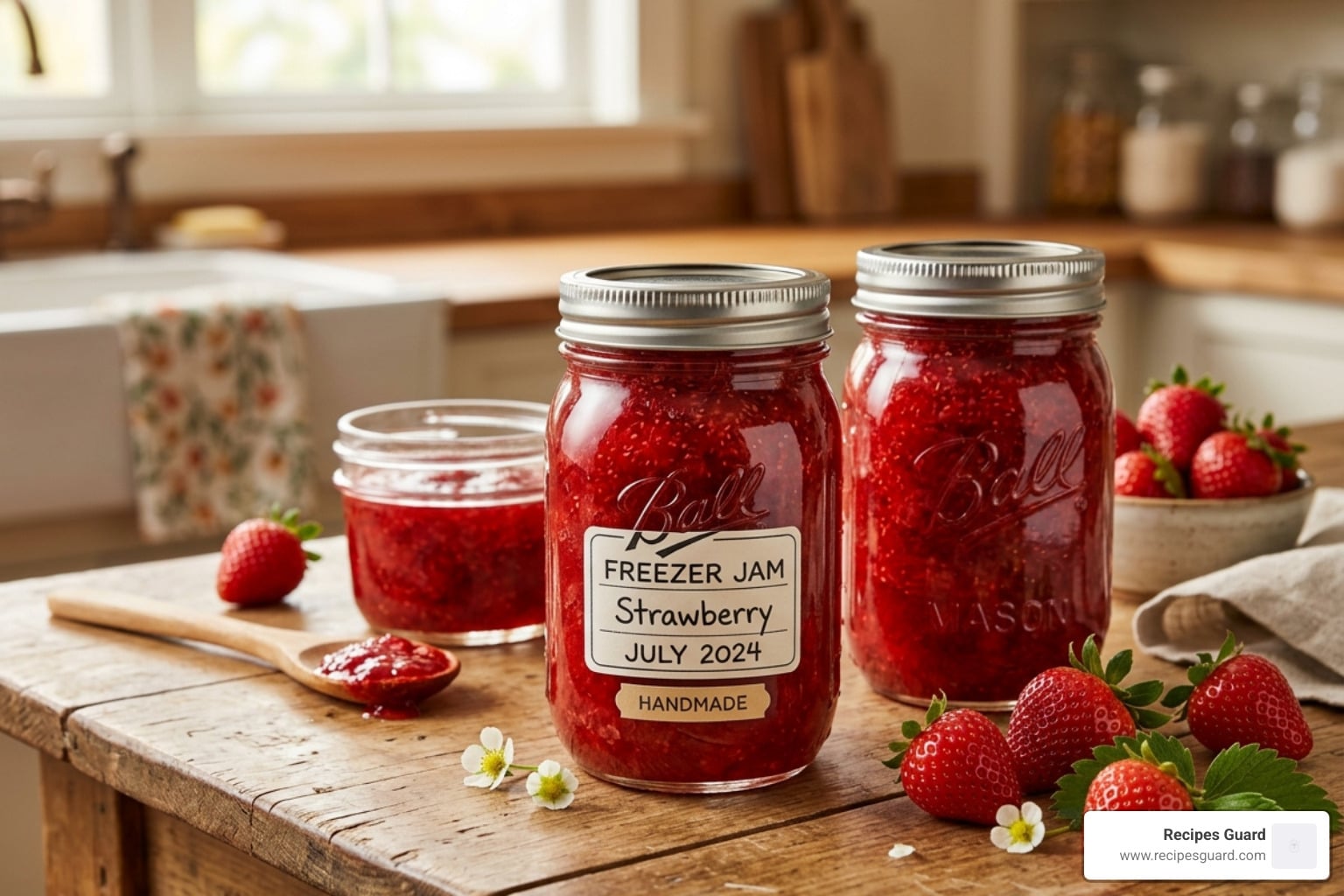
A Jar-ring Experience: Mastering Ball Freezer Jam and Beyond
Why Ball Freezer Jam Belongs in Every Home Preserver’s Toolkit
Ball freezer jam is one of the fastest, most beginner-friendly ways to preserve fresh fruit at peak flavor — no canning equipment, no boiling water bath, and no cooking the fruit itself.
Quick answer: How to make Ball freezer jam
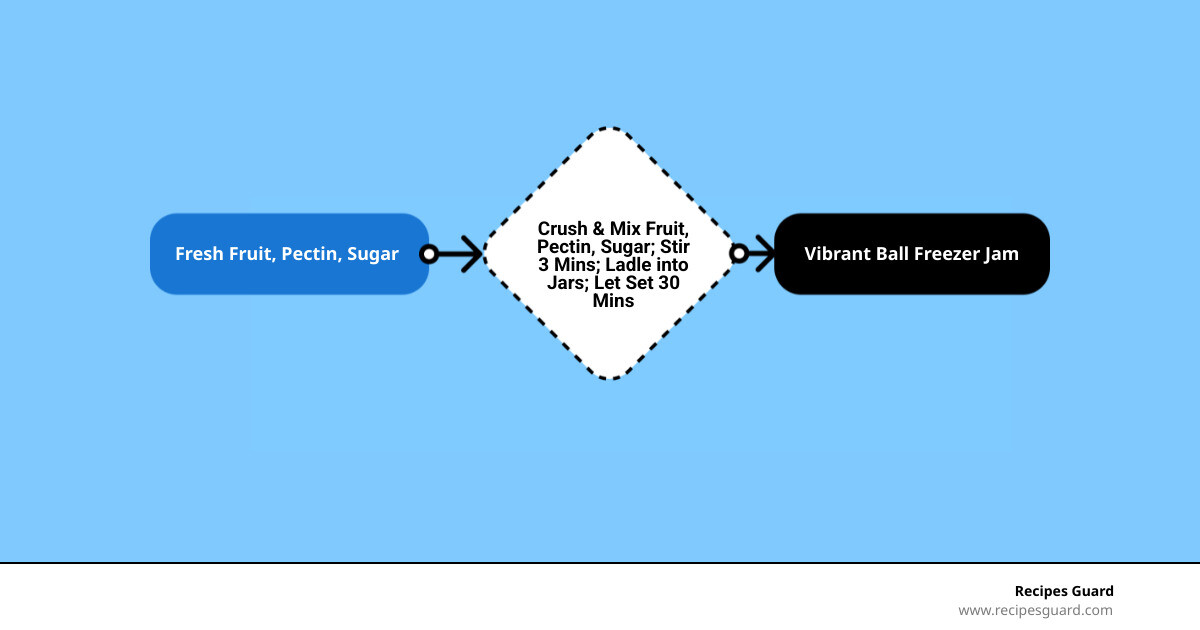
- Crush your fruit — measure exactly (e.g., 1⅔ cups strawberries)
- Mix pectin and sugar together in a large bowl
- Add crushed fruit and stir vigorously for 3 minutes
- Ladle into clean freezer jars leaving ½ inch of headspace
- Let stand 30 minutes, then refrigerate or freeze
- Store up to 3 weeks in the fridge or up to 1 year in the freezer
The whole process takes about 30 minutes. No special skills required.
What makes this method stand out is what you don’t do. You skip the heat. That means the jam keeps the bright color, fresh smell, and vibrant taste of real fruit — something cooked jam simply can’t match.
Ball’s line of RealFruit pectin products (Classic, Low/No-Sugar, and the now-discontinued Instant Pectin) makes the process even simpler. Each one works a little differently, and choosing the right one matters for getting a good set.
Whether you’re preserving a bumper crop of summer strawberries or experimenting with mixed berries in April 2026, this guide covers everything — from picking the right pectin to fixing a jam that won’t set.
Understanding the Basics of Ball Freezer Jam
When we talk about ball freezer jam, we are moving away from the traditional image of a grandmother hovering over a steaming cauldron of boiling sugar. Freezer jam is a “no-cook” or “low-cook” method that relies on cold preservation. Because the fruit isn’t subjected to high heat for long periods, it retains its cellular structure and intense “just-picked” flavor.
The magic happens through pectin activation. Pectin is a naturally occurring starch found in fruits, but for jam to set without hours of boiling, we add commercial pectin. In ball freezer jam, this pectin is formulated to bond with sugar and fruit acid at much lower temperatures—or even no temperature at all. This results in a texture that is more like a thick fruit sauce or a soft jelly compared to the stiff, caramelized consistency of traditional preserves. If you are new to this world, we recommend checking out our guide on Preserving Basics to get your bearings.
Why Choose Ball Freezer Jam Over Traditional Preserves?
The most compelling reason to choose this method is heat sensitivity. Many fruits, especially delicate berries like strawberries and raspberries, lose their bright red hue and turn a muddy maroon when cooked. By using the ball freezer jam method, you preserve the vibrant color and the delicate enzymes that give fresh fruit its nutritional punch.
Efficiency is another major factor. Traditional canning requires sterilizing jars in boiling water, preparing a large water bath canner, and processing the jars for 10 to 20 minutes. With freezer jam, you can go from a flat of berries to five half-pint jars in about 30 minutes. It is the ultimate “instant gratification” of the preserving world.
The Science of the Set
To get that perfect spreadable consistency, three things must work in harmony: pectin, sugar, and acid. Pectin molecules are like tiny pieces of string; in a watery fruit mixture, they repel each other. When we add sugar, it attracts the water, allowing the pectin chains to bump into each other and form a mesh or “bond.”
Acid (often from the fruit itself or added lemon juice) helps neutralize the charges on the pectin, making the bond even stronger. This is why following recipes exactly is vital. If you skimp on sugar or use fruit that isn’t ripe enough (which has less natural acid), your jam might end up as a runny syrup. For those interested in the broader world of preservation safety, see our Safety First: A Guide to Preserving Fermented Foods for more on maintaining a safe kitchen environment.
Essential Ingredients and Equipment for Ball Freezer Jam
One of the best parts about making ball freezer jam in April 2026 is that you likely already have most of the equipment in your kitchen. You don’t need a massive canning pot or specialized lifters.
The Checklist:
- Fruit: Fresh, ripe, and high-quality.
- Pectin: Specifically Ball RealFruit Pectin (Classic, Low-Sugar, or Freezer-specific).
- Sugar: Granulated white sugar is standard, though some recipes allow for alternatives.
- Containers: Ball plastic freezer jars with snap-on lids or glass half-pint jars.
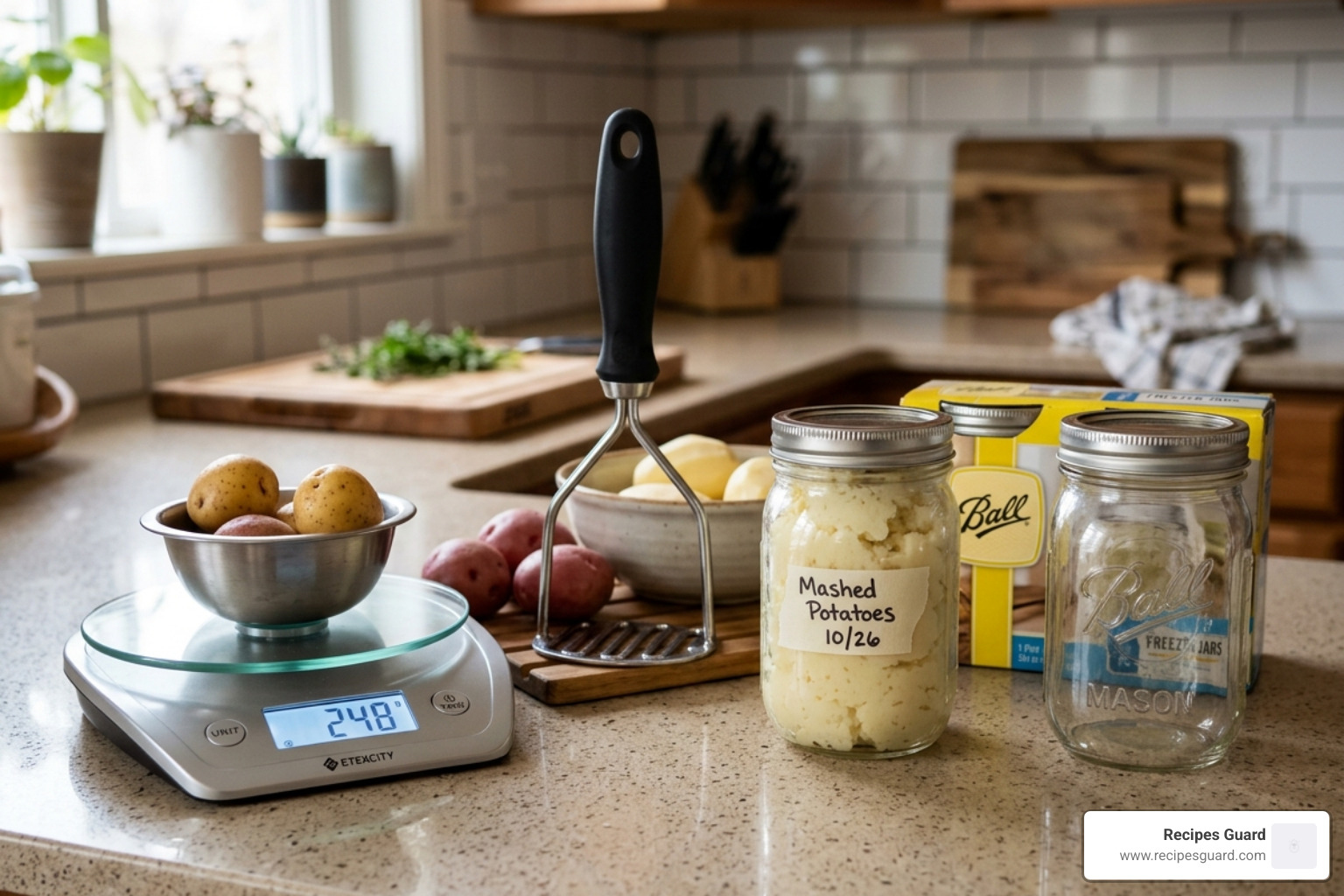
- Tools: A large bowl, a potato masher (for crushing fruit), and a digital kitchen scale for precision.
Selecting the Right Pectin Product
Not all pectins are created equal. Using the wrong one is the number one reason for jam failure.
- Instant Pectin: This is the “gold standard” for no-cook jam. You simply stir it into the fruit and sugar. (Note: As of 2024/2025, some specific “Instant” labels were updated, so always check the current 2026 packaging for “No-Cook” instructions).
- Classic Pectin: Usually requires a brief boil with water before being added to the fruit.
- Low/No-Sugar Pectin: Formulated to set with very little sweetener, often using fruit juice as a base.
- Liquid vs. Powder: Liquid pectin is usually added after the fruit and sugar have sat together, while powder is often mixed with the sugar first.
Preparing Your Fruit for Success
Preparation is where the flavor lives. For strawberries, you must hull them (remove the green leafy top) and then crush them. Never use a blender or food processor to liquefy the fruit; you want small, distinct chunks for the best texture. A potato masher works perfectly.
For blackberries and raspberries, you may want to strain out some of the seeds if you prefer a smoother jam. If you’re working with peaches, peeling is essential, and you’ll need to add lemon juice to prevent browning. For a classic starting point, the BALL Strawberry Freezer Jam – Food Channel recipe is a fantastic reference.
Step-by-Step: The Ultimate Strawberry Recipe
This is the most popular way to make ball freezer jam. It yields about 5 half-pint (8 oz) jars and is incredibly reliable.
Ingredients:
- 1 2/3 cups crushed strawberries (about 1 quart of whole berries)
- 2/3 cup granulated sugar (or sweetener of choice per pectin instructions)
- 2 Tablespoons Ball RealFruit Freezer Pectin
Step-by-Step Ball Freezer Jam with Instant Pectin
- Prep the Fruit: Wash and hull your strawberries. Crush them one layer at a time with a potato masher until you have exactly 1 2/3 cups of fruit.
- The Dry Mix: In a medium bowl, combine the sugar and the RealFruit Freezer Pectin. Stir them together until the pectin is evenly distributed through the sugar.
- The 3-Minute Stir: Add your crushed strawberries to the sugar-pectin mixture. Stir vigorously for exactly 3 minutes. This is the “3-minute stir rule.” It ensures the pectin is fully hydrated and the sugar is beginning to dissolve.
- Jarring: Ladle the jam into clean jars. It is crucial to leave 1/2 inch of headspace at the top. This allows the jam to expand as it freezes without cracking the jar or popping the lid.
- The Rest: Let the jars sit at room temperature for 30 minutes to allow the set to begin.
Low-Sugar and No-Sugar Adaptations
If you’re watching your sugar intake, you don’t have to miss out. Using Ball RealFruit Low or No-Sugar Needed Pectin allows you to use fruit juice (like apple or white grape) as a base.
For a low-sugar version, you might use 3 cups of crushed strawberries, 1 3/4 cups of unsweetened juice, and 3 tablespoons of the specialized pectin. You whisk the pectin into the juice, bring it to a boil for one minute, and then stir in the fruit. This method is compatible with Splenda or Stevia, though the texture may be slightly softer. If you’re looking for ways to balance out these sweet treats with something savory, check out our guide on How to Save Your Salty Snacks.
Troubleshooting and Storage Guidelines
Even the best of us run into a “jam jam” occasionally. The most common issues are a grainy texture or a “weeping” jam that refuses to thicken.
Storing Your Ball Freezer Jam Safely
Safety first! Unlike canned goods, ball freezer jam is not shelf-stable.
- Headspace: Always leave 1/2 inch. We can’t stress this enough.
- Fridge Life: Once opened or thawed, keep it in the refrigerator and use it within 3 weeks.
- Freezer Life: It will stay fresh and delicious for up to 1 year. After that, it’s still safe to eat, but the color may fade and the flavor might dull.
- Thawing: Move a jar from the freezer to the fridge the night before you want to use it. Never thaw on the counter, as this can encourage bacterial growth.
Common Problems and Easy Fixes
If your jam is grainy, it means the sugar didn’t dissolve. A pro tip (the “microwave hack”) is to slightly warm the fruit and sugar mixture in the microwave for 30-60 seconds (not to a boil!) before adding the pectin. This helps the sugar crystals break down.
If it won’t set, it could be expired pectin or inaccurate measurements. Always use a timer for the stirring phase. If after 24 hours in the fridge it’s still liquid, you can often “re-make” it by adding a little more pectin and stirring again, though results vary.
| Pectin Type | Preparation | Average Set Time | Best For |
|---|---|---|---|
| Freezer/Instant | No cook, stir 3 mins | 30 mins – 24 hours | Beginners, Fresh flavor |
| Classic | Boil with water 1 min | 24 hours | Traditional texture |
| Low/No Sugar | Boil with juice 1 min | 24 hours | Health-conscious diets |
Beyond Strawberries: Creative Fruit Variations
While strawberry is the king of ball freezer jam, don’t let that stop you from experimenting. Most berries follow a similar ratio, but some fruits require a little extra love.
- Blueberries: These have thick skins. For a great set, pulse them in a food processor until finely chopped but not pureed.
- Apricots: Use about 21 medium apricots to get 2 1/2 cups of chopped fruit. You must add 2 tablespoons of lemon juice to maintain the bright orange color.
- Peaches: These require peeling and a heavy dose of lemon juice. Peaches are low in acid, so the lemon juice isn’t just for color—it’s for the science of the set.
Blackberry and Raspberry Variations
Blackberries make an incredible freezer jam, but they can be very seedy. We recommend using a potato masher to crush them one layer at a time. If you use Ball RealFruit Classic Pectin for blackberries, the ratio is usually 3 cups of crushed berries to 5.25 cups of sugar and 3/4 cup of water (boiled with the pectin). It sounds like a lot of sugar, but remember: in freezer jam, sugar is a structural component, not just a sweetener!
Creative Serving and Gifting Ideas
Ball freezer jam makes a wonderful gift. Since it’s 2026, personalized QR codes on labels that link to the recipe are a big hit.
- Yogurt Swirls: Stir a spoonful of blueberry freezer jam into plain Greek yogurt.
- Savory Pairings: Try apricot freezer jam on a grilled cheese sandwich with sharp cheddar and bacon.
- Beverages: Whisk a tablespoon of raspberry jam into sparkling water for a “Sparkling Berry Pop.”
Frequently Asked Questions about Ball Freezer Jam
How long does it take for Ball freezer jam to set?
While some pectins start to thicken within 30 minutes, we recommend letting the jars sit in the refrigerator for at least 24 hours before moving them to the freezer. This ensures the pectin chains have fully bonded.
Can I use frozen fruit to make freezer jam?
Yes! Thaw the fruit completely and be sure to include all the liquid that comes off during thawing—that liquid is full of natural pectin and flavor. Measure the fruit and liquid together to reach the required amount in the recipe.
Why is my freezer jam grainy and how do I fix it?
Graininess is caused by undissolved sugar. This usually happens if the fruit was too cold or the stirring wasn’t vigorous enough. To fix it, you can try stirring the mixture longer next time or using the microwave hack mentioned above to gently warm the fruit.
Conclusion
Mastering ball freezer jam is a rite of passage for any home preserver. It’s a low-stress, high-reward project that fills your freezer with the taste of summer, even in the depths of winter. By following the precise measurements and choosing the right pectin for your needs, you can ensure a perfect set every time.
At Recipes Guard, we are dedicated to helping you master the art of food preservation. Whether you’re moving on to fermented pickles or sticking with sweet preserves, the key is always quality ingredients and a bit of patience. For more inspiration, explore our preserving basics and start your next “jar-ring” adventure today!