
Insurance Tips to Ensure Your Missing Suitcase Doesn’t Leave You Broke
Why Every Traveler Needs a Lost Suitcase Insurance Guide Before They Fly
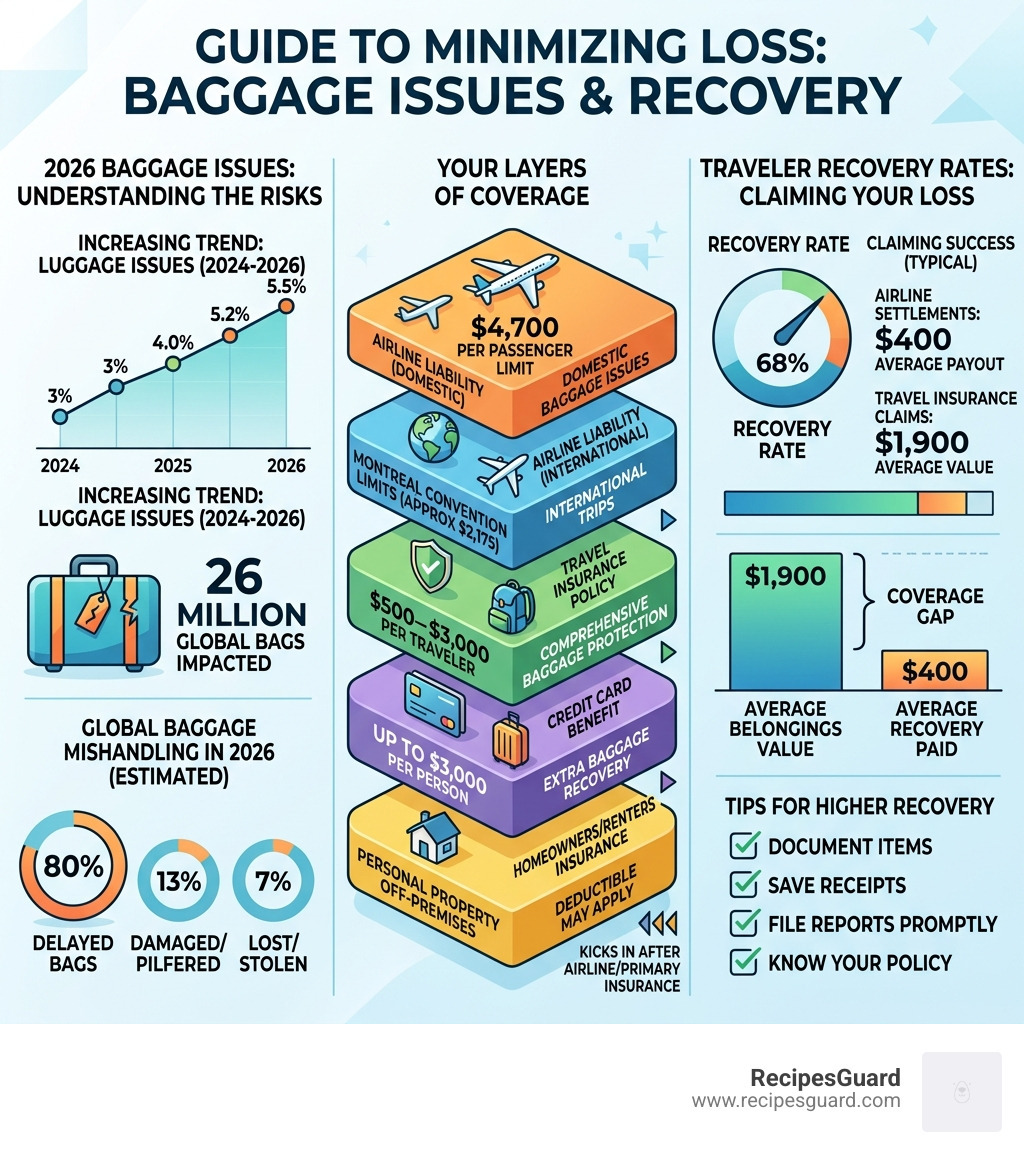
A lost suitcase insurance guide can be the difference between a minor travel hiccup and a financial disaster. Here’s a quick overview of your key protection options:
Quick Answer: Lost Suitcase Insurance at a Glance
| Coverage Source | What It Covers | Typical Limit |
|---|---|---|
| Airline liability (domestic) | Lost, delayed, damaged bags | Up to $4,700 per passenger |
| Airline liability (international) | Lost, delayed, damaged bags | ~$2,175 per passenger |
| Travel insurance policy | Lost, stolen, damaged baggage | $500–$3,000 per traveler |
| Credit card benefit | Lost or damaged checked bags | Up to $3,000 per person |
| Homeowners/renters insurance | Personal belongings off-premises | Varies (deductible applies) |
Imagine arriving at your dream destination after a long-haul flight, only to watch every bag come off the carousel — except yours. It’s a sinking feeling that 26 million travelers experienced in 2022 alone, when that many bags were lost, delayed, or damaged worldwide.
The financial hit is real. The average holiday suitcase holds around $1,900 worth of belongings, yet the average insurance claim pays out closer to $400. That gap can sting — especially if you’re a student abroad with a laptop, textbooks, and a semester’s worth of clothing in that bag.
The good news? You likely have more protection than you think — spread across airlines, travel insurance policies, credit cards, and even your renters insurance. The tricky part is knowing which kicks in first, what’s excluded, and exactly what to do in the first 24 hours.
This guide walks you through all of it in plain language.
Lost suitcase insurance guide terms you need:
- baggage delay insurance
- checked baggage insurance
- travel insurance luggage damage
Decoding Coverage: Lost vs. Delayed Baggage
Before we dive into the deep end of our lost suitcase insurance guide, we need to clear up some common confusion. Many travelers use “lost” and “delayed” interchangeably, but in the insurance world, they are two very different animals with different rules for reimbursement.
Baggage Delay: The “I Need a Toothbrush Now” Benefit
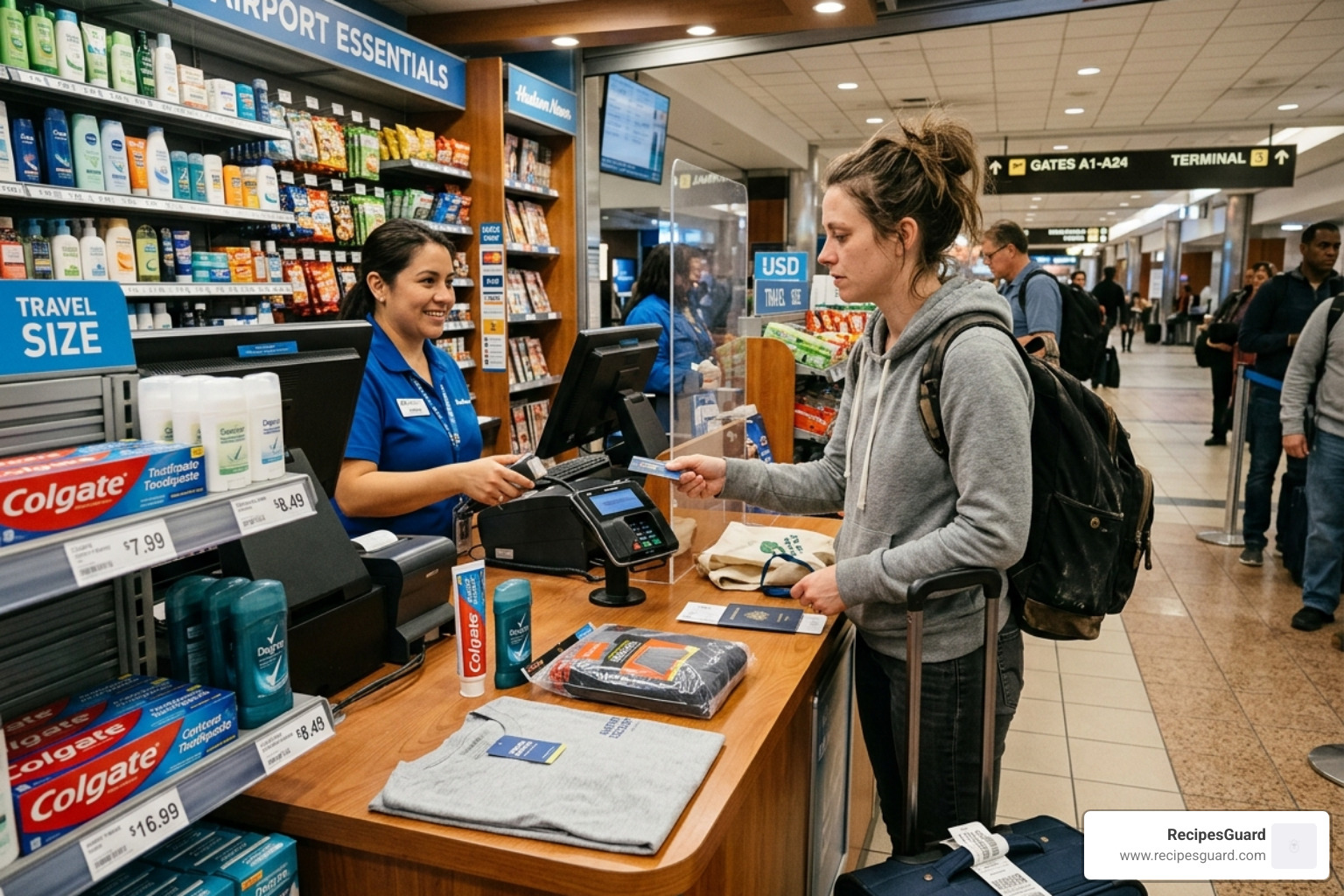
Baggage delay coverage is designed for those awkward 24 to 48 hours when your suitcase is taking a scenic detour while you’ve already arrived at your hotel. This benefit reimburses you for “essential items.” Think toiletries, a change of clothes, and maybe a coat if you’ve landed in a chilly climate without your jacket.
The key here is the time trigger. Most policies don’t kick in the second you leave the airport. You usually have to wait for a 6, 12, or even 24-hour threshold before you can start shopping. For instance, some premium credit cards offer $100 per day for up to five days, provided the delay meets their specific window. If you’re currently stuck without your gear, check out The Ultimate Survival Guide For Delayed Baggage Claims for a deeper dive into these time-sensitive rules.
Lost Baggage: The Permanent Goodbye
Baggage loss coverage only applies when your bag is officially declared “lost” by the airline (usually after 5 to 14 days) or if it is stolen. This covers the actual value of the suitcase and everything inside it, up to your policy limits.
It’s important to remember that delay benefits often only apply to the “outward leg” of your trip. If your bag is delayed on the flight back home to Australia, insurers often assume you have plenty of spare clothes and toothbrushes at your house, so they may not pay for new ones!
The Ultimate Lost Suitcase Insurance Guide for 2026
As we navigate the travel landscape of May 2026, the way we protect our gear has evolved. Modern insurance isn’t just about a single policy; it’s a multi-layered safety net. When your bag goes missing, you need to understand the hierarchy of who pays what.
Primary vs. Secondary Coverage
In most cases, travel insurance acts as secondary coverage. This means you are legally required to try and get money from the airline first. If the airline pays you $1,000 but your bag was worth $2,500, your insurance policy steps in to cover the “gap.”
If you want to get the basics down before moving on, our Lost Luggage Insurance 101 guide is a great place to start.
Understanding Value: ACV vs. Replacement Cost
One of the biggest shocks travelers face is the payout amount. Most insurance companies use Actual Cash Value (ACV). This means they take the replacement cost of your item and subtract depreciation based on its age.
Example: That $1,000 designer suit you bought three years ago? The insurance company might only value it at $400 because it’s “used.” This is why keeping receipts and photos is so vital—it helps you argue for the highest possible value.
Lost Suitcase Insurance Guide: Understanding Policy Limits
Every lost suitcase insurance guide should highlight the “fine print” regarding limits. Policies usually have three distinct caps:
- Per-Person Limit: The total amount the policy will pay (e.g., $3,000).
- Per-Item Sublimit: The maximum they will pay for any single item (often $250 – $500).
- Category/Luxury Limit: A specific cap on high-value items like jewelry, watches, or electronics (often as low as $500 total for the whole category).
| Protection Type | Typical Coverage Limit | Best For |
|---|---|---|
| Airline (Domestic) | Up to $4,700 | General clothing and luggage |
| Airline (International) | ~$2,175 (Montreal Convention) | Standard international trips |
| Credit Card | $3,000 | Secondary gap coverage |
| Comprehensive Insurance | $500 – $3,000 | Theft and total loss protection |
Lost Suitcase Insurance Guide: Common Exclusions to Watch For
Insurance isn’t a blank check. There are several things that almost no standard policy will cover:
- Cash and Securities: Never pack money in your checked bag. If it’s gone, it’s gone.
- Unlocked Vehicles: If your suitcase is stolen from a rental car that you left unlocked, your claim will likely be denied.
- Unattended Baggage: Leaving your bag with a “valet” who doesn’t give you a receipt or leaving it in a hotel lobby while you grab coffee can void your coverage.
- Professional Equipment: If you are a professional photographer or a traveling DJ, your standard travel insurance might exclude “business equipment.”
To ensure you don’t fall into these traps, we recommend you Master The Art Of Getting Paid For Your Missing Suitcase by reviewing these exclusions before you pack.
Airline Liability vs. Private Insurance: Who Pays First?
When a bag goes missing in transit, the airline is your first port of call. Their liability is governed by strict regulations, but those limits might not cover your entire loss.
International Travel: The Montreal Convention
For most international flights, including those to and from Australia, the Montreal Convention sets the rules. As of 2026, the liability limit is approximately $2,175 USD (roughly 1,288 Special Drawing Rights). This is a “per passenger” limit, not a “per bag” limit.
Domestic Travel in Australia
In Australia, domestic airline liability is governed by the Civil Aviation (Carriers’ Liability) Act 1959. For more specifics on local rights, check out The Ultimate Guide To Missing Bag Compensation In Australia.
The Role of Homeowners and Renters Insurance
Did you know your home insurance might follow you on vacation? Many homeowners and renters policies include “off-premises” coverage for personal property. If your suitcase is stolen from a hotel room or a locked car, your home insurance might cover it. The Drawback: You’ll have to pay your deductible first (which could be $500 or $1,000), and making a claim could raise your home insurance premiums. It’s usually best to use this as a last resort.
Step-by-Step: How to File a Successful Claim
If you find yourself standing at an empty carousel, don’t leave the airport! Your chance of a successful claim depends on what you do in the next hour.
- File a PIR Immediately: Go to the airline’s baggage service desk and file a Property Irregularity Report (PIR). This is the “birth certificate” of your claim. Without it, your insurance company will likely reject your application.
- Get a Copy: Ensure you have a physical or digital copy of the report and the claim reference number.
- Report Theft to Police: If your bag was stolen from a hotel or a car, you must get a police report within 24 hours. Most insurers will not pay out for theft without official documentation.
- Itemize Your Loss: Create a detailed list of every item in the bag, when you bought it, and what it cost.
- Gather Receipts: Dig through your emails for digital receipts. If you don’t have a receipt, some insurers will accept credit card statements or even photos of you wearing the items as proof of ownership.
For a more detailed walkthrough, see our guide on How To Navigate The Lost Baggage Claim Process and make sure you have all the Essential Baggage Loss Claim Documents You Need Right Now.
Proactive Strategies to Prevent Luggage Loss
While a lost suitcase insurance guide helps you get paid, it’s much better to never lose the bag in the first place. Here are our expert tips for 2026:
- Use Smart Trackers: Devices like AirTags or Tile trackers are game-changers. Being able to tell the airline agent, “My bag is actually in Terminal 3, not Singapore,” can speed up recovery significantly.
- Take “Packing Selfies”: Lay out everything you’re packing on your bed and take a high-quality photo. This serves as visual evidence for your itemized list.
- Remove Old Tags: Those sticky barcodes from your last trip to Bali can confuse the automated sorting machines. Peel them all off!
- Sturdy, Identifiable Bags: A black suitcase looks like every other black suitcase. Use a bright ribbon, a unique luggage tag, or a colorful strap to prevent someone else from accidentally grabbing your bag.
- Fly Nonstop: The majority of bags are lost during transfers between connecting flights. If you can fly direct, do it.
Frequently Asked Questions about Missing Luggage
How long does it take for an airline to declare a bag officially lost?
Most airlines will categorize a bag as “delayed” for the first few days. It is typically declared officially lost between 5 and 14 days after the flight. In some regions, like the UK, the standard is 21 days. Once this window passes, you can move from “incidental expense” claims to “total loss” claims.
Does travel insurance cover stolen items from a hotel room?
Yes, most comprehensive policies cover theft from your accommodation. However, they usually have a “Care and Control” clause. This means if you left your jewelry sitting on the nightstand while you went to the pool, they might deny the claim for negligence. Always use the hotel safe!
Can students get specific baggage insurance for study abroad?
Absolutely. Students often carry high-value items like laptops and expensive textbooks that exceed standard “per-item” limits. At RecipesGuard, we specialize in helping students find policies with “tech riders” or higher sublimits for study essentials. Check out The Baggage Claim Survival Guide For Students for more tailored advice.
Conclusion
Losing a suitcase doesn’t have to be a financial death sentence. By understanding the layers of protection available—from airline liability to credit card perks—you can travel with confidence.
At RecipesGuard, we know that navigating insurance jargon is the last thing you want to do while on vacation. That’s why we provide student-focused, step-by-step tutorials to make the claim process as painless as possible. Whether you’re studying in Melbourne or backpacking through Europe, we’re here to ensure you get every cent you’re owed.
Don’t wait until your bag is missing to figure out your coverage. Protect your journey with RecipesGuard today and travel with the peace of mind that you’re covered, no matter where the carousel stops.

My name is Bianca, and my journey into the world of fermentation and food safety began with a costly mistake. I once lost an entire season’s harvest of chili peppers because I relied on guesswork instead of science. That failure was my turning point.
