Crack the Code on Egg Water Glassing for Year Round Freshness
Why Egg Water Glassing Is the Smartest Way to Preserve Your Surplus Eggs
Egg water glassing is one of the oldest and most reliable ways to preserve raw eggs for up to 18 months — no refrigeration needed.
Here’s the short answer if you just need the basics:
How to water glass eggs (quick summary):
- Start with fresh, unwashed farm eggs with their natural bloom intact
- Mix 1 oz of food-grade pickling lime (calcium hydroxide) per 1 quart of filtered water
- Place eggs pointy-side down in a clean, food-safe container
- Pour the lime solution over the eggs until fully submerged
- Seal, label with the date, and store in a cool, dark place
- Eggs stay fresh for 12-18 months
If you keep backyard chickens — or buy from a local farm — you’ve probably faced the same problem: eggs piling up faster than you can use them in spring and summer, then a frustrating shortage come winter.
That seasonal swing is the whole reason water glassing has been used since at least the early 1800s. It’s a simple, low-cost method that keeps eggs in a kind of suspended animation, ready to cook just like fresh eggs months later.
The method has recently surged in popularity again, partly driven by rising egg prices and a growing interest in self-sufficient food preservation. And for good reason — when done correctly, it works remarkably well.
This guide covers everything: how it works, what supplies you need, the step-by-step process, safety checks, and how to actually cook with your preserved eggs.
What is Egg Water Glassing and How Does It Work?
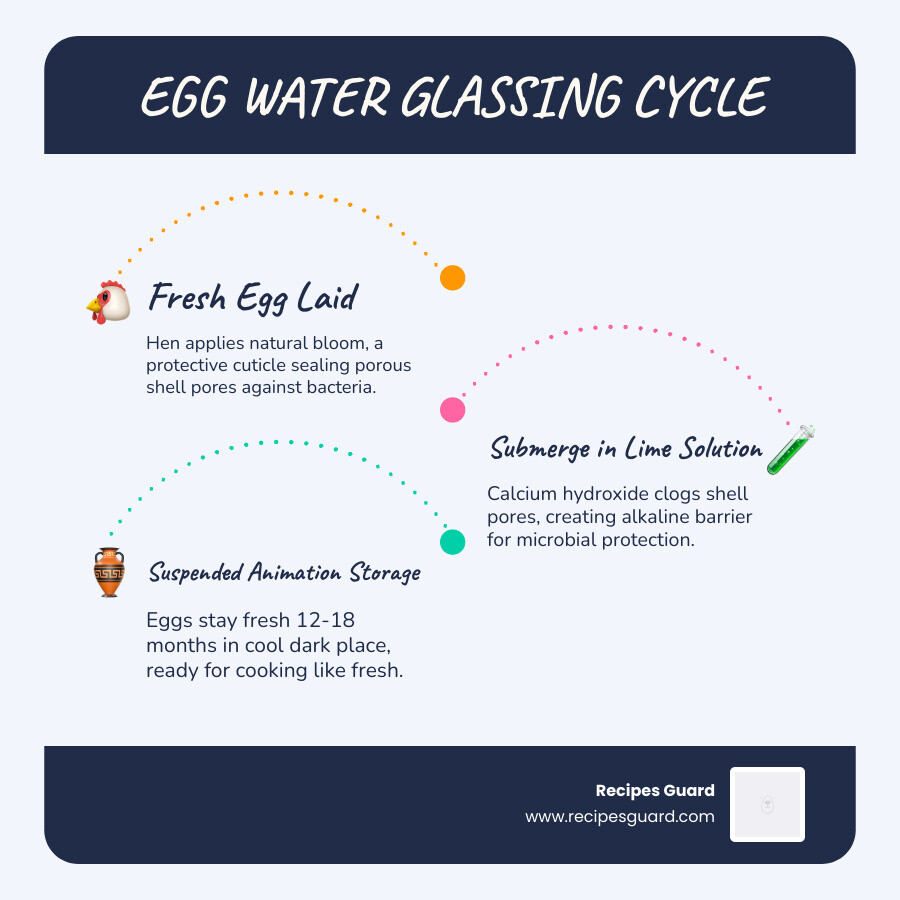
To understand egg water glassing, we have to look at the biology of an egg. When a hen lays an egg, she applies a natural, protective coating called the “bloom” (or cuticle). This bloom is a microbial barrier that seals the thousands of tiny, porous holes in the shell. In nature, this keeps bacteria out and moisture in so a chick can develop safely.
In egg water glassing, we use a solution of calcium hydroxide (commonly known as pickling lime) to reinforce this barrier. The lime solution is highly alkaline, creating an environment where spoilage-causing bacteria simply cannot survive. By submerging unwashed eggs in this solution, we effectively put them into a state of “suspended animation.” The calcium in the lime “clogs” the pores of the shell, stopping the exchange of air and moisture.
This method is a cornerstone of Preserving Basics for any homesteader. Unlike freezing or dehydrating, which change the texture of the egg, water glassing keeps the egg raw and whole. However, it is not without its caveats. As noted in Water Glassing Eggs Could Keep Them Fresh for a Year — But Experts Warn It Comes With Major Risks, the primary concern is Salmonella. If an egg is contaminated internally before the shell forms, or if a cracked egg introduces bacteria into the jar, the safety of the batch can be compromised. That is why following strict protocols is essential.
Essential Supplies and Egg Selection
Preparation is everything. You don’t want to be halfway through a flat of eggs only to realize your scale is out of batteries or your water is too chlorinated.
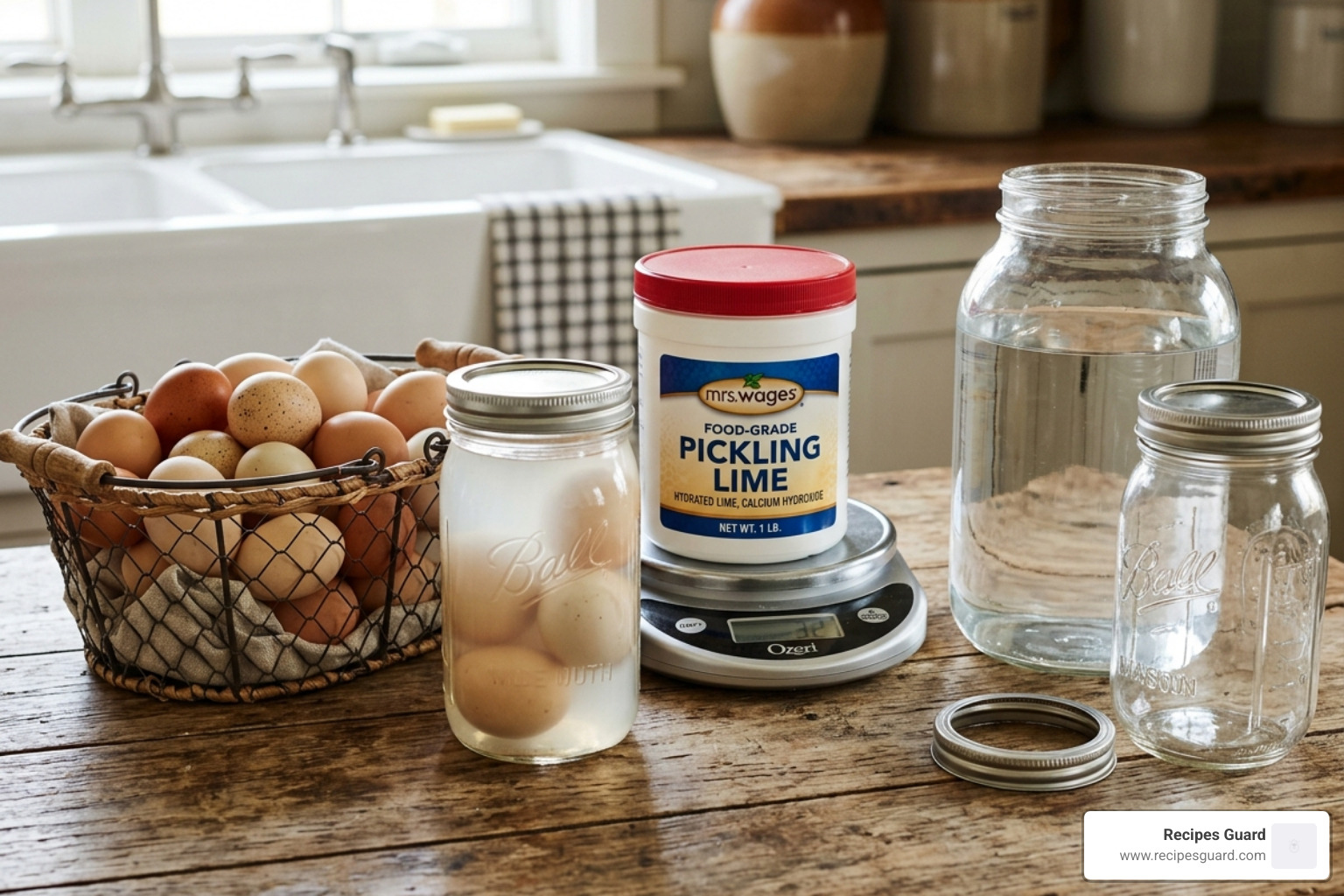
To get started, we recommend the following:
- Clean Glass Jars or Food-Grade Buckets: A half-gallon Mason jar typically fits 15–20 eggs. For larger harvests, a 3-gallon bucket can hold about 80 eggs, while a 5-gallon bucket fits roughly 130.
- Kitchen Scale: Precision matters. We measure pickling lime by weight (ounces) rather than volume (tablespoons) for the most accurate solution.
- Distilled or Filtered Water: Chlorine and fluoride in city tap water can interfere with the lime’s effectiveness and potentially break down the egg’s bloom.
Selecting the Right Eggs for Egg Water Glassing
This is the most critical rule: You cannot use store-bought eggs. In the United States, commercial eggs are washed and bleached before they reach the shelf. This process destroys the bloom. Without that natural seal, the lime solution will seep into the egg, making it inedible.
According to the insights in Preserving Eggs with Water Glassing – KT Bradshaw, you must use farm-fresh eggs that are:
- Unwashed: They must still have their “bloom” intact.
- Clean: Avoid eggs with poop, mud, or significant debris. A tiny bit of dry dirt can be gently rubbed off with a dry cloth, but if it requires water, that egg is destined for the breakfast pan, not the preservation jar.
- Uncracked: Even a hairline fracture can ruin a whole batch.
- Fresh: Ideally, eggs should be less than three days old, and never more than a week old.
While most people preserve chicken eggs, you can successfully use this method for duck, quail, or turkey eggs as well. Just ensure they meet the same cleanliness and freshness standards.
The Science Behind the Egg Water Glassing Solution
The “magic” ingredient here is calcium hydroxide. This is a natural product often derived from limestone, oyster shells, or bones that have been burned and then hydrated.
When mixed with water, it creates a solution with a very high pH level (around 12.4). This high alkalinity is what prevents microbial growth. It is important to distinguish between the types of lime available at the store:
| Type of Lime | Chemical Name | Suitable for Water Glassing? |
|---|---|---|
| Pickling Lime / Hydrated Lime | Calcium Hydroxide | Yes (Use Food-Grade) |
| Garden Lime | Calcium Carbonate | No (Not alkaline enough) |
| Quicklime | Calcium Oxide | No (Highly reactive/dangerous) |
For more on staying safe during these processes, see our Safety First: A Guide to Preserving Fermented Foods guide.
Step-by-Step Guide to Preserving Your Harvest
It is currently April 2026, which is the perfect time to start your preservation cycle. As the days lengthen, your hens are likely hitting peak production. Instead of giving away every extra dozen, let’s start filling your pantry.
- Measure Your Ingredients: Use your scale to measure 1 ounce of pickling lime for every 1 quart of distilled water.
- Mix the Solution: Add the lime to your container first, then pour in the water. Whisk or stir until the powder is mostly dissolved. Don’t worry if the water looks milky; that’s exactly what you want.
- Load the Eggs: Carefully place your clean, unwashed eggs into the container. We recommend placing them pointy side down. This keeps the air pocket at the blunt end and helps the yolk stay centered and fresh.
- Submerge Completely: Ensure there is at least 2 inches of liquid covering the top layer of eggs. If the water evaporates and exposes the eggs, they will spoil.
- Seal and Store: Use an airtight lid. If you are using a bucket, a “gamma lid” is a great investment as it provides a tight seal without the violent “thumping” required to close a standard snap-on lid.
- Label: Mark the jar with the date and the egg count.
Just like when you prepare Quick and Easy Pickled Vegetables for Every Meal, cleanliness of your workspace is key to preventing unwanted bacteria from entering the jar.
Handling the Lime Solution Safely
While pickling lime is food-safe once diluted, the concentrated powder and the high-pH solution can be caustic.
- Wear Gloves: Prolonged contact with the lime water can dry out your skin or cause minor chemical burns (irritation).
- Avoid Dust: Don’t inhale the lime powder when measuring it out.
- Rinse Thoroughly: When you eventually take an egg out to eat, you must wash the shell thoroughly. If lime water gets into your skillet, it can cause your eggs to “curdle” or taste like soap.
Storage, Safety, and Culinary Use
Once your jars are sealed, store them in a cool, dark place. A basement, root cellar, or the bottom of a pantry is ideal. You want to avoid temperature swings and direct sunlight. Under these conditions, your eggs will safely last 12 to 18 months. Some homesteaders report success at the two-year mark, but for the best flavor and texture, we recommend using them within a year.
How to Check if Preserved Eggs are Still Good
Before you crack a year-old egg into your cake batter, perform a few simple checks:
- The Float Test: Place the egg in a bowl of plain water. If it sinks, it’s good. If it floats, the air pocket has grown too large, indicating it is no longer fresh.
- The Smell Test: This is the gold standard. Crack each preserved egg into a separate small bowl before adding it to your recipe. A bad egg will have an unmistakable, sulfurous “rotten” smell. If it smells like a normal egg, it is safe to use.
- Visual Cues: The whites of water-glassed eggs are often slightly cloudier and runnier than fresh eggs, and the yolks are more fragile. This is normal and does not indicate spoilage. However, if you see mold or a black/green film inside the shell, discard it.
Cooking with Water-Glassed Eggs
You can use these eggs for almost anything: baking, scrambling, omelets, and frying. However, there is one major trick for boiling:
Because the lime solution has sealed the pores of the shell so effectively, steam cannot escape during the boiling process. If you don’t intervene, the egg will explode in the pot! Use a pin or needle to poke a tiny hole in the blunt end of the shell before boiling.
For frying, be gentle. Because the yolk membrane weakens over time, you may find it harder to get a perfect “sunny side up” without the yolk breaking. They are, however, absolutely perfect for scrambled eggs or quiche.
Frequently Asked Questions about Egg Water Glassing
Can I water glass store-bought or washed eggs?
We cannot stress this enough: No. Store-bought eggs have been washed, which removes the bloom. Without the bloom, the lime solution enters the egg through the pores, essentially “pickling” the interior and making it unsafe and unpalatable. Only use unwashed, farm-fresh eggs.
Is it normal for the lime to settle at the bottom?
Yes! After a few days, you will notice a white layer of lime settling at the bottom of your jar, and the water above may become clear. This is perfectly normal saturation. Do not stir the jar. Stirring risks cracking the eggs at the bottom, and a single broken egg can spoil the entire container. There is still plenty of lime suspended in the water to do the job.
Can I add more eggs to the jar over time?
Yes, this is often called the “lasagna method.” You can start with a large bucket of lime solution and add a few eggs every day as you gather them. Just ensure you don’t drop them in (place them gently) and always keep the liquid level at least two inches above the top egg.
Conclusion
At Recipes Guard, we believe that taking control of your food supply is one of the most rewarding parts of the homesteading lifestyle. Egg water glassing is a low-tech, high-reward skill that bridges the gap between summer abundance and winter scarcity. By following these steps, you can ensure your family has access to high-quality protein all year round without relying on fluctuating grocery store prices.
Ready to dive deeper into food preservation? Master the art of long-term food storage with our Preserving Basics guide and start building your resilient pantry today!