Take it With a Grain of Salt and Master Your Brine Ratios
The One Number That Makes or Breaks Your Ferment
The lacto-fermentation salt ratio is the single most important variable in fermenting vegetables safely at home. Get it right, and you’ll have crunchy, tangy, probiotic-rich pickles. Get it wrong, and you’ll have mold, mush, or worse.
Here’s the quick answer most people need:
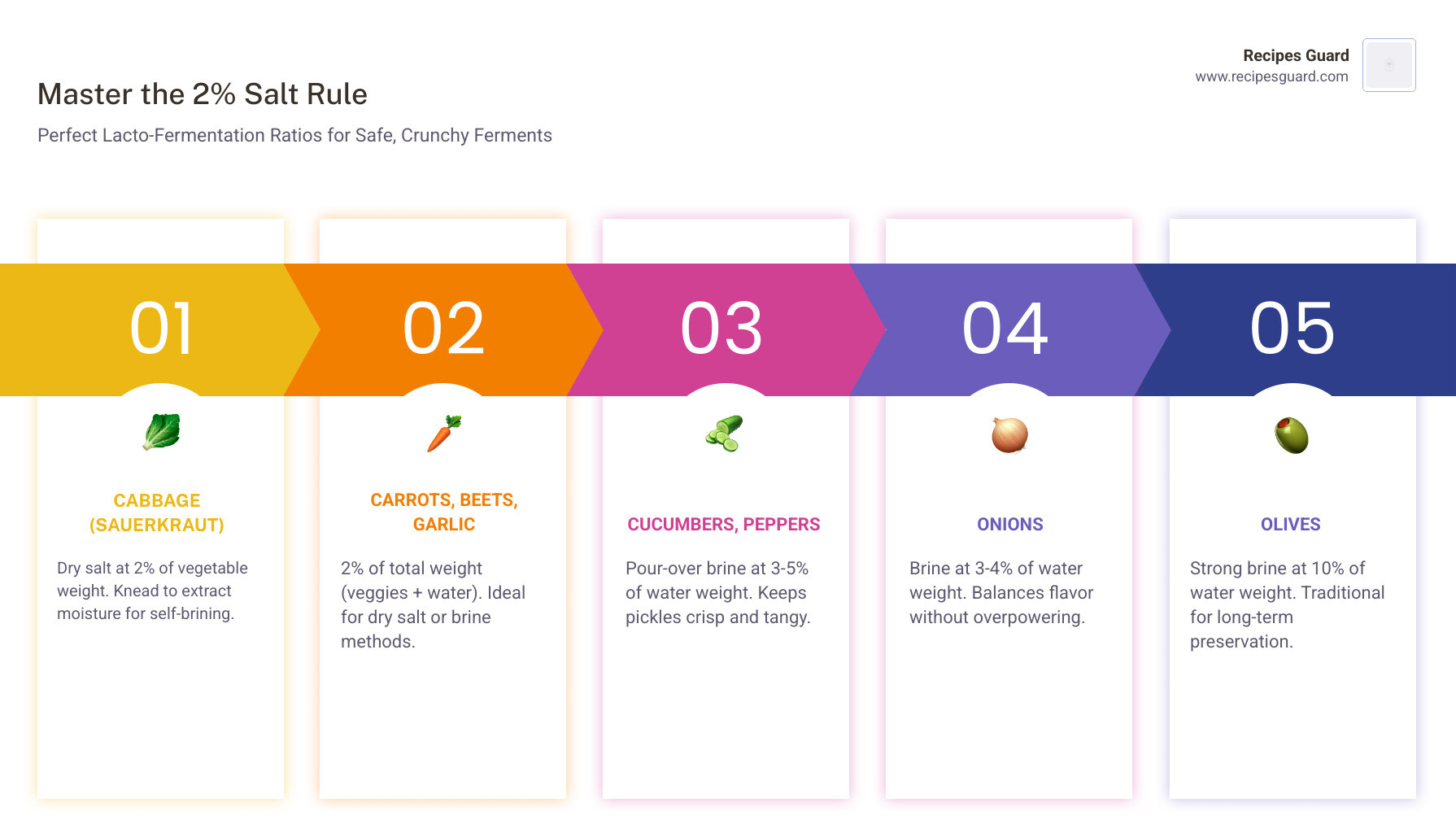
| Vegetable | Method | Salt Ratio |
|---|---|---|
| Cabbage (sauerkraut) | Dry salt | 2% of vegetable weight |
| Carrots, beets, garlic | Dry salt or brine | 2% of total weight |
| Cucumbers, peppers | Pour-over brine | 3–5% of water weight |
| Onions | Brine | 3–4% of water weight |
| Olives | Brine | 10% of water weight |
The universal starting point: use 2% salt by weight of your total ingredients (vegetables + any added water). That means 20 grams of salt per 1 kilogram of vegetables or water.
Always measure salt by weight in grams, never by volume. A teaspoon of fine sea salt and a teaspoon of kosher salt can differ by as much as 60% in actual salt content.
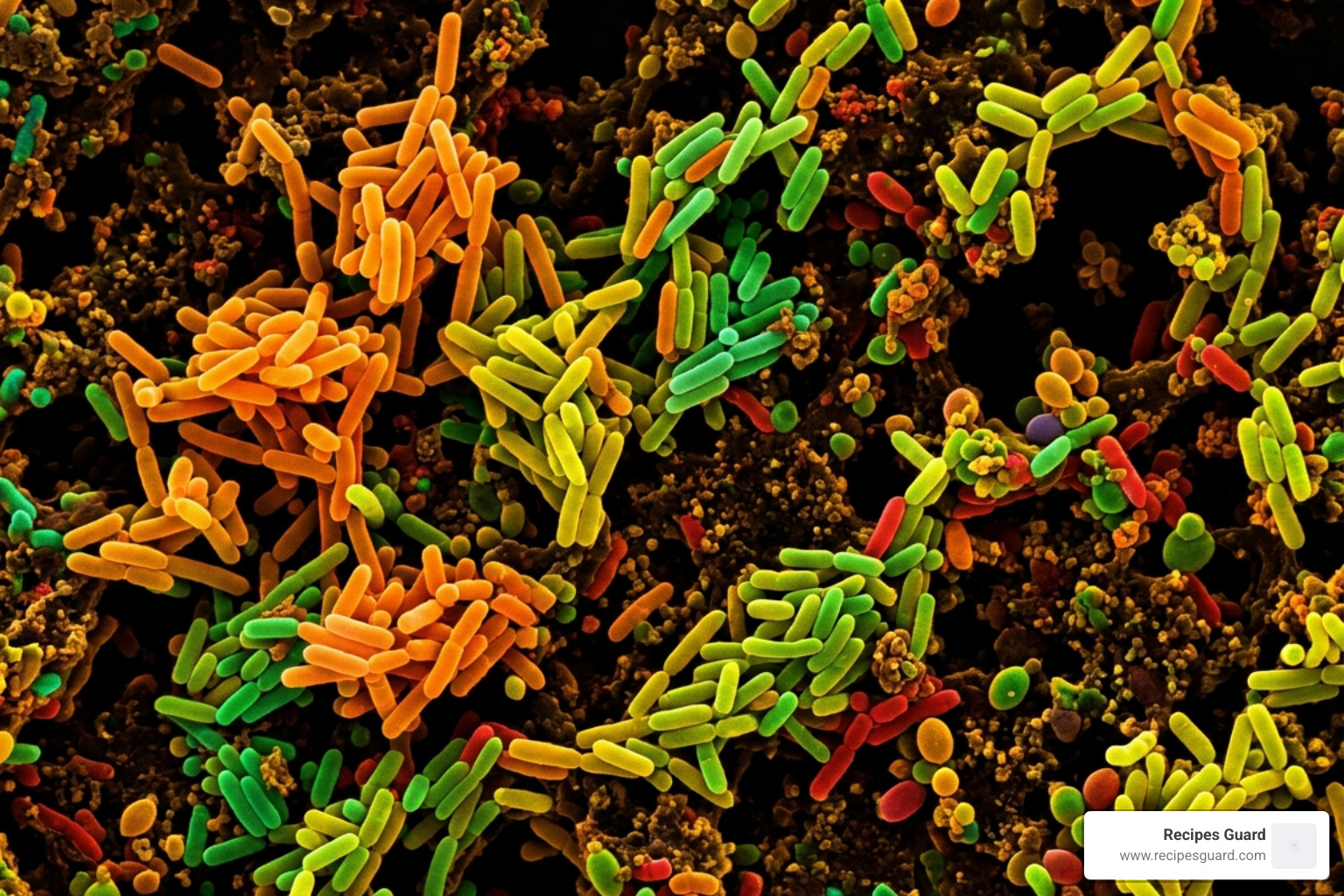
The science behind this is straightforward. Lactic acid bacteria (LAB) — the beneficial microbes naturally present on vegetable surfaces — thrive in a 2–3% salt environment. That concentration is salty enough to suppress harmful bacteria, but mild enough to let LAB do their job: converting sugars into lactic acid, dropping the pH, and preserving your food without refrigeration or heat.
Below 1.5% salt, spoilage becomes a real risk. Above 4–5%, fermentation can stall entirely.
Why the Lacto-Fermentation Salt Ratio is Your Safety Net
Think of salt as the “security team” for your jar. When we ferment vegetables in April 2026, we aren’t just letting things rot; we are practicing controlled biology. Salt performs four critical jobs that ensure our food remains edible and delicious.
First, salt creates a selective environment. Most “bad” bacteria (the ones that cause rot and off-smells) are salt-sensitive. However, our heroes, the Lactobacillus family, are remarkably salt-tolerant. By hitting that 2% lacto-fermentation salt ratio, we effectively roll out the red carpet for the good guys while slamming the door on pathogens.
Second, salt manages the texture of the vegetables. Through the process of osmosis, salt draws water out of the vegetable cells and into the brine. This strengthens the pectin in the cell walls, ensuring your pickles stay crisp rather than turning into a “mushy mess.” This is especially vital for high-water vegetables like cucumbers.
Third, salt facilitates an anaerobic (oxygen-free) environment. By drawing out juices or allowing us to submerge veggies under a brine, salt helps keep the produce away from the air. Since many spoilage molds need oxygen to grow, keeping everything “under the drink” is your best defense.
Finally, salt regulates the speed of fermentation. In warmer temperatures, fermentation can happen too fast, leading to soft textures and one-dimensional flavors. A slightly higher salt ratio (closer to 3%) can act as a “brake,” slowing the microbes down so they have time to develop complex, tangy notes. For more on keeping your kitchen safe, check out our Safety First: A Guide to Preserving Fermented Foods.
How to Calculate the Perfect Salt Ratio by Weight
If there is one tool we insist you use at Recipes Guard, it is a digital kitchen scale. Measuring salt by “tablespoons” is a recipe for inconsistency. One tablespoon of fine sea salt weighs about 17–19 grams, while a tablespoon of fluffy kosher salt might only weigh 10 grams. That is a massive difference when you are aiming for a precise 2% concentration!
To calculate your salt needs, we always recommend the metric system (grams). It makes the math incredibly simple.
The Golden Formula: (Weight of Vegetables + Weight of Water) × Desired Percentage = Grams of Salt
For example, if you have 1,000 grams (1 kg) of cabbage and water combined, and you want a 2% ratio: 1,000 × 0.02 = 20 grams of salt.
| Total Weight (Veg + Water) | 2% Salt (Standard) | 3% Salt (Warm Weather) | 5% Salt (Cucumbers) |
|---|---|---|---|
| 500g | 10g | 15g | 25g |
| 1,000g (1kg) | 20g | 30g | 50g |
| 1,500g (1.5kg) | 30g | 45g | 75g |
| 2,000g (2kg) | 40g | 60g | 100g |
For a deeper dive into specific ingredients, see our guide: Don’t Be Afraid of the Funk with This Easy Fermented Garlic Recipe. You can also explore more tips in our Category: Preserving Basics.
Dry Salting for Sauerkraut and Shredded Veggies
Dry salting is the preferred method for vegetables that have a high water content and can be shredded or sliced thin, like cabbage or zucchini. Instead of adding water, we use salt to “sweat” the moisture out of the vegetable itself to create a self-brine.
- Weigh your shredded vegetables in grams.
- Calculate 2% of that weight in salt.
- Sprinkle the salt over the veggies and massage them vigorously for 5–10 minutes.
- Wait. Let the mixture sit for 15 minutes. You will see a pool of liquid forming at the bottom of the bowl.
- Pack it tight. Push the vegetables into your jar until the liquid rises above the top of the produce.
Mastering the Lacto-Fermentation Salt Ratio for Pour-Over Brines
For whole vegetables or chunky sticks (like carrots, cauliflower, or green beans), you need to add a “pour-over” brine because you can’t massage the liquid out of a whole carrot!
For these ferments, a 3–5% lacto-fermentation salt ratio is common, especially for cucumbers which are prone to softening. To make a 3.5% brine, you would dissolve 35 grams of salt into 1,000 ml (1 liter) of water.
A pro tip we use at Recipes Guard: Weigh your jar with the vegetables inside, fill it with water, then weigh it again. This gives you the total weight of the contents. Multiply that total weight by 0.025 (for a 2.5% ratio) to find exactly how much salt to add to the jar. This ensures the concentration is perfect throughout the entire mixture. This is a key step when Mastering the Art of Lacto-Fermented Hot Sauce.
Choosing the Right Salt and Equipment
Not all salts are created equal. For a successful ferment, you want the purest salt possible.
What to look for:
- Sea Salt: Excellent choice, especially fine-grain varieties.
- Canning or Pickling Salt: Pure sodium chloride with no additives.
- Pink Himalayan Salt: Great, though it contains trace minerals that some say adds flavor (though it doesn’t change the fermentation chemistry much).
What to avoid:
- Iodized Table Salt: Iodine can inhibit the growth of beneficial bacteria and may turn your vegetables an unappealing gray color.
- Anti-Caking Agents: These are often added to table salt to keep it pouring smoothly, but they can make your brine cloudy and leave a bitter aftertaste.
As for equipment, glass mason jars are the gold standard for home fermenters. They are non-reactive and easy to clean. To keep your veggies submerged, use glass fermentation weights or even a smaller jar filled with water that fits inside the mouth of the larger jar. For more beginner-friendly ideas, check out our Quick and Easy Pickled Vegetables for Every Meal.
Troubleshooting Common Salt and Brine Issues
Even with the perfect lacto-fermentation salt ratio, things can sometimes look a little funky. Here is how to tell the difference between a “good funk” and a “bad fail.”
Kahm Yeast vs. Mold If you see a flat, white, wavy film on the surface of your brine, don’t panic! This is likely Kahm yeast. It is harmless, though it can affect the flavor if left too long. Simply skim it off with a clean spoon. However, if you see fuzzy, colorful (green, black, or pink), or hairy spots, that is mold. If mold has taken hold, it’s best to discard the batch and start over. Safety is our priority at Recipes Guard!
Mushy Vegetables If your pickles are soft, it usually means your salt ratio was too low, your kitchen was too hot, or you didn’t trim the “blossom end” of your cucumbers (which contains enzymes that soften fruit). Next time, try a 4% or 5% brine and keep the jar in a cooler spot.
The Sweet Spot Temperature Microbes are like us—they have a preferred “room temperature.” The sweet spot for fermentation is between 65°F and 75°F (18–24°C).
- Below 60°F: Fermentation will be very slow (though flavor development will be excellent).
- Above 80°F: Fermentation happens at lightning speed, increasing the risk of mold and mushy textures.
If your ferment tastes way too salty, don’t throw it out! Give it more time; as the acidity increases, the salty flavor often mellows out. You can also rinse your fermented veggies under cold water before serving to remove excess surface salt. For more troubleshooting, visit our Category: Fermented Recipes.
Frequently Asked Questions about Lacto-Fermentation Salt Ratios
Can you ferment with a low Lacto-Fermentation Salt Ratio?
Technically, you can ferment with as little as 1.5% salt, but it is risky. Below this threshold, you are essentially “rolling out the welcome mat” for spoilage organisms. If you must use less salt for dietary reasons, we recommend using a starter culture (like whey or a commercial starter) and keeping the fermentation period very short—just a few days—before moving it to the fridge.
Should I measure salt by volume or weight?
Always weight! As we mentioned earlier, density variations are huge. A cup of flaked sea salt weighs much less than a cup of fine table salt. If you use volume, you are guessing. If you use a scale, you are a scientist. A basic kitchen scale is a small investment that guarantees consistent results every single time.
How does temperature affect my salt needs?
Temperature acts like a gas pedal for bacteria. In the heat of summer, bacteria work faster. To compensate and keep things safe, many fermenters increase their lacto-fermentation salt ratio by 0.5% or 1%. For example, if you usually make sauerkraut at 2%, try 2.5% or 3% when your kitchen is over 80°F. This slows the process down and helps maintain the texture of the vegetables.
Conclusion
Mastering the lacto-fermentation salt ratio is the key to unlocking a world of flavor and gut-health benefits. By moving away from “handfuls” and “pinches” and embracing the precision of the 2% rule, you ensure that every jar you pack is a success.
At Recipes Guard, we believe that fermentation is one of the most rewarding skills you can learn in the kitchen. It’s a bridge between ancient preservation and modern wellness. So, grab your scale, some fresh veggies, and start your next batch today. You’ll be amazed at what a little salt and a lot of tiny microbes can do!
Ready for more? Explore our full library of guides in our Category: Fermented Recipes. Happy fermenting!