
Why Your Insurance Says No to Illegal Acts
When Insurance Won’t Pay: What the Self Inflicted Injury Exclusion Really Means
The self inflicted injury exclusion is a clause in many insurance policies that blocks coverage for injuries a person deliberately causes to themselves — including suicide attempts, intentional self-harm, and in some cases, intentionally caused illness.
Here’s a quick breakdown of how it typically works across policy types:
| Policy Type | Typically Covered? | Key Rule |
|---|---|---|
| Group Health Insurance | Yes (in the US) | HIPAA prohibits exclusion if injury stems from mental illness |
| Individual Health Insurance | Sometimes | Only excluded if pre-existing conditions are also excluded |
| Life Insurance | Depends on timing | Suicide exclusion usually applies for 1-2 years from policy start |
| Disability Insurance | Often excluded | Especially in policies that already exclude mental health |
| Accident/Travel Insurance | Usually excluded | Intentional harm is outside the scope of “accident” coverage |
If you’ve just had a claim denied and you’re trying to figure out why, you’re not alone. For international students navigating insurance in an unfamiliar country, this kind of denial can feel both confusing and overwhelming — especially during an already stressful moment.
Most people assume insurance covers any medical emergency. But insurers draw a clear line: they protect against unforeseen events, not intentional ones. That’s the core logic behind the self-inflicted injury exclusion.
The tricky part? “Intentional” isn’t always clear-cut. Courts have repeatedly found that policy language around self-inflicted injury is vague — and in many documented cases, that ambiguity has actually worked in policyholders’ favor.
This guide walks through exactly how these exclusions work, where they apply, and what you can do if you believe a claim was wrongly denied.
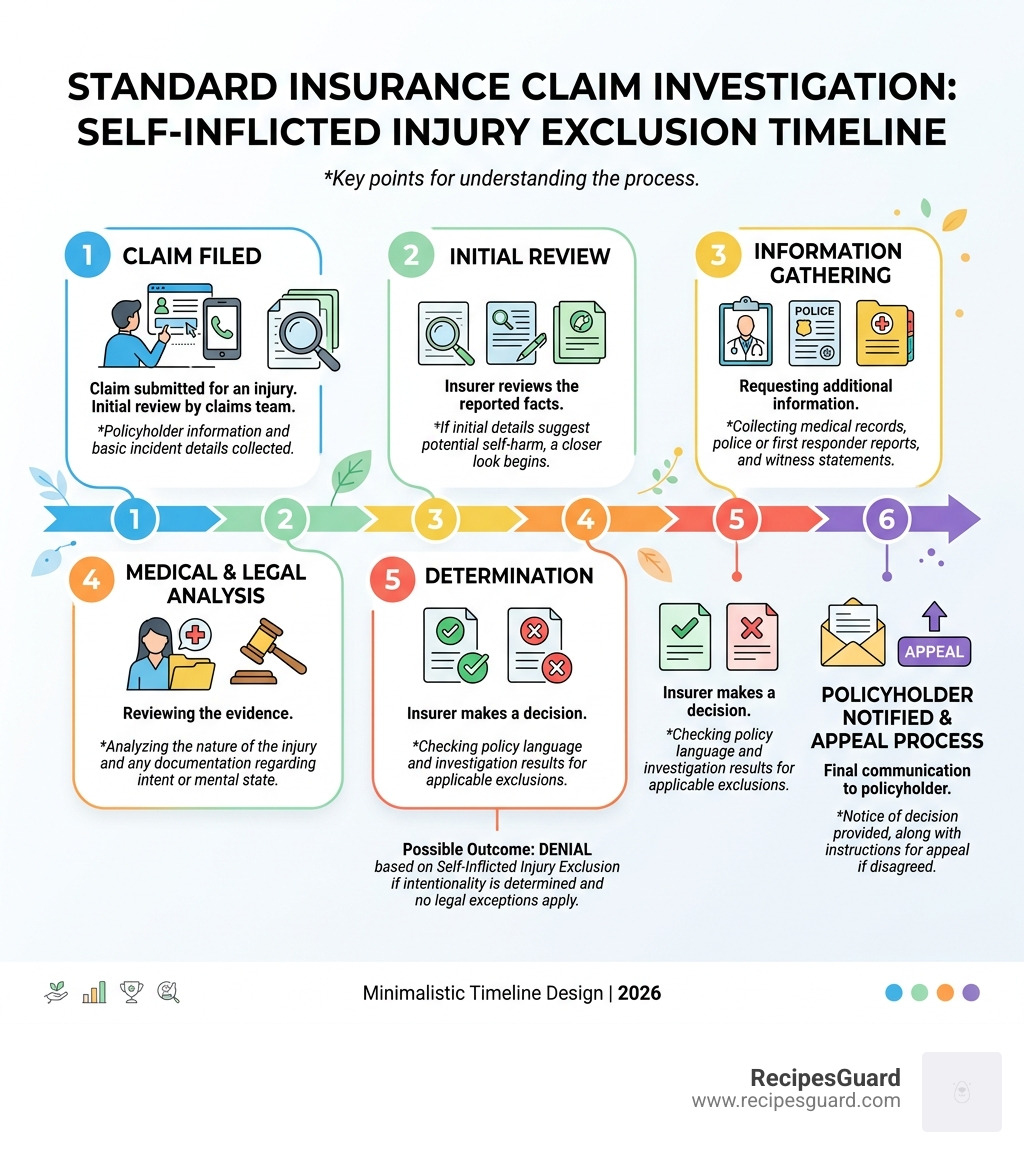
Quick self inflicted injury exclusion definitions:
- pre existing condition exclusion
- travel insurance exclusion
Defining the Self Inflicted Injury Exclusion in Modern Policies

In insurance, a self-inflicted injury is defined as bodily harm caused by an individual’s own actions without any external factors involved. According to Self-Inflicted Injury, these injuries are considered deliberate acts. When a policy includes a self inflicted injury exclusion, it means the insurer will not pay for the care or treatment of intentionally caused diseases or injuries, including suicide attempts.
However, the psychological context is often more complex than the legal definition. As noted in Intentionally caused diseases or self-inflicted injuries – Brokerfish, self-harm is frequently a coping mechanism for intense emotional distress, anger, or pain. While the injury might be “intentional” in a physical sense, it is often a symptom of a deeper mental health crisis rather than a calculated financial move.
For students, this is a vital distinction. If you are struggling with the pressure of studies or living abroad, the long-term emotional and physical harm of self-injury can be compounded by the financial stress of an insurance denial.
Understanding Intent vs. Accident
The biggest battleground in insurance claims is the line between a “reckless accident” and an “intentional act.”
- Bodily Injury: Generally covered if it’s an accident (like tripping down stairs).
- External Factors: If something outside your control caused the harm, the exclusion shouldn’t apply.
- Reckless Conduct: Activities like skydiving or bungee jumping are often high-risk but aren’t usually classified as “self-inflicted” because the intent isn’t to cause harm.
- Accidental Overdose: This is a frequent point of contention. If someone takes too much medication by mistake, it is an accident. If they do it with the intent to cause harm, the exclusion triggers.
How Federal Laws and Mental Health Impact Your Coverage

In April 2026, the legal landscape for health insurance remains heavily influenced by long-standing federal protections. In many jurisdictions, laws have been designed to ensure that mental health struggles aren’t unfairly punished by insurance companies.
Under the HEALTH INSURANCE AND SELF-INFLICTED INJURIES research, we see a major divide between group and individual plans:
| Plan Type | Coverage Protections |
|---|---|
| Group Health Plans | Prohibited from excluding self-inflicted injuries if they result from a medical condition (including mental illness). |
| Individual Health Plans | Can exclude self-inflicted injuries ONLY if they also exclude pre-existing conditions and the person had a documented history at enrollment. |
The Presumption of Mental Illness
Modern medical and legal standards often presume that a suicide attempt or severe self-harm is the result of an underlying medical condition like depression or anxiety. Because these are health factors, group plans (like those provided by universities or employers) generally cannot use the self inflicted injury exclusion to deny treatment for the immediate injury. This ensures that “medical necessity” takes precedence over the intentionality of the act.
Life Insurance and the Suicide Exclusion Clause
Life insurance works a bit differently. Most policies include a specific “suicide clause.” This isn’t a permanent ban on coverage, but rather a waiting period.
- Contestability Period: Usually the first two years of a policy. If a person dies by suicide within this window, the insurer typically denies the death benefit.
- Premium Reimbursement: Even if the death benefit is denied, the insurer usually must return the premiums paid to the beneficiaries.
- Two-Year Rule: Once a policy has been active for more than two years, the insurer generally cannot deny a claim based on suicide, unless there was evidence of fraud or misrepresentation during the application.
According to research on Health insurance for self-inflicted injury, some insurers are now moving toward including psychiatric treatments in their base plans, reflecting a growing global recognition of mental health parity.
Impact of Legal Changes on Exclusions
The decriminalization of physician-assisted dying in various parts of the world has forced insurers to update their wording. If a person ends their life through a legal, medically-assisted process with full consent, many modern policies no longer classify this as “suicide” for the purpose of the exclusion.
Challenging a Self Inflicted Injury Exclusion Denial
If your claim is denied, don’t lose hope. The burden of proof lies with the insurance company. They cannot simply “label” an event as self-inflicted; they must prove it.
We often see insurers rely on:
- Coroner Reports: While a coroner’s ruling is influential, it isn’t always the final word for insurance.
- Toxicology Results: These are used to determine if substances influenced the person’s intent or state of mind.
Research into 10 cases of self-inflicted injury life insurance exclusion denials shows that many denials are overturned because the insurer’s evidence was purely circumstantial.
Proving Intent and Addressing Ambiguity
In legal terms, there is a principle called contra proferentem. This means that if a policy’s language is vague or ambiguous, the court must interpret it in favor of the policyholder, not the insurance company that wrote the document.
Common areas of ambiguity include:
- Mental Incapacity: If a person was in a state of psychosis or severe delirium, did they have the “intent” to harm themselves? Many courts say no.
- Vague Language: Phrases like “intentionally self-inflicted” are often not clearly defined, leaving room for judicial interpretation.
Navigating the Appeals Process
If you face a denial, follow these steps:
- Internal Grievance: Every insurer must have an internal process where you can ask them to review the decision.
- Evidence Gathering: Collect medical records, witness statements, and expert opinions that support the accidental nature of the injury or the presence of a mental health crisis.
- External Appeal: If the internal review fails, you can take the case to an insurance commissioner or an ombudsman for an independent look.
Global Variations: From Australia to New Zealand
In Australia, the way self-inflicted injuries are handled depends heavily on the type of insurance and the specific state’s legislation.
- Workers Compensation: Under Table 4.17: Exclusionary provisions (general) – Safe Work Australia, most Australian jurisdictions exclude compensation if the injury was intentionally self-inflicted.
- Trauma Insurance: As noted by Common Trauma Insurance Exclusions | Cover Australia, trauma policies (which pay a lump sum for specific illnesses) almost universally exclude claims resulting from self-inflicted acts.
- New Zealand (ACC): Across the Tasman, the Accident Compensation Act generally does not cover injuries that are “intentionally self-inflicted,” though there are nuances regarding mental health.
Military and Veteran Considerations
For those in the Australian Defence Force, the 25.3.2 The meaning of ‘intentionally self inflicted’ | CLIK – DVA guidelines state that the DVA must establish that the person had a conscious desire to cause the injury. If the harm was a result of a service-related mental health condition, the exclusion may be waived.
Frequently Asked Questions about Claim Denials
Does health insurance cover treatment for attempted suicide?
In many group health plans, yes. Because attempted suicide is often treated as a symptom of a medical condition (mental illness), the treatment for the physical injuries is covered under mental health parity rules.
How long does a suicide exclusion typically last?
Most commonly, it lasts for a two-year period from the policy’s effective date. Some policies may have a one-year period, but two years is the industry standard for life insurance.
What evidence do insurers use to classify an injury as self-inflicted?
Insurers look at medical records, police reports, toxicology screens, and witness statements. They are looking for “preponderance of the evidence” that the act was deliberate and planned.
Conclusion
At RecipesGuard, we understand that insurance jargon can be a nightmare for students already dealing with the stress of living in Australia. The self inflicted injury exclusion is one of the most difficult clauses to navigate because it sits at the intersection of law, medicine, and mental health.
Our mission is to provide student advocacy and policy transparency. Whether you are filing your first claim or fighting a denial, we are here with step-by-step tutorials to help you get the benefits you deserve. Don’t let a “no” from an insurer be the final word — especially when the law might be on your side.
More info about RecipesGuard services

My name is Bianca, and my journey into the world of fermentation and food safety began with a costly mistake. I once lost an entire season’s harvest of chili peppers because I relied on guesswork instead of science. That failure was my turning point.
