
The Ultimate Student Guide to Navigating Prescription Claims
Why Every Student Needs a Prescription Claim Guide Before Visiting the Pharmacy
A student prescription claim guide can be the difference between getting reimbursed quickly and losing money you didn’t plan to spend.
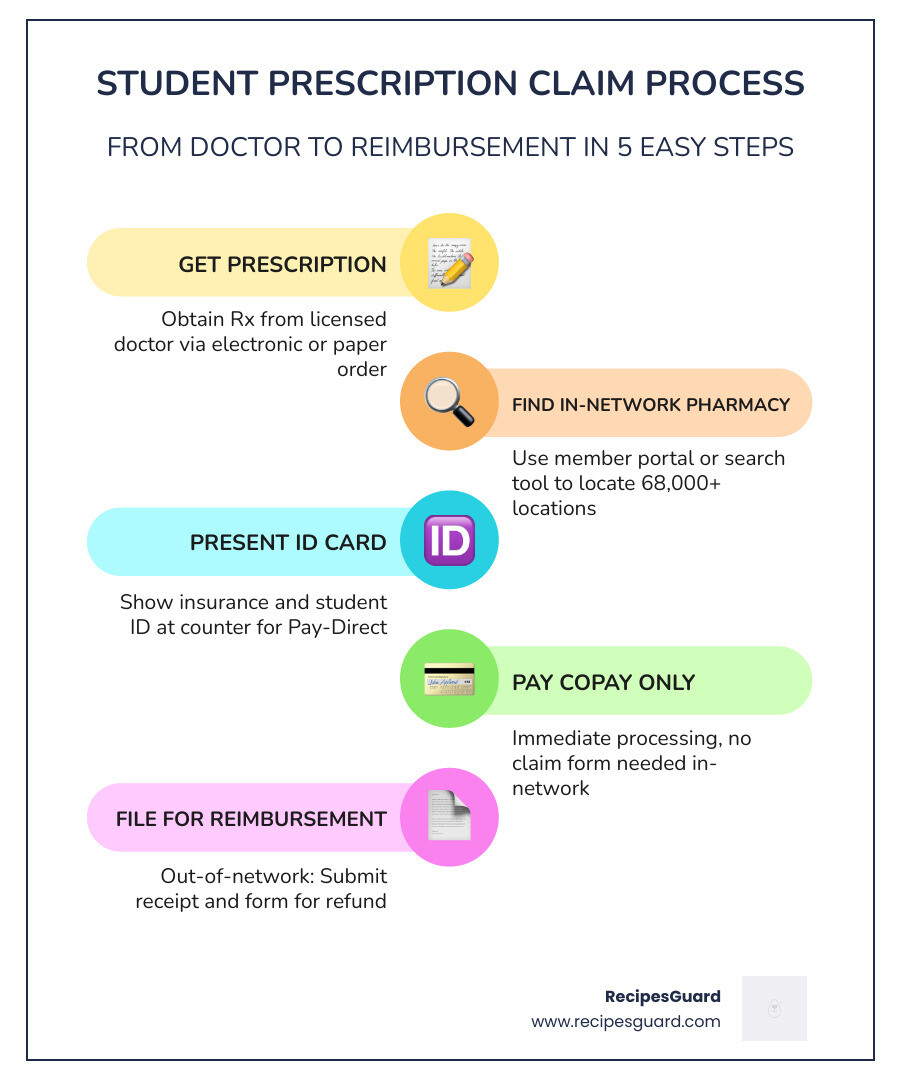
Here’s a quick overview of how the student prescription claim process works:
- Get a prescription from a licensed doctor (electronic or paper)
- Find an in-network pharmacy using your plan’s member portal or search tool
- Present your insurance ID card (and student ID if required) at the pharmacy counter
- Pay only your copay — no claim form needed at in-network pharmacies
- Out-of-network? Pay upfront, keep your receipt, then submit a claim form for reimbursement
- Need prior authorization? Your doctor submits this before you pick up the medication
Being an international student in a new country is already a lot to handle. Then you get sick. Suddenly you’re faced with an unfamiliar healthcare system, confusing insurance terms, and a pharmacist waiting for your insurance details.
Most students have no idea how their prescription drug coverage actually works — until they’re standing at the pharmacy counter, unsure what to pay or what to hand over.
The good news? The process is more straightforward than it looks. With the right steps, you can pick up your medication, minimize out-of-pocket costs, and file a claim correctly — even if this is your first time.
Student prescription claim guide terms to remember:
- Student Health Insurance Australia
- Student Baggage Claim Insurance
Understanding Coverage: Rx vs. OTC and Drug Tiers
Before we dive into the “how-to” of filing a claim, we need to understand what exactly you are buying. Not every bottle of pills at the pharmacy is treated the same by your insurance provider. As of April 2026, the distinction between medication types is the first hurdle in any student prescription claim guide.
Prescription Drugs (Rx) vs. Over-the-Counter (OTC)
Prescription drugs (Rx) are medications that legally require a doctor’s order. These are typically covered by your student health plan, provided they are on the “formulary” (the list of approved drugs).
Over-the-counter (OTC) drugs, like standard paracetamol or basic cough syrup you grab off the shelf, are generally not covered by insurance. You pay for these out of pocket, and they usually do not count toward your deductible. However, some health reforms now cover specific preventive products at 100% cost-sharing, so it is always worth checking your specific drug guide.
The Tier System: How Much Will You Pay?
Most student plans, including those using the Aetna pharmacy drug guide (effective through June 30, 2026), divide medications into “Tiers.” This system determines your out-of-pocket cost.
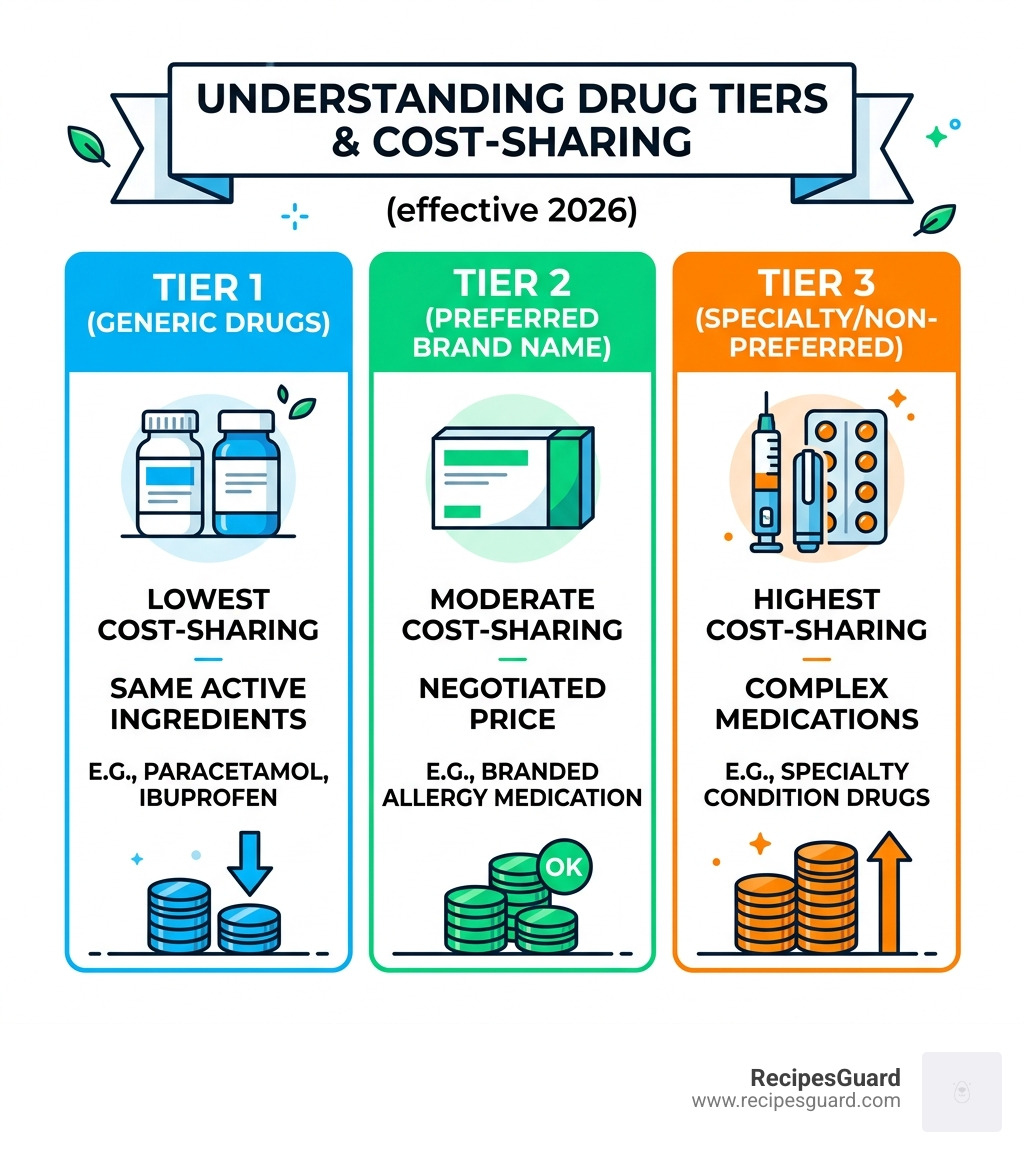
- Tier 1 (Generic Drugs): These have the same active ingredients as brand-name drugs and meet the same rigorous quality standards. They are the most affordable.
- Tier 2 (Preferred Brand Name): These are branded drugs that your insurance company has negotiated a better price for. They cost more than generics but less than specialty drugs.
- Tier 3 (Specialty/Non-Preferred): These are often special drugs for complex diseases. They carry the highest copayments.
By following a Prescription Drugs guide, you can often save money by asking your doctor if a Tier 1 generic alternative is available for your condition.
Step-by-Step Student Prescription Claim Guide for In-Network Pharmacies
The easiest way to handle your medication is to stay “in-network.” In the insurance world, “in-network” means the pharmacy has a direct contract with your insurance provider.
1. Obtain Your Doctor’s Order
Whether you visit a campus clinic or a local GP in Australia, you must obtain a valid prescription. In April 2026, most prescriptions are sent electronically directly to the pharmacy. If you receive a physical slip, keep it safe—you’ll need to hand it to the pharmacist.
2. Find an In-Network Pharmacy
Most major student plans provide access to a massive network—sometimes over 68,000 pharmacies nationwide. You can usually find these using a “Find Care” tool on your insurer’s website. Common networks like CVS Caremark or OptumRX allow you to search by your current location.
3. Present Your Credentials
When you arrive at the pharmacy, you need to provide:
- Your digital or physical Insurance ID Card.
- A valid Student ID (some plans require this to verify your enrollment).
- Your prescription (if it wasn’t sent electronically).

4. The “Pay-Direct” Advantage
If your pharmacy is in-network, they should offer “direct billing.” This means the pharmacist scans your card, the insurance system processes the claim instantly, and you only pay the remaining copay or deductible. You don’t need to fill out a student prescription claim guide form because the pharmacy does the paperwork for you!
Filing for Reimbursement and Managing Out-of-Network Claims
Sometimes, life happens. You might be in a remote area where the only pharmacy is out-of-network, or perhaps you forgot your insurance card. In these cases, you will have to pay the full price upfront and ask for your money back later.
The Manual Claim Process
To get reimbursed, you must follow a manual submission process. This is where most students get stuck, but we’ve broken it down into simple steps:
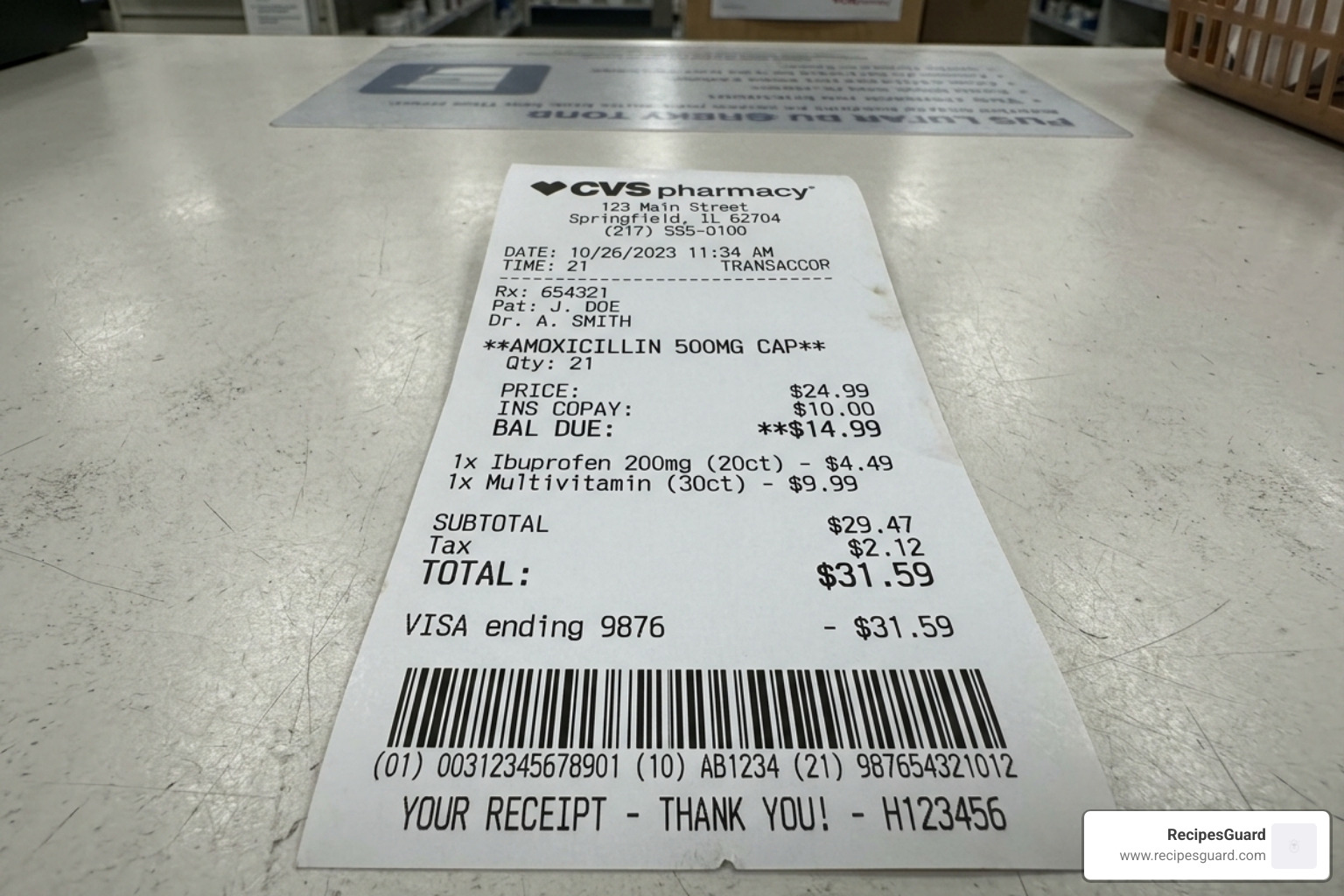
- Pay and Collect Receipts: Pay the full amount at the pharmacy. You must ask for an itemized receipt. A standard credit card slip is not enough; the receipt must show the drug name, dosage, and cost.
- Download the Claim Form: Log into your student health portal and download the “Health Claim Form” or “Prescription Drug Claim Form.”
- Fill in the Details: You will need your Group Number and your Certificate Number (which is often your Student ID number).
- Submit the Claim: Most providers allow you to upload these documents via a mobile app. If not, you can mail or fax them to the address listed on the form.
Important Limits and Tips
- Daily Limits: Be aware that some administrators, like Inspira, have a daily spending and claim submission limit (for example, $3,200).
- Photocopy Everything: Never mail your only copy of a receipt. Always take a photo or make a photocopy before sending it off.
- Direct Deposit: To get your money back faster, register for direct deposit in your member portal. Otherwise, you’ll be waiting for a check in the mail.
- OSHC Considerations: For international students in Australia, the Pharmacy Expenses Claim Process for OSHC Policy – Aussizz Group highlights that keeping original documents is vital for Overseas Student Health Cover (OSHC) reimbursements.
Prior Authorizations and Long-Term Medication Management
If you have a chronic condition that requires ongoing medication, the standard “walk-in and buy” method might not be enough.
What is Prior Authorization?
Certain expensive or specialty medications require “Prior Authorization.” This is essentially your insurance company saying, “We need to double-check with your doctor that this specific drug is medically necessary before we pay for it.”
If your drug requires this, your doctor must submit a “Letter of Medical Necessity” (LOMN) or an electronic authorization request. If you try to pick up the meds before this is approved, the pharmacy will tell you the claim was denied.
Managing Refills and Mail-Order
For long-term medications (like birth control or blood pressure medicine), using a mail-order service is a game-changer.
- 90-Day Supplies: Mail-order services often allow you to get a 90-day dosage at once, which is usually cheaper than buying three 30-day supplies at a retail pharmacy.
- 21-Day Notice: Always allow at least 21 days’ notice for refills when using mail-order to ensure you don’t run out of medication while the package is in transit.
- Budget Caps: Some specific programs, like the Katie Beckett HRA, have an annual expenditure cap (e.g., $10,000). Keep track of your spending throughout the calendar year to avoid hitting your limit unexpectedly in November or December.
Frequently Asked Questions about Student Prescription Claims
What documentation is needed for a student prescription claim guide submission?
To ensure your claim isn’t rejected, you need to provide:
- A completed Health Claim Form.
- Original itemized receipts (showing the pharmacy name, date, drug name, and DIN/drug identification number).
- Your Certificate and Group numbers.
- In some cases, a physician’s statement or a copy of the original prescription.
How do I find an in-network pharmacy for my student prescription claim guide?
The most reliable way is to use your insurance provider’s mobile app or member portal. Look for tools labeled “Find Care,” “Pharmacy Locator,” or “Provider Search.” Most networks include major chains like CVS, Walgreens, or local Australian equivalents depending on your specific policy. You can also check with your campus health center, as they often have direct ties to the student network.
Are there specific drugs that are typically not covered?
Yes. Most student plans have “exclusions.” Common examples include:
- Lifestyle drugs: Medications for hair loss or cosmetic wrinkles.
- Experimental drugs: Medications not yet fully approved for the specific use.
- Non-formulary items: If there is a cheaper, equally effective version available, the expensive one might be excluded.
- Blackout Periods: Some plans have a “Blackout Period” at the start of the semester (while enrollment lists are being finalized) where your Pay-Direct card might not work, requiring you to file a manual claim for reimbursement later.
Conclusion
Navigating healthcare as a student doesn’t have to be a headache. Whether you are using a Pay-Direct card for an immediate discount or filing a manual claim for an out-of-network emergency, the key is staying organized. Keep your receipts, know your drug tiers, and always check for in-network options first.
At RecipesGuard, we specialize in making the complex world of insurance simple. From understanding your OSHC policy in Australia to mastering the student prescription claim guide, our goal is to ensure you spend less time worrying about paperwork and more time focusing on your studies.
Ready to take control of your health benefits? Start your claim journey with RecipesGuard today for more step-by-step tutorials tailored just for students.

My name is Bianca, and my journey into the world of fermentation and food safety began with a costly mistake. I once lost an entire season’s harvest of chili peppers because I relied on guesswork instead of science. That failure was my turning point.
