The Zero Waste Apple Scrap Vinegar Recipe
Turn Apple Scraps Into Free Homemade Vinegar
The apple scrap vinegar recipe is one of the simplest zero-waste fermentation projects you can do at home — and it costs almost nothing to make.
Quick answer: How to make apple scrap vinegar
- Fill a clean glass jar about three-quarters full with apple peels and cores.
- Dissolve 1 tablespoon of sugar per 1 cup of non-chlorinated water and pour over the scraps until fully submerged.
- Cover with a breathable cloth secured with a rubber band.
- Stir daily for 1-2 weeks while bubbling is active.
- Strain out the apple scraps and compost them.
- Let the liquid ferment for another 2-4 weeks until it smells and tastes like vinegar.
- Bottle and store in a cool, dark place for up to a year.
Instead of tossing apple peels and cores into the compost bin, you can ferment them into a genuinely useful pantry staple. The whole process takes about 4-6 weeks of mostly hands-off time, and the result is a mild, tangy vinegar with dozens of uses in cooking, cleaning, and more.
One thing worth knowing upfront: apple scrap vinegar is not the same as commercial apple cider vinegar. It’s milder, less acidic, and made from scraps rather than pressed apple juice. That makes it perfect for everyday use — but not suitable for home canning, where a verified acidity level matters for food safety.
Whether you’ve just made a batch of applesauce, baked a pie, or simply peeled a few apples for a snack, this recipe is a satisfying way to get one more use out of every part of the fruit before anything goes to waste.
Ingredients, Equipment, and the ASV vs. ACV Difference
When we talk about the apple scrap vinegar recipe, we often get asked: “Is this the same stuff I buy in the store with the ‘Mother’ on the label?” The short answer is no, but it’s a very close relative.
Traditional Apple Cider Vinegar (ACV) is made by pressing whole apples into juice (cider) and then fermenting that juice. Apple Scrap Vinegar (ASV), on the other hand, is a resource-saving alternative. We use the peels and cores—the parts usually destined for the bin—and add water and a bit of sugar to provide the fuel that the juice would normally provide.
Because ASV is diluted with water, it typically has a milder flavor and a lower acetic acid content than its commercial cousin. This makes it a “gentle” vinegar, which many of our readers actually prefer for salad dressings because it doesn’t “assault the tastebuds” as much as the high-strength store-bought versions.
| Feature | Apple Scrap Vinegar (ASV) | Traditional Apple Cider Vinegar (ACV) |
|---|---|---|
| Primary Ingredient | Apple peels, cores, and trimmings | Pressed whole apple juice (cider) |
| Liquid Base | Water + Added Sugar | 100% Apple Juice |
| Acidity Level | Variable (usually 2-3% acetic acid) | Standardized (usually 5% acetic acid) |
| Cost | Approx. $0.20 per 6 cups | $5.00 – $8.00 per quart |
| Canning Safety | Not recommended | Safe for canning (if 5% acidity) |
| Flavor Profile | Mild, fruity, and light | Sharp, intense, and complex |
For more details on the nuances of this process, you can check out this guide on Apple Scrap Cider Vinegar.
Essential Equipment
To get started, you don’t need fancy laboratory gear. Most of these items are likely already in your kitchen:
- Glass Jars: A half-gallon or quart-sized wide-mouth Mason jar is perfect. Avoid metal containers, as the acid in the vinegar can react with the metal and impart a nasty metallic taste.
- Breathable Cover: A coffee filter, cheesecloth, or a clean scrap of fabric (like a flour sack towel) works well. This allows oxygen in—which the Acetobacter bacteria need—while keeping fruit flies out.
- Fermentation Weights: These help keep the apple scraps submerged. If you don’t have glass weights, a small sterilized stone or even a smaller glass jar filled with water can work.
- Wooden or Silicone Utensils: Again, we want to stay away from metal during the fermentation process.
If you are new to food preservation, our Category: Preserving Basics is a great place to brush up on the fundamentals before you dive in.
The Role of Sugar and Water Quality
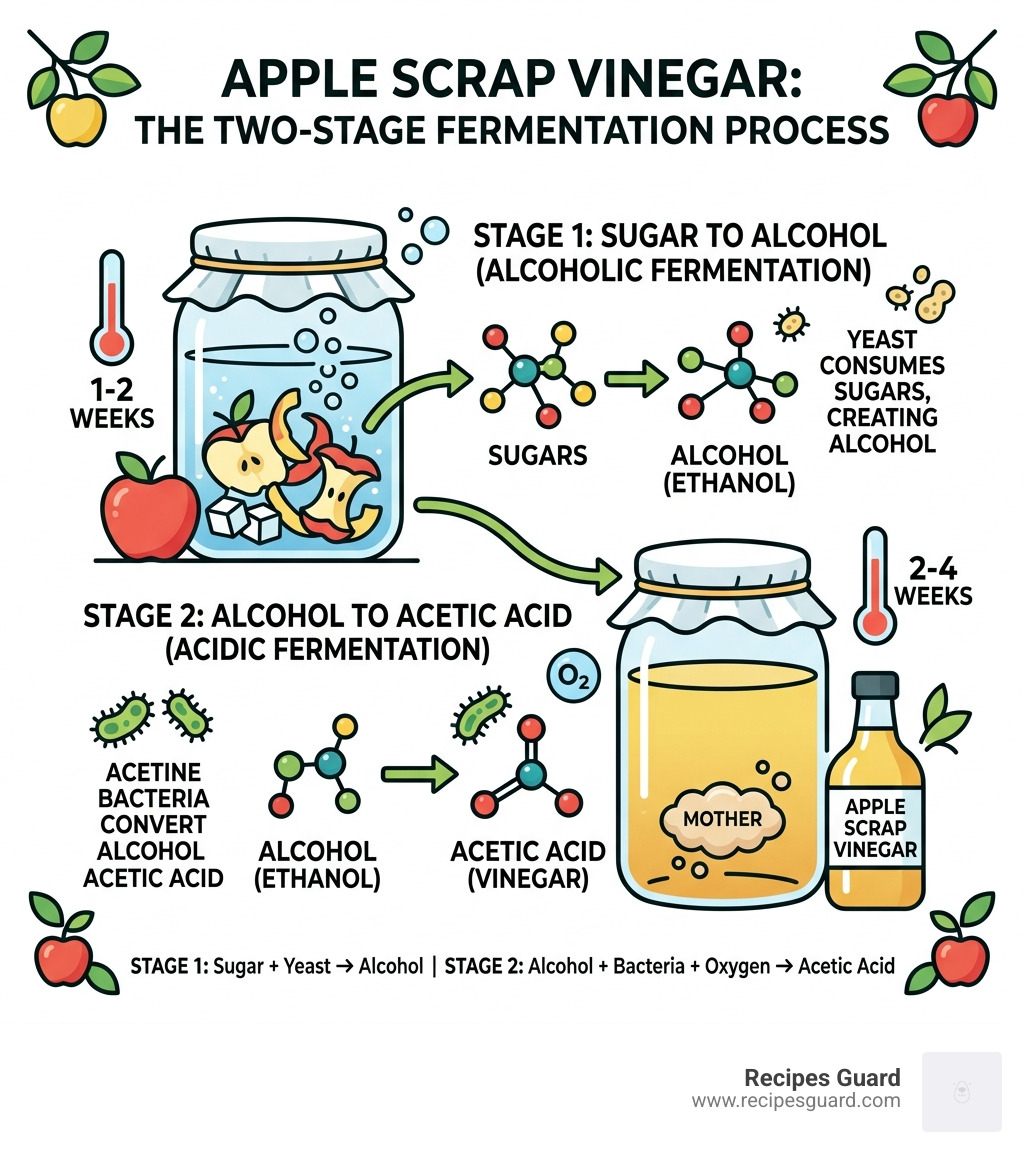
Sugar is the “food” for the yeast. During the first stage of fermentation, wild yeasts (which live naturally on apple skins) eat the sugar and turn it into alcohol. In the second stage, bacteria turn that alcohol into acetic acid (vinegar). While some people try to skip the sugar, we highly recommend it. It ensures a strong fermentation and helps prevent mold by getting the acidity up quickly. You can use white sugar, brown sugar, or even honey, though honey may slow the process down slightly.
Water quality is equally important. Chlorine, which is added to most municipal tap water, is designed to kill microbes—the very microbes we are trying to grow! To dechlorinate your water, simply pour it into a pitcher and let it sit on the counter for 24 hours to allow the chlorine to evaporate. Alternatively, use filtered or spring water.
For a deeper dive into why microbe health matters, read our Safety First: A Guide to Preserving Fermented Foods.
Step-by-Step Instructions for the Best Apple Scrap Vinegar Recipe
Making vinegar is a lesson in patience, but the active work takes less than ten minutes. Here is how we do it at Recipes Guard to ensure success every time.
1. Prepare Your Scraps
Fill your clean glass jar about 3/4 full with apple scraps. We love using a mix of sweet and tart apples (a 70:30 ratio is the “sweet spot” for flavor). Make sure the scraps aren’t rotten or moldy. Browned or bruised apples are perfectly fine, but if you wouldn’t eat a section because it’s “off,” don’t put it in your vinegar.
Pro-Tip: If you only have one or two apples today, don’t worry! You can keep a zip-top bag in your freezer and add scraps to it over time. Once the bag is full, you’re ready to start your apple scrap vinegar recipe. Freezing doesn’t kill the microbes needed for fermentation; it just puts them to sleep.
2. Mix the Sugar Water
The standard ratio is 1 tablespoon of sugar per 1 cup of water. For a half-gallon jar, you will likely need about 4-5 cups of water. Dissolve the sugar in warm (not hot!) water first, then pour it over the apples. Ensure the apples are completely covered by at least an inch of water, leaving about two inches of headspace at the top of the jar for bubbling.
3. Submerge and Cover
This is the most important step: Submerge the fruit! Anything poking above the water line is an invitation for mold to grow. Use a fermentation weight to keep everything down. Cover the jar with your breathable cloth and secure it tightly with a rubber band.
4. The Initial Ferment (Days 1–14)
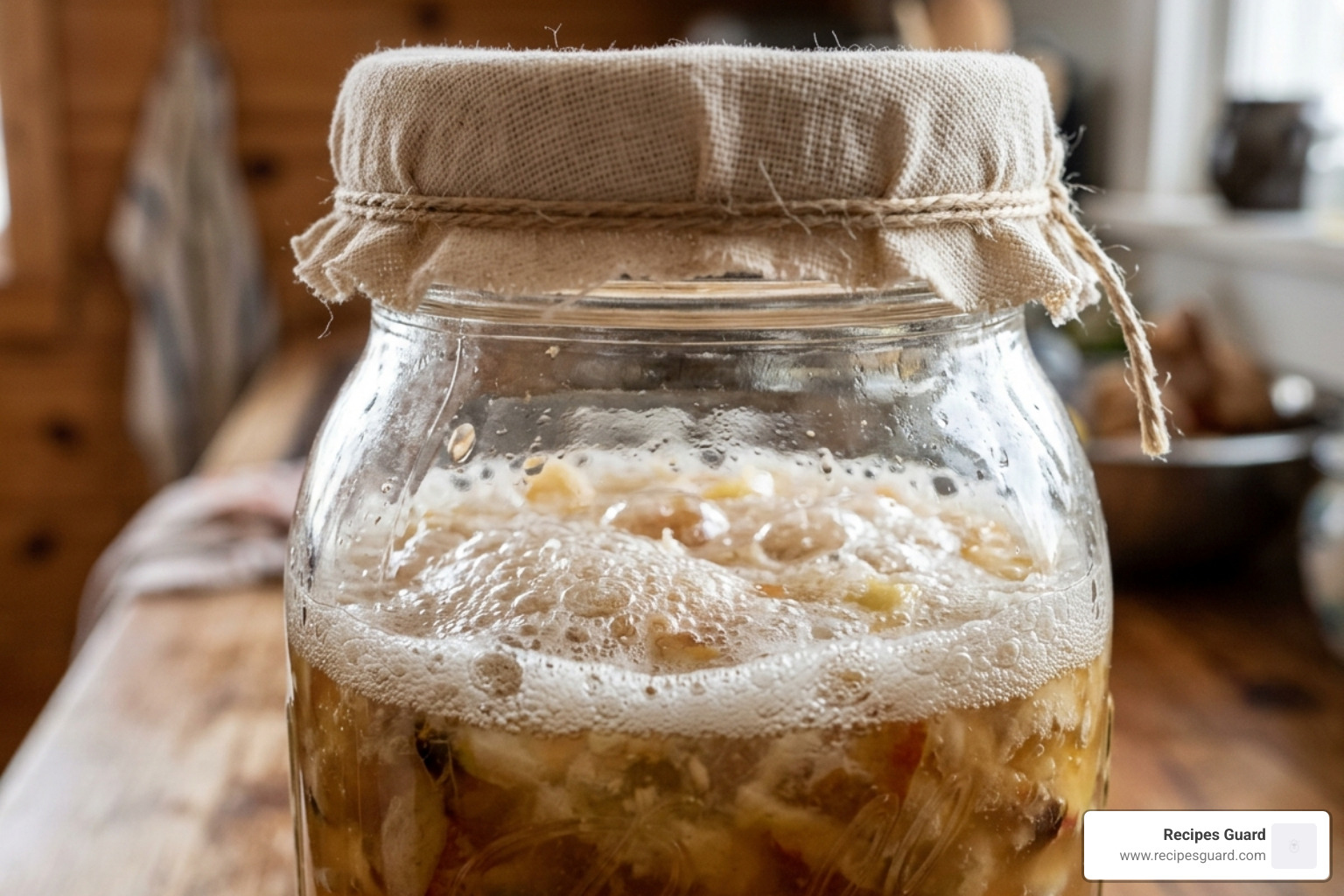
Place the jar in a warm, dark spot (70-75°F is ideal). For the first week, stir the mixture once or twice a day with a wooden spoon. This introduces oxygen and further helps prevent mold. You’ll start to see little bubbles—this is the yeast doing its job! After about 10-14 days, the bubbling will slow down, and the scraps will often start to sink to the bottom.
If you enjoy watching things bubble and transform, you might also want to try Mastering the Art of Lacto-Fermented Hot Sauce, which uses a similar biological process.
Straining and Maturation
Once the initial “bubbly” phase is over, it’s time to separate the solids from the liquid.
- Strain: Pour the mixture through a fine-mesh strainer or cheesecloth into a clean bowl.
- Compost: The apple scraps have given their all. You can compost them or feed them to your chickens (they love fermented treats!).
- Second Ferment: Pour the liquid back into a clean jar. Cover it again with the breathable cloth.
- Wait: Let the liquid sit for another 2 to 4 weeks. During this time, the “vinegar smell” will become much more pronounced. Taste it occasionally with a clean plastic or wooden spoon. When it has that sharp, vinegary tang you like, it’s done!
You can find more inspiration for what to do with your ferments in our Category: Fermented Recipes.
Troubleshooting: The Mother, Mold, and Success Tips
Fermentation is a natural process, and sometimes nature does things that look a little weird. Don’t panic! Most of the time, your vinegar is perfectly fine.
The “Mother” vs. Mold vs. Kahm Yeast
As your vinegar matures, you might notice a cloudy, jelly-like film forming on the surface. Congratulations! That is the Vinegar Mother. It’s a colony of beneficial Acetobacter bacteria that are turning the alcohol into acid. It might look like a weird alien blob, but it’s a sign of a very healthy ferment.
How to tell the difference:
- The Mother: Submerged or floating on top, usually tan or clear, rubbery/jelly-like texture. (Keep it!)
- Kahm Yeast: A thin, white, powdery-looking film on the surface. It’s harmless but can make the vinegar taste a bit “yeasty.” You can just skim it off.
- Mold: Fuzzy, hairy, and usually colorful (blue, green, black, or bright white). If you see fuzzy mold growing on the surface, the batch is unfortunately ruined. Toss it and start over.
Tips for Success:
- Temperature: If your house is too cold (under 60°F), fermentation will stall. If it’s too hot (over 85°F), the vinegar can develop off-flavors.
- Stirring: In the first two weeks, stirring is your best defense against mold. It keeps the surface “active” so mold spores can’t land and take root.
- Fruit Flies: These little guys are attracted to the smell of fermenting fruit like magnets. Ensure your cloth cover is tightly woven and secured well.
For more safety tips, check out Safety First: A Guide to Preserving Fermented Foods.
Identifying and Managing the Mother
Once your vinegar is finished, you can actually save the Mother. Place it in a small jar with a little bit of the finished vinegar and keep it in the back of your pantry. The next time you use this apple scrap vinegar recipe, you can drop that Mother into the new batch to “inoculate” it. This acts as a starter and can significantly speed up the fermentation process!
Explore more ways to use starters in our Category: Fermented Recipes.
Practical Uses and Safety Considerations
Now that you have your homemade vinegar, what do you do with it? Since it costs only about $0.20 to make a quart, you can be much more generous with it than you would be with a $10 bottle of organic ACV.
Culinary Uses
- Salad Dressings: Its mild acidity makes it a fantastic base for vinaigrettes.
- Marinades: Use it to tenderize chicken or pork.
- Deglazing: Use a splash to get the flavorful browned bits off your pan when making a sauce.
- “Trash Soup”: Add a tablespoon to a stock made from vegetable scraps to help extract minerals and deepen the flavor.
If you love the tang of vinegar in your food, you’ll enjoy our guide on Quick and Easy Pickled Vegetables for Every Meal.
Household and Personal Care Applications
- All-Purpose Cleaner: Mix 1 part vinegar with 1 part water for a great window and counter cleaner. It’s excellent at cutting through grease!
- Hair Rinse: Use a diluted mixture (1 tablespoon per cup of water) as a final rinse after shampooing. It helps balance the pH of your scalp and leaves hair incredibly shiny. (Just don’t use it full strength, or your hair might feel a bit “fried”!)
- Odor Remover: Place a small bowl of vinegar in the fridge or a room that smells like fried fish to neutralize odors.
- Animal Health: Many homesteaders add 1 tablespoon of apple scrap vinegar per gallon of water to their chicken waterers. It helps keep the water clear of slime and supports the birds’ digestive health.
A Critical Safety Warning on Canning
We cannot stress this enough: Do not use homemade apple scrap vinegar for water-bath or pressure canning. Safe canning requires a consistent acidity level of at least 5% (a pH of about 2.4). Because the apple scrap vinegar recipe relies on wild fermentation and diluted scraps, the acidity can vary wildly from batch to batch. Using a vinegar that is too weak could allow dangerous bacteria like botulism to survive in your canned goods. For canning, stick to store-bought vinegar with a labeled 5% acidity.
For more on food safety, see our guide: Safety First: A Guide to Preserving Fermented Foods.
Frequently Asked Questions and Conclusion
At Recipes Guard, we believe that self-sufficiency shouldn’t be complicated or expensive. This vinegar is a testament to that. It’s a “soul-satisfying” project that turns waste into a resource.
Can I use this apple scrap vinegar recipe for canning?
As mentioned above, no. While you can use it for “refrigerator pickles” (which are kept cold and eaten quickly), it is not safe for shelf-stable canning. The pH of homemade vinegar is too unpredictable. If you want to see more about safe pickling methods, visit our Category: Fermented Recipes.
What if I don’t have enough scraps for an apple scrap vinegar recipe right now?
Don’t let a lack of scraps stop you! Start a “vinegar bag” in your freezer. Every time you peel an apple for your kids or core one for a snack, toss those bits into the bag. Once you have about 6 large apples’ worth of scraps, you have enough to make about 6 cups of vinegar. The freezing process actually helps break down the cell walls of the apples, which can sometimes lead to an even more flavorful vinegar.
Why is my vinegar not getting sour?
If your liquid stays sweet or just tastes like weak cider after several weeks, check these three things:
- Temperature: Is it too cold? Move it to a warmer spot.
- Oxygen: Are you using a solid lid? Switch to a breathable cloth. The bacteria need air to create acid.
- Sugar: Did you forget the sugar? Without fuel, the yeast can’t create the alcohol that eventually becomes vinegar.
If you’re ready to start your next fermentation adventure, head over to our Category: Fermented Recipes for more step-by-step guides. Happy fermenting!