
The Student Guide to COVID Quarantine Claims and Records
Understanding Your Rights and the COVID Quarantine Claim Student Process
When we talk about a covid quarantine claim student process, we are essentially looking at how you can recover money spent on unexpected isolation. In Australia, international students are often required to hold Overseas Student Health Cover (OSHC), but many also carry additional travel insurance. Knowing the difference between these is the first step toward a successful claim.
Your rights as a student often depend on the specific mandate that put you into isolation. If a government health department or your university officially ordered you to quarantine, you generally have a much stronger basis for a claim than if you chose to self-isolate out of caution. Most insurance policies require “written proof of mandatory isolation.”
To make sure you aren’t paying out of pocket for things that should be covered, you need to understand the financial side of isolation. We’ve seen students lose hundreds of dollars because they didn’t keep a simple receipt for a grocery delivery or a COVID-safe taxi. Check out our guide on Claiming Quarantine Costs For Fun And Profit to see how different expenses are categorized.
Furthermore, many students are unaware that “quarantine fees” charged by facilities or even universities can sometimes be challenged or claimed. If you find yourself being billed for a mandatory stay, Dont Let Quarantine Fees Bite Your Wallet by reviewing your policy’s “Additional Expenses” clause.
Filing a COVID Quarantine Claim Student for Travel Interruption
Travel interruption is one of the most common reasons for a covid quarantine claim student. Imagine you are flying from Sydney to Melbourne for a semester break and you test positive. You can’t board your flight, and you’re stuck in a hotel.
This is where “Trip Interruption” coverage kicks in. It is designed to reimburse you for the unused portion of your trip and the additional costs to get you back on track. We recommend reading The Essential Guide To Covid Trip Interruption Insurance to understand the specific triggers—like a positive PCR test—that allow you to start a claim.
When you are stuck in a hotel room, the costs add up fast. Room service, laundry, and the extra nights of accommodation are all potential line items. You should Claim For Quarantine Costs And Recover Your Isolation Expenses by documenting the exact dates your travel was halted. Insurance usually covers “reasonable” expenses, so keep your five-star hotel dreams in check if you want the claim approved!
Visa Concessions and International Student Support
For those of us studying in Australia, the Department of Home Affairs recognized that COVID-19 created unique hurdles. If your studies were shifted online or your stay was extended due to quarantine, you might be eligible for specific visa concessions.
The COVID-19 Concessions for Student and Working Holiday Maker visa holders were introduced to ensure that students weren’t unfairly penalized for circumstances beyond their control. One of the most critical documents for a covid quarantine claim student regarding their visa is Form 1545. This form, the COVID-19 Impacted Students – Department of Home Affairs document, allows your education provider to certify that you were unable to complete your course within the original visa validity due to COVID-19.
Additionally, many Australian states and universities launched financial support packages. You can find a comprehensive List of COVID-19 Support Packages for international students that details emergency grants and food assistance programs. If you are filing a claim for financial loss, checking these government and university resources first can provide a “safety net” while you wait for an insurance payout.
The Mental Health Impact of Student Quarantines

We cannot discuss a covid quarantine claim student without addressing the heavy mental toll isolation takes. It’s not just about the money; it’s about the mind. Research has shown that the impact of quarantine on college students’ mental health is significant and often long-lasting.
A major Chinese study involving 2,033 students revealed that quarantine experiences were positively associated with higher anxiety levels (with a statistical coefficient of 0.278). For many, being locked in a small room away from friends and family created a “pressure cooker” environment. This wasn’t just “feeling a bit down”—about 40% of students in the study experienced clinical anxiety symptoms during the pandemic.
Interestingly, the duration of quarantine matters. A UK Study Provides Evidence for a 7-Day Quarantine for University Students Exposed to COVID-19 suggested that shorter, test-based quarantines could significantly alleviate some of this mental strain. By using a 7-day window with frequent testing, universities can help students return to their normal routines faster, reducing the duration of social isolation.
Mediating Factors in Student Anxiety
Why does quarantine hit students so hard? The research points to three main “mediators”—factors that sit between the act of quarantine and the resulting anxiety:
- Sleep Quality: This is a huge factor. In a study of Jordanian students, a staggering 76% reported poor sleep quality during quarantine. When your bedroom becomes your classroom, your gym, and your dining hall, your brain struggles to “switch off.”
- Academic Stress: Quarantined students often worry about falling behind. Missing lab work or in-person exams can trigger intense panic about grades.
- Employment Pressure: For many international students in Australia, part-time work is a necessity. Being in quarantine means no shifts, no income, and the fear of losing a job.
The ecological stress model explains that these factors interact. If you aren’t sleeping well, you can’t study; if you can’t study, you worry about your future career, which makes you even more anxious.
Economic Disparities in Quarantine Recovery
The research highlights a sobering truth: quarantine does not affect everyone equally. The impact on anxiety was found to be much stronger in the low-income group (coefficient 0.502) compared to the high-income group (coefficient 0.335).
For a student from a wealthy family, a 10-day hotel quarantine is a boring inconvenience. For a student living paycheck to paycheck, it is a financial catastrophe. This financial strain directly feeds into mental health issues. When we help students with a covid quarantine claim student, we aren’t just helping them fill out forms; we are helping them recover the financial stability needed to support their mental well-being. Targeted mental health interventions must account for these economic differences to be truly effective.
Navigating University Protocols and Policy Changes

University policies have been a moving target since 2020. As we move through 2026, many institutions have shifted away from “institutional quarantine” (where the school provides a room) to “personal responsibility” models.
For example, Virginia Tech discontinued its university-operated quarantine program for the 2024-25 academic year. Students are now expected to develop their own “COVID-19 plan” with their families. This shift means that if you test positive, the university might not provide a bed, but they will provide guidance on how to isolate in your own residence.
Current Guidelines for Positive Cases and Close Contacts
If you are a student today, your university likely follows a “symptom-based” return-to-activity protocol rather than a fixed 14-day clock. Here is the general flow we see at many institutions:
- Positive Test: You must isolate for at least 5 full days. You can usually end isolation if you are fever-free for 24 hours and symptoms are improving.
- Close Contacts: Many schools, following updated CDC and health department advice, no longer require asymptomatic close contacts to quarantine. Instead, you are asked to wear a mask for 10 days and test on Day 5.
- Reporting: Systems like the Healthy Hokies Portal or Schiffert Health Center portals are used to track cases. Always upload your results here; these digital records are essential for your covid quarantine claim student.
Policies like the Quarantine and Isolation Policy—University of Hartford remind us that even if you are off-campus, you are often expected to avoid in-person classes until cleared. Always get this clearance in writing!
Legal Implications of Mishandled Campus Protocols
Not all quarantine experiences go smoothly, and some have ended in legal action. In one high-profile case, a Student alleges campus mishandled COVID-19 protocol after being forced to withdraw because the university couldn’t provide safe isolation for a high-risk student.
Even more tragic is the NJ Student Dies In Quarantine Lawsuit. In this case, a student with a known medical condition (epilepsy) was placed in a solo isolation room without adequate medical monitoring and passed away from a seizure.
These cases highlight the “duty of care” universities owe to students. If you have a pre-existing condition, you must disclose it (often via disability rights offices) to ensure your quarantine plan includes proper monitoring. If a university fails to provide a safe environment, it may be liable for negligence.
Essential Documentation for a COVID Quarantine Claim Student
If you want your covid quarantine claim student to be approved, you need to think like an auditor. Insurance companies love to deny claims based on “insufficient evidence.” We want to make sure that doesn’t happen to you.
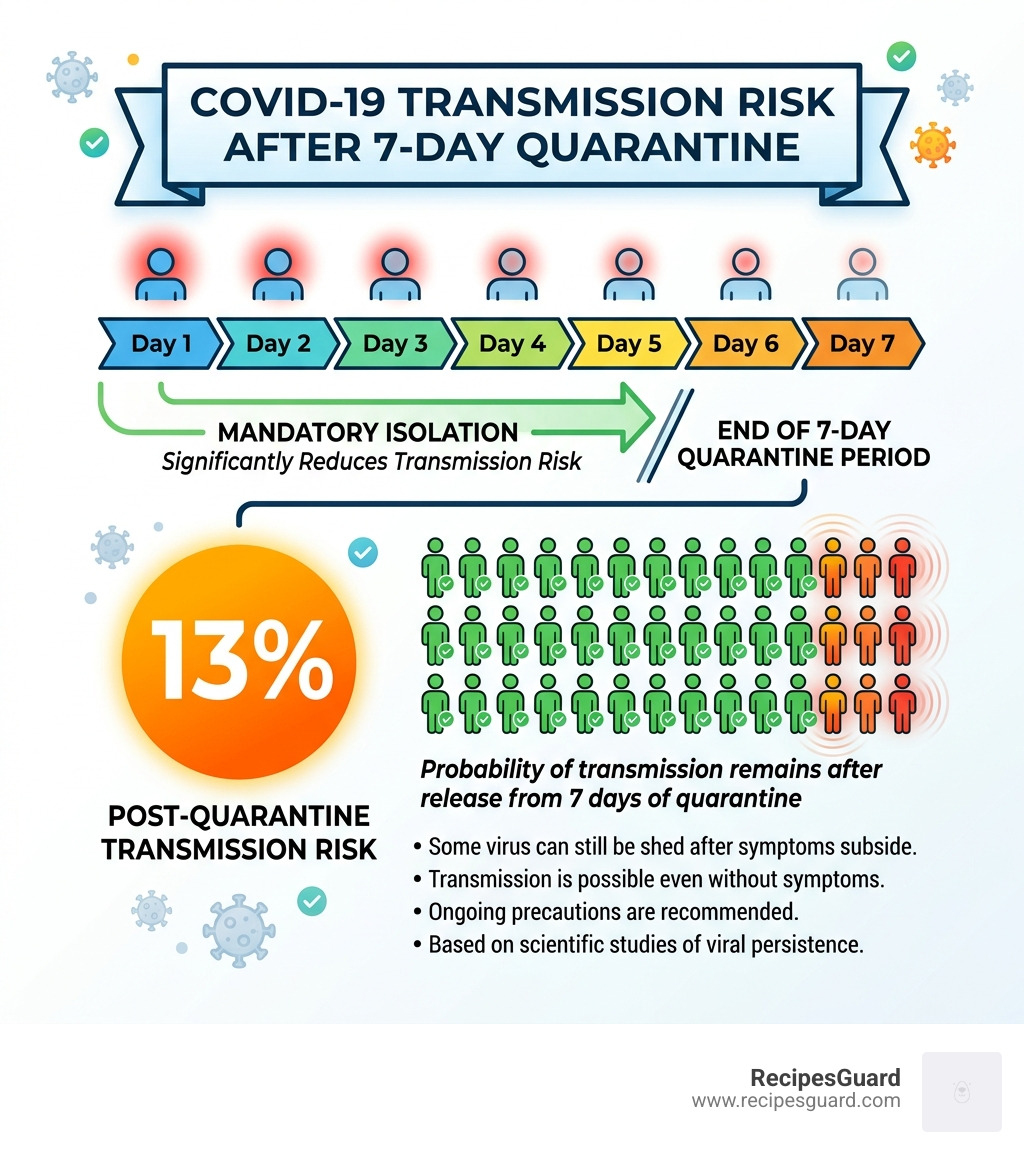
The Association of COVID-19 Quarantine Duration and Postquarantine Transmission Risk study showed that transmission risks remain even after 7 days. This is why insurers are so specific about the dates of your isolation. They want to see that your quarantine period matches the medical advice you were given.
Documentation Checklist for a COVID Quarantine Claim Student
Here is the “Gold Standard” list of documents you should gather:
- Official Positive Test Result: This should include your name, the date, and the type of test (PCR is usually preferred over RAT for insurance).
- Mandatory Isolation Order: This could be a text or email from a Health Department, or an official notice from your university’s Dean of Students.
- Proof of Enrolment: To prove you are a student, keep your current semester’s confirmation of enrolment (CoE) handy.
- Itemized Receipts: Do not just send a bank statement. Send the actual receipt showing what you bought (e.g., “Flu medicine” vs “Video games”).
- Communication Logs: If you had to email your professors about missing class, keep those emails. They prove “Educational Disruption.”
For students in the U.S., the Department of Education resources often provide NCES LEA IDs for schools, which can be useful if you are filing claims related to public school district protocols or testing programs.
Proving Financial Loss and Educational Disruption
To get reimbursed for tuition or housing, you have to prove a “loss of use.” If you paid for a dorm room but were forced to stay in a hotel (and the university didn’t refund the dorm cost for those days), that is a double expense.
- Tuition: While rare, if a quarantine forced you to withdraw from a unit past the census date, you may be able to claim the cost of that unit.
- Meal Delivery: Since you can’t go to the dining hall, keep records of all delivery fees.
- Academic Accommodations: If your university provided a letter stating you were “unable to participate in academic activities,” this is powerful evidence for an insurance company that your “trip” (your study period) was truly interrupted.
Frequently Asked Questions about Student Quarantine Claims
How do I prove my quarantine was mandatory for an insurance claim?
The best way is to provide a “Public Health Order” or a directive from a university medical officer. A self-taken photo of a Rapid Antigen Test (RAT) is often not enough. You need a document that says: “Student [Name] is required to isolate from [Date] to [Date].”
Can international students claim costs for visa-related quarantine delays?
Yes, in some cases. If your travel insurance includes “Travel Delay” or “Visa Interruption” clauses, you can claim the costs of staying in a country longer than planned. In Australia, ensure you have your Form 1545 signed by your university to prove the delay was COVID-related.
What should I do if my university refuses to provide isolation housing?
If your university has moved to a “personal responsibility” model, they are not legally required to provide a room in most cases. However, they are required to provide academic accommodations. If you are forced into a hotel, this is a clear “Additional Expense” for your insurance claim. Contact the Dean of Students to get a letter explaining that campus housing was unavailable for isolation.
Conclusion
Navigating a covid quarantine claim student situation can feel like a full-time job on top of your studies. Between managing your mental health, keeping up with classes, and tracking every dollar spent on masks and meal deliveries, it’s easy to feel overwhelmed.
At RecipesGuard, we believe that no student should be left out of pocket because of a public health crisis. We are dedicated to providing student-focused, step-by-step claim filing tutorials that cut through the insurance jargon. Whether you are studying in Sydney, Melbourne, or anywhere else in Australia, we are here to act as your advocate in the complex world of insurance advisory.
The key to a successful claim is documentation and persistence. Don’t let the paperwork intimidate you—you’ve handled harder exams than this! For more guides and personal support, visit us at https://www.recipesguard.com/. Stay safe, stay healthy, and get those claims filed!

My name is Bianca, and my journey into the world of fermentation and food safety began with a costly mistake. I once lost an entire season’s harvest of chili peppers because I relied on guesswork instead of science. That failure was my turning point.
