The Secret to Keeping Your Basil Fresh and Green for Weeks
Why Fresh Basil Goes Bad So Fast (And How to Stop It)
If you’re wondering how do i store fresh picked basil without watching it turn black overnight, here’s the short answer:
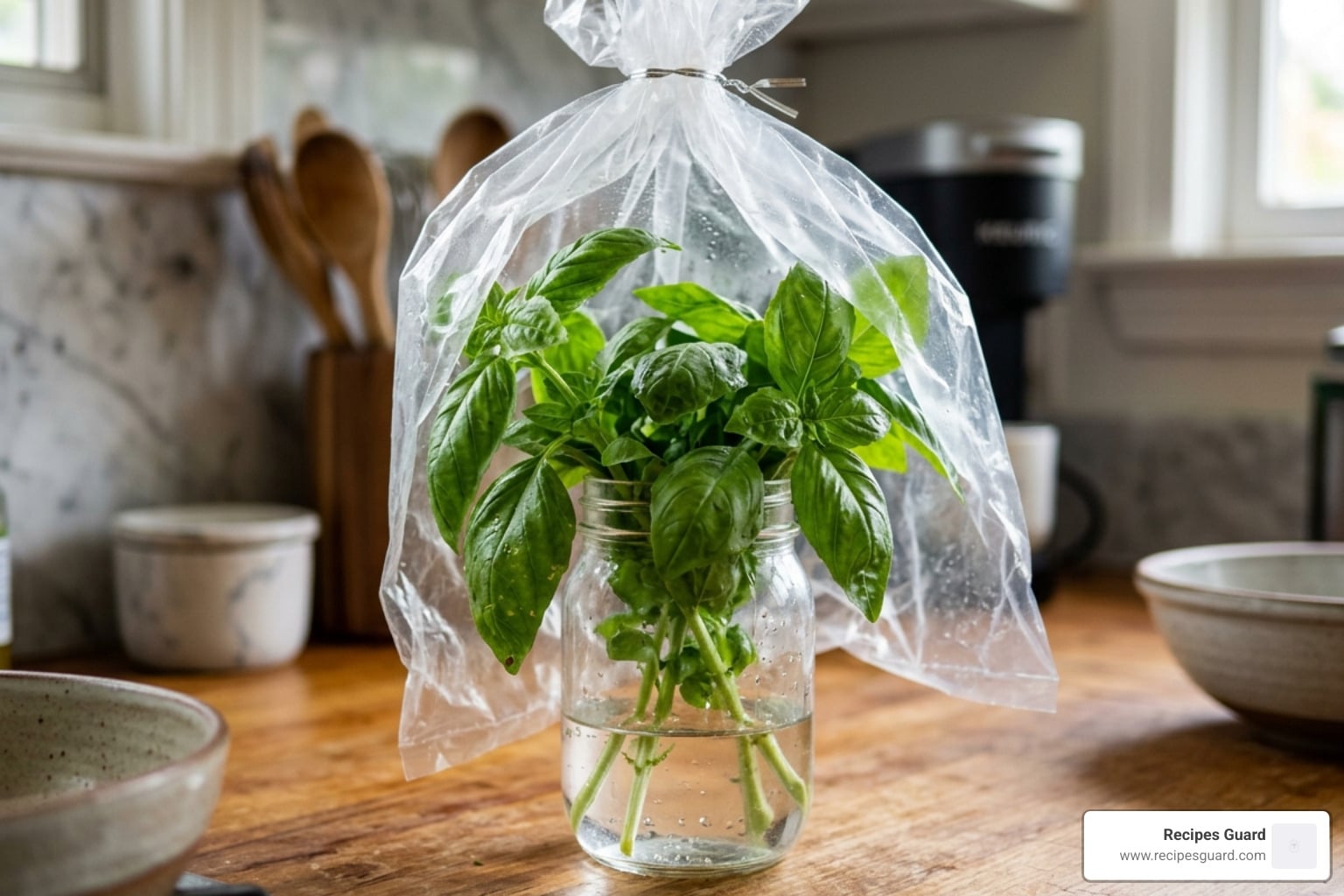
Stand the stems in a jar with about 1 inch of water, loosely cover the leaves with a plastic bag, and keep it on your countertop away from direct sunlight. That’s it. No fridge. No paper towels. Just treat it like a bouquet of flowers.
Here’s a quick breakdown of your best options:
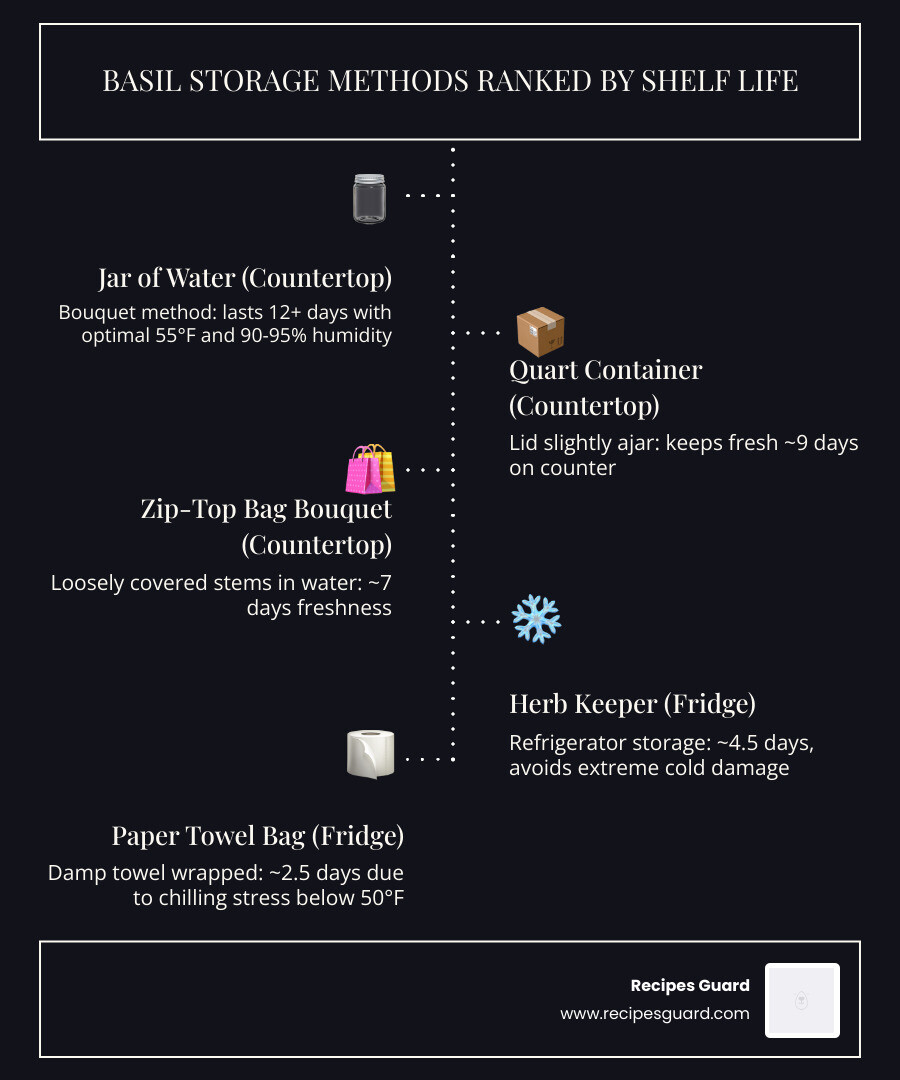
| Method | Where | Lasts |
|---|---|---|
| Stems in water jar (bouquet method) | Countertop | 12+ days |
| Quart container, lid slightly ajar | Countertop | ~9 days |
| Bouquet covered with zip-top bag | Countertop | ~7 days |
| Herb keeper | Refrigerator | ~4.5 days |
| Bouquet in water | Refrigerator | ~3.5 days |
| Paper towel in zip-top bag | Refrigerator | ~2.5 days |
| Clamshell in crisper drawer | Refrigerator | ~2 days |
The pattern is clear: room temperature wins every time.
Fresh basil is a tropical herb. It originally comes from warm climates like India, and it reacts to cold the same way a living basil plant would — badly. Temperatures below 50°F cause what’s known as chilling stress, which damages the oils in the leaves’ cell membranes and leads to that frustrating blackening and wilting you’ve probably seen after one day in the fridge.
So the fridge isn’t just unhelpful for basil — it’s actively harmful.
In the sections below, we’ll cover exactly how to prep your freshly picked stems, how to set up the bouquet method correctly, and how to freeze or dry basil when you have more than you can use right away.
Understanding Why Fresh Basil Spoils and How to Prepare It
To master the art of herb longevity, we first have to understand the science of why basil is so dramatic. Unlike hardy herbs like rosemary or thyme, basil is incredibly sensitive to its environment. When we talk about how do i store fresh picked basil, we are essentially managing three enemies: cold, oxidation, and moisture.

As we mentioned in the intro, the 50°F threshold is the “line in the sand” for basil. Most refrigerators are set to about 35°F to 38°F. At these temperatures, the oils and fats within the basil’s cell membranes begin to solidify and break down. This is the “chilling stress” that causes the leaves to turn limp and develop those unsightly black spots. Furthermore, once the leaves are bruised or cut, oxidation kicks in, turning the bright green chlorophyll into a dull, muddy brown.
According to research on How to Store Fresh Basil to Keep It Crisp and Green, the goal is to maintain a “Goldilocks” environment: not too cold, not too dry, and not too wet. The ideal storage temperature is actually around 55°F with a relative humidity of 90% to 95%. Since most of us don’t have a climate-controlled herb chamber, the kitchen counter is the closest we can get to these tropical conditions.
Essential Preparation Steps
Before you even think about putting your basil in a jar, you need to prepare the stems. Think of this as “pre-flight” maintenance for your herbs.
- The 3cm Trim: This is the single most important step. Research shows that trimming approximately 3cm (about 1.2 inches) off the bottom of the stems increases the success rate of keeping basil fresh from 85% to a staggering 100%. This fresh cut opens up the “veins” of the plant, allowing it to draw up water effectively.
- Remove Lower Leaves: Ensure there are no leaves near the bottom of the stems. If leaves sit in the water, they will rot, creating bacteria that will kill the rest of the bunch.
- The “No-Wash” Policy: Do not wash your basil until the very moment you are ready to cook with it. Excess moisture on the leaves is a fast track to slime and mold. If your garden basil is particularly dusty, gently shake it out or use a dry soft brush to remove debris.
- April 2026 Harvest Tips: If you are harvesting from your own garden this April 2026, try to pick your basil in the early morning after the dew has evaporated but before the sun is at its peak. This is when the essential oils are most concentrated, giving you the best flavor and the longest potential shelf life.
How Do I Store Fresh Picked Basil at Room Temperature?
If you want your basil to last for two weeks—yes, you read that right, two weeks—the “bouquet method” is your new best friend. In our testing, this method consistently receives a 10/10 rating for effectiveness.
The logic is simple: you are treating the cut basil like a living plant. By keeping the stems submerged, you prevent the leaves from dehydrating. By keeping it on the counter, you avoid the chilling stress of the refrigerator.
Step-by-Step: How do I store fresh picked basil using the bouquet method?
We’ve refined this process to make it as foolproof as possible. Follow these steps for maximum freshness:
- Choose Your Vessel: A clean glass jar or a simple flower vase works perfectly.
- Add Water: Fill the jar with about 1 to 2 inches of cool, clean water. You don’t need to drown the stems; just ensure the bottom inch is submerged.
- The Humidity Tent: This is the secret “pro” step. Loosely drape a plastic produce bag or a zip-top bag over the top of the basil leaves. Do not seal it! You want to create a little micro-climate that traps humidity (which basil loves) while still allowing for air circulation. If you seal it tight, the moisture will condense on the leaves and cause rot.
- Location Matters: Place the jar on your kitchen counter in a spot that gets plenty of light but is out of direct, scorching sunlight. Direct sun can “cook” the leaves inside their plastic tent.
- Maintenance: Change the water every two days. If the water looks cloudy, change it immediately. While you’re at it, check for any leaves that might be starting to look grey or slimy and pluck them off so they don’t spoil the rest of the bunch.
Using this method, your basil will remain perky and fragrant for 12 days or more. In some cases, if the stems are healthy enough, they might even start growing roots! If that happens, you can actually pot them in soil and grow a whole new plant.
Long-Term Preservation: Freezing and Drying Techniques
Sometimes, our basil plants grow faster than we can make Caprese salad. When you have a massive April 2026 harvest on your hands, it’s time to look toward long-term preservation. While fresh storage is great for a week or two, freezing and drying can keep that summer flavor available for months.
At Recipes Guard, we often discuss the importance of Preserving Basics to reduce food waste. When it comes to basil, freezing is generally superior to drying. Drying tends to dissipate the volatile oils that give basil its “magic” peppery-sweet punch, whereas freezing locks them in.
Freezing and Drying Methods
The Blanch-and-Freeze Method If you want to keep your basil bright green rather than black in the freezer, you must blanch it.
- Blanch: Drop clean leaves into boiling water for exactly 10–15 seconds.
- Shock: Immediately move them to a bowl of ice water. This stops the cooking and sets the chlorophyll.
- Dry: Pat the leaves completely dry with paper towels.
- Freeze: Lay them flat on a baking sheet to “flash freeze” for an hour, then move them into a zip-top freezer bag.
The Olive Oil Paste Method (Our Favorite) This is the most versatile way to store basil for up to four months.
- Pulse fresh basil leaves in a food processor with a drizzle of olive oil until a thick paste forms.
- Spoon the paste into ice cube trays.
- Once frozen, pop the cubes out and store them in a freezer-safe bag.
- To use, simply drop a cube into a hot pan for pasta sauce, soup, or a stew. The oil protects the basil from oxidation and freezer burn.
The Oven Drying Method If you prefer dried herbs for spice rubs or long-simmered sauces:
- Set your oven to its lowest temperature (usually around 175°F to 200°F).
- Spread leaves in a single layer on a parchment-lined sheet.
- Bake for 2 to 4 hours until the leaves are crumbly to the touch.
- Store in an airtight jar in a cool, dark place.
For more detailed guides on keeping your kitchen supplies safe and fresh, check out How to Store Fresh Basil.
Advanced Tips for Different Basil Varieties and Home Harvests
Not all basil is created equal. While Sweet Basil (Genovese) is the most common variety you’ll find in the grocery store, you might be growing Thai basil, Purple basil, or Lemon basil in your garden.
Thai Basil vs. Sweet Basil Thai basil is generally sturdier than its European cousins. It has purple stems and smaller, narrower leaves that can handle heat a bit better. However, it still suffers from chilling stress in the fridge. Use the same bouquet method for Thai basil, and you’ll find it often lasts even longer than Sweet basil—sometimes up to three weeks!
Hydroponic vs. Soil-Grown If you buy those “living” basil plants from the supermarket that come in a plastic sleeve with the roots attached, you are likely buying hydroponic basil. Interestingly, a 2023 study indicated that hydroponic basil actually has a shorter shelf life once harvested compared to soil-grown basil. If you buy these, keep the roots in water on the counter, but don’t expect them to last as long as a freshly cut bunch from a local farmer’s market.
How do i store fresh picked basil to prevent browning?
Browning is usually caused by one of two things: cold or ethylene gas.
- Ethylene Gas: Many fruits (like apples and bananas) give off ethylene gas as they ripen, which causes leafy greens to decay faster. Keep your basil bouquet away from your fruit bowl!
- The “Slime” Check: Every morning, give your jar a quick look. If you see one leaf turning black or getting slimy, remove it immediately. One bad leaf can release enzymes that trigger the breakdown of the leaves touching it.
- Humidity Tents: If you notice the edges of your leaves are curling and looking dry, your “tent” might be too loose. Ensure the plastic bag is draped far enough down to trap the moisture rising from the jar.
If you are interested in more advanced preservation, we have several Fermented Recipes that can utilize fresh herbs to create unique, probiotic-rich condiments.
Frequently Asked Questions
How can I revive wilted fresh picked basil?
If you forgot your basil on the counter without water and it’s looking sad and droopy, don’t toss it yet! You can often perform “herb CPR.” Trim another half-inch off the stems and submerge the entire bunch in a bowl of very cold water for about 30 to 45 minutes. The cells will often rehydrate through osmosis, “plumping” the leaves back up. This works best if the basil is just wilted, not yet turned black.
What are the signs that fresh basil has gone bad?
You’ll know it’s time to say goodbye when you see:
- Slimy Texture: This is a clear sign of bacterial breakdown.
- Black or Dark Brown Spots: This indicates either chilling stress or old age.
- Foul Odor: Fresh basil should smell sweet and peppery. If it smells like rotting grass or sulfur, discard it.
- Mold: Any white or grey fuzzy growth means the batch is compromised.
Can I use frozen basil in fresh recipes like Caprese salad?
Unfortunately, no. When basil freezes, the water inside the cell walls expands and bursts the cells. Once thawed, the basil will be limp and dark. While it still tastes great, it loses the structural integrity needed for salads. Save your frozen basil for cooked applications like sauces, soups, or as a base for a quick pesto.
Conclusion
At Recipes Guard, we believe that understanding the science of food preservation is the key to a better kitchen experience. Whether you are dealing with a bumper crop from your garden in April 2026 or just trying to make that expensive grocery store bunch last through the week, the “bouquet method” is the undisputed champion of basil storage.
By keeping your basil at room temperature, giving the stems a fresh trim, and providing a little bit of humidity, you can enjoy that “fresh-picked” flavor for nearly two weeks. And for those times when you have more than you can eat, a little olive oil and a freezer tray can preserve the taste of summer for months to come.
For more tips on keeping your kitchen safe and your food delicious, read our guide on Safety First: A Guide to Preserving Fermented Foods or explore our other Preserving Basics. Happy cooking!