Master the Microbe with an Online Fermentation Course
Why an Online Fermentation Course Is Worth Your Time
The best online fermentation course options available right now include:
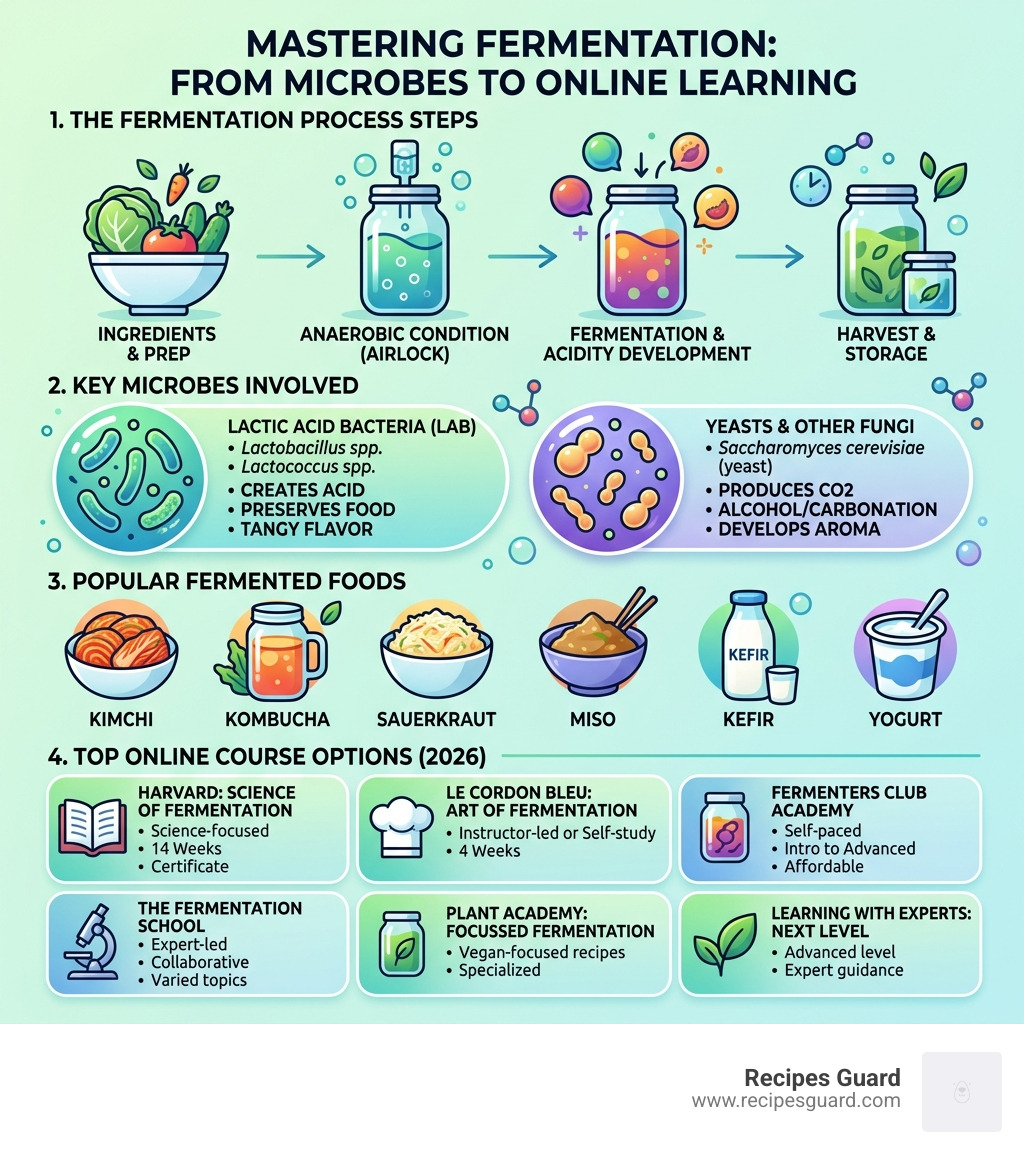
- Harvard’s Food Fermentation: The Science of Cooking with Microbes — 14 weeks, $249 verified certificate, science-focused
- Le Cordon Bleu’s The Art of Fermentation — 4 weeks, €250–€700, instructor-led or self-study
Fermented foods are everywhere. Your morning coffee, that tangy yogurt, the sourdough on your counter — microbes made all of it possible.
But when your kimchi goes mushy or your kombucha tastes like vinegar, it’s hard to know why — or how to fix it.
That’s exactly where a structured online fermentation course helps. Whether you want the science behind the bubbles or just reliable, step-by-step recipes that actually work, there’s a course built for you.
The options range from free beginner-friendly intro classes to Harvard-level microbiology to specialized culinary programs. Prices run from nothing to several hundred dollars, and most let you learn at your own pace with lifetime access.
This guide breaks down the top courses so you can find the right fit — fast.
Top-Rated Online Fermentation Course Options for Every Skill Level
Choosing the right online fermentation course depends entirely on your goals. Are you looking to understand the microscopic “why” behind the bubbles, or do you just want a jar of crunchy pickles that won’t make you sick? As of April 2026, the market for fermentation education has exploded, offering everything from casual hobbyist workshops to rigorous academic certifications.
| Course Provider | Primary Focus | Price Range | Format |
|---|---|---|---|
| Harvard University | Microbiology & Chemistry | $249 (Verified) | 14 Weeks, Self-paced |
| Le Cordon Bleu | Culinary Art & History | €250 – €700 | Instructor-led/Self-study |
For those just starting, we recommend beginning with Preserving Basics to understand the fundamental environment microbes need to thrive.
If you prefer a structured, academic environment, Harvard’s course is a heavyweight. It requires about 2-3 hours per week over 14 weeks. For those seeking professional prestige, Le Cordon Bleu provides a 4-week intensive that bridges the gap between traditional food preservation and modern restaurant applications. Other specialized providers offer courses ranging from free introductory classes to advanced professional training.
What really separates these options is not just prestige or price, but learning style. Some students do best with a syllabus, deadlines, and graded assignments. Others want to watch a lesson on Saturday morning, start a batch of sauerkraut in the afternoon, and revisit the material only when questions come up. A good online fermentation course should fit your schedule as comfortably as it fits your skill level.
It also helps to think about your end goal before you enroll. If you want a stronger foundation for food science, recipe development, or professional kitchen work, a course with more theory and assessment may be worth the investment. If your goal is practical home fermentation, look for programs that emphasize repeatable recipes, visual demonstrations, and troubleshooting common mistakes such as kahm yeast, soft vegetables, overly sour kombucha, or inactive starters.
Another useful filter is ingredient coverage. Some courses focus heavily on vegetables and cultured dairy, while others branch into sourdough, vinegar, hot sauce, miso, tempeh, or beverages. The broader the curriculum, the more likely you are to discover a niche that keeps you practicing after the course ends. That matters, because fermentation is learned best through repetition: salting, tasting, waiting, adjusting, and trying again.
Finally, do not underestimate accessibility features. Downloadable notes, subtitles, recipe sheets, and lifetime access can make a course far more usable than a flashy sales page. The best programs give you enough structure to get started and enough reference material to return later when tomato season, cabbage season, or sourdough season rolls around again.
Scientific Depth vs. Culinary Art: Choosing Your Learning Path
When you enroll in an online fermentation course, you are essentially choosing between becoming a “kitchen chemist” or a “culinary artist.”
The Scientific Approach
Courses like Food Fermentation: The Science of Cooking with Microbes dive deep into the microbiology of your food. You aren’t just making sauerkraut; you are studying how Lactic Acid Bacteria (LAB) transform sugars into lactic acid, lowering the pH to create a safe, shelf-stable environment.
This scientific perspective is crucial for Safety First: A Guide to Preserving Fermented Foods. You’ll learn about:
- Chemical Characterization: Using instruments to measure acidity and salt concentrations.
- Metabolites: Understanding the byproducts microbes leave behind, which create those complex “funky” flavors.
- Oxygen Management: Learning which ferments need to breathe (aerobic) and which must be submerged (anaerobic).
The Culinary Approach
If you are more interested in the sensory experience, specialized culinary programs emphasize flavor molecules and the physiology of taste. These programs teach you how to manipulate variables to achieve specific culinary results. For example, if you are Mastering the Art of Lacto-Fermented Hot Sauce, the culinary approach focuses on the balance of heat, tang, and aromatics rather than just the bacterial count.
Specialized Fermentation: From Vegan Koji to Traditional Charcuterie
As you progress, you might find that “general” fermentation isn’t enough. The world of microbes is vast, and specialized courses allow you to master niche traditions.
Plant-Based and Vegan Innovations
Specialized courses offer a haven for vegans, often including dozens of core recipes plus bonus materials from world-renowned chefs. You’ll explore:
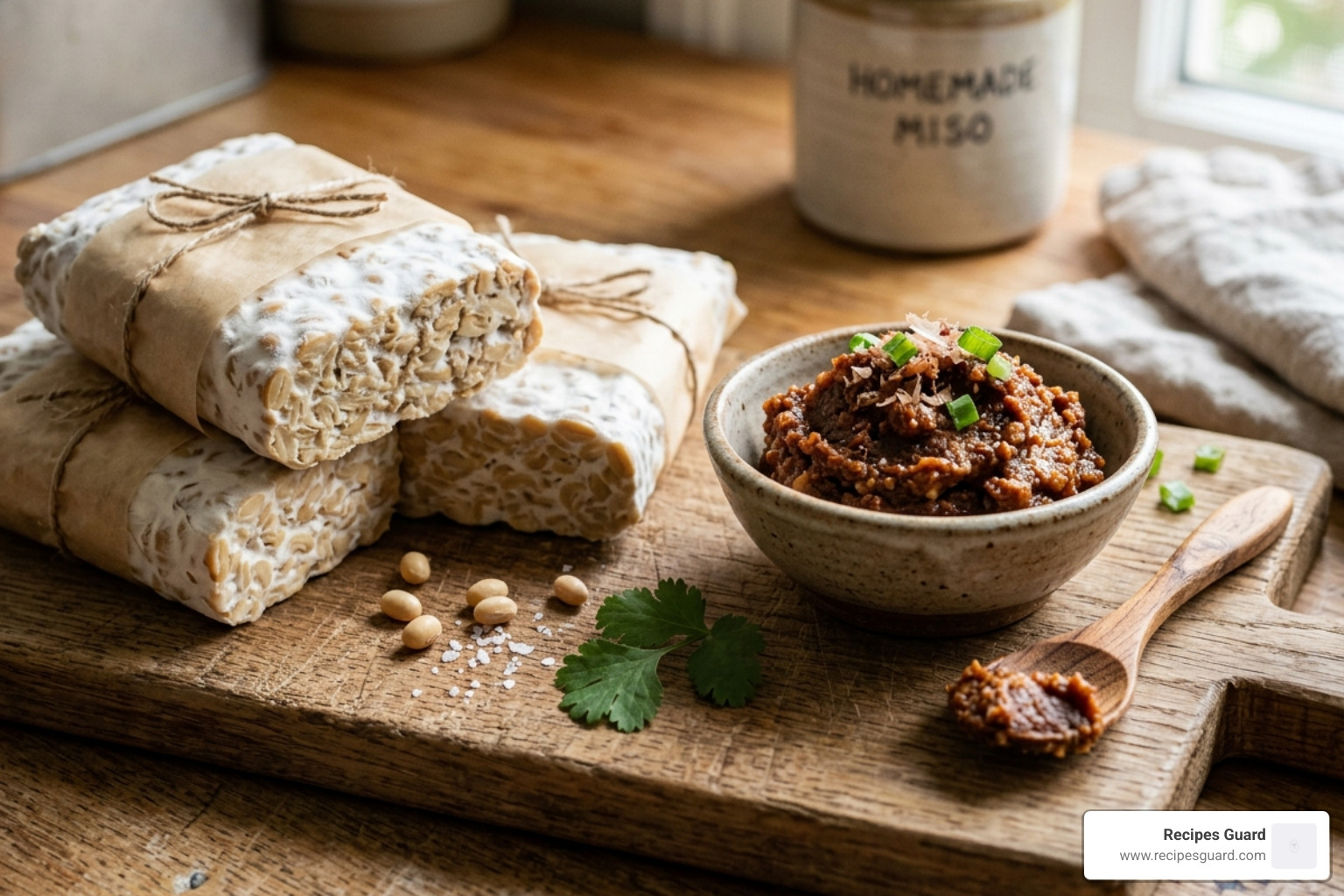
- Aspergillus Oryzae (Koji): The “national fungus” of Japan, used to create miso, soy sauce, and even vegan charcuterie.
- Nut-Based Cheeses: Using fermentation to create the creamy, sharp profiles of traditional dairy without the cow.
- Tempeh: Mastering the growth of Rhizopus oligosporus on legumes and grains.
Meat-Based and Advanced Ferments
For the omnivores, high-end charcuterie courses are available. This is serious business, involving meat-based curing and the science of safe mold growth. If you are looking for something a bit more approachable but still unique, you can try Don’t Be Afraid of the Funk with This Easy Fermented Garlic Recipe.
Liquid Gold: Mead and Sourdough
Advanced courses often touch on Mead making (honey fermentation) and the complex world of the Sourdough mother. These require a fine-tuned understanding of wild yeasts. You can find many of these techniques in our Fermented Recipes section, where we demystify the process of keeping a starter alive.
Essential Features: Kits, Community, and Troubleshooting
What separates a mediocre online fermentation course from a great one? It’s the support system. Fermentation is a living process, and things will go wrong.
- Starter Kits: Some providers offer bundles that include the physical tools you need. A master class can often be purchased with a starter kit, ensuring you have the right jars and weights from day one.
- Community and Q&A: Many online classrooms allow you to share photos of your jars and get feedback from peers and instructors. This “sociable environment” is vital for learning the nuances of the craft.
- Lifetime Access: Most self-paced courses offer lifetime access. This is vital because fermentation is seasonal. You might learn to make fruit wine in the spring but not have the ingredients to actually do it until autumn.
- Troubleshooting: A good course answers the hard questions. How to Master the Traditional Sourdough Bread Recipe Without Losing Your Mind is a great example of the kind of guidance you need when your dough won’t rise. And for those times when things get weird, you’ll need to know: Why Does My Sourdough Smell Like Old Gym Socks? (Hint: it’s usually just hungry microbes!).
Beyond those core features, the strongest courses are designed to reduce hesitation. Fermentation beginners often stall not because the process is too difficult, but because they are unsure what is normal. Is cloudiness okay? Should the brine smell sharp? Why is one jar bubbling and another quiet? When a course includes photo examples, decision trees, and clear safety notes, it turns confusion into confidence.
Recipe cards and printable checklists are especially helpful here. A simple page that reminds you of salt percentages, target temperatures, burping schedules, or storage steps can save an entire batch. For home fermenters, these practical materials often matter more than polished production value. You want something you can prop up on the counter while your hands are wet and your cabbage is halfway shredded.
Community is another underrated advantage. Fermentation can feel oddly solitary when you are staring at a jar and wondering whether the surface film is harmless or a sign to start over. A discussion space where students compare outcomes, ask beginner questions, and learn from one another makes the process less intimidating. Even experienced fermenters benefit from seeing how others adapt recipes for different climates, ingredient quality, or kitchen temperatures.
In short, the best online fermentation course does not just teach a recipe once. It creates a full learning loop: instruction, practice, feedback, correction, and retry. That is what helps home cooks move from “I followed directions” to “I understand what my ferment is doing.”
Frequently Asked Questions about Online Fermentation Courses
What is the best online fermentation course for beginners?
For absolute beginners, we recommend starting with a low-cost or free introductory workshop. Many educational platforms offer free intro courses that are perfect for getting your feet wet. If you want a comprehensive but approachable start, look for programs that provide step-by-step guidance on kimchi, kombucha, and yogurt. You can also supplement your learning with our guide on Quick and Easy Pickled Vegetables for Every Meal for an immediate win in the kitchen.
Are there free online fermentation course options?
Yes! You can “audit” the Food Fermentation: The Science of Cooking with Microbes | Harvard University course for free. This gives you access to the video lectures and reading materials, though you won’t receive a certificate or graded assignments. Additionally, many platforms offer free introductory modules or educational videos to help you decide if their teaching style suits you before you commit financially.
Do these courses provide professional certification?
Several do. Harvard offers a verified certificate for $249, which is excellent for those looking to add academic weight to a resume in food science. Le Cordon Bleu is perhaps the most prestigious name in the culinary world, and their certificate is a significant asset for career advancement in professional kitchens or the food production industry.
Conclusion
Mastering the microbe is a journey that blends ancient tradition with modern science. Whether you choose a high-level academic path through Food Fermentation: The Science of Cooking with Microbes | Harvard University or a practical, recipe-focused course from a local expert, the skills you gain will stay with you for a lifetime.
At Recipes Guard, we believe that everyone should have the confidence to ferment at home. By enrolling in an online fermentation course, you aren’t just learning to cook; you are learning to collaborate with the invisible world to create flavors that are deeper, healthier, and more sustainable.
Ready to start bubbling? Explore our full library of Fermented Recipes and begin your home experimentation today!