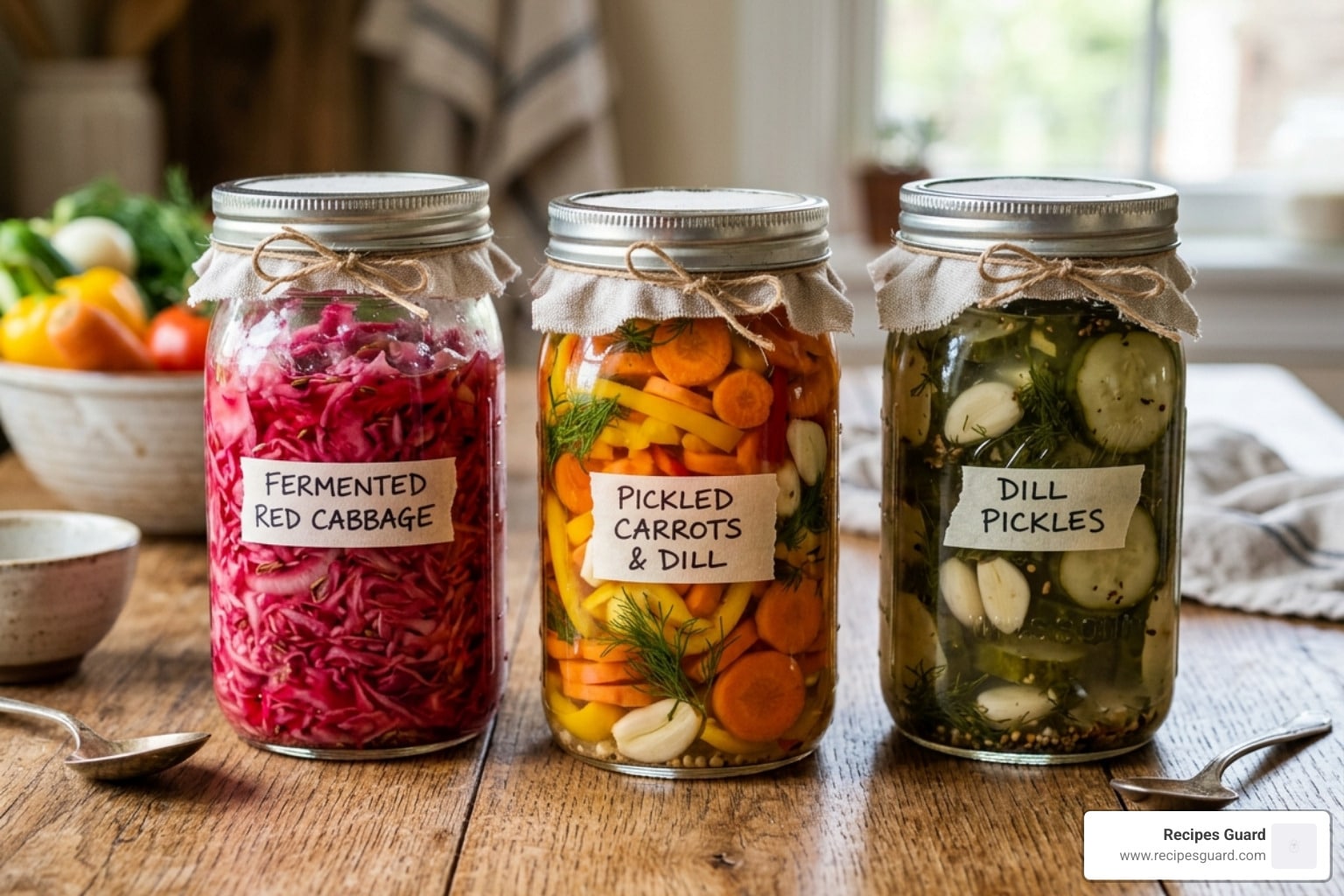
How to Ferment Vegetables on a Budget
The Science and Benefits of Fermentation in 2026
Fermented vegetable recipes are one of the easiest, most affordable ways to boost your health and reduce food waste at home.
Here are some popular beginner-friendly fermented vegetable recipes to get you started:
- Sauerkraut – shredded cabbage fermented in salt brine; ready in 5–7 days
- Lacto-fermented pickles – cucumbers in garlic-dill brine; half-sour in 3–5 days
- Kimchi – spiced napa cabbage with vegetables; ready in 2–3 days at room temperature
- Fermented salsa – tomatoes, peppers, and onions; ready in 2–3 days, lasts up to 3 months
- Fermented carrot salad – shredded carrots in brine; ready in just 48 hours
- Fermented mixed vegetables – cauliflower, radishes, daikon in spiced brine; ready in 3–5 days
Humans have been fermenting vegetables for thousands of years — long before refrigerators or canning existed. And in 2026, the science behind why it works has never been clearer.
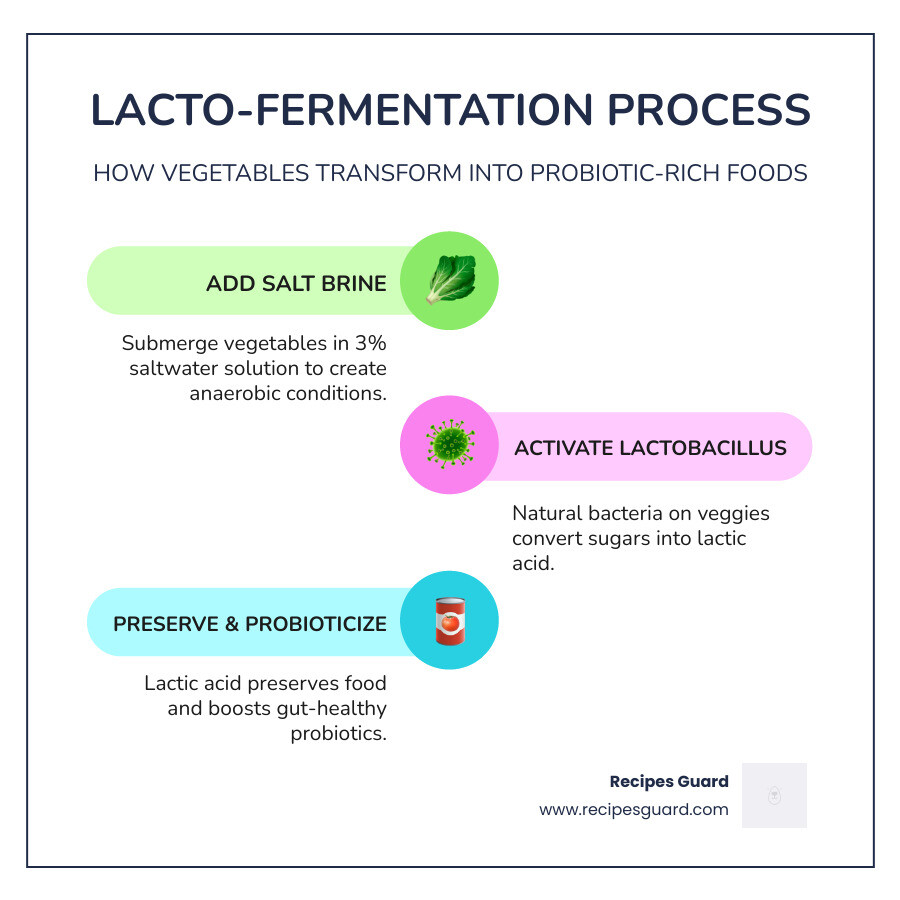
The process is called lacto-fermentation. Beneficial bacteria called Lactobacillus live naturally on the surface of vegetables. When you submerge those vegetables in a saltwater brine, the bacteria convert the natural sugars into lactic acid. That lactic acid preserves the food and creates that distinctive tangy flavor.
No dairy involved. No fancy equipment needed. Just salt, water, and time.
The health benefits are real and well-documented. Fermented vegetables are rich in natural probiotics that support gut health, strengthen the immune system, and even support brain health. Sauerkraut alone contains vitamins B, C, and K, plus antioxidants. And because fermentation breaks down the food, your body absorbs nutrients more easily than from raw vegetables.
The best part? It costs a fraction of what probiotic supplements do — and the flavor is in a completely different league.
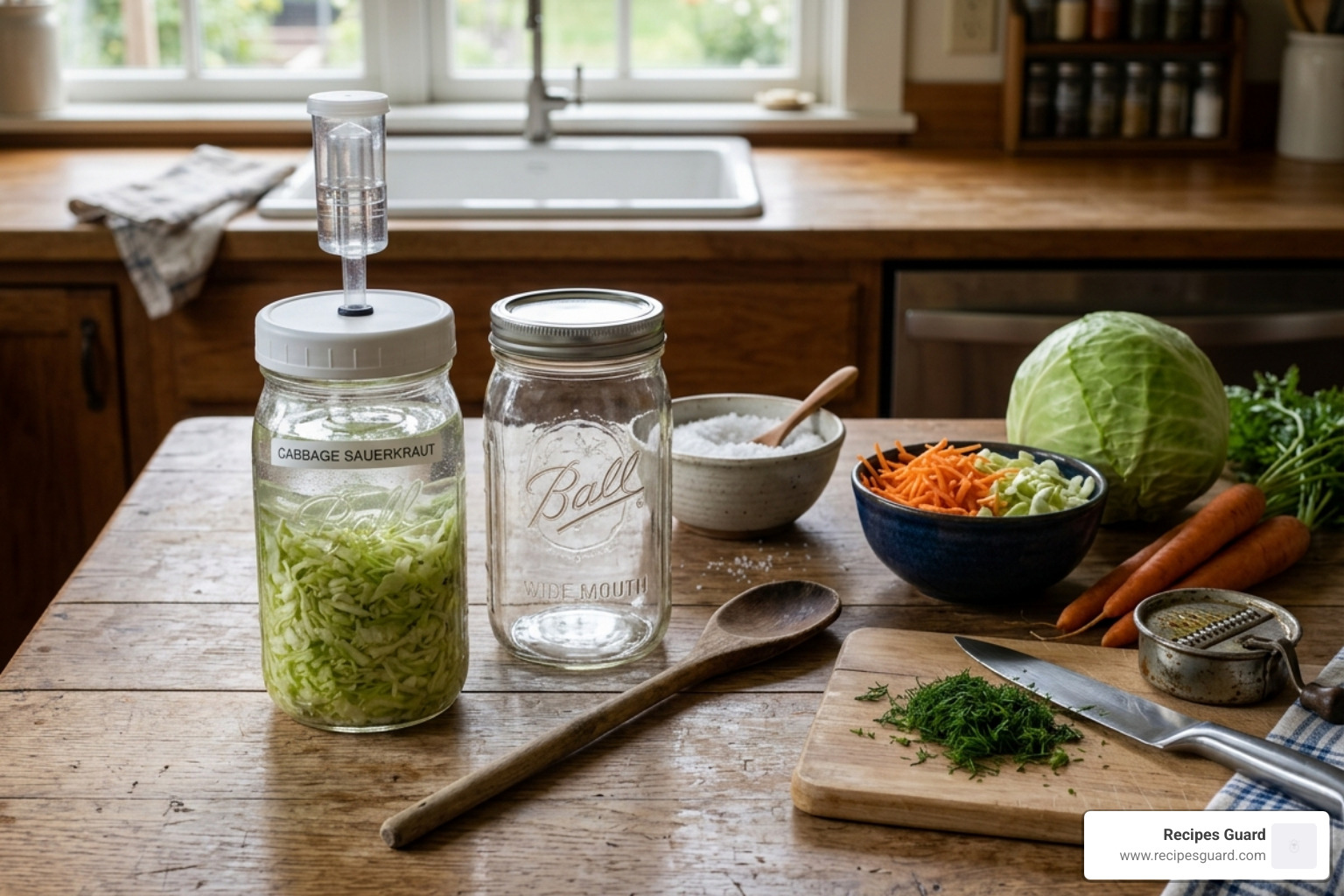
Essential Equipment and Ingredients for fermented vegetable recipes
One of the biggest myths about starting your journey with fermented vegetable recipes is that you need a laboratory-grade kitchen. We are here to tell you that if you have a jar and some salt, you are halfway there.
The Basic Toolkit
To get started on a budget, look no further than your own cupboards:
- Glass Jars: Wide-mouth Mason jars are the gold standard, but any clean glass jar from store-bought sauce will work. Just ensure it is non-reactive (glass, ceramic, or high-quality food-grade plastic).
- Lids: While metal lids are common, the acidity of the brine can eventually corrode them. We recommend plastic storage lids if you have them.
- Weights: The golden rule of fermentation is “keep it under the brine.” You can buy glass fermentation weights, but a clean rock, a smaller glass jar filled with water, or even a folded cabbage leaf wedged at the top of the jar works perfectly.
- Water: Use unchlorinated water. Chlorine is designed to kill bacteria, which is exactly what we want to grow! If your tap water is heavily chlorinated, let it sit out overnight or use filtered water.
- Salt: This is crucial. Use non-iodized salt like sea salt, Himalayan pink salt, or pickling salt. Iodine has antimicrobial properties that can hinder the Lactobacillus we are trying to invite to the party.
For more detailed safety protocols, check out our Safety First: A Guide to Preserving Fermented Foods.
Choosing the Best Produce for fermented vegetable recipes
The beauty of fermentation is that it works with almost any crunchy vegetable. However, starting with high-quality, fresh produce ensures a better crunch and a more successful ferment.
- Cabbage: The king of fermentation. High in natural sugars and water, making it perfect for sauerkraut or kimchi.
- Carrots: These ferment quickly and stay wonderfully sweet and crunchy.
- Radishes and Daikon: These add a peppery bite and are staples in many Asian-inspired fermented vegetable recipes.
- Cucumbers: Specifically pickling or Kirby cucumbers. Standard English cucumbers have too much water and can turn mushy.
- Aromatics: Garlic and onions don’t just add flavor; they provide additional prebiotic fiber.
According to scientific research on nutrient density in fermented vegetables, the fermentation process can actually increase the bioavailability of certain vitamins, making your cheap grocery store cabbage a nutritional powerhouse.
Master the Process: A Step-by-Step Guide to Success
Ready to get your hands salty? The process is remarkably consistent across most fermented vegetable recipes.
- Prep your Veggies: Wash them in unchlorinated water. Slice, shred, or chop them into uniform pieces. Remember: smaller pieces ferment faster!
- Pack the Jar: Place your vegetables and any spices (like peppercorns or dill) into the jar. Pack them down tightly to remove air pockets.
- Add the Brine: For most vegetables, a 3% brine is the “sweet spot.” This is roughly 1.5 to 2 tablespoons of salt per quart of water. Pour the brine over the vegetables until they are completely covered.
- Submerge: Place your weight on top. Ensure no vegetable bits are floating on the surface, as this is where mold likes to grow.
- The Wait: Store the jar at room temperature (ideally 68-75°F) out of direct sunlight.
- Burp the Jar: If you aren’t using an airlock lid, you must “burp” the jar daily by slightly opening the lid to release carbon dioxide buildup.
Brine Percentage Guide
| Vegetable Type | Recommended Brine % | Salt per Quart of Water |
|---|---|---|
| Cucumbers (Pickles) | 3.5% – 5% | 2 – 3 Tbsp |
| Peppers / Salsa | 2% – 3% | 1.5 Tbsp |
| Root Veggies (Carrots) | 2.5% | 1.5 Tbsp |
| Shredded Cabbage | 2% (Dry Salted) | 1.5 Tbsp per 5lbs |
If you are looking for a faster way to get veggies on your plate, you might also enjoy our guide on Quick and Easy Pickled Vegetables for Every Meal.
Top 5 Beginner fermented vegetable recipes to Try Today
If you are a newbie, don’t overthink it. Start with these five “no-fail” options:
- Traditional Sauerkraut: Just cabbage and salt. Massage the salt into shredded cabbage until it releases its own juice, pack it tight, and wait a week.
- Mixed “Deli Style” Veggies: Toss cauliflower florets, carrot coins, and red pepper strips into a 3% brine with garlic and oregano.
- Probiotic-Rich Fermented Salsa: Chop your usual salsa ingredients (tomatoes, onions, cilantro, lime, salt) and let them sit on the counter for 2 days. It becomes effervescent and tangy!
- Fermented Garlic: Don’t Be Afraid of the Funk with This Easy Fermented Garlic Recipe — the garlic cloves mellow out and become sweet and savory over time.
- Lacto-Fermented Hot Sauce: Once you’ve mastered the basics, try Mastering the Art of Lacto-Fermented Hot Sauce for a spicy kick that blows store-bought versions away.
Troubleshooting, Safety, and Long-Term Storage
We know what you’re thinking: “Is it supposed to look like that?” Fermentation is a biological process, and it isn’t always pretty.
The Good, the Bad, and the Fuzzy
- Cloudy Brine: This is a great sign! It means the Lactobacillus are working hard.
- Bubbles: Also great. This is carbon dioxide, a byproduct of happy fermentation.
- Kahm Yeast: This is a thin, white, wavy film on the surface. It is harmless but can affect flavor. Simply skim it off.
- Mold: If you see fuzzy growth that is green, black, or pink, discard the batch. This usually happens if the vegetables weren’t submerged.
- Mushiness: Usually caused by fermentation temperatures being too high or forgetting to trim the blossom end of cucumbers (which contains softening enzymes). Adding a tannin-rich leaf (bay leaf, grape leaf, or tea bag) can help keep things crisp.
Storage and Shelf Life
Once your ferment reaches the flavor you love, move it to the refrigerator. The cold temperature slows the bacteria down significantly.
- Salsa: Lasts up to 3 months.
- Pickles and Sauerkraut: Can last 6 months to a year.
- Kimchi: Flavors deepen over months; it’s still good even when it gets “fizzy.”
Frequently Asked Questions about Fermenting Vegetables
How long does it take to ferment vegetables?
It depends on the temperature and the vegetable. A shredded carrot salad can be ready in 48 hours, while “half-sour” pickles take 3–5 days. For a “full-sour” traditional deli pickle, you might wait 6 weeks. Always taste-test! When it tastes tangy and delicious to you, it’s ready.
Is it safe to ferment vegetables at home?
Yes! In fact, lacto-fermentation is incredibly safe because the lactic acid creates an environment that is too acidic for harmful pathogens like botulism to survive. As long as you follow the correct salt ratios and maintain hygiene, you are safe. If it smells “revolting” or “rotten” rather than “sour and tangy,” trust your nose and toss it.
Can I reuse the fermentation brine?
Absolutely! We call it “liquid gold.” You can use a few tablespoons as a “starter” for your next batch to speed things up, use it as a probiotic-rich salad dressing base, or even drink a small shot of it for a quick gut-health boost. Just don’t reuse it more than 5 times, as the mineral balance can shift.
Conclusion: Start Your Fermentation Journey Today
At Recipes Guard, we believe that healthy eating shouldn’t be a luxury. By mastering fermented vegetable recipes, you are taking control of your gut health while saving money and enjoying flavors that simply can’t be found in a supermarket aisle.
Whether it’s a jar of garlicky pickles or a spicy batch of kimchi, the “funk” is your friend. Ready to explore more? Check out our full library of Fermented Recipes and start your first jar today. Your microbiome will thank you!