
How to Ace Your Student Visa Health Insurance Requirements
Why Your Student Visa Health Guide Can Make or Break Your Study Abroad Plans
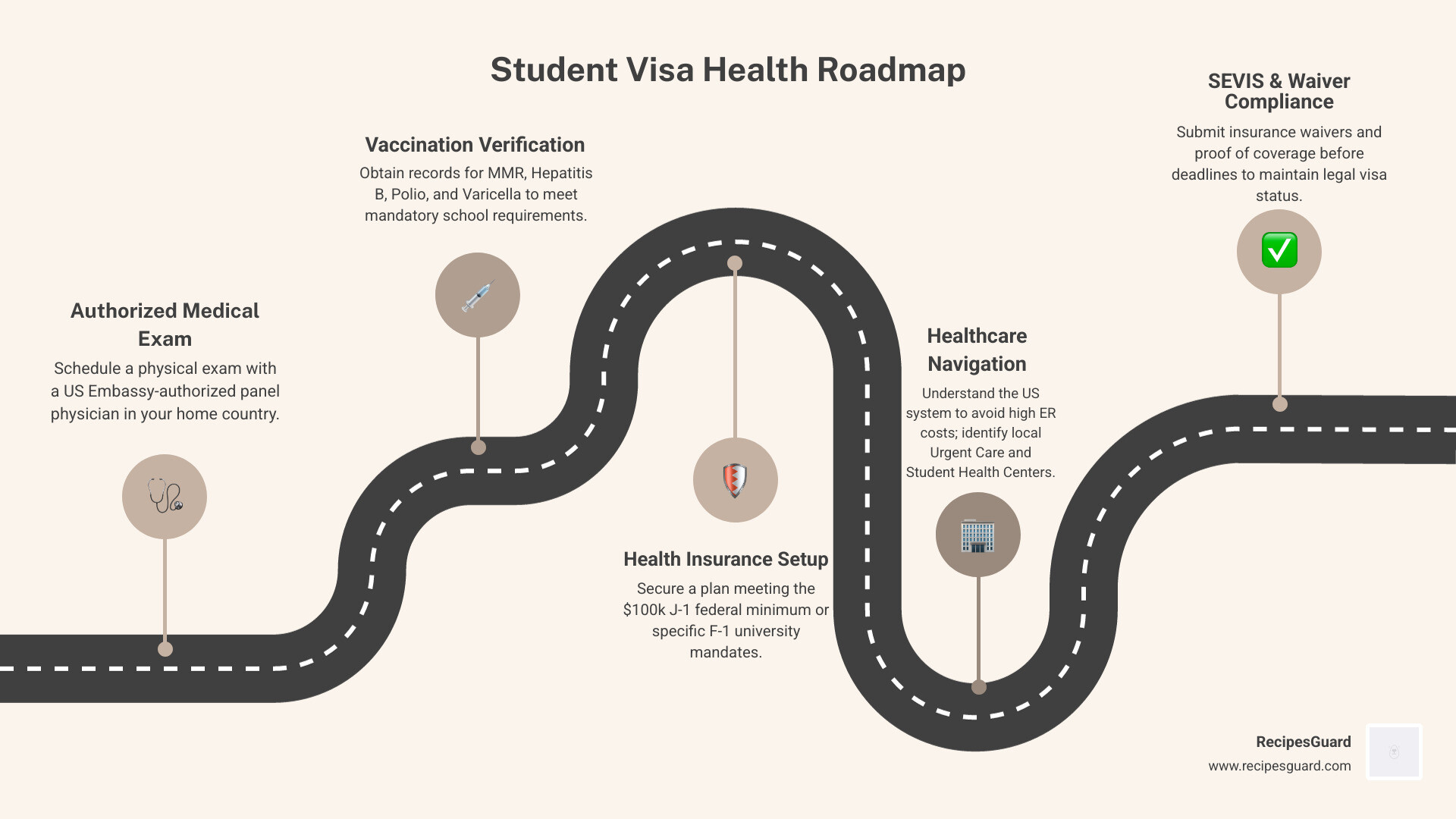
Your student visa health guide covers everything you need to know to meet visa health requirements before studying abroad. Here’s a quick overview:
Quick Answer: Student Visa Health Requirements
- Get a medical exam from a US Embassy-authorized panel physician (not your own doctor)
- Update your vaccinations — Hepatitis B, MMR, Polio, Varicella, and others are required
- Get health insurance — J-1 visa holders need at least $100,000 in medical coverage by federal law; F-1 requirements vary by school
- Know your healthcare system — the US has no universal healthcare; one ER visit can cost around $5,000
- Check compliance deadlines — insurance waivers and enrollment windows are strict and missing them risks your visa status
Unlike most countries, the US has no government-sponsored healthcare. That gap falls entirely on you as an international student.
The stakes are real. A single major illness or accident can cost hundreds of thousands of dollars. A normal birth in Boston, for example, can run anywhere from $8,000 to $20,000 or more. An ER visit that might cost the equivalent of €100 back home? Expect a bill closer to $5,000 here.
And it’s not just about money. Failing to maintain the right health insurance can put your visa status at risk entirely.
For many students, the hardest part isn’t the cost — it’s the confusion. The US healthcare system is notoriously difficult to navigate, even for Americans who grew up in it. Add a new country, a new visa type, and a pile of unfamiliar paperwork, and it’s easy to feel lost before your first semester even begins.
This guide breaks it all down into clear, actionable steps — from medical exams and vaccinations before you leave home, to understanding your insurance plan and knowing where to go when you get sick.
Understanding Mandatory Health Requirements for US Student Visas (F-1 and J-1)
When we talk about the student visa health guide, the first thing to understand is that the rules change depending on your visa type. The US government treats F-1 students and J-1 scholars very differently when it comes to insurance.
For J-1 visa holders (exchange visitors, researchers, and scholars), the requirements are written into federal law. The U.S. Department of State mandates that you and any J-2 dependents must have insurance that meets these minimums:
- Medical benefits: At least $100,000 per accident or illness.
- Deductible: No more than $500 per accident or illness.
- Medical Evacuation: At least $25,000 (to fly you home if you are seriously ill).
- Repatriation of Remains: At least $50,000.
If you’re on an F-1 visa, the federal government doesn’t set a specific dollar amount, but your university certainly will. Most schools won’t let you register for classes until you prove you have coverage that meets their standards. To get a better handle on this, check out Everything You Need To Know About Student Insurance Cover.
It’s also worth noting that international students are a massive part of the US landscape. In the 2023-2024 academic year, students and scholars contributed $43.8 billion to the U.S. economy. Because you are such a vital part of the community, the government and universities want to ensure you don’t end up in “financial ruin” due to a medical emergency.
For more details on what to expect, you can read Medical Requirements for US Student Visa: What Every Applicant Must Know.
Maintaining Compliance with Your Student Visa Health Guide
Compliance isn’t a “one and done” task. We often see students who buy a plan to get their visa but let it lapse once they arrive. This is a huge mistake. U.S. immigration authorities and school International Student Offices (ISO) monitor insurance compliance closely. If you fall out of compliance, you risk losing your visa status and being forced to leave the country.
Many universities automatically enroll you in their own Student Health Insurance Plan (SHIP) and add the cost to your tuition bill. If you want to use a private plan instead, you must apply for a “waiver.” To qualify for a waiver, your private plan usually has to be based in the US and meet strict standards (like those set by the Affordable Care Act). Foreign-based policies almost never meet these standards. If you’re looking for budget-friendly options that still keep you legal, read The Ultimate Guide To Affordable Overseas Student Health Cover.
Navigating the Student Visa Health Guide: Medical Exams and Vaccinations
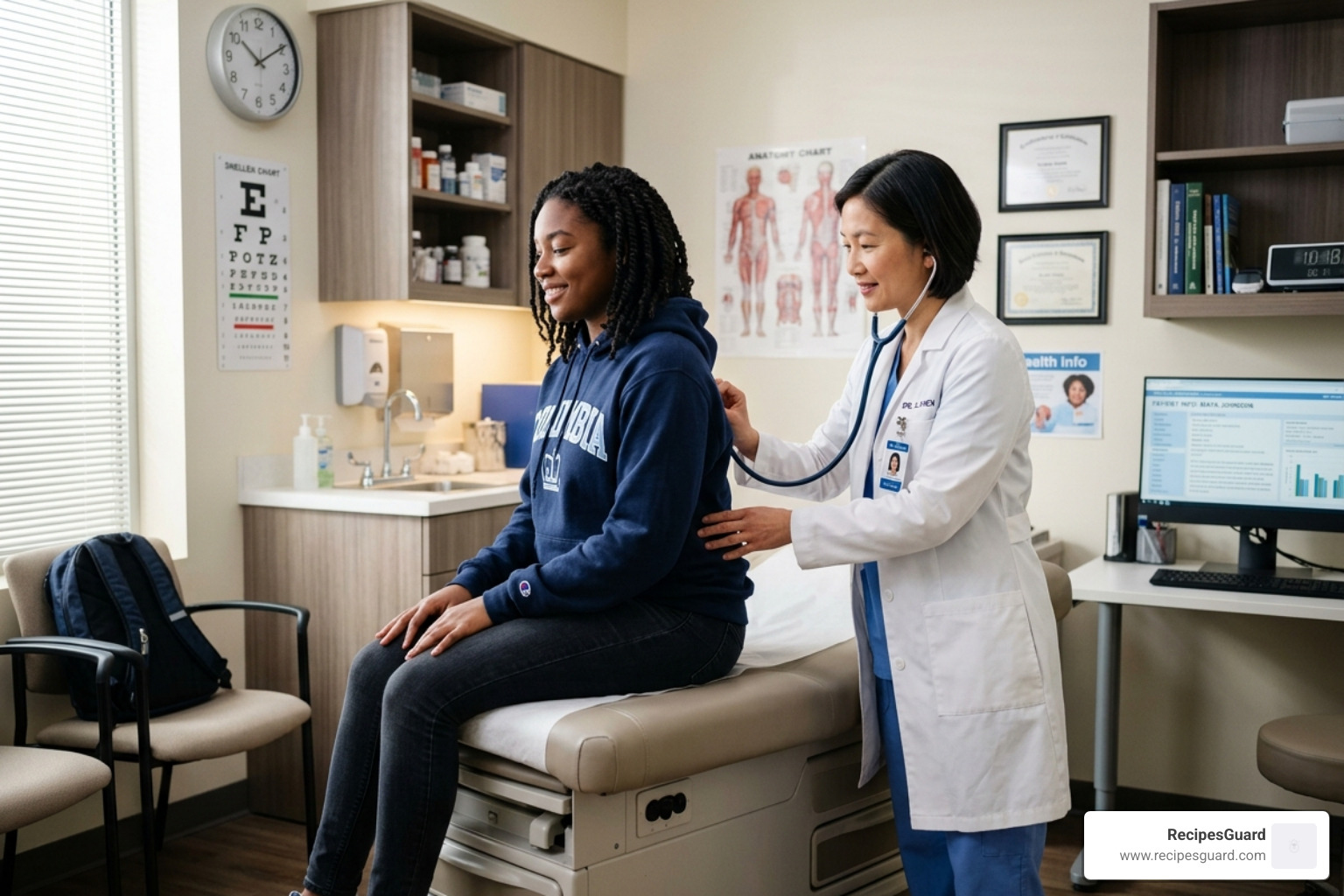
Before you even step on a plane, you need medical clearance. This isn’t just a quick check-up with your local family doctor. For a US visa, the exam must be performed by a “panel physician” authorized by the US Embassy or Consulate in your country.
What happens during the exam? We’ve found it usually includes:
- A review of your medical history: Including past surgeries, chronic conditions, and psychiatric history.
- A physical examination: Checking your ears, nose, throat, heart, lungs, and lymph nodes.
- Vaccination review: The physician will check if you have all the required shots.
The list of required vaccinations is long. You’ll likely need proof of:
- Hepatitis A and B
- Influenza (and Hib)
- Measles, Mumps, and Rubella (MMR)
- Meningococcal and Pneumococcal
- Polio, Pertussis, Tetanus, and Diphtheria
- Varicella (Chickenpox) and Rotavirus
If you don’t have records of these, don’t panic! The panel physician can administer them, though it might cost more than getting them done through your local public health clinic beforehand. For a full pre-departure list, see this Health Checklist for International Students Before Arriving in U.S..
Age-Specific Tests in Your Student Visa Health Guide
The medical exam also includes specific screenings based on your age. For example:
- Tuberculosis (TB): Applicants age 2 and older usually require an IGRA blood test. If that’s positive, or if you are 15 or older, a chest X-ray is mandatory.
- Syphilis: A blood test is required for applicants aged 18 to 44.
- Gonorrhea: A screening is required for those aged 18 to 24.
What could disqualify you? Generally, “communicable diseases of public health significance” are the main concern. This includes active TB or certain untreated STIs. Mental disorders that lead to “harmful behavior” or a history of drug addiction can also be grounds for visa denial. However, HIV/AIDS is no longer a disqualifying condition for entering the US.
If you do fail an exam due to a treatable condition (like syphilis), you can often reapply once you’ve completed treatment and can provide a certificate of clearance from the physician.
Decoding the US Healthcare System for International Students
Welcome to the most expensive healthcare system in the world! In the US, there is no “free” clinic on the corner for everyone. You pay for what you use, which is why your student visa health guide emphasizes insurance so heavily.
Knowing where to go can save you thousands of dollars. We recommend following this hierarchy of care:
| Provider Type | When to Use | Cost Level |
|---|---|---|
| Student Health Center (SHC) | Minor illnesses, flu shots, basic prescriptions, and initial consultations. | $ (Lowest) |
| Primary Care Physician (PCP) | Non-emergency issues, chronic condition management, or routine checkups. | $$ |
| Urgent Care / Walk-in Clinic | After-hours care for non-life-threatening issues (like a deep cut or high fever). | $$$ |
| Emergency Room (ER) | Life-threatening emergencies only (chest pain, broken bones, severe bleeding). | $$$$ (Highest) |
Pro Tip: Always try the Student Health Center first. They are usually “in-network” for your insurance and have the lowest co-pays. Avoid the ER unless it’s a true emergency. An ER visit for something simple like a sore throat could result in a $5,000 bill, whereas an Urgent Care clinic might charge $200.
If you ever find yourself needing to file a claim because you had to pay upfront, we have a guide for that: Visa Claims 101 Navigating The Process For International Students.
Key Insurance Terminology for Students
To survive the US system, you need to speak “Insurance-ese.” Here are the terms that will show up on your bills:
- Premium: The monthly or semesterly fee you pay just to have the insurance.
- Deductible: The amount you pay out of your own pocket before the insurance company starts paying. (e.g., if your deductible is $500, you pay the first $500 of your medical bills).
- Co-insurance: Your share of the costs. After the deductible is met, you might pay 20% of a bill while the insurance pays 80%.
- Out-of-Pocket Maximum: The most you will have to pay in a year. Once you hit this, the insurance pays 100%.
- Explanation of Benefits (EOB): This is not a bill. It’s a document showing what the insurance covered and what you might still owe the doctor.
Understanding these can prevent “sticker shock” when you get your first medical statement. For more on the costs involved, read Cost And Certificates Your Guide To Overseas Student Health Cover.
Global Perspectives: Australia’s OSHC and New Zealand Standards
While the US system is a beast of its own, our friends in Australia and New Zealand have their own strict rules.
In Australia, if you are on a Subclass 500 visa, you must have Overseas Student Health Cover (OSHC). This is non-negotiable. There are only five approved providers: Allianz, Bupa, CBHS International, Medibank/ahm, and nib.
OSHC covers 85% of the “MBS fee” (the government-set price for a service). If your doctor charges more than the MBS fee, you pay the difference—this is called a “gap fee.”
Big News for 2026: Starting January 1, 2026, OSHC insurers will remove waiting periods for pregnancy-related treatment on policies held for two or more years. This is a huge win for long-term students! For the official government breakdown, see the Overseas Student Health Cover fact sheet.
To learn how to handle medical bills in the Land Down Under, check out A Student Guide To Australian Insurance Claims And Visa Medicals.
New Zealand Acceptable Standard of Health
New Zealand takes a slightly different approach. They focus on whether you will be a “burden” on their public health system.
Immigration New Zealand checks if your condition might cost more than NZ$81,000 to treat over the life of your visa. If your expected medical costs exceed this threshold, your visa might be declined. They also look at whether you pose a public health risk or if you’ll require “high-cost disability services.”
Unlike the US, New Zealand does not consider your private health insurance or family support when making this assessment. You either meet the “acceptable standard of health,” or you don’t. You can find more on their criteria here: Why you may need to provide evidence you are in good health :: Immigration New Zealand.
Frequently Asked Questions about Student Visa Health
Can I use my home country’s health insurance for my US visa?
Technically, you can try, but we don’t recommend it. Most US universities will reject a foreign policy because it doesn’t have a US-based claims office or meet the specific coverage mandates (like mental health or maternity care). It’s almost always safer to buy a plan specifically designed for international students in the US.
What happens if I fail the visa medical examination?
If the physician finds a “Class A” condition (like active TB), your visa will be denied. However, many conditions are “Class B,” which means you can still get a visa but must report to a local health department for follow-up once you arrive in the US. If you have a treatable condition, you can usually pause your application, get treated, and then provide a “clearance” letter to the embassy.
Are dental and vision care included in mandatory student plans?
Usually, no. In the US, dental and vision are treated as entirely separate from general health insurance. Most student plans will only cover dental if it’s an “emergency” (like a tooth getting knocked out in a baseball game). For routine cleanings or new glasses, you’ll likely need to pay out of pocket or buy a separate add-on plan.
Conclusion
Navigating the student visa health guide requirements might feel like a full-time job, but it’s the foundation of a successful study abroad experience. By getting your medical exams done early, staying up to date on your vaccines, and choosing an insurance plan that actually protects you, you can focus on what really matters: your education.
Remember to keep digital copies of all your medical records and your insurance ID card. If you ever find yourself confused by a medical bill or struggling to file a claim, we are here to help. At RecipesGuard, we specialize in making the complex world of student insurance easy to understand.
For a deep dive into the claims process, don’t miss The International Students Guide To Navigating An Insurance Claim Student Visa. Safe travels and stay healthy!

My name is Bianca, and my journey into the world of fermentation and food safety began with a costly mistake. I once lost an entire season’s harvest of chili peppers because I relied on guesswork instead of science. That failure was my turning point.
