
Cost and Certificates: Your Guide to Overseas Student Health Cover
What You’ll Actually Pay for Overseas Student Health Cover in 2026
How much is overseas student health cover depends on your policy type and duration — but here are the key 2026 rates to know right away:
| Policy Type | 12 Months | 24 Months | 36 Months |
|---|---|---|---|
| Single (Allianz Care Australia) | AUD $806 | AUD $1,668 | AUD $2,505 |
| Single (Medibank Comprehensive) | AUD $769 | AUD $1,599 | AUD $2,401 |
| Couple (approximate) | ~AUD $2,600+ | — | — |
| Family (approximate) | ~AUD $4,200+ | — | — |
Rates effective from 1 April–May 2025. Prices vary by provider and are subject to annual review.
If you’re heading to Australia to study, there’s one thing you can’t skip: Overseas Student Health Cover (OSHC).
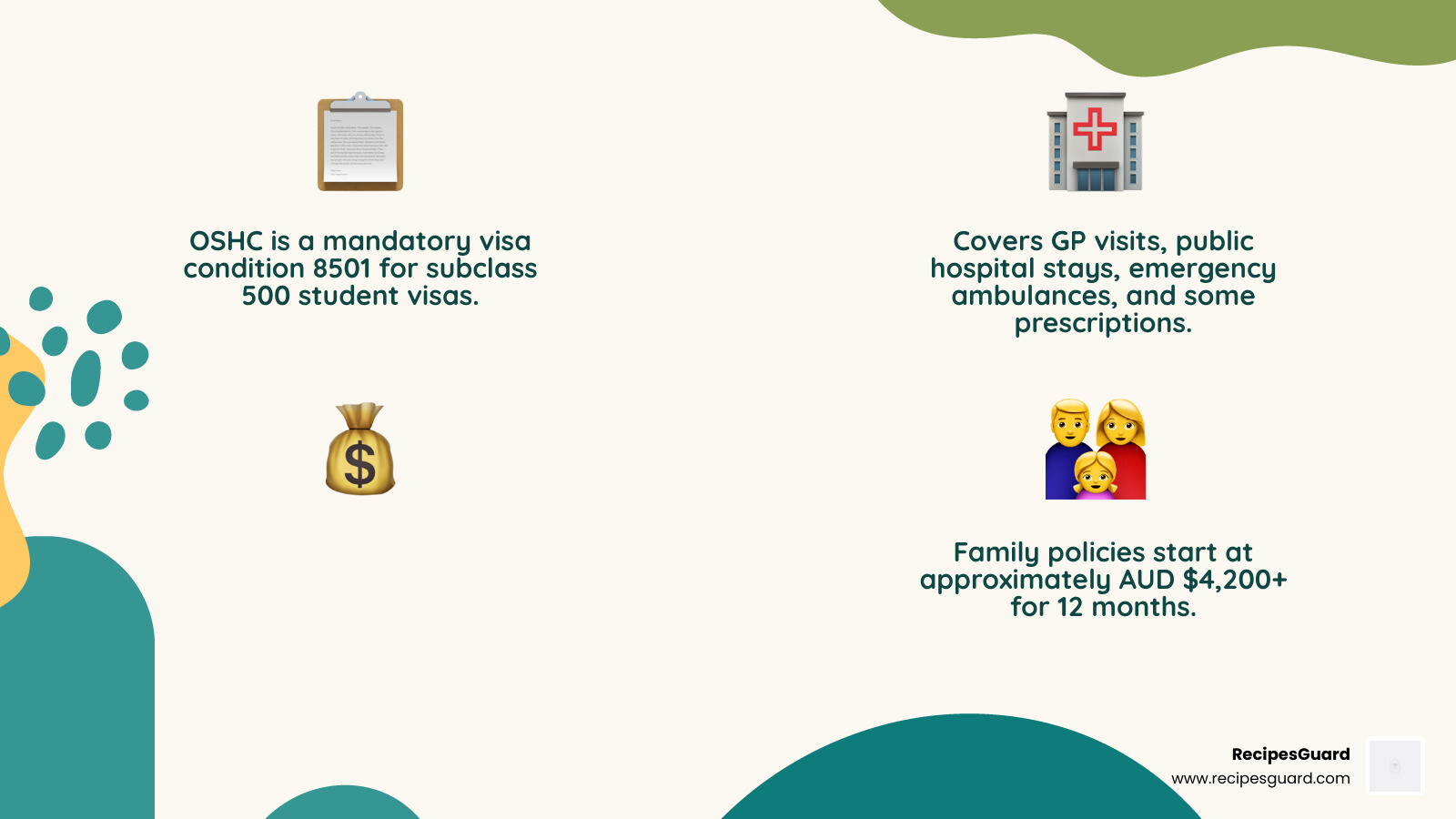
It’s not optional. It’s a mandatory condition of your Australian student visa (subclass 500), known as visa condition 8501. Without it, your visa can be cancelled.
OSHC is private health insurance designed specifically for international students. It helps cover the cost of visiting a doctor, staying in a public hospital, emergency ambulance transport, and some prescription medicines. Think of it as your healthcare safety net while you’re far from home.
The good news? Comparing providers can save you up to $300. The approved providers — including Medibank, Allianz Care Australia, Bupa, nib, CBHS, and ahm — all offer similar base coverage, but their prices differ. Knowing those differences before you buy matters.
This guide breaks down exactly what OSHC costs, what it covers, and how to manage your policy so you stay protected and visa-compliant throughout your studies.
Simple how much is overseas student health cover glossary:
- medical claim student guide
- medical expenses student australia
- student claim hospital expenses
Mandatory Requirements and Visa Compliance
When we talk about coming to Australia as an international student, the Student Visa (Subclass 500) is the golden ticket. However, this ticket comes with rules. The Department of Home Affairs is very strict about Visa Condition 8501, which states that you must maintain adequate health insurance for the entire time you are in the country.
This isn’t just for you, the primary student. If you are bringing your “dependents”—which usually means a spouse or partner and any children under 18—they must also be covered by an OSHC policy. In fact, your visa grant letter will often specify that your insurance must start before you arrive in Australia and end only after your visa expires.
If you let your cover lapse, even for a few weeks, you are technically in breach of your visa. We’ve seen cases where students forgot to renew their policy after their first year, and it caused significant stress during their degree. To stay safe, always ensure your Overseas Student Health Cover | Study in Australia matches your visa dates exactly.
Exemptions for Specific Nationalities
Are there any lucky students who don’t need OSHC? Yes, but only a very specific group. Australia has “Reciprocal Health Care Agreements” with certain countries, but even then, the exemptions are narrow.
Currently, you might not need OSHC if you are:
- A Norwegian student covered by the Norwegian National Insurance Scheme.
- A Swedish student covered by CSN (Centrala studiestödsnämnden) or Kammarkollegiet.
- A Belgian student covered under the reciprocal agreement with Australia.
If you fall into these categories, you’ll need to provide evidence of your home-country coverage when you apply for your visa. For everyone else, OSHC is a must-have.
How Much is Overseas Student Health Cover in 2026?
We know the biggest question on your mind is the bottom line: how much is overseas student health cover going to cost my bank account?
In 2026, pricing is higher than in previous years due to standard medical inflation and annual premium reviews. One thing to remember: OSHC is a “Visa Length Health Cover” (VLHC). This means you usually have to pay the entire premium upfront. If you are staying for a three-year degree, you will likely need to pay for all 36 months before you even arrive.
Here is a more detailed breakdown of what you can expect to pay for different durations based on current 2025/2026 data:
| Duration | Single Policy (Avg) | Dual/Couple Policy (Avg) | Family Policy (Avg) |
|---|---|---|---|
| 12 Months | $769 – $806 | $2,600 – $4,597 | $4,200 – $8,917 |
| 24 Months | $1,599 – $1,668 | $5,200 – $9,100 | $8,400 – $17,518 |
| 36 Months | $2,401 – $2,505 | $7,800 – $13,600 | $12,600 – $26,000 |
Data sourced from 2024 Premium sheet for Education Partners and Allianz 2025 rates.
Factors Influencing How Much is Overseas Student Health Cover
Why is there such a huge gap between a single policy and a family policy? It’s not just about the number of people.
- Policy Duration: Most providers don’t just multiply the monthly rate. For example, a 36-month policy might be slightly cheaper per month than a 12-month policy, but because of the upfront payment requirement, the total sum is significant.
- Family Structure: Providers categorize families into “Dual” (you and a partner) or “Multi-family” (you, a partner, and one or more children).
- Inflation Adjustments: Every year, usually around April or May, health funds review their prices. If you buy your policy in March for a course starting in July, you might lock in a slightly lower rate.
Estimating How Much is Overseas Student Health Cover for Families
If you’re coming to Australia with a partner, you might be shocked to see that a “Couple” policy costs more than double a “Single” policy. In some cases, it can be four to five times as much!
Why? The primary reason is pregnancy and childbirth coverage. Statistically, couple and family policies lead to much higher claims for maternity services, which are very expensive in Australian private hospitals.
Pro-tip: If you and your partner are both international students on your own individual primary student visas, you can actually save thousands by each purchasing a “Single” policy instead of one “Couple” policy. However, if one of you is a dependent on the other’s visa, you must take out the more expensive couple or family cover.
Coverage Inclusions, Exclusions, and Waiting Periods

When you pay for OSHC, you aren’t just buying a piece of paper for your visa; you are buying access to the Australian healthcare system. But it doesn’t cover everything.
Most basic OSHC policies cover:
- GP Visits: 100% of the Medicare Benefits Schedule (MBS) fee. If your doctor “bulk bills,” you pay nothing. If they charge more than the MBS fee, you pay the “gap.”
- Hospital Stays: Coverage for accommodation and treatment in a public hospital as a private patient.
- Emergency Ambulance: 100% coverage for transport when you need urgent medical attention.
- Prescription Medicine: Usually up to $50 per item, with a yearly limit (e.g., $500 for singles). You still pay a small co-payment for each script.
To find the best value for these services, it’s worth the time to Compare Overseas Student Health Cover (OSHC) – Study in Australia before committing.
Common Exclusions and Extras
Don’t assume your OSHC is a “fix-all” for your health. There are several things that basic OSHC almost never covers:
- Dental Care: Cleaning, fillings, and wisdom teeth removal are usually excluded.
- Optical: Eye tests and glasses/contact lenses.
- Physiotherapy: Treatment for sports injuries or back pain.
- Cosmetic Surgery: Any procedure not medically necessary.
If you want coverage for these, you’ll need to buy “Extras” or “Ancillary” cover. This is a separate insurance policy on top of your OSHC. At RecipesGuard, we often help students navigate the complex paperwork involved when they try to claim these “extras,” as the process differs from standard medical claims.
Understanding Waiting Periods
A “waiting period” is the time you must hold your insurance before you can claim for certain treatments.
- Pre-existing conditions: Usually a 12-month waiting period. If you had asthma or a back injury before you arrived in Australia, you can’t claim for it in your first year.
- Pregnancy-related services: Also typically a 12-month waiting period. This is why have your insurance sorted well before you plan to start a family.
- Psychiatric care: Often has a shorter waiting period (around 2 months), but check your specific policy.
If you are switching from one OSHC provider to another, your new provider will usually “recognize” the time you already spent with the old one, so you don’t have to start your waiting periods all over again.
Managing Your Policy: Switching and Refunds
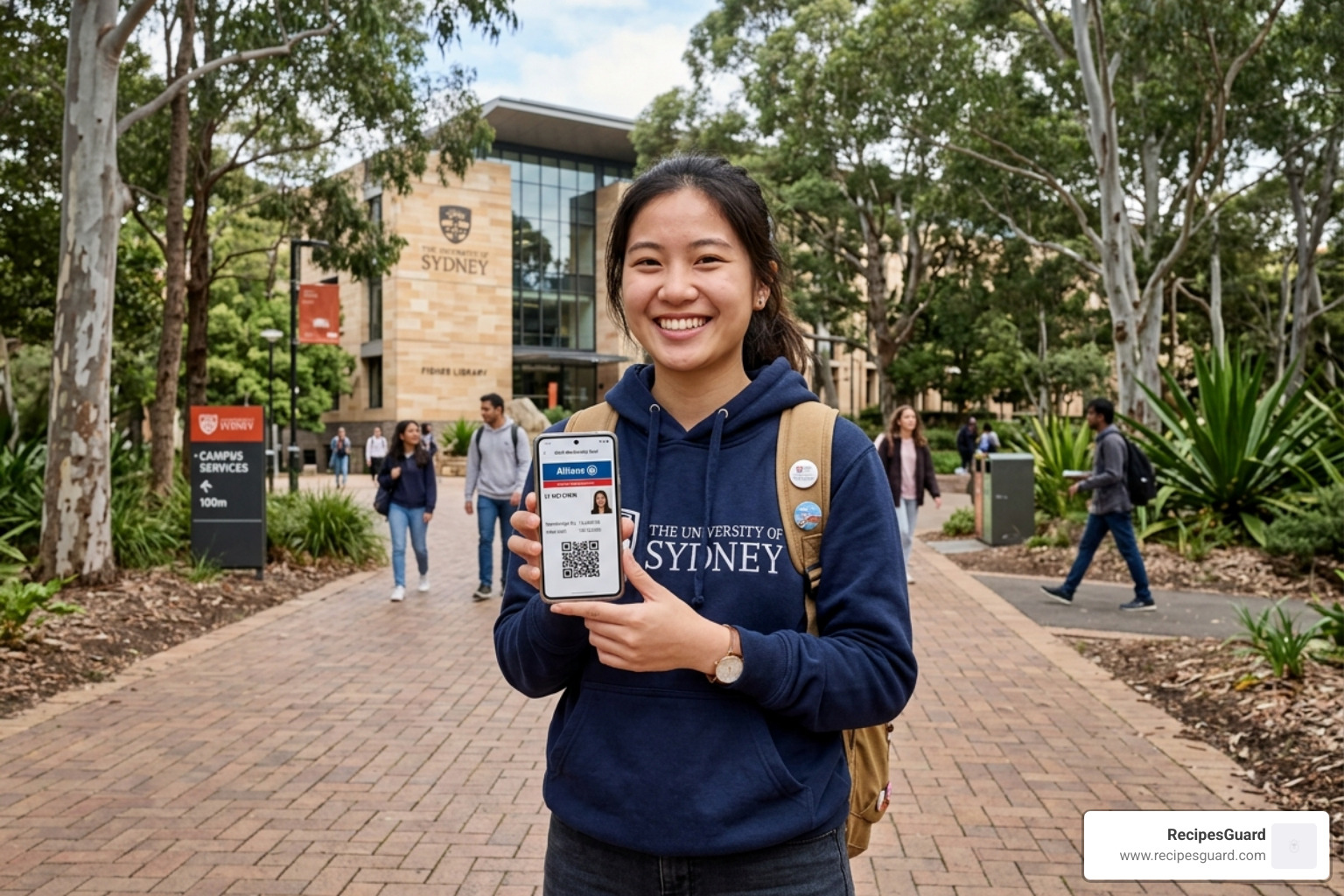
Many students simply buy the OSHC recommended by their university because it’s easy. It’s often included in your “Offer of Admission” letter. However, you are not required to use the university’s preferred provider. You are free to shop around and buy independently.
Once you buy your policy, you’ll receive a Certificate of Insurance. You’ll need the policy number for your visa application. When you arrive in Australia, make sure to download your provider’s app to access your digital membership card—you’ll need this every time you visit a doctor.
Switching Providers and Requesting Refunds
Can you change your mind? Yes! If you find a cheaper deal or prefer a different provider’s app, you can switch.
The Golden Rule of Switching: Never cancel your old policy until the new one is active. You must have continuous coverage to stay visa-compliant.
You can also get a refund if:
- Your visa was refused by the Department of Home Affairs.
- You finished your studies and are leaving Australia earlier than expected.
- You have been granted Permanent Residency.
- You decided to switch providers (you’ll get a pro-rata refund for the remaining months).
To get a refund, you’ll usually need to provide proof (like a flight ticket or a visa grant letter). For more details on the administrative side, check out Overseas Student Health Cover – Duration & Costs | Australian National University.
Frequently Asked Questions about OSHC
Can I switch my OSHC provider mid-stay?
Absolutely. You can switch at any time. You’ll need to buy the new policy first to ensure there is no gap in cover, then apply for a refund from your old provider. Most companies will give you a “pro-rata” refund, meaning they pay back the months you didn’t use.
What happens to my OSHC if I graduate early?
If you finish your degree six months early and decide to head home, you don’t have to lose that money. Contact your insurance provider, provide proof of your early completion and your flight details, and you can claim a refund for the remaining months on your policy.
Does OSHC cover dental and optical treatments?
No, basic OSHC does not cover dental check-ups, glasses, or contact lenses. You would need to purchase a separate “Extras” policy to get these benefits. Some providers offer “bundles” for students, but these come at an additional monthly cost.
Conclusion
Navigating Australian health insurance can feel like trying to read a textbook in a language you haven’t quite mastered yet. But understanding how much is overseas student health cover is the first step toward a stress-free study experience. By comparing 2026 rates, you can save enough money to cover a few months of textbooks (or a lot of coffee!).
OSHC is your safety net. While it’s a visa requirement, its real value is in making sure a sudden illness doesn’t end your Australian dream prematurely.
At RecipesGuard, we specialize in helping students like you navigate the “what happens next” part of insurance. If you’ve had a medical visit and are staring at a pile of confusing receipts, we provide step-by-step tutorials on how to file your claims correctly the first time. Our goal is to make sure you get your money back as quickly as possible so you can focus on what really matters—your education.
For more guides on managing your health expenses or to see our latest claim-filing tutorials, visit RecipesGuard. We’re here to help you stay healthy, wealthy (relatively speaking!), and wise while you study down under.

My name is Bianca, and my journey into the world of fermentation and food safety began with a costly mistake. I once lost an entire season’s harvest of chili peppers because I relied on guesswork instead of science. That failure was my turning point.
