
Don’t Get Barred from Returning by Missing Your Pre-Departure Claim
What a Pre-Departure Exclusion Claim Actually Means (And Why It Matters)
A pre departure exclusion claim is a formal step you can take in Canadian immigration law to challenge or respond to an exclusion order before you leave Canada — and getting it wrong can bar you from returning for one to five years.
Quick answer for those in a hurry:
- A pre-departure exclusion claim lets you contest an exclusion order issued by the CBSA or Immigration Division before departure
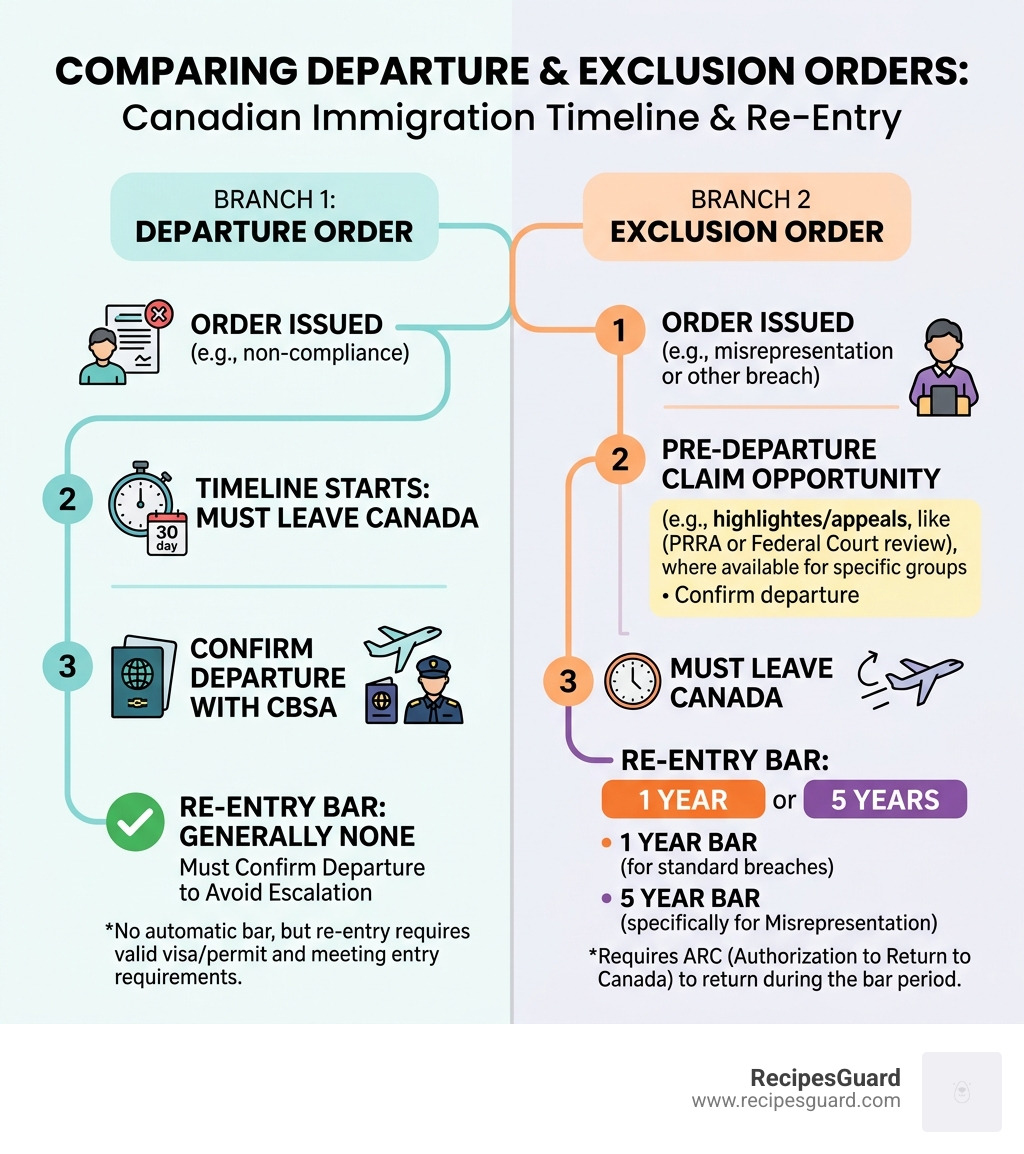
- An exclusion order requires you to leave Canada and bars re-entry for one year (or five years if misrepresentation was involved)
- You must confirm your departure with the CBSA when you leave
- If you fear returning to your home country, you can apply for a Pre-Removal Risk Assessment (PRRA)
- Permanent residents may appeal to the Immigration Appeal Division (IAD) — foreign nationals generally cannot, but can seek Federal Court review
- Time is critical — deadlines are strict and missing them can convert your situation into something much harder to fix
If you are an international student in Canada and you have just received a removal order, the clock is already running. An exclusion order is not the same as being asked to leave politely. It is a legal order with real consequences for your ability to come back to Canada — whether for school, work, or family.
What makes this especially confusing is that not all removal orders are the same. A departure order, an exclusion order, and a deportation order each carry different rules, different deadlines, and different paths forward. Mixing them up — or waiting too long — can turn a fixable situation into a permanent one.
The difference between acting in time and missing your window could mean years before you can return.
Pre departure exclusion claim word roundup:
- Pre-existing Condition Exclusion
- Self-Inflicted Injury Exclusion
- Travel Insurance Exclusion
Understanding the Pre-Departure Exclusion Claim in Canadian Law
In the high-stakes world of Canadian immigration, a pre departure exclusion claim essentially acts as your final opportunity to address an exclusion order before the Canada Border Services Agency (CBSA) enforces it. This isn’t just a bureaucratic hurdle; it’s a legal process that determines how long you’ll be barred from the country.
When the Immigration Division or a CBSA officer determines a person is “inadmissible”—perhaps due to a visa overstay or a more serious issue like misrepresentation—they issue a removal order. Understanding the Benefits, Scope and Exclusions of your legal status is vital. If you’ve been issued an exclusion order, you are legally required to leave Canada and, crucially, you must confirm your departure with the CBSA. If you leave without that confirmation, your order can automatically upgrade to a much more severe deportation order.
Differences Between Removal Orders
Navigating these terms can feel like alphabet soup, but the distinctions are massive:
- Departure Order: This is the “lightest” version. You must leave Canada within 30 days. If you follow the rules and confirm your exit, there is usually no bar to returning in the future.
- Exclusion Order: This is what triggers a pre departure exclusion claim. It bans you from Canada for one year (or five years for misrepresentation). You need an Authorization to Return to Canada (ARC) if you want to come back sooner.
- Deportation Order: This is a permanent bar. You can only return if you successfully apply for an ARC, and these are notoriously difficult to obtain.
Consequences of an Unsuccessful Claim
If your pre departure exclusion claim or appeal fails, the consequences are immediate. You will be barred for either one or five years. This stays on your permanent record, which can make getting future visas to other countries (like Australia or the US) significantly harder.
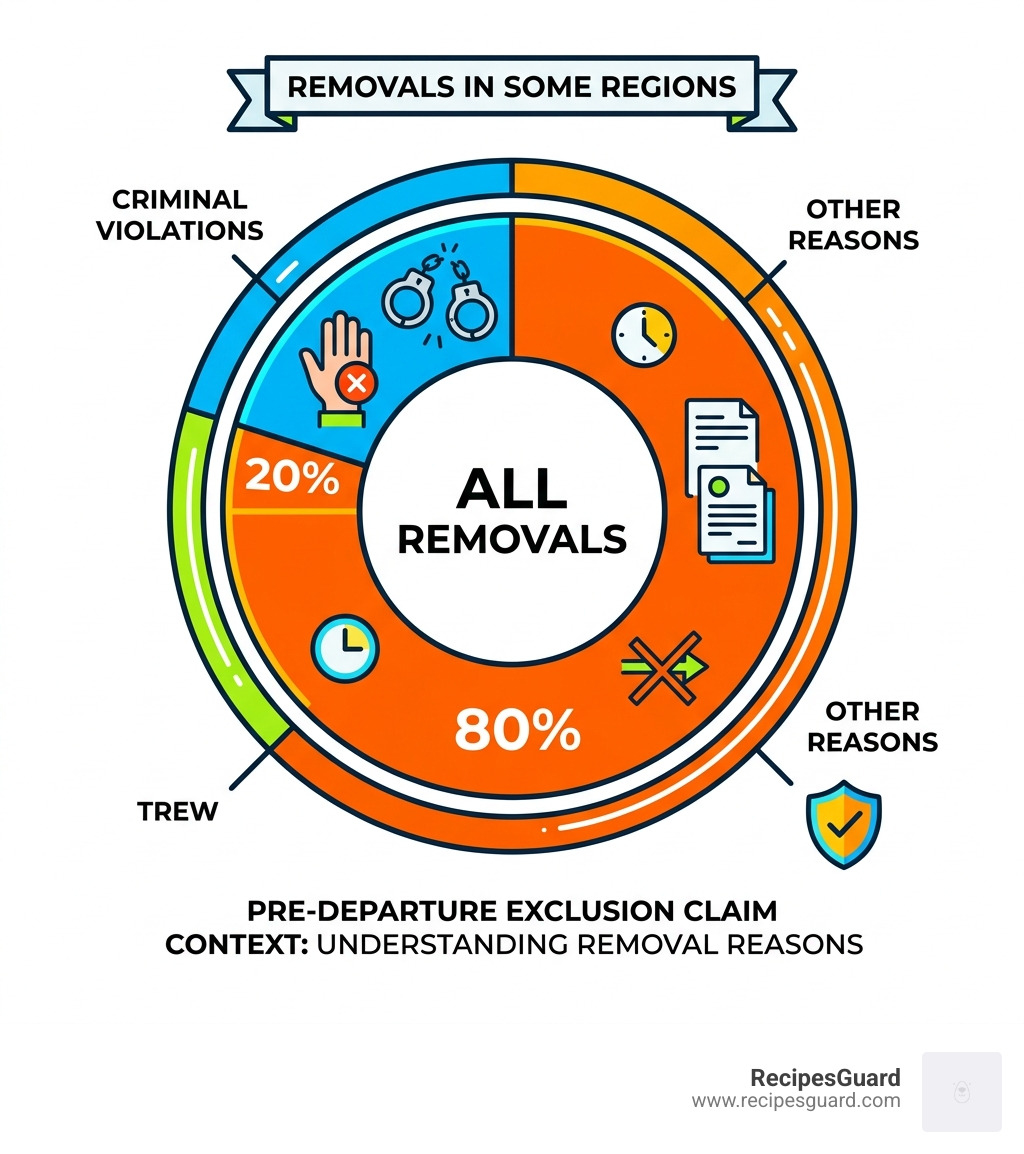
Furthermore, the CBSA prioritizes removals involving national security or serious criminality. Approximately 8% of enforced removals require escorts by CBSA officers. If you fail to cooperate, you might find yourself detained or escorted out, and the government may later seek to recover those enforcement costs from you if you ever try to return.

How to File a Pre-Departure Exclusion Claim Before Leaving Canada
Filing a pre departure exclusion claim is a procedural race against time. The goal is often to stay the removal (pause it) while your case is reviewed. We always recommend seeking professional legal help immediately because, in immigration law, “time is of the essence.”
The process typically involves:
- Receiving the Order: You are served with the exclusion order by a CBSA officer or the Immigration Division.
- Assessment of Avenues: You must determine if you have a right to appeal to the Immigration Appeal Division (IAD) or if you must go to the Federal Court.
- Filing the Application: This involves submitting specific forms and written arguments explaining why the order was issued in error or why you should be allowed to stay.
- The Interview: You may be called for a removal interview where you must present your travel documents and discuss your departure arrangements.
Understanding Exclusions in your legal defense is just as important as knowing what is covered.
Eligibility Requirements for a Pre-Departure Exclusion Claim
Not everyone can make a pre departure exclusion claim with the same level of success.
- Foreign Nationals: Generally do not have a right to appeal to the IAD. Their main avenue is challenging the decision in the Federal Court of Canada.
- Permanent Residents: Usually have a right to appeal to the IAD, unless the order was based on serious criminality (a sentence of 6 months or more), organized crime, or security grounds.
- Humanitarian Grounds: In some cases, you can argue that your removal would cause “unusual and undeserved or disproportionate hardship.”
Deadlines and Time Limits in April 2026
As of April 2026, the statutory stay of removal is strictly enforced. If you are issued a Departure Order, you have exactly 30 days to leave and confirm your exit. If you are filing for a judicial review in the Federal Court, you often have only 15 to 30 days from the date of the decision to file your leave for appeal. Missing these windows effectively ends your legal right to remain while your case is heard.
Essential Evidence and Documentation for Your Case
To win a pre departure exclusion claim, you need more than just a good story; you need a mountain of evidence. The CBSA and the courts look for objective proof that the exclusion order is either legally flawed or that your removal would lead to extreme risk.
Documentation Needed for a Pre-Departure Exclusion Claim
We suggest organizing your file with the following:
- Proof of Rehabilitation: If the order is based on a criminal record, show evidence of counseling or community service.
- Family Ties: Birth certificates of Canadian-born children or marriage certificates to Canadian citizens.
- Medical Records: Documentation of any health conditions that cannot be treated in your home country.
- Employment History: Tax returns and pay stubs showing your contribution to the Canadian economy.
- Country Condition Reports: Expert reports on the safety and political climate of your destination country.
The Role of Pre-Removal Risk Assessment (PRRA)
If you truly fear for your life, the PRRA is your most important tool. It assesses whether you face a risk of torture, a risk to your life, or a risk of cruel and unusual treatment if returned to your country of habitual residence. If you are eligible to apply for a PRRA, your removal is usually stayed (paused) until a decision is made. This is a crucial part of a pre departure exclusion claim strategy for those from volatile regions.

Navigating Travel Insurance and Immigration Exclusions
This is where we at RecipesGuard see students get caught out most often. If you are ordered to leave Canada, your student health and travel insurance policies are often thrown into chaos. Most policies have very specific International travel insurance premium, excess and claims guide rules regarding “criminal acts” or “illegal presence.”
Impact of Removal Orders on Student Policies
When a removal order is issued, your visa is often effectively cancelled. This can trigger “moral hazard” or “adverse selection” clauses in insurance. Essentially, if your presence in Canada becomes unlawful, your insurance company may argue that they are no longer liable for your medical costs or trip interruptions.
- Visa Cancellation: Most student policies require a valid study permit. If that’s gone, your coverage might be too.
- Academic Deferral: If you have to leave mid-semester, you might lose your tuition. Some “Lifestyle Paks” in premium insurance offer tuition reimbursement, but these often exclude removals due to immigration violations.
Filing a Pre-Departure Exclusion Claim for Trip Costs
If you have to cancel your flight home or book a last-minute ticket due to an exclusion order, can you claim the cost? Generally, no. Most travel insurance policies explicitly exclude “loss or damage caused by detention, confiscation or destruction by customs” or “any criminal acts committed by you.”
However, if you are making a claim for a different reason—say, you got sick before the removal order was issued—you’ll need to provide the adjuster with:
- Proof of Loss: Original receipts and itineraries.
- Adjuster Calculations: Ask for a line-by-line breakdown of why they may only be offering a partial payment.
- Non-refundable Vouchers: Show that you’ve tried to get a refund from the airline first.
Challenging Decisions Through Appeals and Judicial Review
If your initial pre departure exclusion claim is denied, you aren’t necessarily out of options, but the road gets much steeper. You move from the administrative realm of the CBSA into the judicial realm of the Federal Court.
When to Seek Judicial Review
You can ask the Federal Court to review the decision if you believe there was an “error of law” or a breach of “procedural fairness.” For example, if the officer ignored evidence of your risk in your home country, that’s a grounds for review. You must first apply for “leave” (permission) from the court. If leave is granted, a judge will hear your case. This process often includes an application for an “emergency stay of removal” to keep you in Canada until the judge decides.
While you are navigating these Canadian hurdles, don’t forget that other countries have their own systems. For instance, the Tourist Refund Scheme (TRS) – Australian Border Force is something to look into if you are heading to Australia next, though it deals with tax refunds rather than immigration status.
Limitations for Permanent Residents
Permanent residents have more rights, but they aren’t invincible. If you are found inadmissible for “serious criminality”—which means a crime in Canada with a sentence of at least six months—you lose your right to appeal to the IAD. Your only hope then is the Federal Court, which is much harder to win.
Frequently Asked Questions about Pre-Departure Claims
What happens if I fail to leave Canada after an exclusion order?
If you don’t leave within the 30-day window (for a Departure Order) or immediately (for an Exclusion Order), the CBSA will issue a Canada-wide warrant for your arrest. You can be detained, and your removal order automatically becomes a Deportation Order, meaning you are barred for life unless you get an ARC.
Can I return to Canada early if my exclusion claim is denied?
Only if you obtain an Authorization to Return to Canada (ARC). You will have to explain why the reasons for your exclusion are no longer relevant and why you should be allowed back before your one-year or five-year bar has expired.
Does travel insurance cover the cost of a removal order?
In almost all cases, no. Travel insurance is designed for “unforeseen” events like accidents or natural disasters. Being ordered to leave the country due to a violation of immigration law is considered a “foreseeable” result of your actions and is a standard exclusion in nearly every policy worldwide.
Conclusion
Navigating a pre departure exclusion claim is one of the most stressful experiences a student can face. Between the tight 30-day deadlines, the risk of a five-year bar, and the complexity of the Federal Court, it’s easy to feel overwhelmed.
At RecipesGuard, we specialize in helping students understand the fine print. While we focus on the insurance side of the house—helping you navigate tuition refunds and medical coverage during transitions—we know that your immigration status is the foundation of your journey. If you are facing an exclusion order, act today. Don’t let a simple mistake turn into a five-year ban from your dreams.
For more detailed guides on how to protect your student journey, check out More info about our student travel guides.

My name is Bianca, and my journey into the world of fermentation and food safety began with a costly mistake. I once lost an entire season’s harvest of chili peppers because I relied on guesswork instead of science. That failure was my turning point.
