
A Student Guide to Not Staying Suitcaseless After Your Flight
That Sinking Feeling at the Carousel: What Every Student Needs to Know
A claim lost bag guide is exactly what you need when your suitcase doesn’t show up after a flight — and it happens more often than you’d think.
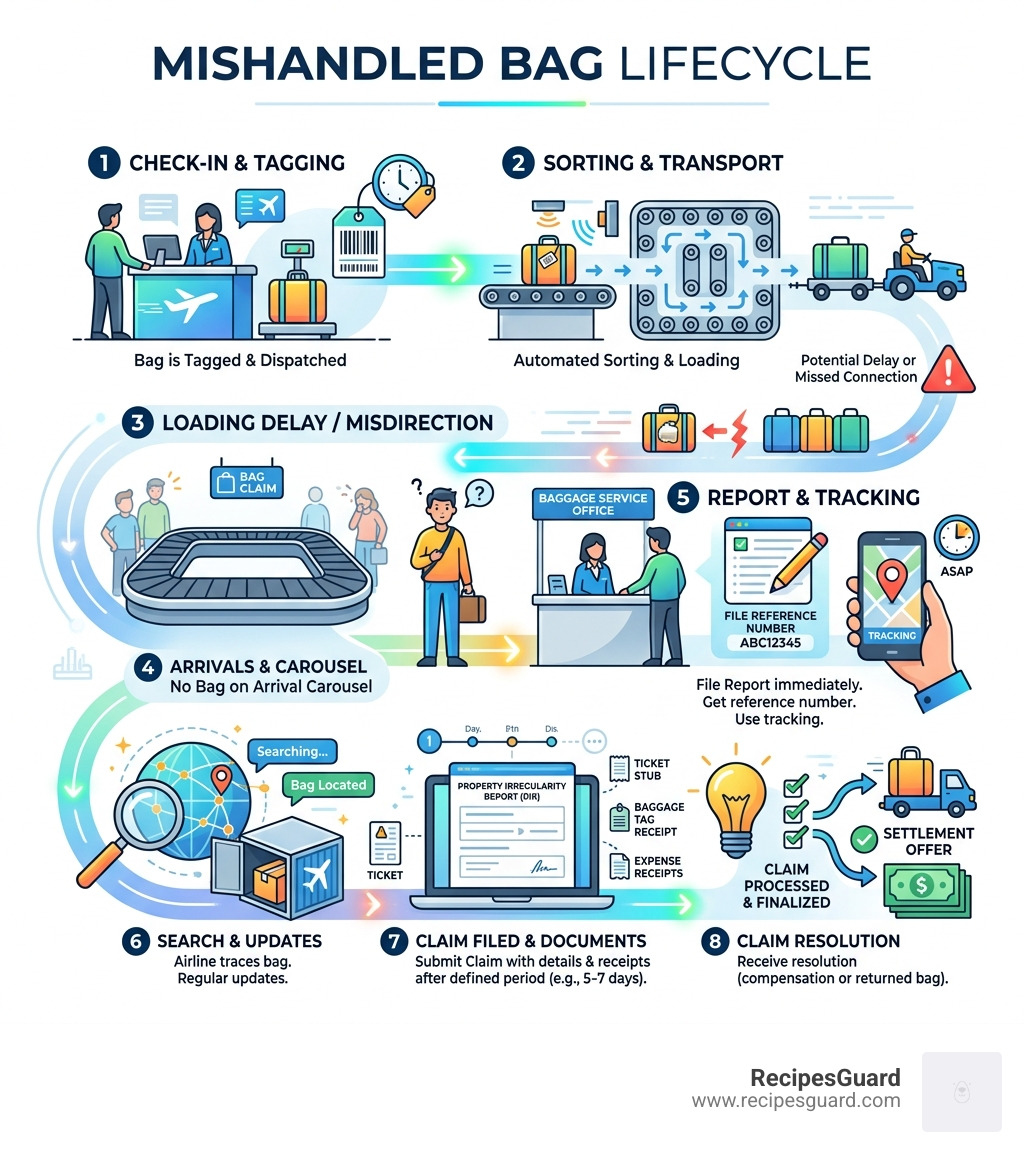
Here’s the short version of what to do:
- Don’t leave the airport. Go straight to the airline’s Baggage Service Office and file a report before you exit.
- Get a file reference number. You’ll need this for every follow-up.
- Track your bag using the airline’s app or your AirTag if you have one.
- Keep every receipt for anything you buy while your bag is missing — toiletries, clothes, essentials.
- Know your deadline. For most U.S. domestic flights, you have 24 hours to report a missing or damaged bag.
- File a formal lost bag claim if your bag hasn’t turned up within 5 days.
As a student traveling abroad, losing your luggage is stressful enough on its own. Add in unfamiliar airports, tight budgets, and zero experience navigating airline claim processes — and it can feel completely overwhelming.
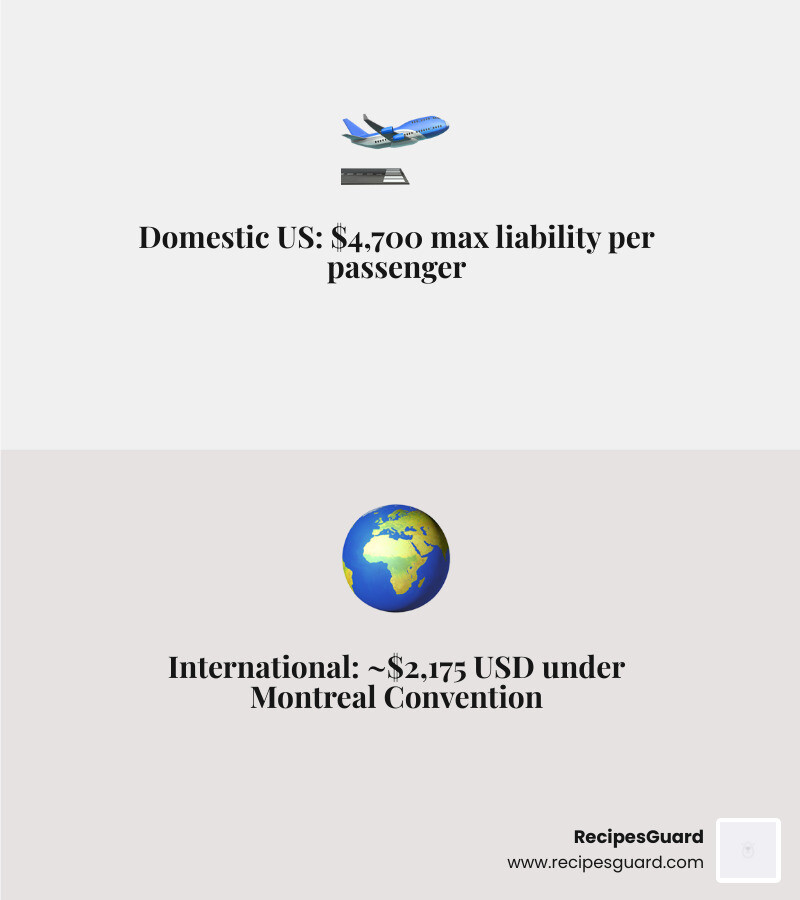
The good news? You have real legal protections. U.S. regulations cap airline liability at $4,700 per passenger on domestic flights. International flights covered by the Montreal Convention give you up to 1,519 Special Drawing Rights (roughly $2,175 USD). And if your bag is delayed, airlines may owe you $50 per day for up to five days to cover essential purchases.
You just have to know how to claim it.
Similar topics to claim lost bag guide:
- australia student luggage insurance
- baggage delay insurance
- travel insurance luggage damage
The Ultimate Claim Lost Bag Guide for Students
When that last suitcase tumbles off the belt and it isn’t yours, the clock starts ticking. For a student on a budget, every hour without your gear is an hour of stress. This is where your journey into the airline’s “Baggage Service Office” (BSO) begins. Usually located right near the carousels, this office is your command center for recovery.
The most critical piece of paper you will receive is the Property Irregularity Report (PIR), which contains your File Reference Number. This is usually a 9 to 13-character alphanumeric ID (like SYDVA12345). Without this number, you essentially don’t exist in the airline’s tracking system. If you’re studying abroad, we recommend checking out The Baggage Claim Survival Guide For Students to help manage the logistics of moving between student housing and airports.
For those of us in Australia, local consumer laws provide robust protections. You can find more details in The Ultimate Guide To Missing Bag Compensation In Australia to ensure you are getting the full benefit of Australian regulations.
Step 1: Initiating the Claim Lost Bag Guide at the Airport
The absolute golden rule: Never leave the airport without filing a report. While some airlines now allow you to file via their mobile app or by scanning a QR code at the carousel, talking to a human agent at the BSO is often the safest bet.
Airlines like Delta Air Lines have strict reporting windows. For domestic flights, you often only have 24 hours to report a delay or damage, but some airlines are moving toward even tighter windows—as short as 4 to 6 hours for specific types of claims. If you walk out that sliding glass door without a file reference number, the airline can claim the bag was lost or damaged after you left their care.
Pro Tips for Your Claim Lost Bag Guide Documentation
Filing a claim is a lot like writing a research paper—it’s all about the evidence. To get paid, you need to prove what you lost and what it was worth. We suggest keeping digital copies of everything.
- Itemized Receipts: If you bought a new suit for an internship or expensive textbooks, have those receipts ready.
- Baggage Tags: Never throw away that little sticker they put on the back of your boarding pass until your bag is safely in your room.
- Photo Evidence: Take a photo of the outside of your bag and the contents inside before you check it.
For a deeper dive into the paperwork side of things, see our guide on Essential Baggage Loss Claim Documents You Need Right Now.
Understanding Airline Liability: Domestic vs. International Rules
Liability isn’t a flat rate; it depends entirely on where you are flying. Two major legal frameworks govern your rights: the Montreal Convention and U.S. DOT regulations.
Domestic Flight Protections
For domestic travel within the United States, the Department of Transportation (DOT) sets a high bar. As of May 2026, the liability limit is $4,700 per passenger. This doesn’t mean you automatically get $4,700; it means that is the maximum the airline is required to pay for the “actual cash value” of your lost items.
Interestingly, for domestic flights, airlines are also required to refund your checked baggage fees if your bag isn’t delivered within 12 hours of you arriving at the gate. Furthermore, assistive devices like wheelchairs have no liability limit on domestic flights—airlines must pay the full original purchase price if they are destroyed.
International Treaty Coverage
Most international flights are covered by the Montreal Convention. Instead of a fixed dollar amount, liability is measured in “Special Drawing Rights” (SDR). Currently, the limit is 1,519 SDR, which is roughly $2,175 USD.
Under these rules, a bag is officially “lost” if it hasn’t arrived within 21 days. Once that three-week mark hits, you transition from a “delayed bag” claim to a “lost bag” settlement. If you are flying with Virgin Australia, be sure to check their specific international timelines, as they can vary slightly based on the destination.
Maximizing Reimbursement for Delayed and Damaged Luggage
If your bag is delayed, you shouldn’t have to spend your semester’s grocery money on a new toothbrush and clean clothes. Airlines are required to reimburse “reasonable” incidental expenses. While many airlines suggest a guideline of $50 USD per day for the first five days, this is not a legal cap. If you are a student traveling for a formal event or a job interview, “reasonable” might include the cost of a rental suit or professional attire.
To ensure you get the maximum possible payout, read our advice on How To Get The Best Luggage Compensation Payouts.
Handling Damaged Bags and Missing Items
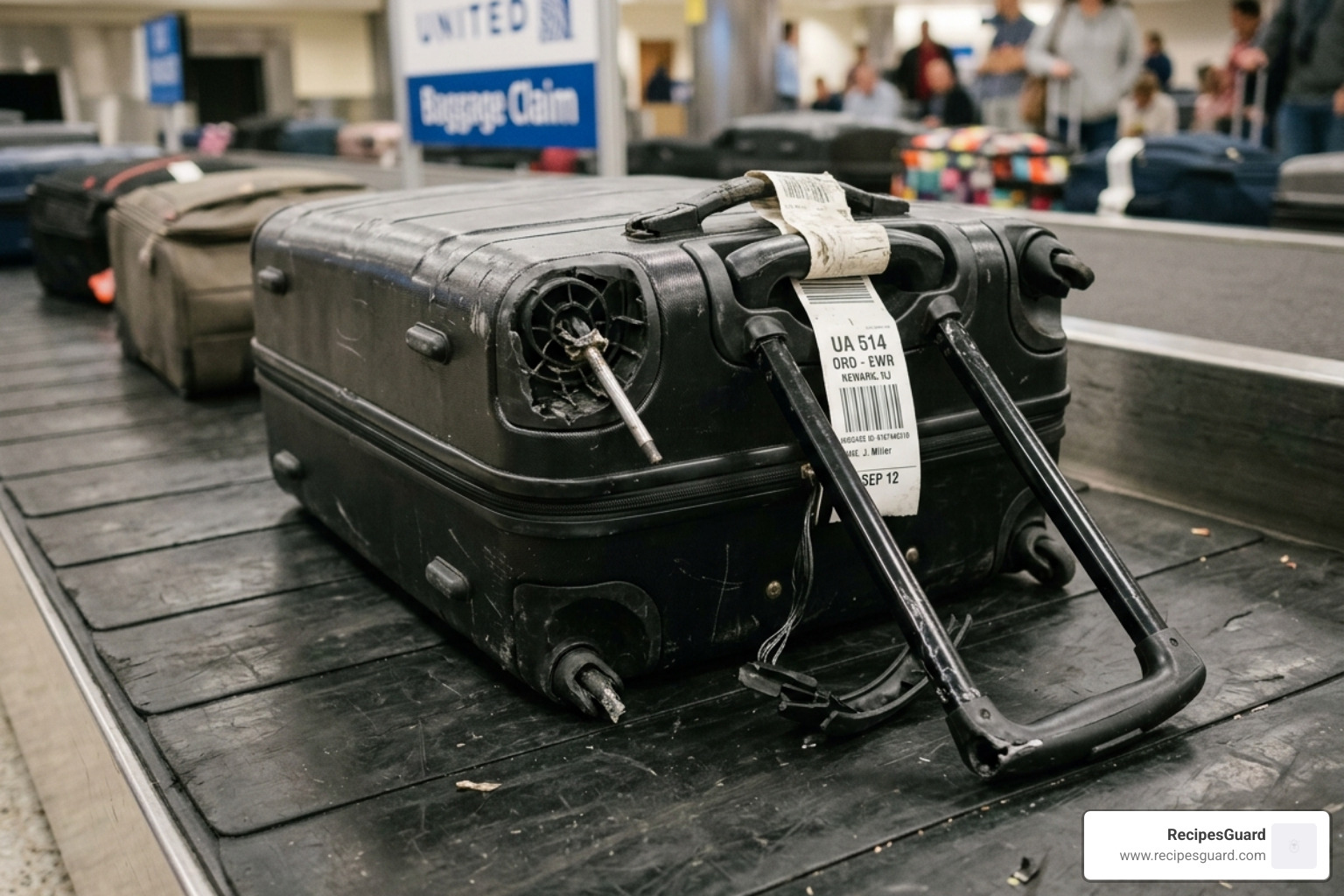
If your suitcase comes off the belt looking like it went ten rounds with a heavyweight boxer, you need to act fast. Many airlines, including American Airlines, require damage to be reported within 24 hours for domestic flights and 7 days for international flights.
However, airlines usually won’t pay for “normal wear and tear.” This includes minor scratches, scuffs, or damage resulting from overpacking (like a burst zipper). If you find a “Notice of Baggage Inspection” inside your bag and items are missing, you may actually need to file a claim with the TSA rather than the airline.
Bag Fee Refunds and Interim Costs
Don’t forget about your baggage fee! If your bag is significantly delayed—usually defined as 12 hours for domestic flights—you are entitled to a refund of the fee you paid to check that bag. For international flights, the threshold is typically 15 to 30 hours. This is an automatic right, but you often have to prompt the airline to actually process the refund. For more on this, see The Baggage Delay Claim Process Explained For Weary Travelers.
Leveraging Tech and Insurance for Lost Suitcases
In 2026, we don’t just wait for the airline to tell us where our bags are; we tell them.
Apple AirTags and the Find My Network
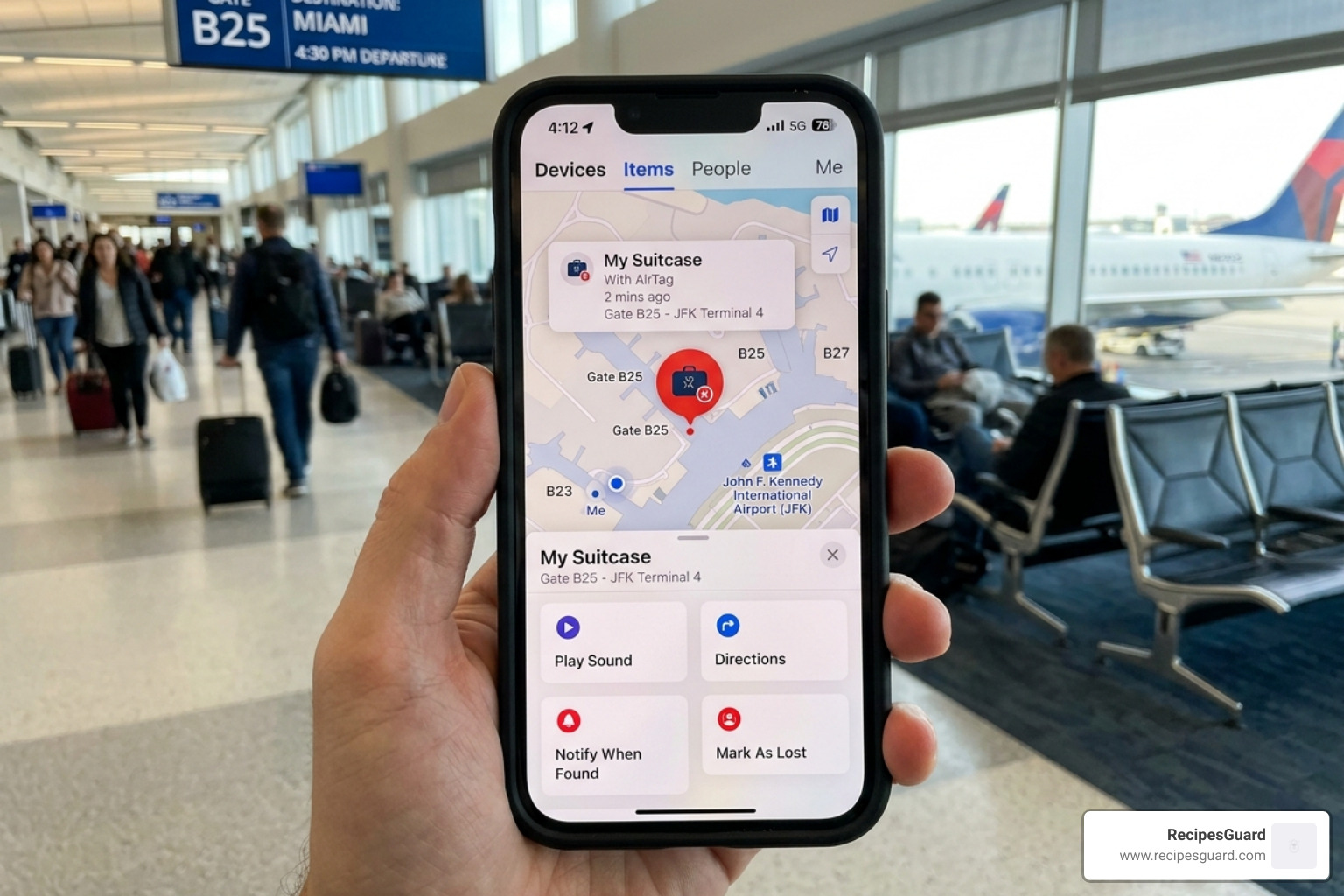
Using an AirTag is a game-changer for students. You can see exactly where your bag is—whether it’s still at your layover city or sitting in a back room at your destination. Modern airline apps now even allow you to share a “Find My” location link directly with the baggage agent. This speeds up the process significantly because it eliminates the guesswork for the airline staff.
If you’re wondering if third-party insurance is worth it, check out Lost Luggage Insurance 101.
Credit Card and Secondary Insurance Benefits
Many students don’t realize that the credit card they used to book the flight might have better insurance than the airline. Cards like the Chase Sapphire series often offer baggage delay coverage (reimbursing you after just 6 hours of delay) and lost luggage reimbursement that covers the gap between what the airline pays and what your items were actually worth.
Additionally, your parents’ homeowner’s or renter’s insurance might actually cover your belongings while you’re traveling! You can learn more about these layers of protection in The Ultimate Guide To Stolen And Delayed Luggage Insurance.
Exclusions and Packing Strategies
Prevention is the best claim lost bag guide strategy. Airlines have a long list of items they won’t pay for if they go missing from a checked bag. This usually includes:
- Cash and negotiable papers
- Jewelry and watches
- High-value electronics (laptops, tablets)
- Critical medications
- Irreplaceable documents (passports, visas)
Always pack these in your carry-on. The TSA also recommends removing any loose straps or hooks from your bags before checking them, as these are the primary cause of bags getting stuck and damaged in conveyor systems.
Frequently Asked Questions about the Claim Lost Bag Guide
When is a bag officially considered lost?
While every airline is a bit different, the general industry standard is between 5 and 21 days. Most airlines, like United Airlines, allow you to file a “Permanent Loss Claim” after the bag has been missing for 5 days. However, legally, under the Montreal Convention, the bag isn’t “lost” until day 21.
Can I get a refund for my checked bag fee?
Yes! If your bag is delayed more than 12 hours on a domestic flight, the airline must refund your baggage fee. This is a DOT requirement. For international flights, the rules are slightly more complex, often requiring a delay of 15 to 30 hours depending on the flight length. Check the Qantas AU baggage page for specific international examples.
What if the TSA damaged my bag during screening?
If your bag was damaged by security personnel, the airline isn’t responsible. You must file a claim through the TSA’s passenger support portal. Be sure to keep the “Notice of Inspection” card that was left inside your bag, as you’ll need the info on it to file your claim. You can also call their support line at 866-289-9673.
Conclusion
Losing a bag is a rite of passage for many travelers, but it doesn’t have to ruin your trip or your bank account. By following this claim lost bag guide, staying organized with your receipts, and knowing your rights under the Montreal Convention and DOT rules, you can ensure you’re fairly compensated.
At RecipesGuard, we specialize in helping students navigate the complex world of insurance and airline claims. Whether you’re dealing with a smashed suitcase or a missing backpack full of textbooks, we provide the step-by-step tutorials you need to get back on your feet.
For more expert advice and student-focused travel tips, check out More info about travel insurance services and let us help you protect your next adventure. Safe travels!

My name is Bianca, and my journey into the world of fermentation and food safety began with a costly mistake. I once lost an entire season’s harvest of chili peppers because I relied on guesswork instead of science. That failure was my turning point.
