
Step-by-Step Guide: How to Successfully Claim Your Trip Cancellation Refund
When Your Trip Falls Apart: What You Need to Know About Filing a Cancellation Claim
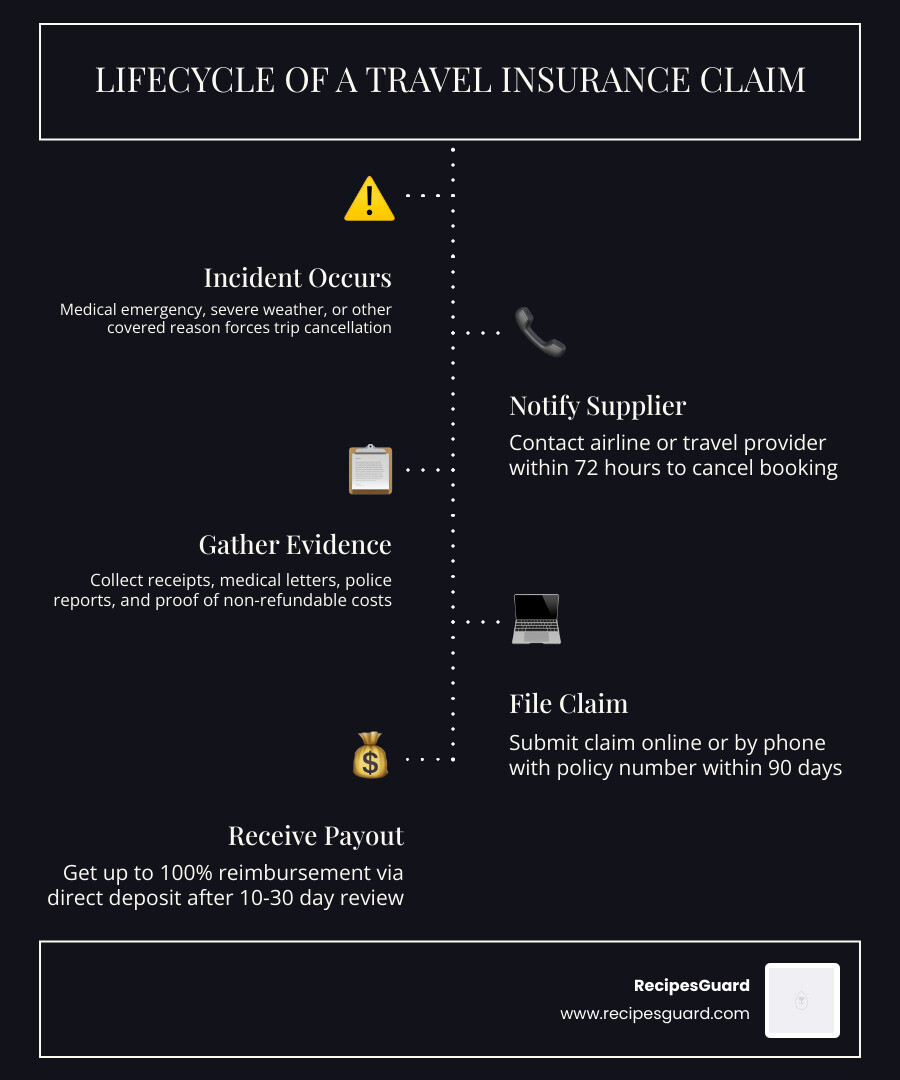
How cancel trip claim reimbursement works comes down to three core steps: cancel with your airline or travel supplier, gather your supporting documents, and file a claim with your insurance provider.
Here’s the quick version:
- Cancel your flight or booking with the airline or travel supplier as soon as you decide to cancel
- Gather your documents — receipts, medical letters, police reports, or whatever proves your reason for canceling
- File your insurance claim online or by phone within 90 days of your loss
That’s the process in a nutshell. But the details matter a lot — especially if you want to get the full amount back.
Travel doesn’t always go to plan. A medical emergency, a family crisis, or a sudden natural disaster can wipe out a trip you’ve spent months planning — and thousands of dollars booking.
For international students especially, this hits hard. You’re dealing with non-refundable flights, prepaid accommodation, and a claims process you’ve probably never navigated before — all while managing the stressful situation that caused the cancellation in the first place.
The good news: trip cancellation insurance can reimburse up to 100% of your prepaid, non-refundable travel costs — if your reason is covered and you follow the right steps.
This guide walks you through exactly how to do that.
How cancel trip claim terms made easy:
- Cancel for Any Reason Plan
- Holiday Insurance Cancellation Due to Illness
- Student Travel Claim Process
Understanding Trip Cancellation Insurance vs. CFAR Coverage
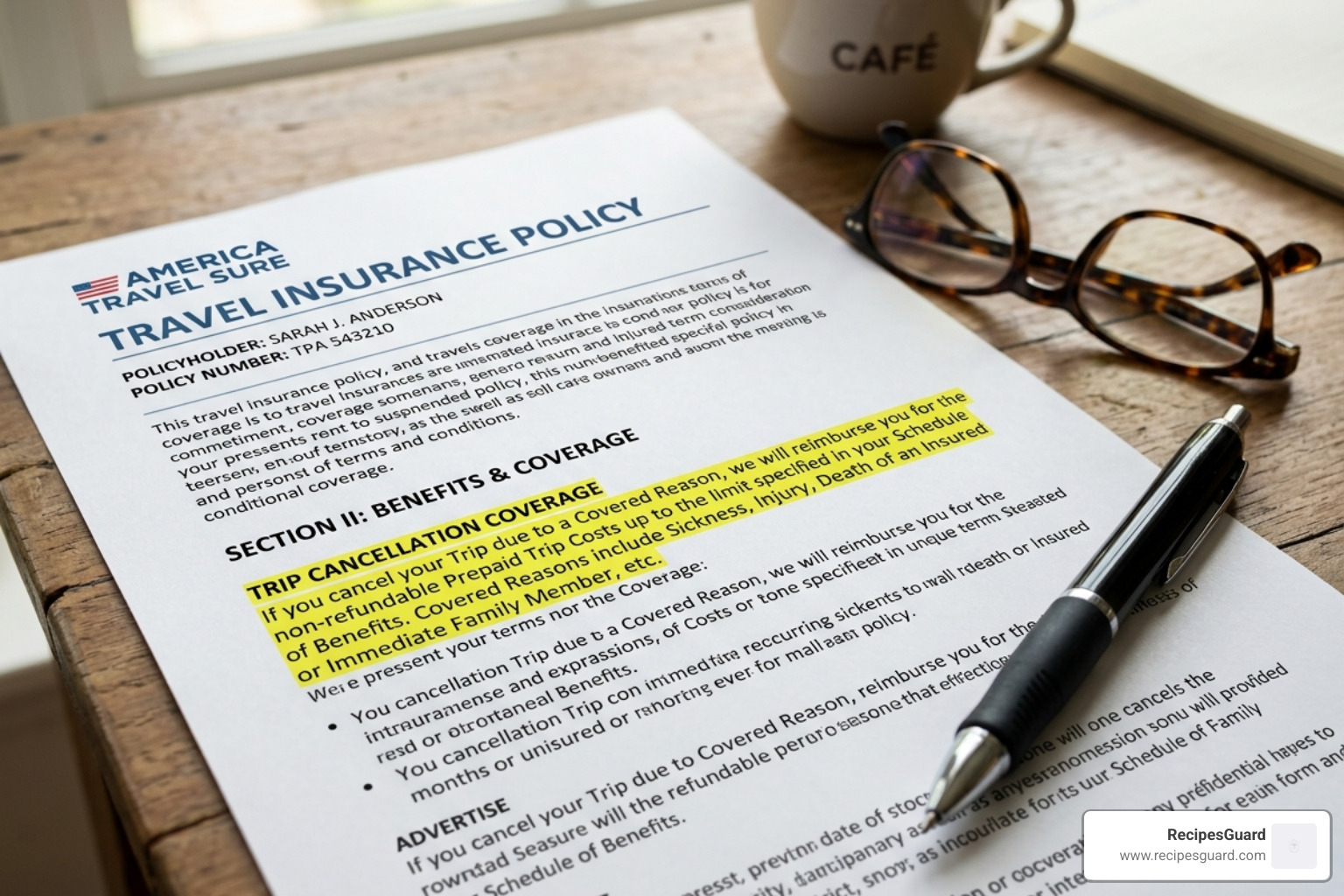
When we talk about how cancel trip claim procedures work, we first need to distinguish between standard trip cancellation and its more flexible cousin, Cancel For Any Reason (CFAR).
Standard trip cancellation insurance is a “named perils” benefit. This means it only pays out if you cancel for a reason specifically listed in your policy. Common covered reasons include things like a sudden illness, a death in the family, or a natural disaster that makes your destination uninhabitable. If your reason isn’t on that list—say, you just changed your mind or your pet got sick—a standard policy won’t help you.
The primary goal of this insurance is to protect your “prepaid, non-refundable” costs. This includes things like flight tickets, hotel deposits, and tour fees that you wouldn’t get back otherwise. For a deeper dive into the health-related side of this, check out A Travelers Guide To Canceling Trips For Medical Reasons.
The Benefits of Cancel For Any Reason (CFAR)
If you want the ultimate safety net, CFAR is the way to go. This is an optional add-on that, as the name suggests, lets you walk away from your trip for literally any reason—whether it’s a breakup, a new job, or just a bad vibe about the destination.
However, there are three major catches to keep in mind for 2026:
- Cost: Adding CFAR typically increases your premium by 40% to 50%.
- Reimbursement: While standard cancellation covers 100% of costs, CFAR usually only reimburses 50% to 75%.
- The Purchase Window: You must usually buy CFAR within 10 to 21 days of making your initial trip deposit. You also generally have to cancel at least 48 hours before your scheduled departure.
For students on a budget, we often recommend looking at Student Friendly Travel Insurance With Cancellation Coverage to see if standard coverage meets your needs before splurging on CFAR.
| Feature | Standard Trip Cancellation | Cancel For Any Reason (CFAR) |
|---|---|---|
| Reimbursement Amount | Up to 100% of non-refundable costs | 50% to 75% of non-refundable costs |
| Covered Reasons | Specific list (Illness, Weather, etc.) | Any reason at all |
| Cost | 4% to 8% of trip total | Standard premium + 40-50% extra |
| Notification Deadline | As soon as possible (usually 72 hrs) | At least 48 hours before departure |
Common Covered Reasons for 2026 Travelers
As we move through 2026, insurance providers have streamlined what counts as a “covered reason.” While every policy is different, most standard Australian policies include:
- Medical Emergencies: A sudden, disabling illness or injury to you, a travel companion, or a close family member.
- Severe Weather: Natural disasters like bushfires or cyclones that prevent travel or destroy your accommodation.
- Legal Obligations: Being called for jury duty or receiving a subpoena that can’t be rescheduled.
- Employment Changes: Involuntary job loss (redundancy) or being required to work by your employer if you are a first responder or military personnel.
- Stolen Documents: If your passport is stolen shortly before your flight and cannot be replaced in time.
How to File a Trip Cancellation Claim: A Step-by-Step Process
The moment you realize you can’t go on your trip, the clock starts ticking. The biggest mistake travelers make is waiting too long to act. Here is the exact sequence we recommend to ensure your how cancel trip claim journey is successful.
Step 1: Notify the Travel Suppliers Before you talk to your insurance company, you must cancel your bookings with the airline, hotel, or tour operator. Most policies require you to notify these suppliers within 72 hours of the event that caused the cancellation. If you wait longer, the insurance company might only reimburse you for the cancellation fees that would have applied if you had acted promptly.
For help with the airline side of things, How to change or cancel your flight – Travel Help is a great resource to understand the technical steps for major carriers.
Step 2: Request a Refund or Credit Always ask the supplier if they can give you a refund or a travel credit. Insurance only covers what the supplier won’t return. If the airline gives you a full refund, you don’t have a “loss” to claim. If they give you a partial refund, you claim the remaining balance.
Gathering Evidence for Your How Cancel Trip Claim
Documentation is the backbone of any insurance claim. Without proof, the insurance company has no way to verify your loss. Think of yourself as a detective gathering clues.
- Medical Attestations: If canceling for health reasons, you need a doctor’s note. In 2026, most insurers require the doctor to have examined you within 72 hours of the cancellation.
- Death Certificates: If a family member passes away, a copy of the death certificate is required.
- Police Reports: Necessary for claims involving car accidents on the way to the airport or stolen passports.
- The “No-Refund” Letter: You need written proof from the airline or hotel stating exactly how much of your money is non-refundable.
Students often find this part overwhelming, so we created The Student Guide To Getting Your Money Back After A Cancelled Trip to help you organize these files effectively.
Notifying Your Insurance Provider
Once you have your “proof of loss” and your cancellation confirmation from the airline, it’s time to head to your insurance provider’s website.
Most modern providers use a claim portal. You’ll need your policy number (found in your confirmation email) and the travel dates. You typically have 90 days from the date of the loss to file the claim, but earlier is always better. If you need to adjust your actual policy before the trip even starts, see our guide on How To Cancel Or Change A Student Travel Insurance Policy.
Essential Documentation and Timelines for Success
To maximize your chances of a payout, you need to be meticulous. We suggest creating a digital folder (like Google Drive or Dropbox) specifically for your how cancel trip claim evidence.
What to include in your digital folder:
- The original itemized receipts for all trip costs.
- The “Confirmation of Benefits” document from your insurer.
- Confirmation of cancellation from the airline/hotel.
- Documentation of any refunds or credits already received.
- Unused flight tickets or boarding passes.
If you are specifically dealing with a flight issue, you might find more tailored advice in How To Get Your Money Back After A Flight Cancellation.
Common Mistakes When Submitting a How Cancel Trip Claim
Even with the best intentions, small errors can lead to claim denials. Here are the pitfalls we see most often:
- Incomplete Forms: Skipping a single question can put your claim at the bottom of the pile.
- Missing Receipts: Insurers won’t just take your word for how much the hotel cost; they need the itemized bill.
- Delayed Notification: If you wait two weeks to cancel your flight after getting sick, the insurer may penalize you for the increased cancellation fees.
- Foreseeable Events: You can’t buy insurance after a hurricane is named or after you’ve been diagnosed with an illness and expect it to cover a cancellation for those reasons.
Avoid these “non-refundable nightmares” by reading our tips on Dont Get Stuck With A Non Refundable Nightmare.
Expected Reimbursement Timelines in 2026
How long until the money hits your bank account? In 2026, the industry standard for claim review is about 10 business days once all documentation is submitted.
If your claim is approved, choosing “Direct Deposit” is the fastest way to get paid. Physical checks can take an extra week or two to arrive in the mail. Most providers now offer real-time claim tracking through an app, so you can see exactly when an adjuster has looked at your file.
Navigating Epidemic and COVID-19 Related Cancellations
By 2026, COVID-19 is often treated as any other illness, but specific “Epidemic Coverage Endorsements” are still common. These endorsements can provide coverage if you are diagnosed with a covered epidemic disease (like COVID-19) and are ordered to quarantine or are denied boarding.
However, “fear of travel” due to a spike in cases is almost never a covered reason under standard policies. If you are worried about changing government advisories or border closures, this is where a Cancel For Any Reason policy becomes invaluable.
For real-time community advice on how others are handling these specific claims, checking active travel groups like those on Facebook can provide some “boots on the ground” perspective.
Frequently Asked Questions About Trip Claims
How much does trip cancellation insurance typically cost?
On average, a travel insurance plan that includes trip cancellation will cost between 4% and 8% of your total trip cost. For example, if you are booking a $5,000 trip to Europe, expect to pay between $200 and $400 for the policy. The price varies based on your age, the length of the trip, and the total non-refundable expenses you are insuring.
Can I get a refund for my insurance policy if I cancel the trip?
Most policies come with a “Free Look Period” (usually 15 days from purchase). If you cancel your trip within this window and haven’t filed a claim, you can usually get a full refund of your insurance premium. After this period, you might be eligible for a voucher or a partial refund depending on your state or territory’s regulations.
What should I do if the airline cancels my flight instead of me?
This is an “involuntary cancellation.” In this case, the airline is usually responsible for rebooking you or providing a full refund. Under rules like EU261 (for European flights) or similar Australian consumer protections, you may also be entitled to compensation for the delay. Insurance typically kicks in here to cover “trip interruption”—things like the extra hotel night you had to pay for because of the airline’s mistake.
Conclusion
Navigating a how cancel trip claim doesn’t have to be a nightmare. By staying organized, acting quickly, and understanding the difference between standard and CFAR coverage, you can protect your hard-earned money.
At RecipesGuard, we specialize in helping students navigate these complex insurance waters. Whether you’re studying abroad in Melbourne or heading home for the holidays, our step-by-step guides are designed to give you the confidence to travel—and the security of knowing you can get your money back if things go sideways.
Ready to secure your next adventure? More info about travel claim services is just a click away. Safe travels!

My name is Bianca, and my journey into the world of fermentation and food safety began with a costly mistake. I once lost an entire season’s harvest of chili peppers because I relied on guesswork instead of science. That failure was my turning point.
