
The Ultimate Guide to the Australia Student Medical Claim Form
What Every International Student Needs to Know About Making a Medical Claim in Australia
Australia student medical claim processes can feel overwhelming when you’re sick, far from home, and unsure where to start. The good news? Once you understand the system, it’s straightforward.
Here’s the quick answer for international students in Australia:
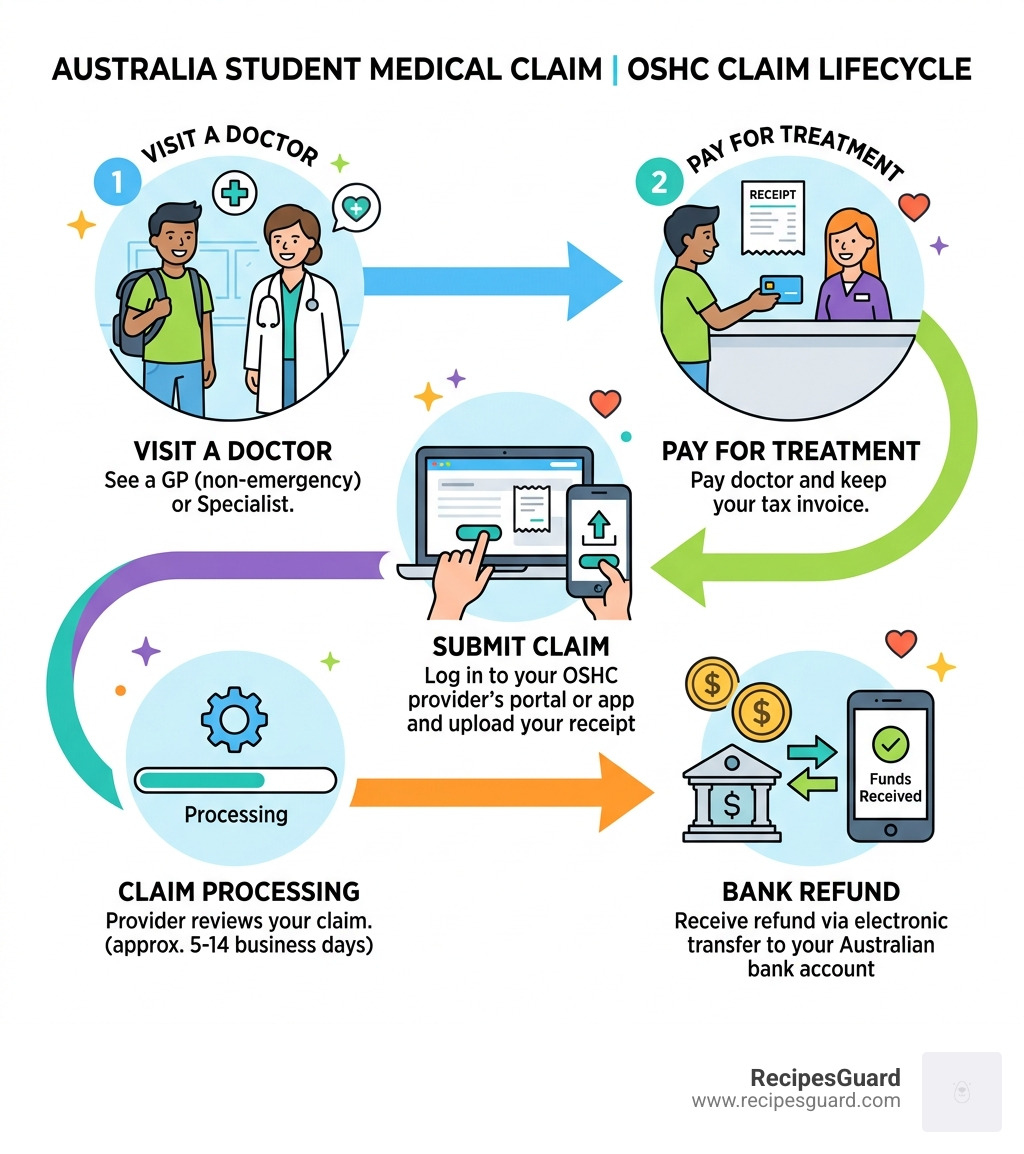
- Visit a doctor or hospital — go to a GP first for non-emergencies, or call 000 for emergencies
- Pay for your treatment (or ask if your provider does direct billing)
- Log in to your OSHC provider’s app or online portal (e.g., myBupa, Allianz MyHealth, Medibank app)
- Select “Make a claim” and upload your tax invoice or receipt
- Enter your Australian bank account details — refunds are paid by electronic transfer only
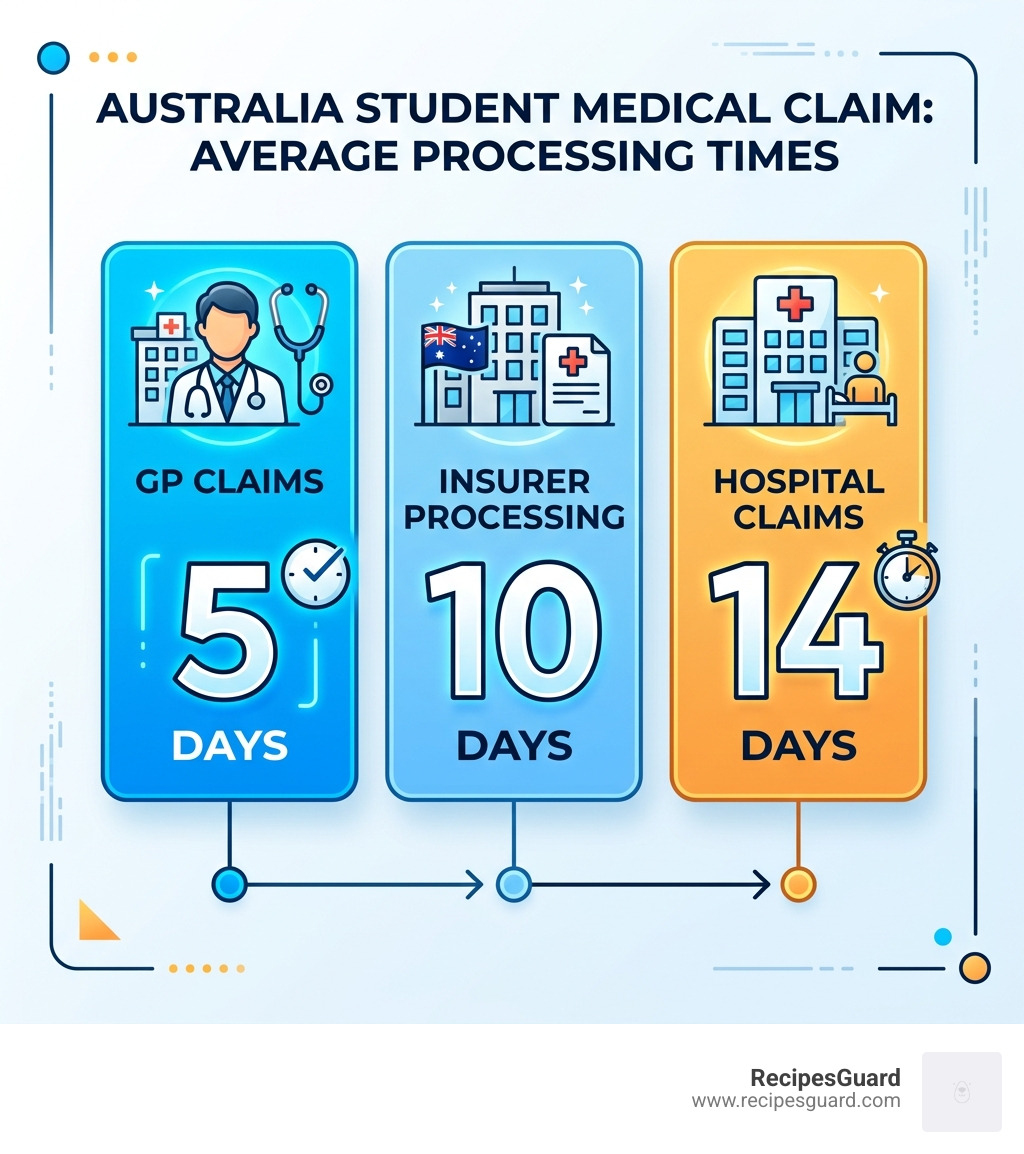
- Wait for processing — GP claims typically take around 5 business days; hospital claims take 7–14 business days
If you’re studying in Australia on a Student Visa (Subclass 500), you are required by law to hold Overseas Student Health Cover (OSHC) for your entire stay. It’s not optional — it’s a condition of your visa.
OSHC is private health insurance that helps cover the cost of medical and hospital care while you study. Without it, you’d pay the full price of every doctor visit, hospital stay, and ambulance call out of pocket. That can add up fast.
There are five approved OSHC providers in Australia: Allianz Care Australia, Bupa Australia, CBHS International Health, Medibank (and ahm), and nib OSHC. Each one has its own app, portal, and claims process — but the core steps are similar across all of them.
One real-world example helps explain how claims work in practice: a student visits a GP and is charged $80. Their OSHC insurer pays $42.85 (based on the Medicare Benefits Schedule fee), leaving the student to cover a $37.15 gap. That difference — between what the doctor charges and what OSHC pays — is called a gap fee. Understanding this now saves you surprise bills later.
Most students pay around A$438 per year for individual OSHC cover — a small price compared to the cost of uninsured medical care in Australia.
Simple guide to australia student medical claim terms:
- how long do i have to file an insurance claim
- how to file insurance claim
Understanding OSHC Requirements and Coverage Limits

When we talk about the australia student medical claim process, we first have to understand the backbone of the system: Overseas Student Health Cover (OSHC). The Department of Home Affairs mandates this insurance to ensure you aren’t left with massive debts if you fall ill. Think of it as your safety net while you’re tackling exams and exploring the Outback.
According to the Overseas Student Health Cover (OSHC) Fact Sheet, you must maintain this cover for the entire duration of your stay. If your visa is for three years, your insurance must be for three years. If you let it lapse, you are technically in breach of your visa conditions, which is a headache nobody needs.
Exemptions and Status Changes
Are there exceptions? Yes, but they are rare. If you are a student from Norway, Belgium, or Sweden, you might be exempt due to reciprocal national insurance schemes. For everyone else, it’s mandatory. If your visa status changes—for example, if you transition to a graduate visa or permanent residency—you must notify your insurer immediately. Your OSHC will no longer be valid, and you’ll need to switch to a different type of visitor or resident cover.
Medical Services and Benefit Percentages
In Australia, the government sets a list of “fair prices” for medical services called the Medicare Benefits Scheme (MBS). Your australia student medical claim will be calculated based on these fees.
- GP Visits: Most policies cover 100% of the MBS fee. If the MBS fee is $41.40 and your doctor charges exactly that, you pay nothing (if they direct bill) or get a full refund.
- Specialists & Out-of-Hospital Services: Usually, OSHC covers 85% of the MBS fee for specialists, pathology (blood tests), and radiology (X-rays).
- Ambulance: This is a big one. OSHC typically covers 100% of the cost for emergency ambulance transport. In Australia, an ambulance ride can cost over $1,000, so this is a lifesaver.
- Hospital Treatment: OSHC covers 100% of the MBS fee for in-hospital medical services.
| Service Type | Public Hospital (as private patient) | Private Hospital (contracted) |
|---|---|---|
| Accommodation | Fully Covered | Fully Covered (shared room) |
| Theatre Fees | Fully Covered | Fully Covered |
| Doctors/Surgeons | 100% of MBS Fee | 100% of MBS Fee |
| Surgically Implanted Prostheses | Fully Covered | Fully Covered (min. benefit) |
Pharmaceutical and Extras Coverage
Don’t expect your australia student medical claim to cover your entire pharmacy bill. Pharmaceutical benefits are usually limited to $50 per item, with an annual cap of $300 to $500 for singles. This means if a specialized medicine costs $200, you might still pay $150 yourself.
Standard OSHC also does not cover “Extras” like dental, optical (glasses), or physiotherapy. If you have a toothache or need a new pair of frames, you’ll need to purchase “Extras OSHC” or pay the full price. However, many providers now include mental health support and repatriation benefits (covering costs if you need to be flown home due to a serious medical condition) in their higher-tier plans.
Waiting Periods and Pre-existing Conditions

One of the most common reasons an australia student medical claim is rejected is because of a “waiting period.” This is a set amount of time you must hold your policy before you can claim for certain conditions.
What is a Pre-existing Condition?
A pre-existing condition is any ailment or illness where signs or symptoms existed in the six months before you arrived in Australia or started your cover. A medical practitioner appointed by the insurer (not just your own doctor) will make this determination.
- Pre-existing conditions: 12-month waiting period.
- Pregnancy-related treatment: 12-month waiting period. (Note: As of 2026, some insurers are starting to remove this for policies longer than 2 years).
- Pre-existing Psychiatric conditions: 2-month waiting period.
For more information on OSHC regulations, you can check the official government portal. The good news? Waiting periods do not apply to emergency treatment. If you have an unexpected accident, you are covered from day one.
Step-by-Step Guide to Filing an Australia Student Medical Claim
Ready to get your money back? We’ve broken down the australia student medical claim into a simple, step-by-step tutorial.
Step 1: Gather Your Documents
Before you open your app, make sure you have:
- The Tax Invoice/Receipt: This must show the doctor’s details, the date of service, the MBS item number, and the amount paid.
- Medical Certificate: Required if you are claiming for a condition within your first 12 months of cover.
- Policy Number: Found on your digital membership card.
- Australian Bank Details: BSB and Account Number. Insurers cannot refund money to overseas bank accounts.
Step 2: Choose Your Method
Most providers offer four ways to submit:
- Mobile App: The fastest way. Take a photo of your receipt and hit send.
- Online Portal: Log in via your provider’s website (e.g., myBupa or Allianz MyHealth).
- In-Person: Some providers have kiosks on university campuses or retail stores in major cities.
- Mail: The “old school” way. Print a form, attach receipts, and post it. (Warning: This takes the longest!).
Step 3: Wait for Processing
- GP and Medical Claims: Usually processed within 5 business days.
- Hospital Claims: These are more complex and typically take 7 to 14 business days.
Preparing Your Australia Student Medical Claim Documentation
Accuracy is key. If your name on the receipt doesn’t match the name on your policy, or if the MBS item number is missing, your claim will be delayed. Always ask the receptionist at the clinic for a “Tax Invoice for OSHC purposes”—they usually know exactly what you need.
Submitting Your Australia Student Medical Claim Online or via App
Most students prefer the app. For example, using the Allianz MyHealth or Medibank OSHC app allows you to track the status of your claim in real-time. You’ll receive a notification once the money has been deposited into your Australian bank account.
How to Minimize Gap Fees and Out-of-Pocket Costs
We know being a student means living on a budget. The best way to save money on your australia student medical claim is to avoid paying upfront at all. This is where Direct Billing comes in.
Navigating the Direct Billing Network
A “Direct Billing” doctor has an agreement with your OSHC provider. Instead of you paying $80 and waiting for a refund, the doctor sends the bill directly to the insurer. You might only have to pay the “gap” (the part the insurer doesn’t cover) or, in some cases, nothing at all!
How to find a Direct Billing provider:
- Open your OSHC app.
- Use the “Find a Provider” or “Find a Doctor” tool.
- Look for clinics labeled “Direct Billing” or “Member’s Choice.”
- Call the clinic and confirm: “Do you direct bill for [Your Provider Name] OSHC?”
By using these OSHC-friendly doctors, you minimize your out-of-pocket expenses and skip the paperwork entirely.
Frequently Asked Questions about OSHC Claims
What happens if my claim is rejected?
Don’t panic! Claims are often rejected for simple reasons: a missing receipt, an incorrect bank account number, or being within a waiting period. Check the “Explanation of Benefits” (EOB) sent by your insurer. If you believe the decision is wrong, you can appeal by providing a letter from your doctor. If it’s still unresolved, you can contact the Private Health Insurance Ombudsman.
Can I use an overseas bank account for my refund?
No. All Australian OSHC providers require an Australian bank account for Electronic Funds Transfer (EFT). If you haven’t opened a local bank account yet, do it as soon as you arrive. It makes the australia student medical claim process much smoother.
Does OSHC cover emergency dental or optical work?
Generally, no. Even in an emergency, standard OSHC policies exclude dental and optical. However, if you are admitted to a hospital for a major oral surgery (like impacted wisdom teeth removal), the hospital costs might be covered, even if the dentist’s fees are not. Always call your insurer first to check.
Conclusion
Managing your australia student medical claim doesn’t have to be a full-time job. By staying insured, using direct-billing doctors, and keeping your receipts organized, you can focus on what really matters: your studies and your Australian adventure.
At RecipesGuard, we specialize in providing student-focused, step-by-step claim filing tutorials. We know that navigating insurance in a new country is tough, and we’re here to make it easier. Whether you’re in Sydney, Melbourne, or Perth, our guides are designed to help you get your refunds faster and with less stress.
Don’t let medical bills pile up. Start your claim guide today and ensure your health—and your wallet—are protected while you study in Australia. Stay healthy, stay covered, and enjoy everything this beautiful country has to offer!

My name is Bianca, and my journey into the world of fermentation and food safety began with a costly mistake. I once lost an entire season’s harvest of chili peppers because I relied on guesswork instead of science. That failure was my turning point.
