
Medicare Enrollment for Dummies and Busy People
Why the Medicare Opt-In Simplified Enrollment Mechanism Matters in 2026
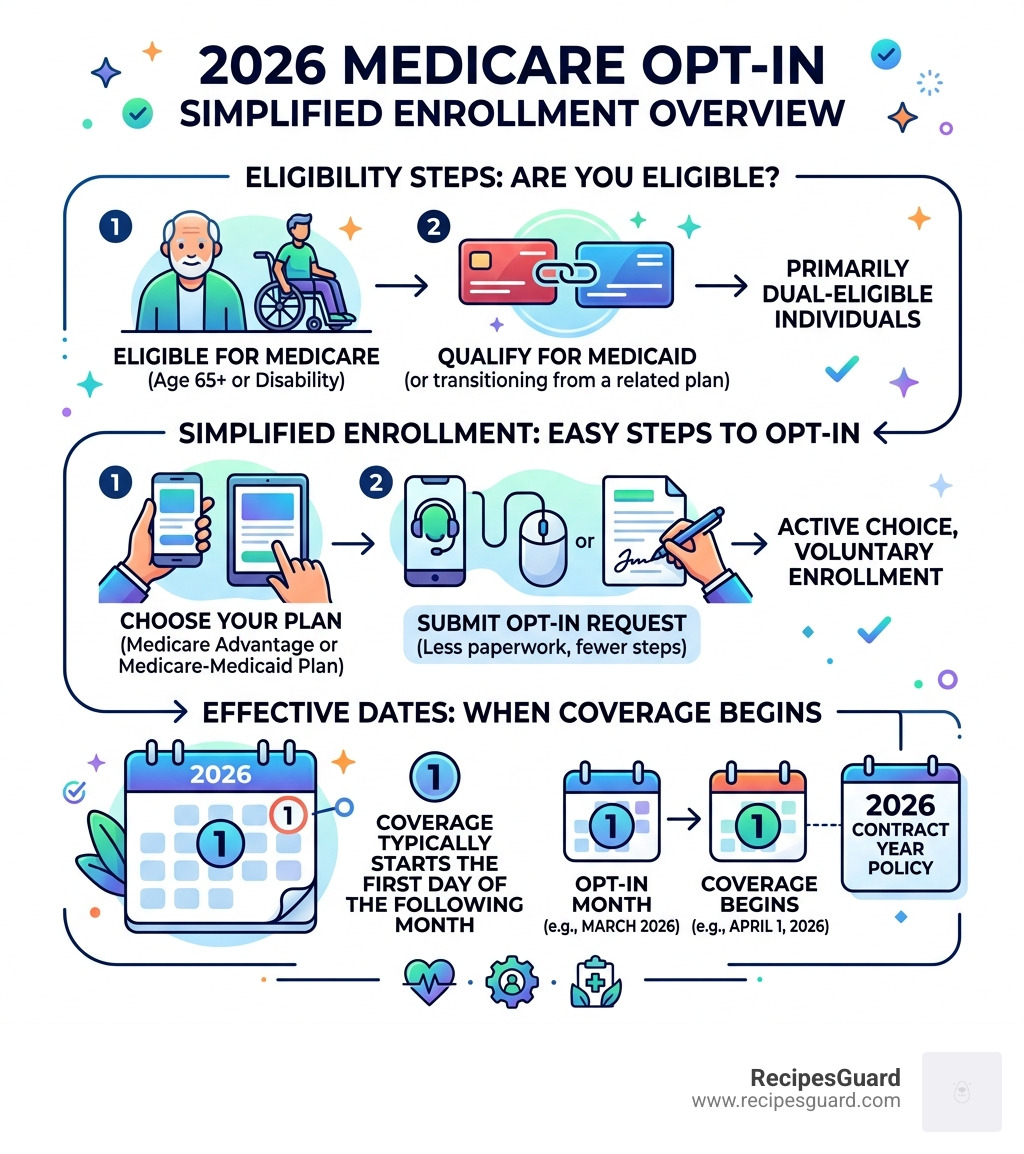
The medicare opt in simplified enrollment mechanism is a streamlined way for eligible individuals to voluntarily join a Medicare or Medicare-Medicaid Plan (MMP) — often with less paperwork and fewer steps than standard enrollment.
Here’s a quick breakdown of what it is and how it works:
- What it is: A simplified process that lets eligible people enroll in a Medicare Advantage (MA) or Medicare-Medicaid Plan by submitting a shorter enrollment request — sometimes using data the plan already has on file
- Who it’s for: Primarily dual-eligible individuals (people who qualify for both Medicare and Medicaid), and people transitioning from an MA organization’s non-Medicare coverage
- How you opt in: By submitting a request via paper, phone, or online — your coverage typically starts the first of the following month
- How it differs from passive enrollment: Opt-in is your active choice. Passive enrollment happens automatically unless you say no
Most people assume Medicare enrollment is a maze of forms and phone calls. And honestly, it can be — unless you know which path to take.
The simplified opt-in mechanism was introduced as part of CMS policy changes for Contract Year 2019. Its goal is simple: make it easier for newly eligible people to get integrated, coordinated care without drowning in red tape.
Whether you’re a dual-eligible beneficiary, someone aging into Medicare, or transitioning from a Medicaid or commercial plan, understanding this mechanism can save you time and stress.
Relevant articles related to medicare opt in simplified enrollment mechanism:
- low cost student health insurance
- student health coverage
- waiving medical coverage
What is the Medicare Opt-In Simplified Enrollment Mechanism?
In the complex world of Australian healthcare and international advisory, we often see people overwhelmed by bureaucracy. When it comes to Medicare, the medicare opt in simplified enrollment mechanism is essentially a “fast track.”
This mechanism allows Medicare Advantage Organizations (MAOs) and Medicare-Medicaid Plans (MMPs) to streamline the enrollment of individuals who are already known to them. For example, if you are already enrolled in a Medicaid managed care plan or a commercial plan with a specific company, and you suddenly become eligible for Medicare, that company can use the data they already have to make your transition into a Medicare plan much smoother.
According to Medicare Opt-in Simplified Enrollment – Law Expression, this process is designed to promote integrated care. By reducing the number of questions you have to answer and the documents you have to hunt down, the government hopes to encourage more “dual eligibles”—those qualifying for both Medicare and Medicaid—to choose coordinated care models. These models align financial incentives so that your doctors and insurers work together rather than in silos.
As of April 2026, these mechanisms are more refined than ever. They leverage “internal data sharing,” meaning the plan pulls your address, phone number, and basic eligibility details from their existing files so you don’t have to type them in for the hundredth time.
Eligibility and Requirements for Streamlined Coverage
Not everyone can use the simplified “express lane.” There are specific criteria you must meet to ensure the process remains secure and accurate.
Eligibility for the Medicare Opt-In Simplified Enrollment Mechanism
To use the medicare opt in simplified enrollment mechanism, you generally need to meet these core requirements:
- Entitlement to Part A and Enrollment in Part B: You must be eligible for Medicare Part A (hospital insurance) and already enrolled in Medicare Part B (medical insurance). If you aren’t sure how to get started with these basics, How do I sign up for Medicare? | Medicare provides the foundational steps.
- Medicaid Status: For MMPs, you must be eligible for medical assistance under a State Medicaid plan.
- Service Area: You must live in the permanent service area of the plan you are trying to join.
- Existing Relationship: Usually, this mechanism is available if you are transitioning from a non-Medicare product (like a commercial plan or Medicaid-only plan) offered by the same parent organization.
Required Data Elements for Opt-In Requests
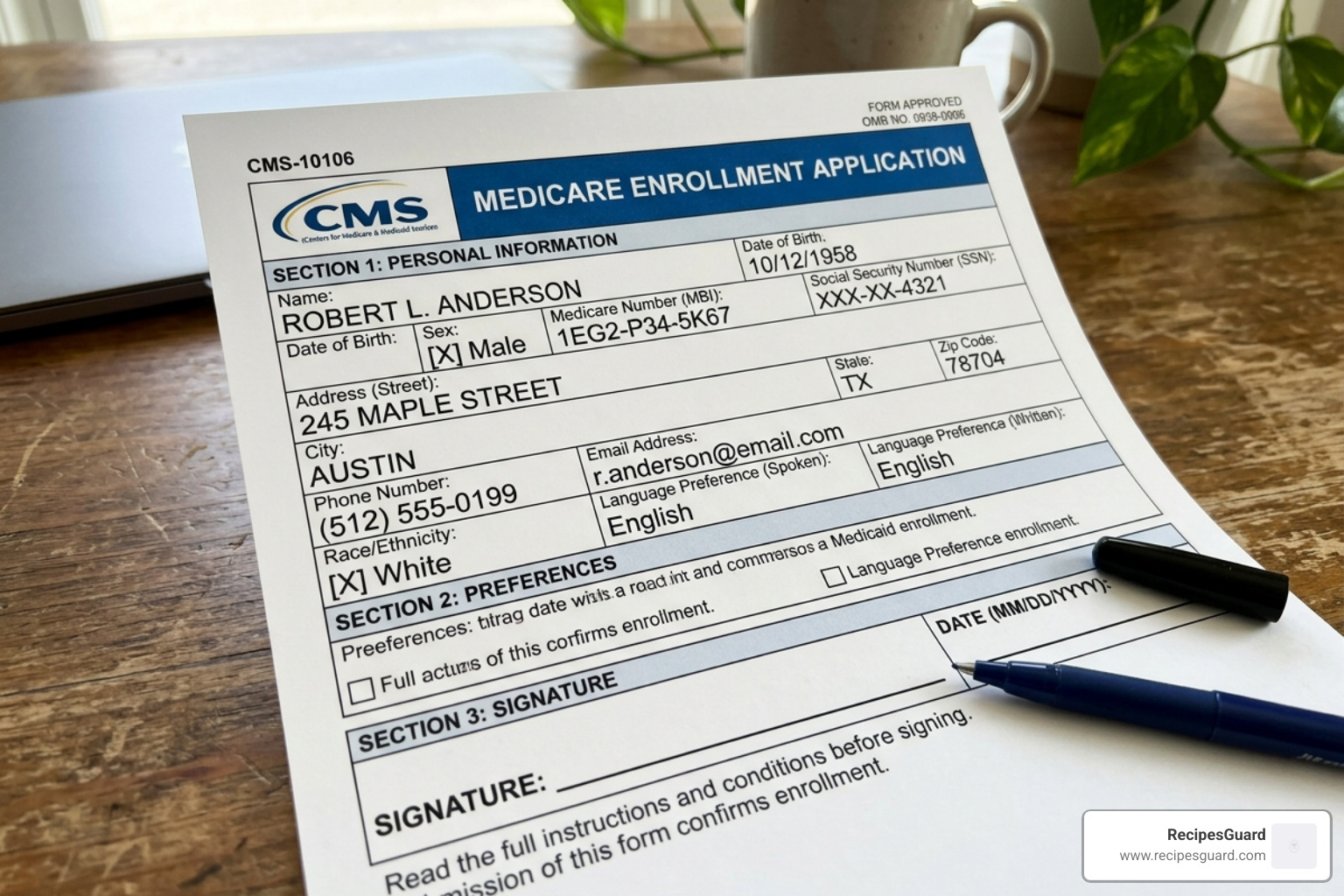
Even though it’s “simplified,” the government still needs specific data to process your request. The beauty of this mechanism is that many of these elements can be pre-filled by the insurance provider.
The required elements include:
- Your full name and permanent residence address.
- Your Medicare Number (the unique ID on your red, white, and blue card).
- Your telephone number.
- Language preference (to ensure you get notices you can actually read!).
- A signature (electronic or physical) and the date.
- Authorized representative information (if someone is helping you sign up).
Step-by-Step: Submitting Your Enrollment Request
We know you’re busy—perhaps you’re a student balancing studies or a professional managing a household. The good news is that you have choices in how you submit your request.
Formats for a Medicare Opt-In Simplified Enrollment Mechanism Request
You aren’t stuck with just one way to sign up. Here is how the different formats compare:
| Format | How it Works | Best For |
|---|---|---|
| Paper/Mail | You sign a physical form (like the CMS-40B) and mail it in. | Those who prefer a physical paper trail. |
| Internet | You complete the process via the plan’s secure website or a state exchange. | Tech-savvy users who want instant confirmation. |
| Telephone | You call the plan or a state enrollment broker and complete an audio-recorded enrollment. | People who want to talk to a human and avoid typing. |
For telephonic enrollments, the plan must record the entire conversation and ensure you clearly state that you intend to enroll. For internet enrollments, an electronic signature is required. If you are already in the system, the medicare opt in simplified enrollment mechanism means the online portal might only ask you three or four questions instead of twenty.
Processing and Effective Dates
Timing is everything. In the insurance advisory world, we always tell our students: don’t wait until the last minute!
Generally, if you submit your opt-in request, the effective date of coverage is the first day of the month following the month the request is received.
- Example: If you submit your request on April 15, 2026, your coverage typically starts May 1, 2026.
- Cutoff Dates: Some states have “cutoff dates” (often around the 15th or 20th of the month). If you submit after that date, your coverage might not start until the first day of the second month.
Plans use the MARx system to communicate with CMS (Centers for Medicare & Medicaid Services) to ensure your enrollment is official.

Beneficiary Protections: Opt-In vs. Passive Enrollment
It is vital to understand that “Opt-In” is a choice. This is where many people get confused, especially when terms like “seamless conversion” or “passive enrollment” start flying around.
- Opt-In Enrollment: This is voluntary. You take an action to join. You have the right to choose the plan that fits your specific needs.
- Passive Enrollment: This is when the State or CMS moves you into a plan automatically because your old plan is closing or to ensure you don’t lose coverage. You are notified in advance and can “opt-out” if you don’t like the choice, but the default is that you are moved.
If you are deciding whether to join, we recommend reviewing the Fact Sheet: Deciding whether to enroll in Medicare Part A and Part B when you Turn 65 . It highlights the risks of delaying enrollment, such as lifetime penalties, but also explains how employer or union coverage might allow you to wait without being penalized.
Frequently Asked Questions about Simplified Enrollment
What happens if my request is incomplete or denied?
If your medicare opt in simplified enrollment mechanism request is missing a signature or a Medicare number, the plan can’t just ignore it. They are required to contact you—usually within 10 calendar days—to ask for the missing info.
If you are denied (perhaps because you live outside the service area), the plan must send you a formal notice explaining why and how you can appeal the decision.
Can I opt-in if I have employer or union coverage?
Yes, but be careful. If you have “creditable” coverage from a current employer, you might not need to opt into a Medicare Advantage plan yet. However, if you do decide to opt-in, your Medicare plan usually becomes your primary insurance, and your employer plan becomes secondary. In 2026, the penalties for not having “creditable” drug coverage remain strict, so always verify your status with your benefits administrator first.
What notices will I receive during the process?
Transparency is a hallmark of the 2026 Medicare system. You should expect:
- Acknowledgment Notice: Sent within 10 days of the plan receiving your request.
- Confirmation Notice: Sent once CMS officially approves the enrollment.
- Pre-Enrollment Info: A packet explaining your benefits, costs, and how to use the plan.
All these notices must pass a “plain language review” to ensure they aren’t filled with impossible-to-understand legal jargon.
Conclusion
Navigating the medicare opt in simplified enrollment mechanism doesn’t have to be a headache. By leveraging the data your current insurance provider already has, you can skip the redundant paperwork and get straight to the coverage you need.
At RecipesGuard, we specialize in helping students navigate the complexities of travel insurance claims with step-by-step tutorials. While Medicare is a different beast, the principle is the same: having the right information makes the process simple and stress-free. Whether you are filing a claim for a trip or opting into a new health plan, clarity is your best friend.
For more information on navigating insurance hurdles, visit our travel insurance claims guide.

My name is Bianca, and my journey into the world of fermentation and food safety began with a costly mistake. I once lost an entire season’s harvest of chili peppers because I relied on guesswork instead of science. That failure was my turning point.
