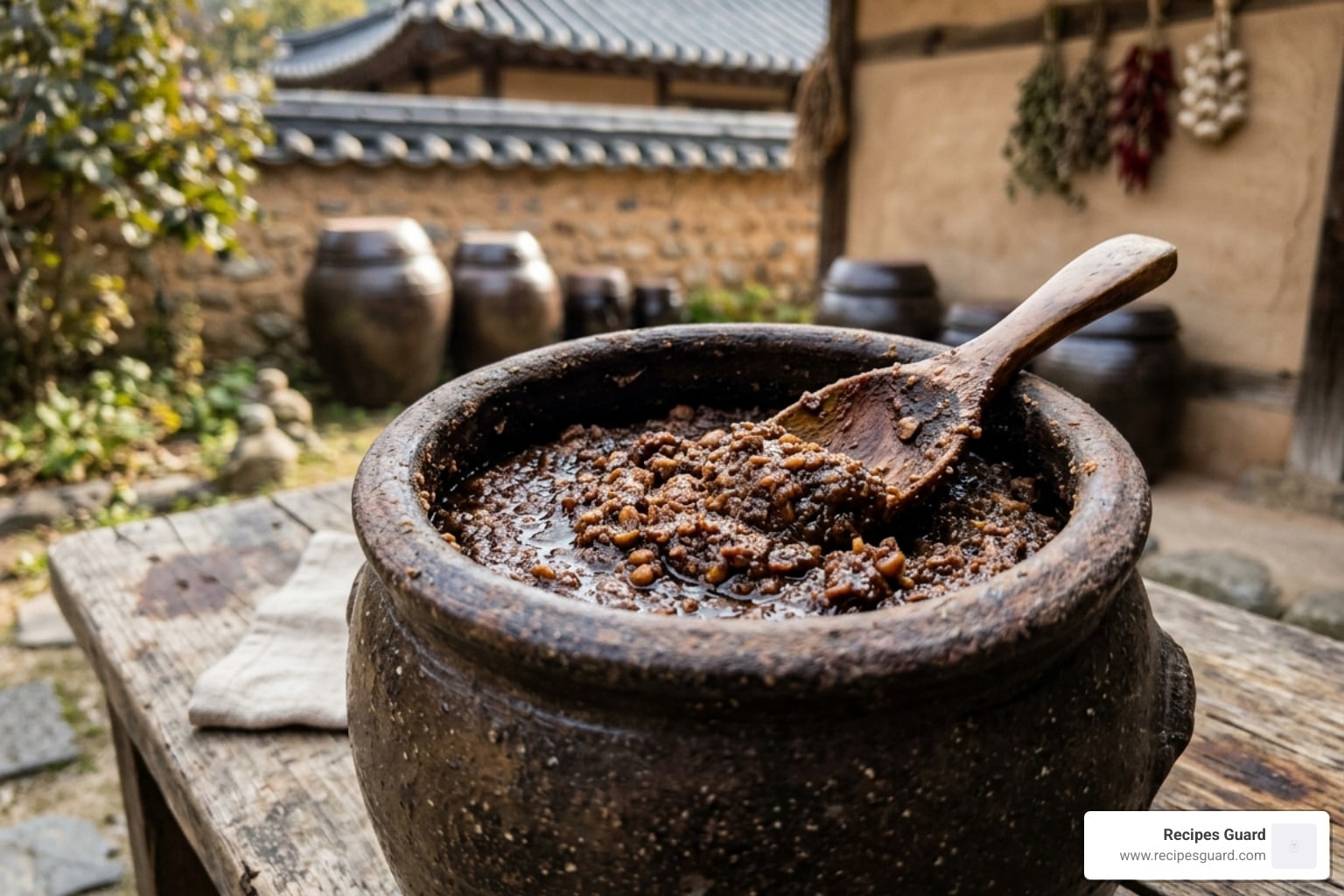
Get Lost in the Sauce with Authentic Fermented Soy
The Ancient Sauce That Makes Every Dish Taste Better
Fermented soy bean sauce is a thick, salty paste made from soybeans, water, and salt — left to ferment until it develops a deep, savory, umami-rich flavor. It has been a cornerstone of Asian cooking for over 2,000 years.
Quick answer — what you need to know:
| Question | Answer |
|---|---|
| What is it? | A fermented paste of soybeans, salt, and water with a rich umami flavor |
| Key varieties | Chinese huang dou jiang, Korean doenjang, Vietnamese tương |
| Flavor profile | Salty, savory, earthy — mild heat, no spice |
| Common uses | Stir-fries, braises, noodle sauces, dipping sauces, soups |
| Shelf life | Up to 18 months unopened; refrigerate after opening |
| Best substitute | Miso paste (closest in flavor for most home cooks) |
Despite being one of the most versatile condiments in Asian cooking, fermented soy bean sauce flies under the radar. It lacks the flashy heat of doubanjiang or the sweetness of hoisin. But that’s exactly the point — it quietly deepens flavors without stealing the spotlight.
Think of it like a great supporting actor. You might not notice it directly, but every dish is better when it’s there.
Whether you want to buy a jar, use it in a recipe, or ferment your own batch at home, this guide covers everything you need.
Fermented soy bean sauce terms to remember:
- fermented serrano hot sauce
- fermented foods recipes
- fermentation recipes for beginners
The Science and Soul of Yellow Soybean Paste
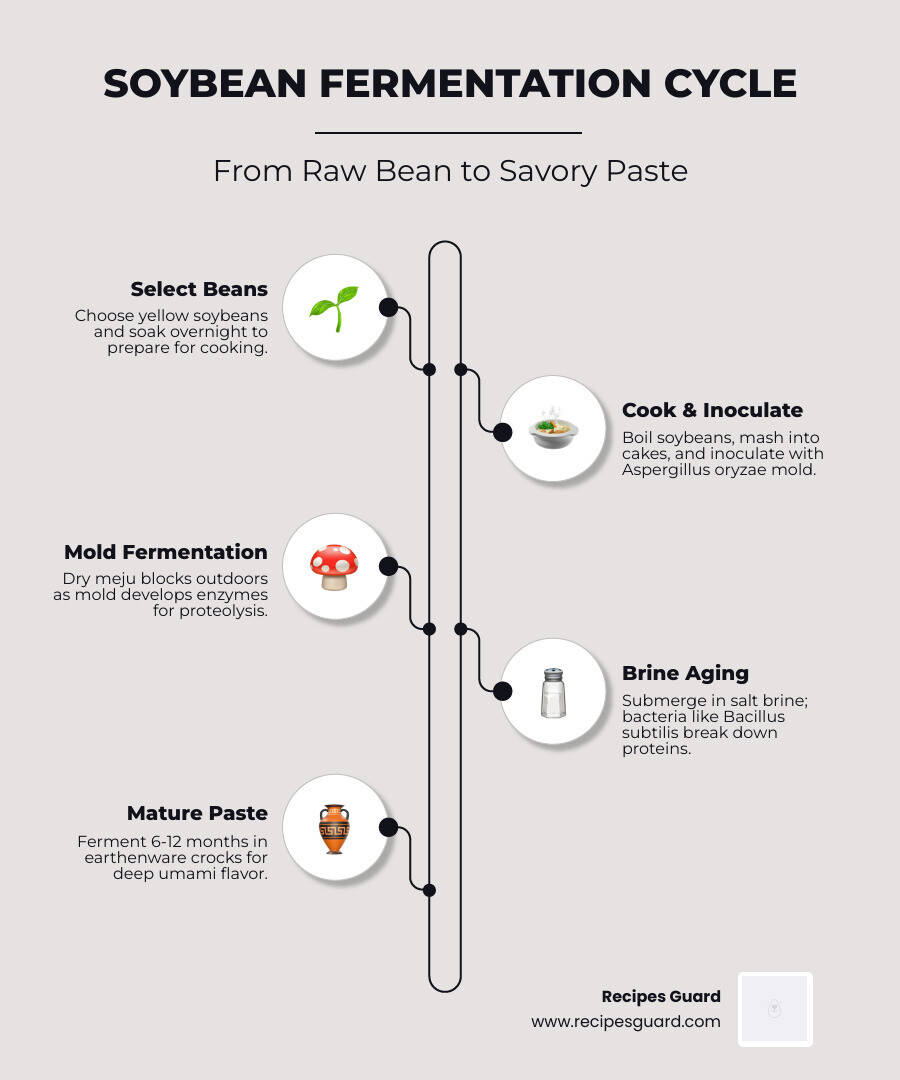
At its core, Yellow soybean paste (known in Mandarin as huang dou jiang) is a marvel of biological engineering. The process begins with the humble yellow soybean. These beans are soaked, steamed, and then inoculated with a specific mold, usually Aspergillus oryzae or Aspergillus sojae.
This is where the magic of proteolysis happens. As the mold grows, it produces enzymes that break down the complex proteins in the soybeans into free amino acids, primarily glutamic acid. This is the scientific source of that “umami” punch we all crave. Over time, the starches also break down into simple sugars, adding a subtle, natural sweetness that balances the heavy salt brine.
The fermentation environment is strictly controlled. In traditional methods, a high salt concentration (typically 17–20%) is used to inhibit “bad” bacteria while allowing halophilic (salt-loving) yeasts and lactic acid bacteria to thrive. This low pH environment (usually between 4.4 and 5.4) further protects the paste from spoilage.
As we look at modern production in April 2026, there are two primary industrial methods used to create the fermented soy bean sauce you find on store shelves:
| Feature | High-Salt Liquid Fermentation (HLF) | Low-Salt Solid Fermentation (LSF) |
|---|---|---|
| Salt Content | 17–20% | 13–15% |
| Temperature | 15–30°C (59–86°F) | 40–55°C (104–131°F) |
| Duration | 90 to 180 days | 15 to 30 days |
| Flavor Profile | Complex, deep, aromatic | Lighter, less nuanced |
| Market Share | ~10% (Premium) | ~90% (Mass market) |
While Soy sauce is the liquid byproduct of this general process, the paste itself retains the fiber and body of the beans, making it a much more substantial ingredient for coating noodles or thickening stews.
Regional Varieties: Huang Dou Jiang, Doenjang, and Beyond
Not all fermented soy bean sauce is created equal. Depending on where you are in Asia, the flavor, texture, and ingredients shift significantly.
Chinese Huang Dou Jiang
Originating largely from Chaozhou in the Guangdong province, this is the “standard” yellow bean sauce. It is often mild and savory, sometimes sold as “salted soybeans.” You will find it in two states: “dry” (which is thick and requires dilution) and “liquid” (where whole or broken beans float in a thick brine). It is the soul of Beijing’s famous zhajiang mian.
Korean Doenjang
Korean doenjang is a powerhouse of flavor. Unlike some Chinese varieties, it is often made solely from soybeans and brine without added wheat flour. It is funkier, earthier, and more pungent. It is a foundational element of Korean identity, traditionally fermented in large earthenware crocks called onggi.
Vietnamese Tương
In Central Vietnam, particularly around Huế, tương is a staple. It is often smoother and can be used to create incredibly Nutty Fermented Soy Bean Dipping Sauces by blending the paste with fried peanuts and sesame seeds.
How does it compare to other pastes?
It is easy to get confused in the international aisle, so here is a quick breakdown:
- Miso: Japanese fermented soy. Usually smoother and sweeter than huang dou jiang because of a higher grain-to-bean ratio.
- Doubanjiang: The spicy cousin. It includes fermented broad beans (fava beans) and a heavy dose of chili oil.
- Sweet Bean Sauce (Tianmianjiang): Made primarily from wheat flour. It is much darker and sweeter, with less of a “beany” texture.
- Douchi – Wikipedia : These are specifically fermented black soybeans. They are salty, pungent, and used as a seasoning rather than a base paste.
If you are looking to expand your pantry further, check out our other Fermented Recipes to see how these ingredients interact.
Mastering Homemade Fermented Soy Bean Sauce
Making your own fermented soy bean sauce is a test of patience, but the reward is a flavor that store-bought jars simply cannot match. The most famous “long-haul” recipe comes from the Korean tradition of making doenjang.
The process begins with meju—blocks of cooked, mashed soybeans that are formed by hand and left to dry. In a traditional setting, these blocks are hung with rice straw, which provides the necessary Bacillus subtilis bacteria for fermentation.
The Timeline of Patience:
- Days 1-4: Soak, cook, and mash beans; form into blocks.
- Weeks 1-6: Hang blocks in a well-ventilated area to dry.
- Months 2-3: Submerge the dried blocks in a salt brine inside earthenware crocks.
- Months 5-12: Separate the liquid (which becomes soy sauce) from the solids (which become the paste). Let the paste ferment for another 6 months.
A standard batch using 5 pounds of dried soybeans can yield up to 10 pounds of fresh, probiotic-rich paste. While you wait for your beans to age, you can practice your fermentation skills with shorter projects like our Easy Fermented Garlic Recipe or Quick and Easy Pickled Vegetables for Every Meal.
Practical Kitchen Guide: Usage and Storage
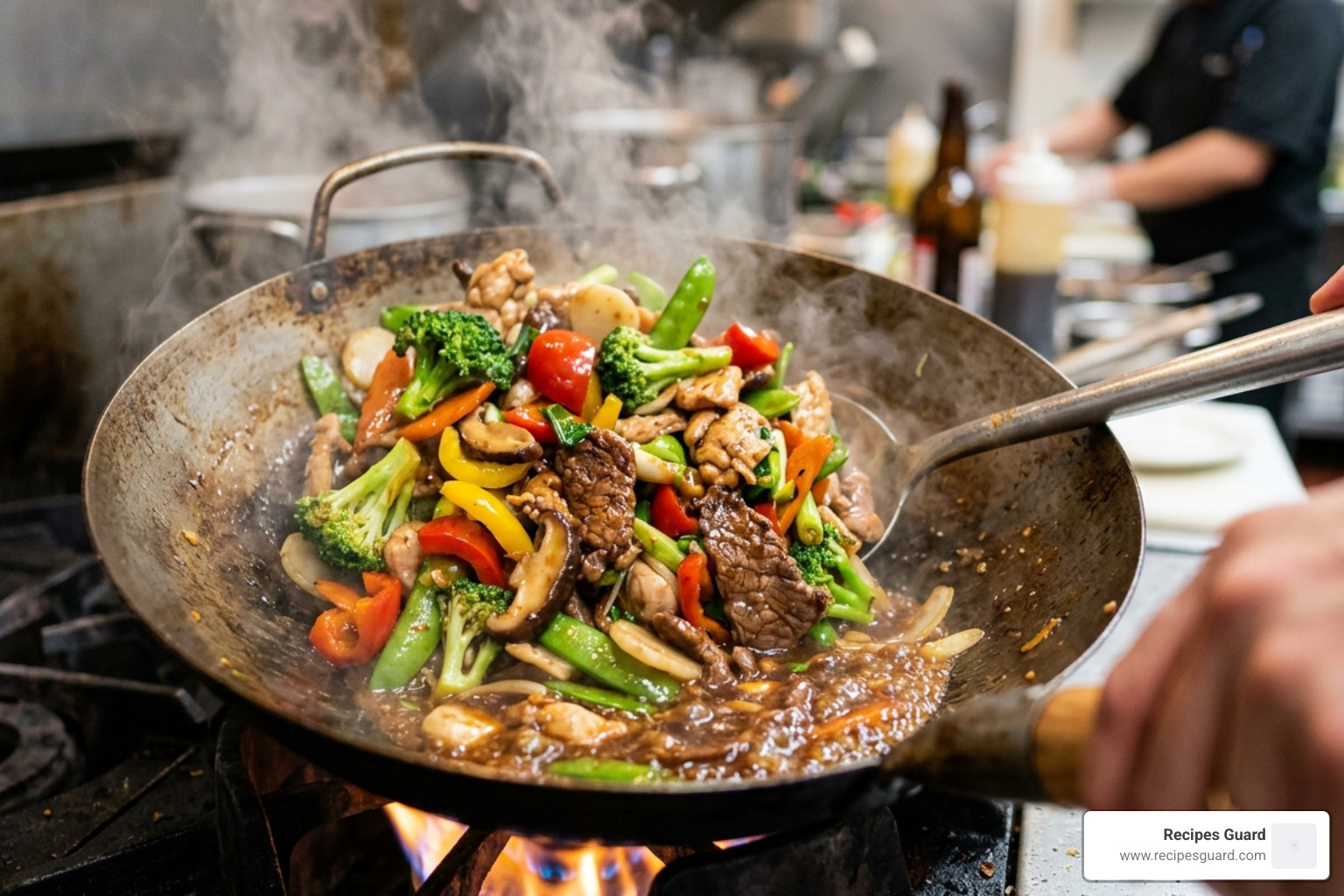
Once you have your hands on a jar of fermented soy bean sauce, you need to know how to handle it.
Storage Tips:
- Unopened: Most commercial brands, like SXETBEAN or Lee Kum Kee, have a shelf life of about 18 months. Keep them in a cool, dark pantry.
- Opened: Once the seal is broken, oxygen is the enemy. Always use a clean spoon to prevent cross-contamination. Keep the lid tightly capped and store it in the refrigerator.
- Sensory Check: Good paste should smell like rich soy sauce or slightly nutty. If you see fuzzy mold (that isn’t part of the intended culture) or smell an “off” sourness, it’s time to toss it.
For more on keeping your ferments healthy, read Safety First: A Guide to Preserving Fermented Foods.
Culinary Applications for Fermented Soy Bean Sauce
This sauce is a versatile workhorse. Here are three ways we love to use it:
- Chinese Pork Sauce with Egg Noodles (Zhajiang Mian): This serves 4 and is the ultimate comfort food. Fry ground pork with ginger and garlic, then add a generous 1/2 cup of yellow soybean paste diluted with a little water. Simmer until thick and glossy, then pour over chewy wheat noodles.
- Nutty Dipping Sauce: A Vietnamese favorite. This recipe yields about 1 cup. Blend 1/2 cup of soybean paste with 2 tablespoons of peanut butter, a splash of water, sugar, and toasted sesame seeds. It’s the perfect companion for fresh spring rolls or boiled vegetables.
- Braised Greens: Add a tablespoon of the paste to your next stir-fry of bitter melon or bok choy. The saltiness cuts through the bitterness of the greens perfectly.
If you enjoy the depth this sauce brings to your cooking, you might also want to try Mastering the Art of Lacto-Fermented Hot Sauce to add some heat to your umami base.
Selecting the Best Fermented Soy Bean Sauce
When shopping in April 2026, you will likely see brands like SXETBEAN (often sold in 15.8oz/450g bags) or Lee Kum Kee.
What to look for on the label:
- Whole Beans: Premium sauces often feature whole or roughly crushed beans rather than a smooth puree.
- Ingredients: Traditional recipes should be simple (soybeans, water, salt). However, many modern brands add wheat flour to thicken the sauce and potassium sorbate as a preservative.
- Color: Look for a rich, golden-brown to dark chocolate color. Avoid anything that looks grey or overly pale.
Conclusion
At Recipes Guard, we believe that understanding the “funk” is the key to becoming a better cook. Fermented soy bean sauce is more than just a salty condiment; it is a concentrated explosion of protein-driven flavor that has sustained cultures for millennia.
Beyond the taste, fermented soy offers significant nutritional benefits, including high levels of protein and essential minerals. However, keep in mind that it is a high-sodium food, and those with soy or wheat allergies should exercise caution.
Whether you are stirring a spoonful into a quick Tuesday night stir-fry or embarking on a year-long journey to ferment your own meju blocks, you are participating in a culinary tradition that celebrates the beauty of slow food.
Start your fermentation journey today and discover how a little bit of “old” bean can bring new life to your kitchen.
What is the difference between soybean paste and miso?
While both are fermented soy products, they differ in texture and ingredients. Miso typically uses a “koji” starter made from rice or barley, leading to a sweeter, smoother finish. Fermented soy bean sauce (huang dou jiang) often uses Aspergillus sojae and contains more whole bean pieces, resulting in a saltier, more rustic texture.
How long does fermented soybean paste last after opening?
When kept in a tightly sealed container in the refrigerator, commercial fermented soy bean sauce can last for up to 12 months. Always use a clean utensil to scoop it out. If you notice a change in smell or the appearance of colorful mold, discard the jar immediately.
Can I substitute hoisin sauce for yellow soybean paste?
You can, but be careful! Hoisin sauce contains much more sugar and added spices like five-spice powder. If you use hoisin as a substitute for yellow soybean paste, reduce the other sweeteners in your recipe and expect a thicker, sweeter, and less “beany” result. For a closer match, miso paste is a better alternative.