Don’t Mane-gle Your Mushrooms with these Dehydration Tips
What You Need to Know About Dehydrating Lion’s Mane
Dehydrating lion’s mane is one of the smartest ways to preserve this unusual mushroom for long-term use. Here’s the quick version if you’re in a hurry:
Quick-start guide:
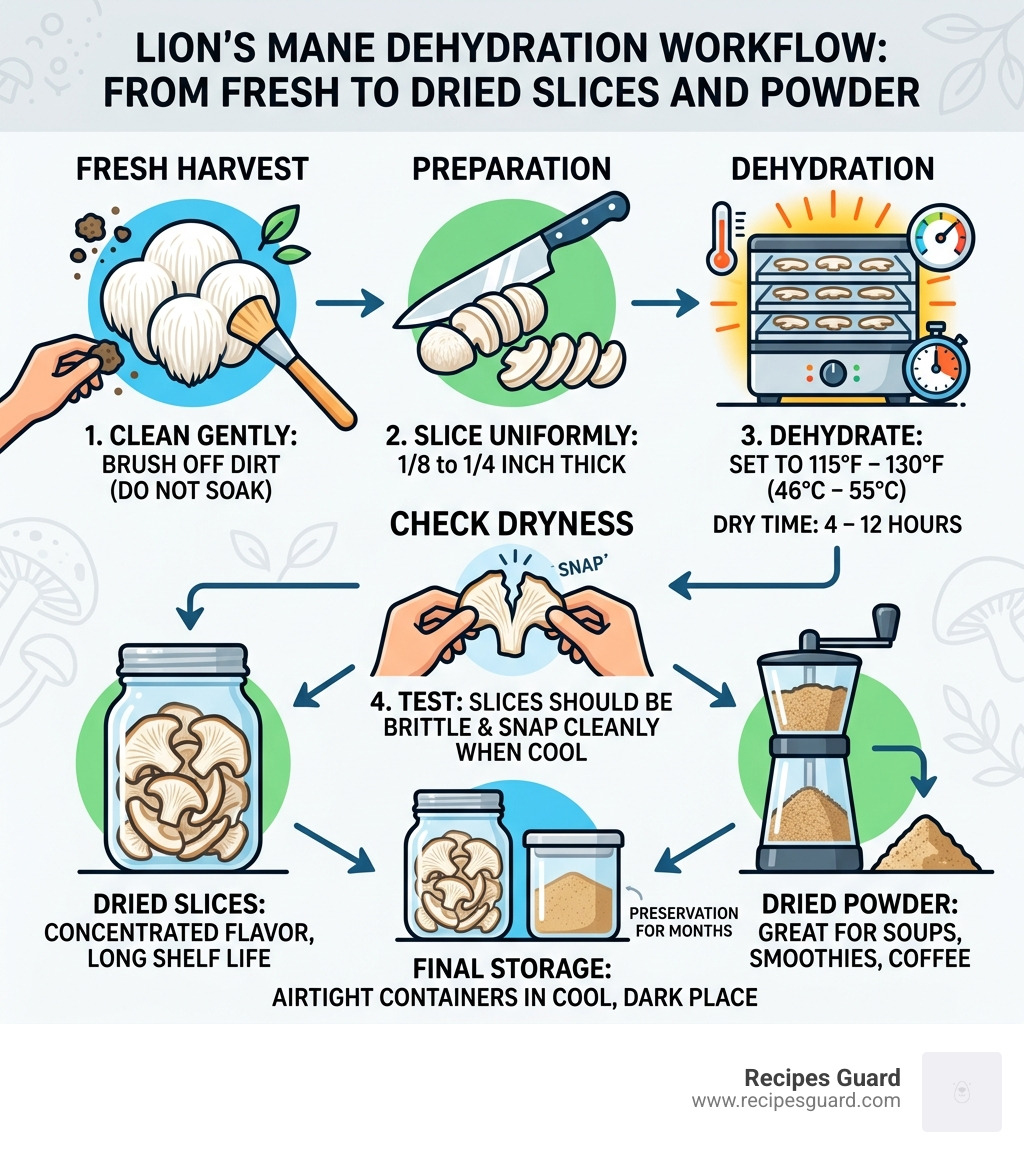
- Clean — gently brush off dirt with a soft brush (avoid soaking)
- Slice — cut into 1/8 to 1/4 inch uniform pieces
- Dehydrate — set your dehydrator to 115–130°F (46–55°C)
- Dry time — 4 to 12 hours depending on slice thickness
- Test — slices should be brittle and snap cleanly when cool
- Store — airtight container in a cool, dark place for up to a year
Lion’s Mane (Hericium erinaceus) looks like something from another planet — shaggy, white, and cloud-like. But don’t let the appearance fool you. It has a rich, seafood-like flavor and a meaty texture that makes it a favorite among home cooks and food preservers alike.
There’s just one problem: fresh Lion’s Mane is highly perishable. It lasts about a week in the fridge before it starts to decline.
That’s where dehydration comes in.
Mushrooms are up to 92% water. Lion’s Mane is actually a bit denser and drier than common varieties like button mushrooms — but it still shrinks dramatically when dried. Expect roughly a 9:1 ratio: nine pounds of fresh mushroom yields about one pound dried.
The payoff? Concentrated flavor, months of shelf life, and a pantry staple that’s ready whenever you need it.
Why Dehydrating Lion’s Mane is a Game-Changer for Your Pantry
If you’ve ever bought a beautiful cluster of Lion’s Mane only to have it turn yellow and slimy in the back of your crisper drawer, you know the heartbreak of mushroom waste. In April 2026, as more of us look toward sustainable kitchen habits, dehydrating lion’s mane has become the gold standard for preservation.
When we remove the water, we aren’t just stopping rot; we are performing a culinary magic trick. Because mushrooms are approximately 92% water, the dehydration process concentrates the natural sugars and amino acids. This results in a deep, umami-rich flavor that is often more intense than the fresh version.
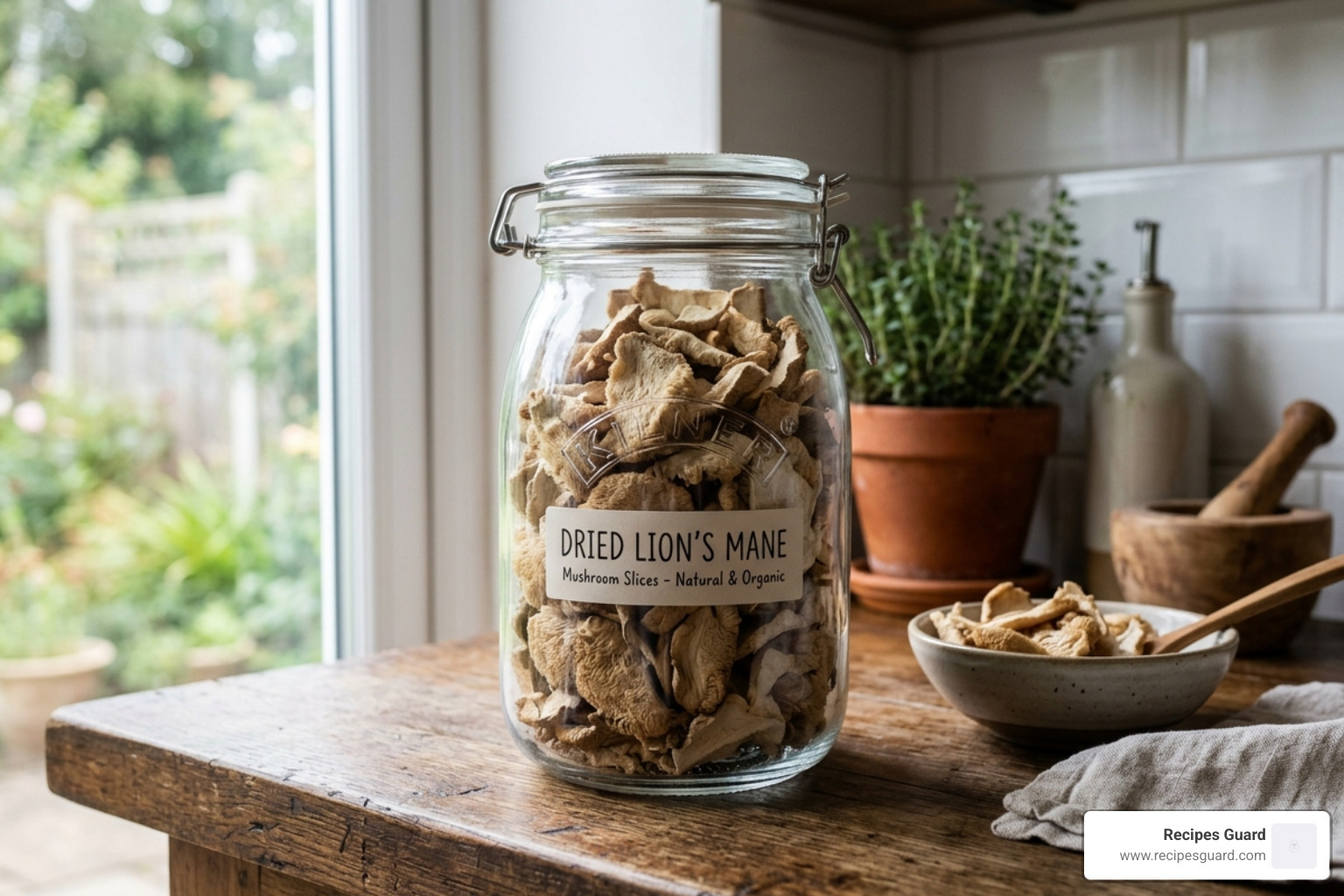
The logistics are also hard to beat. Because of that 9:1 fresh-to-dried ratio, a massive “pom-pom” mushroom that takes up half your fridge shelf can be reduced to a handful of slices that fit in a small glass jar. It is the ultimate space-efficient storage solution for a well-stocked pantry. Beyond the kitchen, Drying Lion’s Mane in a Dehydrator: Unlocking the Secrets of this Ancient Fungus – KitchenPearls notes that drying is essential for long-term preservation of this highly perishable fungus.
The Nutritional Powerhouse of Dehydrating Lion’s Mane
We often talk about Lion’s Mane in the context of “brain food,” and for good reason. It contains bioactive compounds like hericenones and erinacines, which are known as nerve growth factors. These compounds support cognitive function and may even help with focus and memory.
Does drying ruin these benefits? Quite the opposite. While some delicate vitamins might decrease slightly, many of the most important compounds, like antioxidants and the potent amino acid ergothioneine, remain stable. In fact, some research suggests that the drying process can actually increase the concentration of certain bioactive compounds, making the dried version more potent by weight than the fresh mushroom. For a deeper dive into these holistic advantages, The Ultimate Guide to Drying Lion’s Mane Mushroom: Techniques, Tips, and Benefits | mealmastermind provides an excellent overview of how drying preserves these medicinal qualities.
Preparing Your Harvest: Cleaning and Slicing for Success
Before we fire up the machine, we need to prep. If you’ve harvested your own or bought them from a local grower, your Lion’s Mane might have bits of substrate or forest debris tucked into its “shag.”
The first rule of mushroom club: Do not soak your mushrooms. Lion’s Mane is like a giant, delicious sponge. If you wash it under a heavy stream of water, it will soak up liquid, which only makes your dehydration time longer and can lead to a rubbery texture. Instead, use a soft-bristled brush or a slightly damp cloth to whisk away dirt. If there are stubborn bits in the crevices, a quick rinse followed by an immediate, gentle pat-dry with a paper towel is the way to go.
Expert Tip: To boost the Vitamin D content of your mushrooms, lay them in direct sunlight for 2–4 hours before you start processing them. Mushrooms are one of the few food sources of Vitamin D, and their levels actually increase when exposed to UV light! If you’re new to handling fresh produce for storage, our guide on Preserving Basics covers the foundational steps for keeping your food safe.
Optimal Slicing for Dehydrating Lion’s Mane
Uniformity is your best friend here. If you have some slices that are paper-thin and others that are thick chunks, they won’t dry at the same rate. We recommend aiming for a thickness between 1/8 and 1/4 inch.
When slicing, try to cut in the direction that the “icicles” or teeth are facing. This helps maintain the integrity of the mushroom’s unique structure. If you’re processing a large batch, a mandoline can be a lifesaver, but be careful—Lion’s Mane is softer than a potato, so use a very sharp blade to avoid crushing the delicate spines. Much like when you’re preparing Quick and Easy Pickled Vegetables for Every Meal, consistent surface area ensures that every piece finishes at the same time.
Step-by-Step Guide to Dehydrating Lion’s Mane in a Food Dehydrator
While there are several ways to dry mushrooms, a dedicated food dehydrator is the most reliable. It provides the consistent airflow and low temperatures needed to preserve the mushroom’s color and nutrients.
- Arrange the Slices: Place your slices in a single layer on the trays. Make sure they aren’t touching or overlapping. Air needs to circulate around every side of the mushroom to prevent “wet spots” that could lead to mold later.
- Set the Temperature: We recommend a temperature between 115°F and 130°F (46–55°C). Some prefer 125°F as the “sweet spot” for balancing speed with nutrient preservation. If you go too high (above 150°F), you risk “case hardening,” where the outside dries but moisture stays trapped inside.
- Monitor and Rotate: Depending on your machine, you may need to rotate the trays every 2–3 hours. The trays closest to the fan or heating element will dry faster.
- Time it Right: Expect the process to take anywhere from 4 to 12 hours.
| Slice Thickness | Temperature | Estimated Time |
|---|---|---|
| 1/8 inch (Thin) | 125°F | 4–6 Hours |
| 1/4 inch (Standard) | 125°F | 6–10 Hours |
| Cubes/Chunks | 130°F | 10–14 Hours |
Testing for Doneness when Dehydrating Lion’s Mane
Don’t guess—test! To check if your dehydrating lion’s mane is finished, take a few pieces out and let them cool for a minute. If you test them while they are still hot, they might feel slightly flexible.
Once cool, the slices should be brittle. They should snap cleanly in half like a cracker. If they feel leathery or bend without breaking, they still have moisture inside. Put them back in for another hour. Any residual moisture is an invitation for mold to ruin your hard work.
Alternative Methods: Oven Drying and Air-Drying Techniques
No dehydrator? No problem. You can still preserve your harvest using tools you already have.
Oven Drying: This is the most common alternative. Preheat your oven to its lowest setting—usually around 150°F (65°C). Line a baking sheet with parchment paper and arrange your slices. To help moisture escape, propping the oven door open slightly with a wooden spoon is a classic pro-move. Check them every 30 minutes, as ovens tend to be less consistent than dehydrators. This usually takes 2–4 hours.
Air-Drying: If you live in a climate with low humidity (below 60%), you can air-dry Lion’s Mane. String the slices together with a needle and thread or lay them out on a wire rack. Place them in a spot with excellent airflow, away from direct sunlight (unless you’re doing the Vitamin D trick mentioned earlier). This can take several days, so keep a close eye on them to ensure no dust or pests interfere. For more safety tips on traditional preservation, see our Safety First: A Guide to Preserving Fermented Foods article.
From Brittle to Broth: Storing and Rehydrating Your Mushrooms
Once your mushrooms are bone-dry and cooled, it’s time to pack them away.
Storage: Use airtight containers like glass mason jars or vacuum-sealed bags. To be extra safe, drop a food-grade silica packet or an oxygen absorber into the jar to catch any stray moisture. Store your jars in a cool, dark place. Light and heat are the enemies of shelf life!
Rehydration: When you’re ready to cook, place the dried slices in a bowl and cover them with warm water. Use a small plate as a weight to keep them submerged. They usually take about 20 minutes to plump back up.
Expert Tip: Never throw away the soaking liquid! That water is now a potent, umami-rich mushroom broth. Use it as a base for soups, gravies, or even for cooking rice or quinoa. If you’re interested in using these in more complex ways, check out our Fermented Recipes for inspiration on incorporating preserved ingredients into modern meals.
Powdering: If you want to add Lion’s Mane to your morning coffee or smoothies, you can turn your brittle slices into powder. Simply toss the dried pieces into a high-powered blender or coffee grinder and pulse until you have a fine dust. Store the powder in a small jar and use it within a month for the best flavor.
Frequently Asked Questions about Dehydrating Lion’s Mane
How long do dehydrated Lion’s Mane mushrooms last?
If stored correctly in an airtight container in a cool, dark pantry, dehydrated Lion’s Mane can last for up to a year. For the absolute best flavor and nutritional potency, we recommend using them within six months. Always do a “sniff test” before use—they should smell earthy and slightly sweet (some say like cocoa!). If they smell musty or show visible signs of mold, toss them.
Can you sun-dry Lion’s Mane mushrooms effectively?
Yes, but with caution. Sun-drying is a traditional method that provides a massive Vitamin D boost. However, you must cover the mushrooms with a fine mesh or cheesecloth to protect them from insects and dust. It’s also only effective in very dry, sunny weather. If it’s humid outside, the mushrooms will likely spoil before they dry.
What are the best culinary uses for dried Lion’s Mane?
The possibilities are endless!
- “Crab” Cakes: Rehydrate the mushrooms, shred them, and use them as a plant-based substitute for crab meat.
- Risotto: Add rehydrated slices and the soaking liquid to your next risotto for a deep, earthy flavor.
- Vegan Tacos: Sauté rehydrated slices with taco seasoning for a meaty, chewy filling.
- Tea Infusions: Steep a few dried slices in hot water with ginger and honey for a brain-boosting tonic.
- Smoothies: Add a teaspoon of Lion’s Mane powder to your morning green smoothie.
Conclusion
At Recipes Guard, we believe that mastering preservation is the key to a more resilient and delicious kitchen. Dehydrating lion’s mane is more than just a storage trick; it’s a way to ensure you have access to the incredible cognitive and culinary benefits of this mushroom all year round. Whether you’re making a medicinal tea or a gourmet “seafood” pasta, your future self will thank you for having these dried gems ready in the pantry.
Ready to explore more ways to stock your shelves? Start your preservation journey with our guide to preserving basics and discover how easy it is to keep the harvest alive through every season!