
How to Ferment and Preserve Labneh Without Losing Your Whey
What the Labneh Cheese Fermentation Method Actually Is (And Why It Matters)
The labneh cheese fermentation method is one of the oldest and simplest ways to turn plain yogurt into a thick, tangy, spreadable cheese — no rennet, no special equipment, and no cheesemaking experience required.
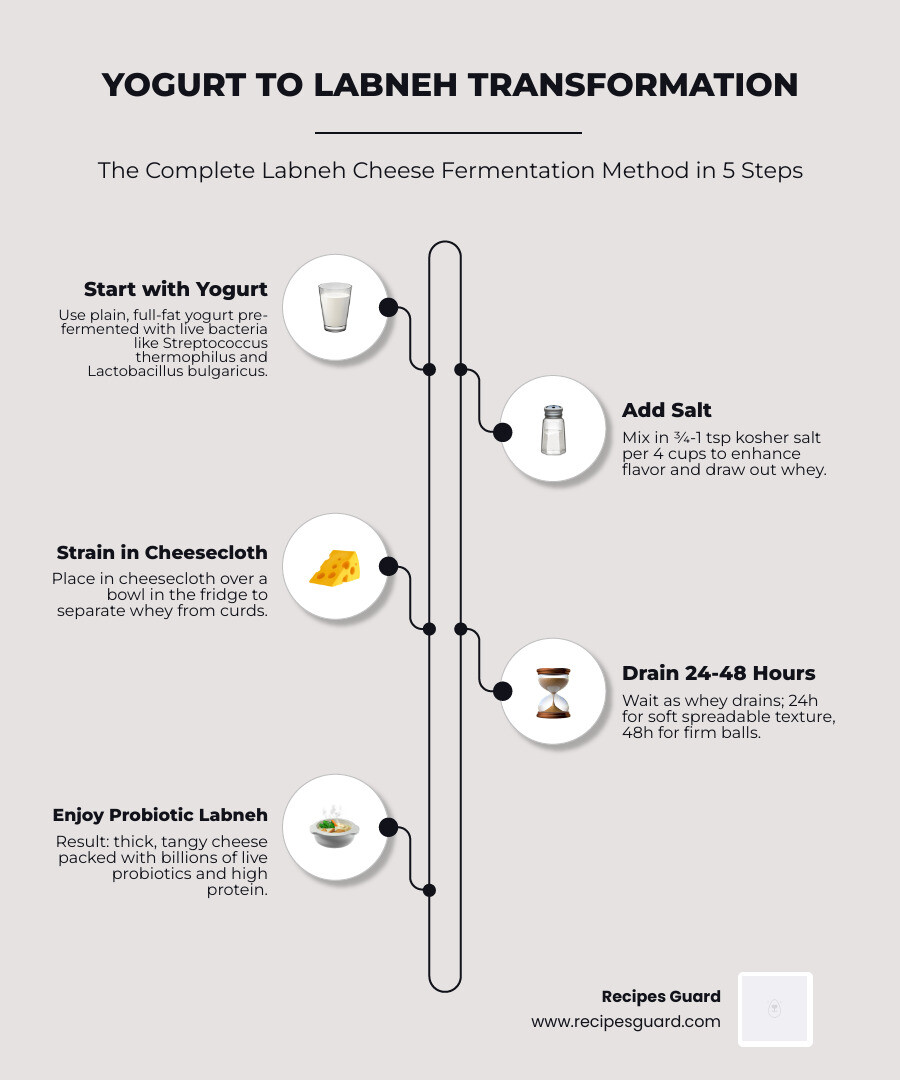
Here’s the quick version of how it works:
- Start with plain, full-fat yogurt (already fermented by live bacteria)
- Mix in salt (about ¾ to 1 teaspoon per 4 cups of yogurt)
- Strain through cheesecloth over a bowl in the refrigerator
- Wait 24–48 hours while whey drains away
- The result: a creamy, protein-rich cheese with billions of live probiotics
24 hours = soft and spreadable. 48 hours = firm enough to roll into balls.
The entire process takes less than 5 minutes of hands-on time. The rest is just patience.
Labneh sits somewhere between Greek yogurt and cream cheese in texture — but unlike either of those, it keeps the full probiotic punch of the original fermented milk. It’s been a staple of Middle Eastern kitchens for thousands of years, and in 2026 it’s becoming a go-to for home fermenters who want maximum flavor and shelf life from minimal effort.
Whether you’re straining basic yogurt or experimenting with kefir-based methods, this guide walks you through every step — including how to not waste the whey.
Understanding the Labneh Cheese Fermentation Method
At Recipes Guard, we believe that understanding the “why” behind your food makes the “how” much more satisfying. The labneh cheese fermentation method isn’t just about making things thick; it’s a biological transformation.
When we talk about labneh, we are essentially talking about “ultra-strained” yogurt. The fermentation actually begins before you even touch the yogurt. Standard yogurt is produced by heating milk (typically to 85-90°C for 5-10 minutes) to eliminate pathogens and then cooling it to 43-45°C. At this point, specific starter cultures—primarily Streptococcus thermophilus and Lactobacillus bulgaricus—are added.
These bacteria consume the lactose (milk sugar) and produce lactic acid. This process continues until the pH drops to approximately 4.6-4.8. This acidity is what causes the milk proteins to denature and form a gel—that’s your yogurt! If you want to dive deeper into other cultured delights, check out our Fermented Recipes for more inspiration.
The “method” part of labneh involves physical separation. By adding salt and using gravity (straining), we remove the liquid whey, concentrating the milk solids. In industrial settings, this is measured as “dry matter content,” usually aiming for 20-25%. At home, we just call it “deliciously thick.”
Texture Comparison: Where Labneh Fits In
| Feature | Regular Yogurt | Greek Yogurt | Labneh Cheese |
|---|---|---|---|
| Straining Time | None | 2-4 Hours | 12-72 Hours |
| Consistency | Liquid/Pourable | Thick/Spoonable | Spreadable/Firm |
| Whey Content | High | Medium | Very Low |
| Protein per 1/4 cup | 2-3g | 5-6g | 8-10g |
| Primary Use | Breakfast/Smoothies | Cooking/Bowls | Dips/Cheese Spreads |
Essential Ingredients and Equipment for Home Fermentation
You don’t need a laboratory to master the labneh cheese fermentation method, but having the right tools makes the process seamless.
The Ingredients
- Full-Fat Yogurt: This is the most critical component. We always recommend whole milk yogurt (cow or goat). Goat’s milk yogurt is a traditional favorite in the Levant and offers a distinct, earthy tang. Avoid “low-fat” or “fat-free” versions; they often contain thickeners like pectin or gelatin that interfere with proper whey separation and result in a chalky texture.
- Kosher Salt: Salt is more than a seasoning here. It helps draw out the moisture (whey) from the yogurt solids. A standard ratio is about 1% salt by weight, or roughly 3/4 tsp to 1 tsp per 32 ounces (4 cups) of yogurt.
- Optional Starters: If you are making your yogurt from scratch before straining, ensure you use high-quality live cultures.
The Equipment
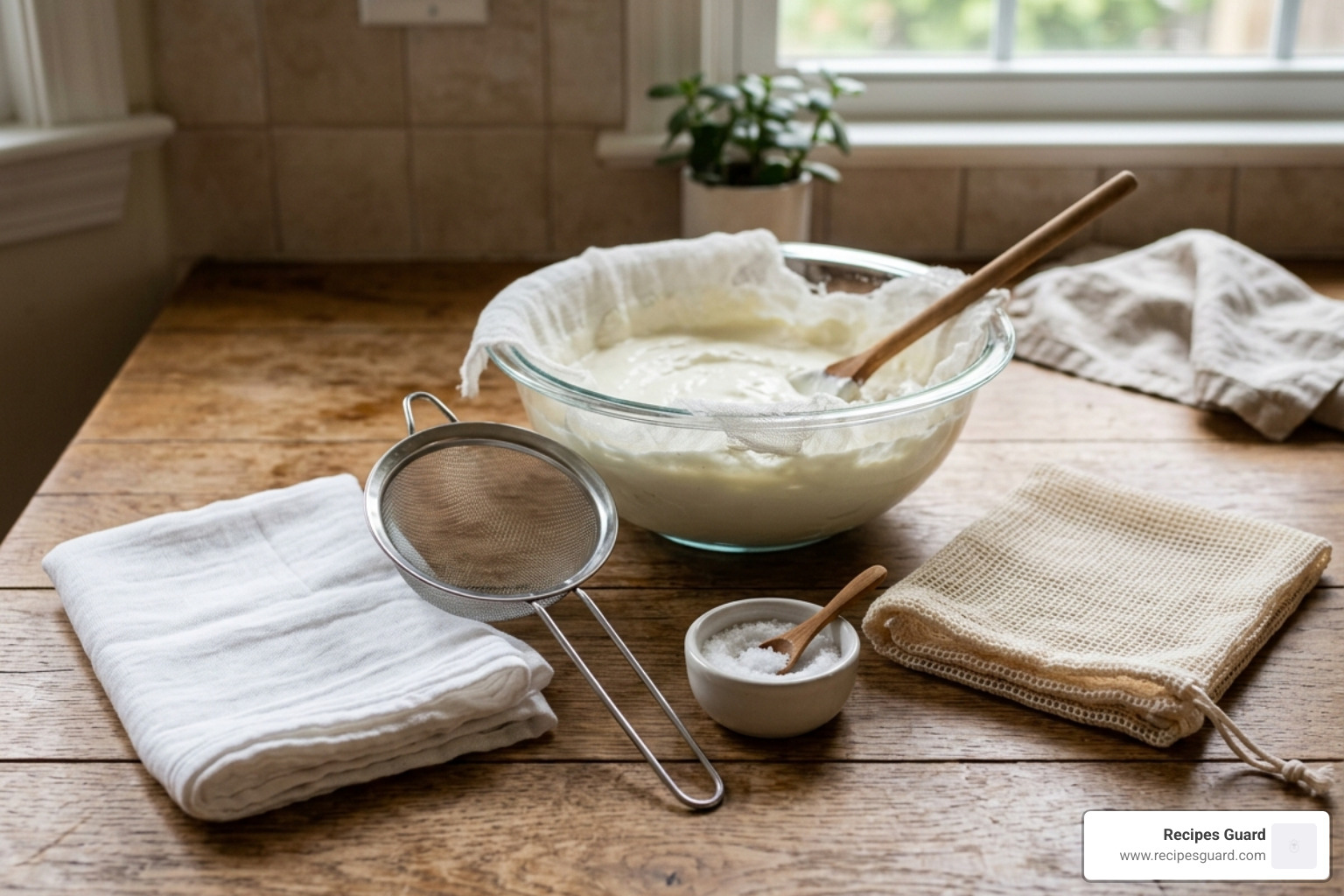
- Cheesecloth or Nut Milk Bag: You need a fine-mesh barrier. Many modern home fermenters prefer a nut milk bag because it’s reusable and less messy than layers of cheesecloth.
- Fine-Mesh Strainer: This supports the cloth and allows the whey to drip through.
- Deep Bowl: Ensure there is enough space between the bottom of the strainer and the bottom of the bowl. You don’t want your cheese sitting in its own drained whey!
- Spring Press (Optional): If you use a specialized tool like a Kefirko Yogurt and Cheese Strainer, you can use a spring press to achieve a super-firm, cream-cheese-like consistency in less time.
- Sterile Glass Jars: Essential for storing the finished product. Safety is paramount when working with live cultures, so be sure to review our Safety First: A Guide to Preserving Fermented Foods for sterilization tips.
Step-by-Step Guide to the Traditional Straining Process
Preparing the Base for the Labneh Cheese Fermentation Method
The first step is simple: mix your yogurt and salt. Use a clean whisk or spoon to ensure the salt is evenly distributed. This ensures that the moisture extraction happens uniformly throughout the batch.
While traditional methods in the Middle East often involve straining at room temperature to allow for a slight “extra” fermentation (increasing the tang), we generally recommend straining in the refrigerator for the first 24 hours, especially if you are using commercial yogurt. This keeps the environment controlled and safe. If you’re feeling adventurous and want to explore more room-temperature ferments, you might enjoy our guide: Don’t Be Afraid of the Funk With This Easy Fermented Garlic Recipe.
Straining and Achieving the Perfect Texture
Once mixed, scoop the yogurt into your cloth-lined strainer. You have two main options for the actual straining:
- The Hanging Method: Tie the corners of your cheesecloth around a wooden spoon and balance it over a deep pitcher or bowl. This uses gravity most effectively.
- The Compression Method: Place a weighted lid (like a heavy cast iron pot lid) on top of the yogurt bundle inside the strainer. This speeds up the process and creates a very dense, smooth cheese.
Timing is Everything:
- 12 Hours: Results in a “labneh cream” that is perfect for sauces or as a substitute for sour cream.
- 24 Hours: This is the “sweet spot” for most. It yields a spreadable texture similar to thick Greek yogurt but much richer. You can expect about a 50% reduction in volume (32 oz of yogurt becomes 16 oz of labneh).
- 48 to 72 Hours: The labneh becomes firm and slightly dry, similar to a soft goat cheese. At this stage, it can be rolled into balls for oil preservation.
Advanced Techniques: Kefir-Based and Industrial Methods
The Triple-Fermented Kefir Labneh Cheese Fermentation Method
For those who want to take their probiotic game to the next level, labneh can be made from milk kefir instead of yogurt. Kefir contains a much wider variety of bacteria and yeasts than standard yogurt.
The “Triple-Fermented” method is a favorite among enthusiasts:
- Initial Fermentation: 24-48 hours with kefir grains in milk.
- Second and Third Fermentation: After removing the grains, the kefir is left at room temperature for two additional 6-8 hour cycles between periods of refrigeration.
- Straining: The resulting kefir is strained for 48 hours. This creates a complex, effervescent, and incredibly healthy “Kefir Curd Cheese.”
Industrial vs. Artisanal Production
How does the tub you buy at the store compare to what’s in your fridge? Industrial production is a feat of engineering:
- Homogenization: Milk is processed at 150-200 bar to ensure a perfectly creamy mouthfeel.
- Ultrafiltration: Instead of waiting for gravity, factories use high-tech membranes to separate the whey instantly.
- Standardization: Every batch is tested to ensure a pH of exactly 4.6-4.8 and a specific fat content.
While industrial labneh is consistent, it often lacks the “living” character of homemade versions. Artisanal methods allow the bacteria to continue developing flavor as they strain, leading to a more nuanced, tangy profile.
Preservation, Storage, and Creative Uses for Whey
Once you’ve mastered the labneh cheese fermentation method, you’ll likely have a surplus. Don’t let it go to waste!
Storing Your Labneh
Fresh labneh kept in an airtight container in the fridge will last about 10 days to 2 weeks. However, if you want it to last for months, you should preserve it in oil. Roll firm labneh (strained for 48-72 hours) into walnut-sized balls. Place them in a sterilized jar and cover them completely with extra virgin olive oil. You can add dried mint, chili flakes, or garlic to the oil for extra flavor. These will keep for up to 3 months! For more on the fundamentals of keeping food fresh, visit our Preserving Basics section.
You can even use your labneh as a base for other ferments, much like how we use peppers in our guide to Mastering the Art of Lacto-Fermented Hot Sauce.
Don’t Lose Your Whey!
One of the biggest mistakes beginners make is pouring the leftover whey down the drain. From 4 cups of yogurt, you’ll get about 2 cups of whey. This liquid is “liquid gold” packed with protein and probiotics.
- Smoothies: Use it as a liquid base for a tangy protein boost.
- Baking: Use whey instead of water or milk in bread recipes (it helps the dough rise and adds a sourdough-like tang).
- Soup: Add it to stocks for a depth of flavor.
- Quick Pickles: Use it as a starter for Quick and Easy Pickled Vegetables for Every Meal.
Frequently Asked Questions about Labneh Fermentation
Why is my labneh grainy or lumpy instead of smooth?
This usually happens if the yogurt was over-heated during its initial production or if you used a low-fat yogurt. To fix this, simply whisk in a tablespoon of cold water or a little bit of the reserved whey until it smooths out.
Can I use non-dairy or plant-based yogurts for this method?
Yes! You can use coconut, almond, or soy yogurt. However, because these lack the same protein structure as animal milk, they may not thicken as firmly. You may need to strain them longer or accept a slightly softer consistency.
How do I know if my labneh has fermented too long?
Labneh is naturally tangy, but if it develops a sharp, vinegary smell or shows any signs of colorful mold (pink, green, or black), it has gone bad. A “yeasty” smell is normal for kefir-based labneh, but standard yogurt labneh should smell clean and bright. If you ever feel unsure, remember our motto at Recipes Guard: “When in doubt, throw it out.” But generally, the high acidity and salt content make labneh very resistant to spoilage.
Conclusion
The labneh cheese fermentation method is a testament to the magic of simple food preservation. By April 2026, as more people look for sustainable, gut-healthy ways to manage their kitchens, labneh stands out as the ultimate “zero-waste” dairy product. You get a versatile cheese, a probiotic boost, and a nutrient-dense liquid in the form of whey.
At Recipes Guard, we’re dedicated to helping you master these traditional skills. Whether you’re spreading it on pita, rolling it into balls for a mezze platter, or using the whey for your next loaf of bread, you’re participating in a culinary tradition that spans millennia.
Ready to explore more? Check out More info about preserving basics to continue your fermentation journey!
External Resources for Inspiration:
- Labneh Recipe | Epicurious
- Homemade Labneh Recipe – Love and Lemons
- Authentic Labneh Recipe {2 Ingredients to Make!)
- Homemade Labneh
- How to Make Labneh Cheese – A Little And A Lot
CTA: Visit Recipes Guard Preserving Basics for more expert guides on keeping your kitchen fermented and fresh!