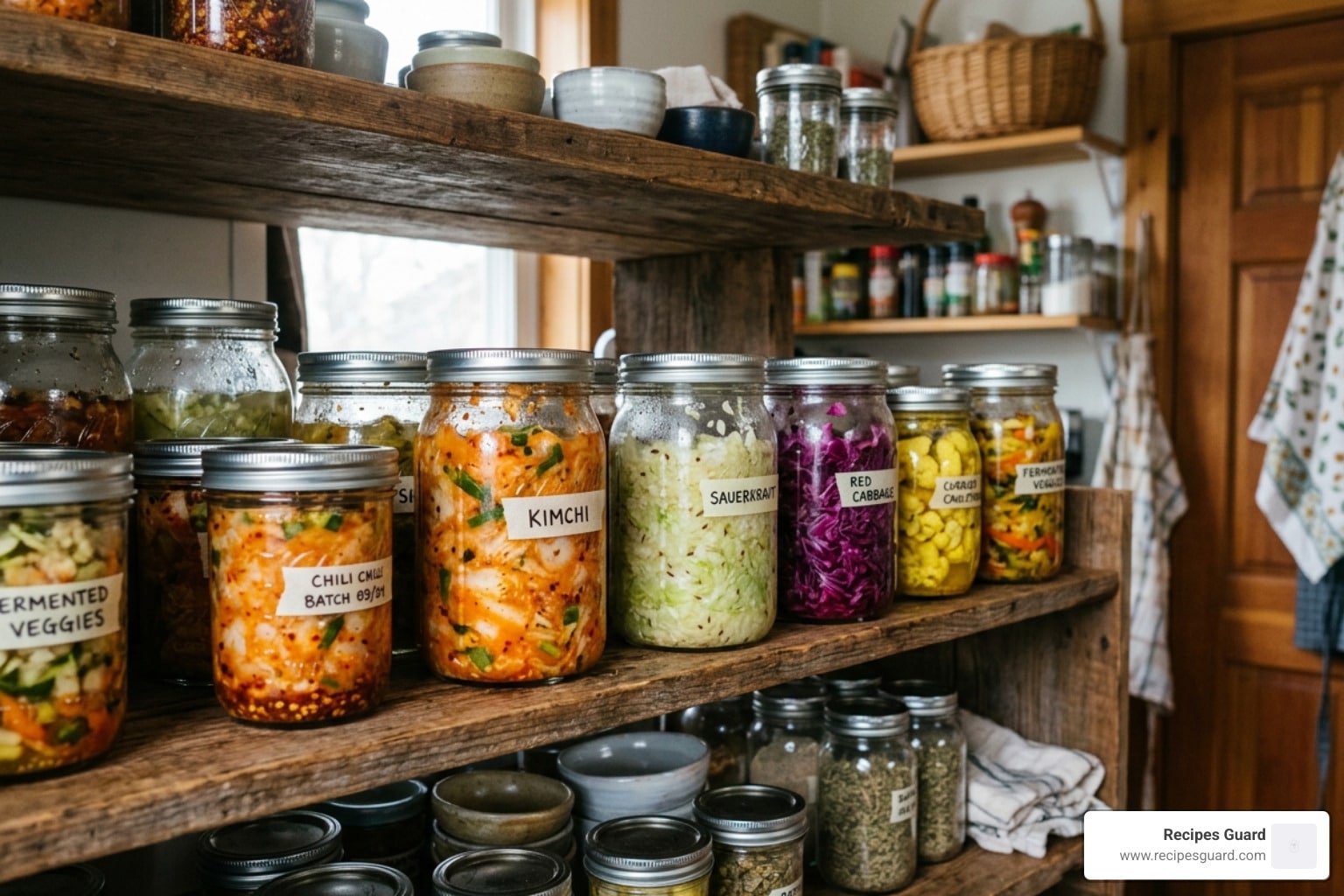
Keep Your Cool: A Guide to Storing Fermented Vegetables
Why Knowing How to Store Fermented Vegetables Makes All the Difference
Store fermented vegetables the right way, and they can last for a year or more — packed with flavor, probiotics, and nutrition. Store them wrong, and you could end up with mushy, moldy jars that go straight into the trash.
Here’s a quick summary of how to store fermented vegetables properly:
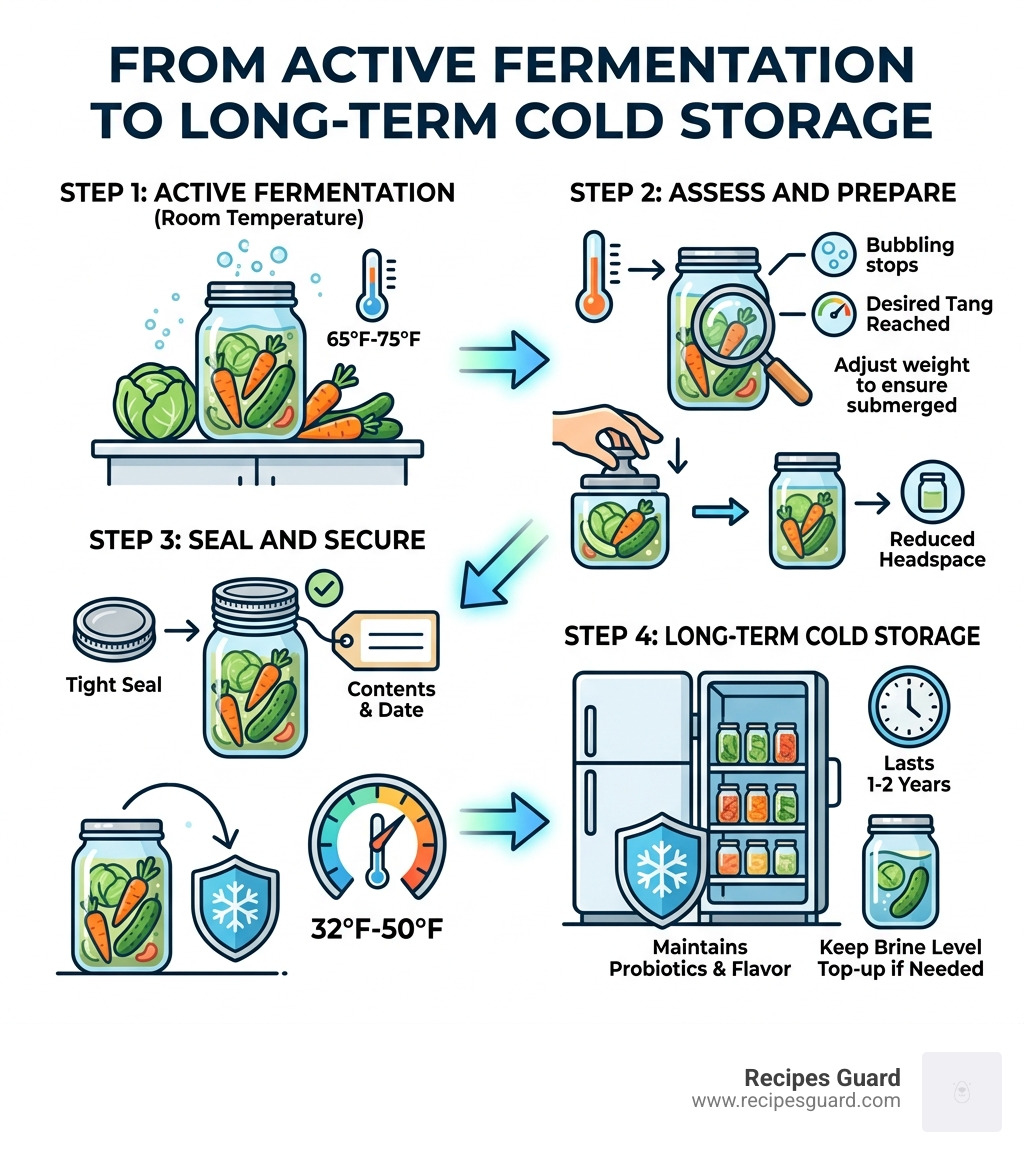
- Temperature: Keep finished ferments between 32–50°F (refrigerator, root cellar, or cold basement)
- Brine coverage: Always keep vegetables fully submerged under brine to prevent mold
- Air space: Minimize headspace by repacking into smaller jars as you eat through them
- Salt: Use a 2–3% brine concentration for active ferments; slightly stronger for long-term storage
- Shelf life: Properly stored fermented vegetables last 1–2 years in cold storage
- Signs it’s ready: Fermentation is done when bubbling stops and the flavor is pleasantly tangy
You’ve done the hard part. You’ve salted, packed, and waited. Your vegetables are bubbling away, developing that sharp, tangy flavor you’ve been working toward.
But now what?
Moving a finished ferment into storage is where a lot of home fermenters run into trouble. Too much air. Dropping brine levels. Unexpected mold. These are common problems — and they’re almost entirely preventable with the right approach.
Americans eat more than 2.5 million pounds of pickles every year. Fermented vegetables have been a staple of food preservation for centuries, long before refrigerators existed. People stored crocks of sauerkraut in root cellars and buried kimchi pots underground — and it worked.
This guide covers everything you need to know to store your ferments safely and confidently, from ideal temperatures and brine management to troubleshooting mold and repackaging half-finished jars.
Optimal Conditions to Store Fermented Vegetables
When we talk about the “best” way to store fermented vegetables, we are essentially talking about how to slow down time. Fermentation is a living process driven by Lactobacillus bacteria. If left at room temperature indefinitely, these bacteria will continue to consume sugars, making your vegetables increasingly sour and eventually soft.
To preserve the crunch and the perfect level of tang, we need to control the environment. The gold standard for storage temperature is between 32°F and 50°F. This range is cool enough to put the microbes into a state of “hibernation” without killing them.
Temperature and Environment
According to the General Information on Fermenting – National Center for Home Food Preservation, temperature is the most critical factor in both the success of the ferment and its subsequent shelf life. While active fermentation thrives at 65–75°F, long-term storage requires a significant drop.
If you have a root cellar or a very cold basement, these are traditional and highly effective spots. However, for most of us in April 2026, the kitchen refrigerator is the most reliable tool. Cold storage doesn’t just stop the souring; it also protects the delicate enzymes and probiotics that make these foods so healthy.
Light Degradation and UV Protection
We often forget that light is an enemy of food preservation. UV rays can degrade the quality of the vegetables and even impact the nutritional profile over several months. Always aim to store fermented vegetables in a dark place. If your refrigerator has a glass door or you are using a pantry shelf, consider wrapping your jars in a dark cloth or using amber-colored glass jars to provide an extra layer of protection.
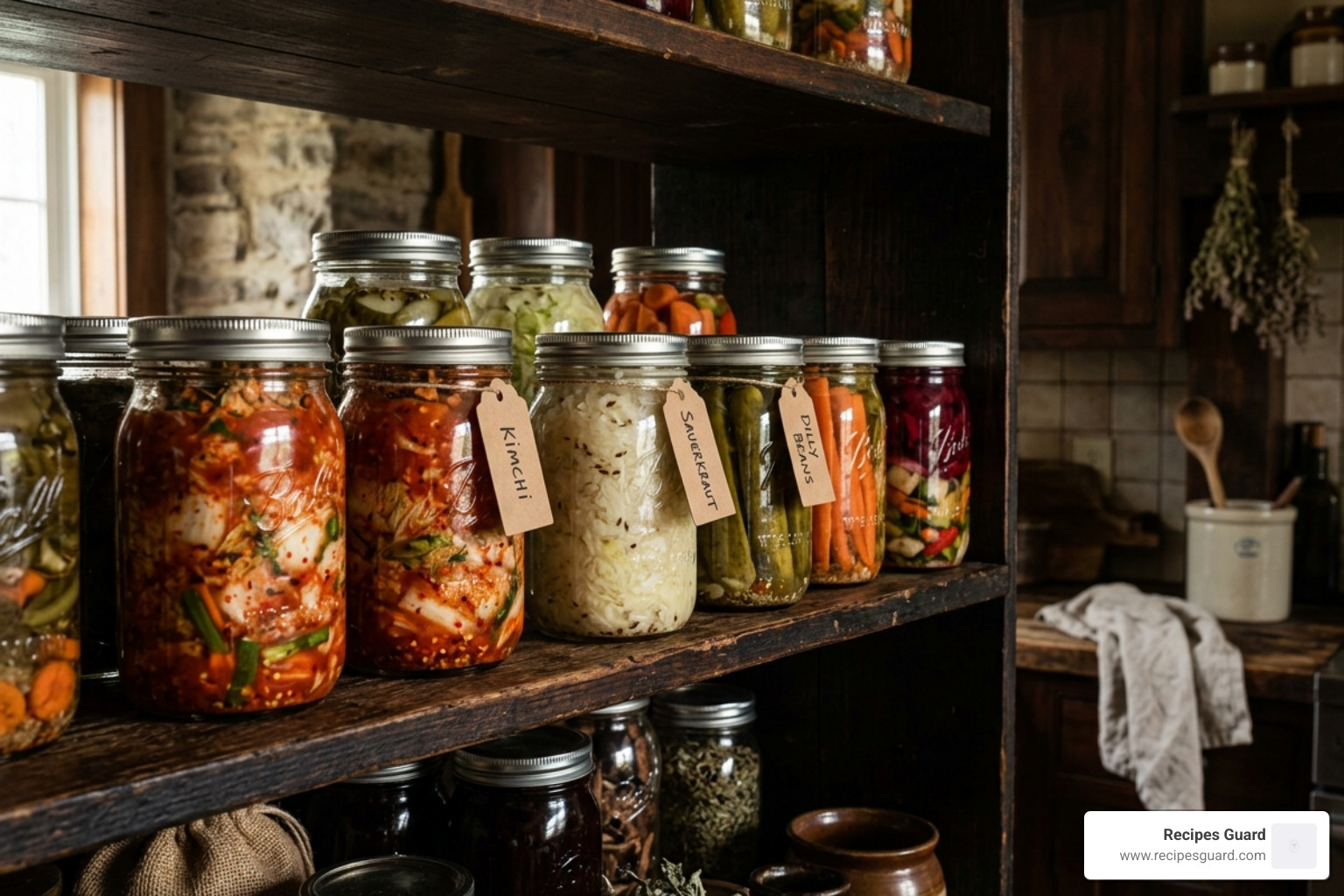
Refrigeration vs. Room Temperature Storage
There is a lively debate in the fermentation community: do you really need a fridge? Historically, the answer was no. Our ancestors used crocks buried in the earth or kept in deep stone cellars.
However, modern homes are often kept much warmer than historical dwellings. If you leave a finished jar of sauerkraut on a 75°F kitchen counter, it will likely become “mushy” within a few weeks as the pectin in the vegetables breaks down. Moving the jar to the fridge maintains the structural integrity of the vegetable.
We recommend checking our guide on Safety First: A Guide to Preserving Fermented Foods to understand how acidity levels (pH) interact with temperature to keep your food safe from pathogens. As long as the pH is below 4.6, the food is technically shelf-stable, but “stable” doesn’t always mean “tasty.” Cold storage keeps it tasting fresh.
How Long Can You Store Fermented Vegetables?
One of the most impressive statistics in food preservation is that properly fermented vegetables can last one to two years safely. While most people eat their batches much faster, you can rest easy knowing that a large harvest of cucumbers or cabbage can see you through to the next growing season.
Approximately 100,000 to 125,000 acres are devoted to growing pickling cucumbers in the United States. If you’ve contributed to that number with your home garden, you’ll be glad to know that the Vitamin C levels in ferments like sauerkraut actually remain quite stable over months of cold storage. For more ideas on what to put in your jars, see our Quick and Easy Pickled Vegetables for Every Meal guide.
Maintaining Brine and Preventing Spoilage
The most important rule of fermentation is: Under the brine, all is fine.
Lacto-fermentation is an anaerobic process, meaning it happens in the absence of oxygen. The brine acts as a physical barrier between your vegetables and the air. If the brine level drops and the vegetables are exposed to oxygen, mold and yeast will inevitably move in.
The Role of Salt in Long-Term Preservation
Salt is not just for flavor; it is a safety mechanism. It inhibits the growth of “bad” bacteria while allowing the salt-tolerant Lactobacillus to thrive. For long-term storage, some experts suggest using a slightly stronger brine. While a 2% salt-to-weight ratio is standard for a Sauerkraut Recipe, moving toward 3% can provide an extra safety buffer if you plan to store the jars for over a year.
| Fermentation Phase | Recommended Brine Ratio | Purpose |
|---|---|---|
| Active Fermentation | 2% – 2.5% | Encourages microbial growth and flavor development |
| Long-Term Storage | 2.5% – 3% | Maximizes shelf stability and prevents softening |
| Cold Storage Topping | 2% Brine Solution | Replaces evaporated or absorbed liquid |
If you notice your brine levels have dropped after moving a jar to the fridge (vegetables often “drink” some of the brine), don’t just add plain water. This dilutes the salt and acidity. Instead, mix a small batch of 2% brine (about 1 teaspoon of salt per cup of water) and top off the jar.
Minimizing Air Space and Repackaging
As you eat your ferments, the “headspace” (the empty air at the top of the jar) increases. This is a common pitfall. The more air in the jar, the higher the risk of surface mold or oxidation, which can turn the top layer of vegetables gray or brown.
We follow a simple rule: Repack when you reach the halfway point. If you have a gallon jar of kraut that is now half-empty, move the remaining contents into two-quart jars or a single half-gallon jar. This minimizes the oxygen exposure. For more on these techniques, visit our Preserving Basics section.
Using fermentation weights — like glass pucks or even a smaller jar filled with water — is also helpful during storage to keep the vegetables pushed down. If you’re working with smaller items like cloves, our Don’t Be Afraid of the Funk with This Easy Fermented Garlic Recipe offers specific tips for keeping small floaters submerged.
Troubleshooting Common Storage Issues
Even the most experienced fermenters occasionally face “the funk.” Knowing how to distinguish between a minor aesthetic issue and a batch-killing mold is vital.
Kahm Yeast vs. Mold
One of the most frequent questions we get is about a white, thin, powdery film on the surface of the brine. This is usually Kahm yeast. It is harmless, though it can impart a slightly “yeasty” or “cheesy” odor if left too long. You can simply skim it off.
Mold, on the other hand, is usually fuzzy and can be colorful (green, black, or pink). If you see fuzzy mold, the safest bet is to toss the batch, especially if you are sensitive to molds.
Mushiness and Texture Changes
If your pickles come out of storage and turn to mush in your hand, it’s usually due to one of three things:
- Temperature: It was stored too warm.
- Enzymes: The blossom ends of cucumbers weren’t removed (they contain softening enzymes).
- Salt: Not enough salt was used to maintain the pectin structure.
For liquid-based ferments like those found in Mastering the Art of Lacto-Fermented Hot Sauce, texture is less of an issue, but you should still watch for separation or off-smells.
Best Practices for Long-Term Storage
To ensure your ferments stay pristine for a year or more, follow these “Pro” tips:
- Sterilization: Always start with sterilized jars. While the fermentation process creates an acidic environment that kills many pathogens, starting clean is non-negotiable for long-term storage.
- Clean Utensils: Never double-dip! Use a clean fork every time you grab a pickle. Introducing bacteria from your mouth or other foods can cause a jar to spoil in the fridge.
- Combining Batches: You can combine different batches of the same ferment (e.g., two half-jars of sauerkraut) to save space and reduce headspace. Just ensure both batches are “finished” and taste good before mixing.
- Airlocks: While you can use a standard lid in the fridge, some prefer to keep an airlock on for the first week of cold storage just in case the microbes produce a final burst of CO2.
Explore our full range of Fermented Recipes to see how different vegetables require slightly different handling.
Frequently Asked Questions about Ferment Storage
How do I know if my ferment is ready for cold storage?
Your ferment is ready when it reaches your preferred flavor profile. Generally, this takes 1–4 weeks at room temperature. Look for:
- Bubbling cessation: The active “roiling” bubbles have slowed down.
- Color change: Vegetables often move from bright colors to a more muted, translucent appearance (like a “cooked” look).
- Aroma: It should smell sour and vinegary, never like rotting garbage.
- pH: If you have pH strips, a reading of 4.6 or lower indicates it is safely acidified.
Can I store fermented fruits the same way as vegetables?
Fermented fruits are a bit different. Because they have higher sugar content, they tend to ferment much faster and can quickly turn into alcohol (and then vinegar).
- Shelf Life: While vegetables last a year, fermented fruits should generally be eaten within 2–4 weeks.
- Texture: Fruits soften much faster than vegetables. We recommend eating them while they still have a bit of “pop.”
Is it safe to freeze fermented vegetables to stop fermentation?
You can freeze them, but we usually don’t recommend it for vegetables you want to eat crunchy. Freezing breaks the cell walls of the vegetables, resulting in a very soft texture once thawed.
- Probiotic Survival: Most probiotics will survive freezing (they just go dormant), but the texture sacrifice is high.
- The Exception: Freezing “LiveBrine” or leftover pickle juice into ice cubes is a fantastic way to preserve the liquid for use in smoothies or cocktails without worrying about the texture of the veg. If you do freeze, use double-layer protection to prevent freezer burn.
Conclusion
At Recipes Guard, we believe that mastering the art of how to store fermented vegetables is the final step in becoming a self-sufficient home cook. By respecting the biological needs of your “microbial pets,” you can turn a seasonal harvest into a year-round supply of gut-healthy treats.
Whether you are tucking away a massive crock of sauerkraut for the winter or just keeping a small jar of fermented garlic in the back of your fridge, the principles remain the same: keep it cool, keep it submerged, and keep it dark.
Ready to fill your pantry? Explore our full collection of Fermented Recipes and start your next batch today!