Bubbles or Trouble? A Guide to Fermented Salsa Safety
Is Fermented Salsa Safe to Eat? Here’s What You Need to Know
Is fermented salsa safe to eat? Yes — when made correctly, it is not only safe but actually harder for harmful bacteria to survive in than fresh salsa.
Here’s the short answer:
- Properly fermented salsa is safe because beneficial bacteria produce lactic acid, which lowers the pH and creates an environment where pathogens cannot thrive
- Botulism is not a realistic risk — the bacteria responsible requires low-acid, oxygen-free conditions, and fermented salsa has neither
- Bubbling is a good sign, not a warning — it means active, healthy fermentation is happening
- Discard if you see fuzzy colored mold, smell something putrid, or notice slime — those are the real red flags
So why do so many home cooks still feel nervous about it?
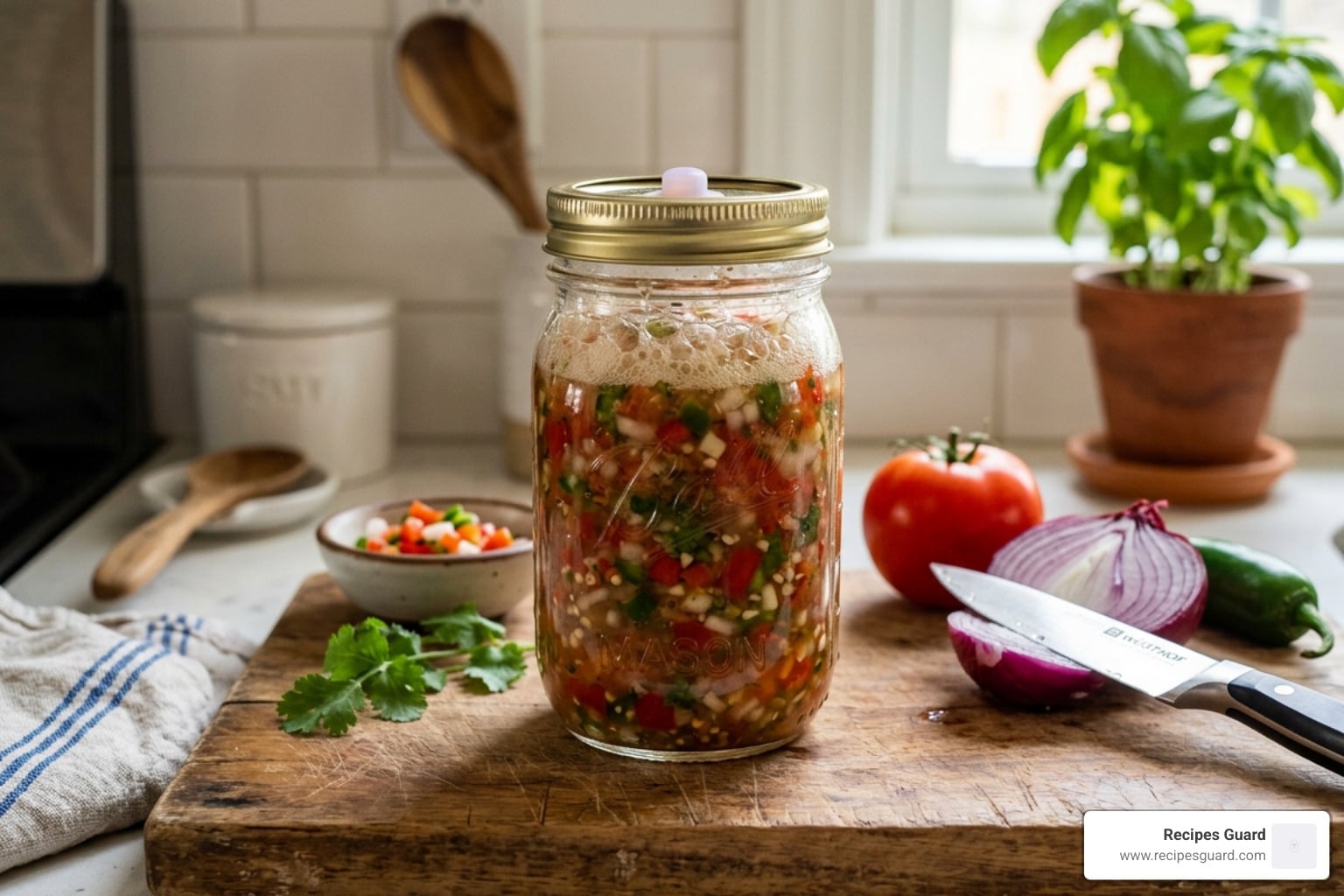
Fermentation looks a little wild. Jars bubble. Brine gets cloudy. The salsa smells tangy and alive. It’s easy to confuse active fermentation with spoilage — especially if you’re new to the process.
But that bubbling jar on your counter? It’s doing exactly what it’s supposed to do. The lactic acid bacteria naturally present on vegetables are breaking down sugars, producing acid, and essentially preserving your salsa from the inside out — the same way humans have been preserving food for thousands of years.
This guide breaks down the science, the safety signals, and the practical steps you need to ferment salsa with confidence.
Is Fermented Salsa Safe to Eat? Understanding the Science
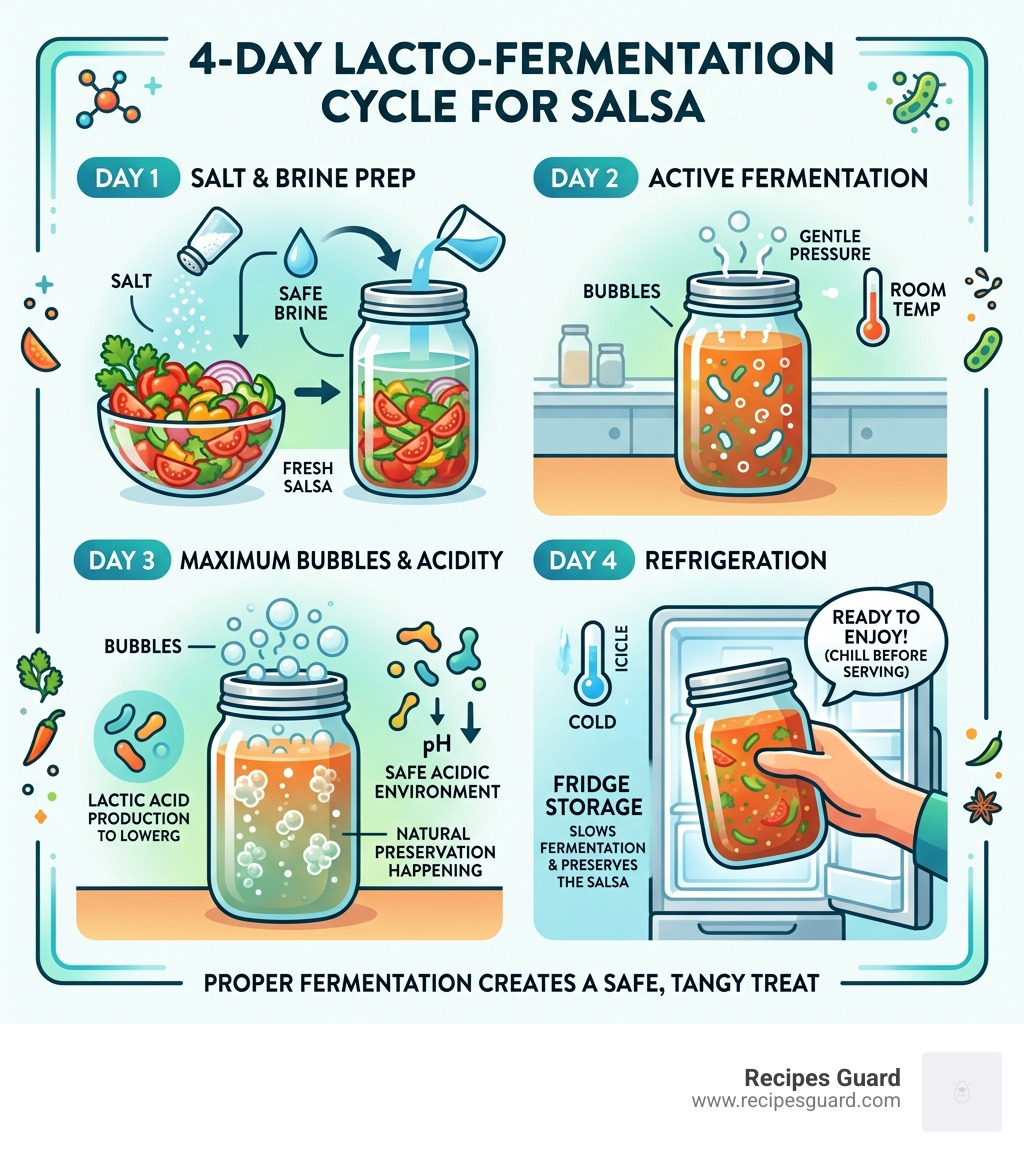
To understand why we can confidently say yes to the question is fermented salsa safe to eat, we have to look at the microscopic battle happening inside your mason jar. This process is known as lacto-fermentation. It doesn’t involve milk; rather, it refers to Lactobacillus bacteria. These friendly microbes are already living on the skins of your tomatoes, peppers, and onions.
When we place these vegetables in a salty environment (the brine), we create a “pro-biotic” filter. The salt inhibits “bad” spoilage bacteria while allowing the “good” lactic acid bacteria to flourish. As these beneficial bacteria eat the natural sugars in the salsa, they produce lactic acid as a byproduct.
This lactic acid is the secret to safety. It rapidly lowers the pH of the salsa. Most harmful pathogens, including E. coli and Salmonella, simply cannot survive in an environment with a pH below 4.6. By the time your salsa is tangy and bubbly, it has become a self-preserving ecosystem. For a deeper dive into these mechanics, check out Safety First: A Guide to Preserving Fermented Foods.
The safety of this process isn’t just folk wisdom; it’s backed by the Scientific research on the antimicrobial properties of lactic acid bacteria, which highlights how these bacteria produce natural compounds that kill off competitors.
| Feature | Fresh Salsa | Canned Salsa | Fermented Salsa |
|---|---|---|---|
| Preservation Method | Refrigeration | Heat/Vinegar | Lactic Acid/Salt |
| Microbial Status | Raw/Active | Sterile (Dead) | Probiotic (Live) |
| Shelf Life | 5-7 Days | 12+ Months (Unopened) | 2-9 Months (Refrigerated) |
| Safety Risk | High (Spoils fast) | Low (if sealed) | Very Low (Self-acidifying) |
Why is fermented salsa safe to eat for most people?
Beyond just being “not dangerous,” fermented salsa is actually a functional superfood. Because the bacteria have partially “pre-digested” the vegetables, the nutrients become more bioavailable. For example, fermentation can significantly increase the absorption of iron and the levels of Vitamin C. In some fermented vegetables like cabbage, Vitamin C levels can jump tenfold compared to their raw state!
Furthermore, the live enzymes and probiotics support a healthy gut microbiome, which is linked to everything from better digestion to improved immune function. If you’re looking to expand your probiotic horizons, our Fermented Recipes section offers plenty of inspiration.
Addressing the botulism myth: is fermented salsa safe to eat?
The word “botulism” (caused by Clostridium botulinum) often haunts the dreams of home preservers. However, when people ask is fermented salsa safe to eat regarding botulism, the answer is a resounding yes.
Clostridium botulinum is a “strict anaerobe,” meaning it requires a completely oxygen-free, low-acid environment to produce its toxin. Fermented salsa doesn’t fit this profile for two reasons:
- Acidity: As we mentioned, the lactic acid bacteria quickly drop the pH. Botulism cannot grow in acidic conditions (pH below 4.6).
- Oxygen Exposure: While we submerge the vegetables in brine, the process itself isn’t the same as the vacuum-sealed, pressurized environment of a tin can.
In April 2026, food safety experts continue to emphasize that there has never been a documented case of botulism from properly fermented vegetables. The “funk” you smell is lactic acid, not a deadly toxin.
Signs of Success vs. Spoilage: How to Tell if Your Salsa is Safe
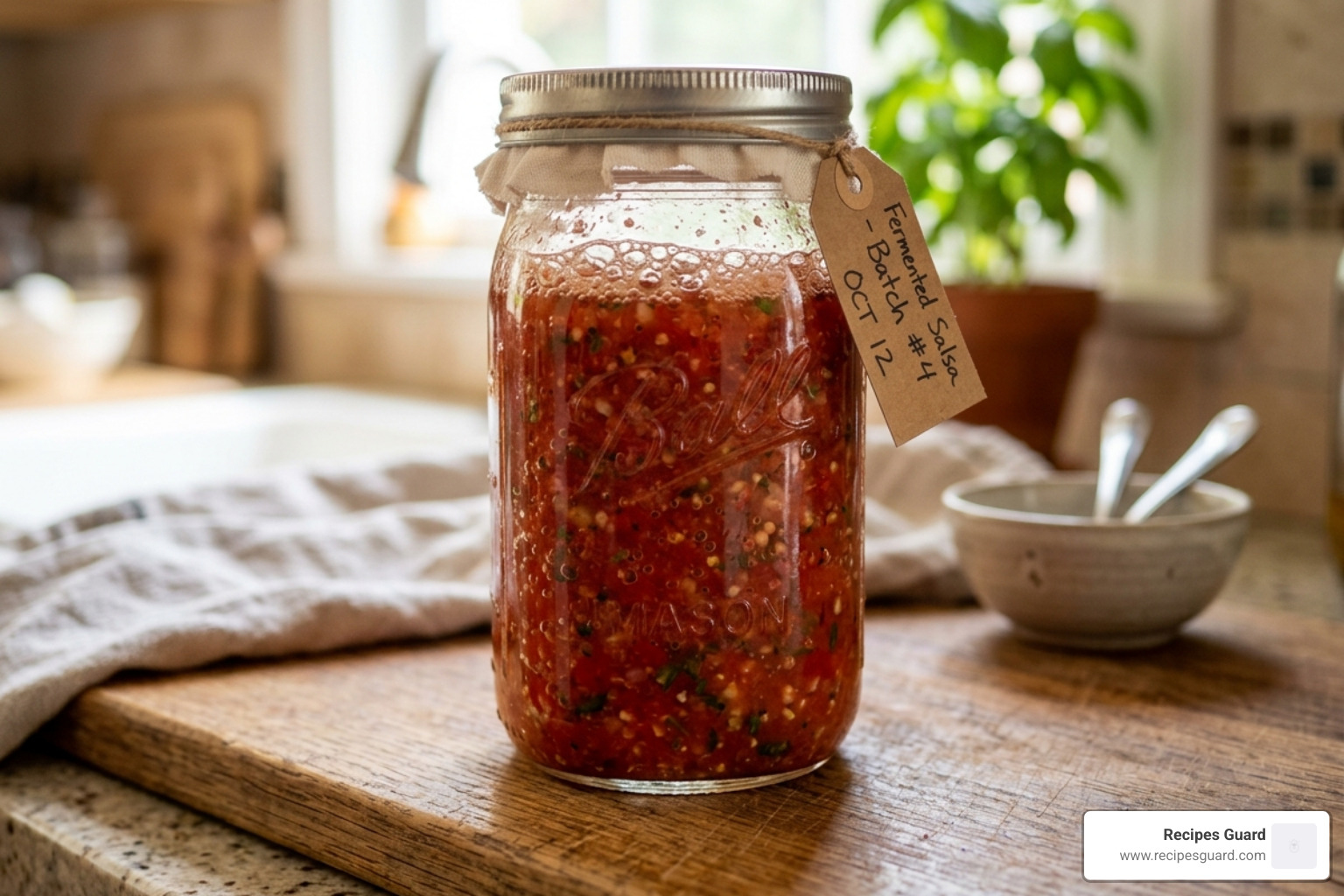
How do you know if your experiment is a success? Your senses are your best tools. A safe, successful ferment will show several clear signs:
- Bubbles: You’ll see tiny carbon dioxide bubbles rising to the top or trapped in the salsa.
- Color Change: The vibrant red of the tomatoes might dull slightly, and jalapeños often turn a muted olive green. This is normal!
- Smell: It should smell sour, tangy, and bright—similar to a pickle or sauerkraut.
- Taste: It should have a pleasant “zing” or effervescence on the tongue.
If you’ve ever tried Mastering the Art of Lacto-Fermented Hot Sauce, you’ll recognize these signs immediately.
What to do if you see mold or yeast
This is where many beginners panic. If you see a thin, white, opaque film on the surface of your brine, don’t throw it out just yet! This is likely Kahm yeast. It’s harmless, though it can affect the flavor if left too long. You can simply scrape it off.
However, mold is different. Mold is usually fuzzy and can be white, green, black, or pink.
- White fuzzy mold: Some traditionalists scrape this off, but we recommend caution. If the mold is only on a piece of vegetable poking above the brine, discard that piece and ensure the rest is submerged.
- Colored mold (Green, Black, Pink): This is a dealbreaker. If you see colorful fuzz, the batch belongs in the compost.
For more on managing these “funky” moments, read Don’t Be Afraid of the Funk with This Easy Fermented Garlic Recipe.
Identifying off-smells and textures
If your salsa smells like “mildewey alcohol,” old gym socks, or something putrid, trust your nose. Fermentation should smell clean and sour. A “stinky” smell often indicates that the salt ratio was too low or the temperature was too high, allowing putrefying bacteria to take over.
Similarly, check the texture. While fermented salsa is softer than fresh pico de gallo, it shouldn’t be “slimy” or “mushy.” If the vegetables have turned into a literal sludge, it’s a sign that pectolytic enzymes (often from mold or high heat) have broken down the structure. When in doubt, throw it out!
Essential Tips for Safe Home Fermentation
Safety in fermentation starts with preparation. You don’t need a laboratory, but you do need to follow a few “Golden Rules” to ensure your salsa stays in the safe zone.
Salt ratios and water quality
Salt is your primary safety net. We recommend using non-iodized salt, such as sea salt, Himalayan pink salt, or Celtic salt. Avoid standard table salt, as the iodine can inhibit the good bacteria and turn your vegetables a weird color.
A standard safe ratio for salsa is about 2% salt by weight of the vegetables. If you are making a brine, a common rule of thumb is 1 tablespoon of salt per cup of water. This concentration is high enough to stop pathogens but low enough for Lactobacillus to thrive. Also, use filtered, chlorine-free water; chlorine is designed to kill bacteria, and it doesn’t distinguish between the “good” and “bad” ones! For more quick pickling tips, see Quick and Easy Pickled Vegetables for Every Meal.
Temperature and environment control
Bacteria are very sensitive to their environment.
- Ideal Range: 60°F to 75°F (15°C to 24°C).
- Too Cold: Fermentation will stall or take weeks.
- Too Hot: The salsa may ferment too fast, leading to mushy textures or off-flavors. In the heat of summer, find the coolest spot in your house—perhaps a basement or a dark pantry.
Keep your jars out of direct sunlight, as UV rays can be antimicrobial and may kill off the very cultures you’re trying to grow.
Storage and Shelf Life: Keeping Your Salsa Fresh in 2026
Once your salsa has reached that perfect level of tanginess (usually 2 to 5 days at room temperature), it’s time to move it to “cold storage”—your refrigerator.
The cold doesn’t stop fermentation, but it slows it down to a crawl. In the fridge, the flavors will continue to deepen and mellow.
- How long does it last? Most sources say 2-3 weeks for peak freshness, but many experienced fermenters find that properly acidified, submerged salsa can last up to 9 months.
- Pro Tip: Always use a clean spoon to scoop out your salsa. Introducing bacteria from your mouth or other foods into the jar is the fastest way to cause spoilage.
Frequently Asked Questions about Fermented Salsa Safety
Can I ferment store-bought salsa to make it safe?
You actually can! If you have a jar of “fresh” salsa from the refrigerated section of the grocery store (the kind without preservatives), you can add a little salt or a “starter” like whey or sauerkraut juice and let it sit at room temperature for a day or two. However, shelf-stable canned salsa has been pasteurized (heat-killed), so it contains no live bacteria. You would have to add a starter culture to get that moving.
Why is my fermented salsa fizzy and is it safe to eat?
Yes, it is safe! The fizziness is caused by carbon dioxide, a natural byproduct of the fermentation process. It’s essentially “salsa soda.” Some people love the effervescent zing, while others find it startling. If it’s too fizzy for your taste, just give it a good stir to release the gas bubbles before eating.
Is it safe to ferment salsa without using whey?
Absolutely. This is called “wild fermentation.” The vegetables themselves are covered in the bacteria needed for the job. While some recipes use whey (the liquid from strained yogurt) to speed things up, salt alone is perfectly safe and often results in a cleaner, more traditional flavor profile.
Conclusion
At Recipes Guard, we believe that bringing fermentation back into the modern kitchen is one of the best ways to support a gut-healthy lifestyle. While the bubbles and the “funk” might seem intimidating at first, the science is on your side. By following basic salt ratios, keeping your vegetables submerged, and trusting your senses, you can transform seasonal tomatoes into a probiotic-rich culinary staple.
So, is fermented salsa safe to eat? Not only is it safe, but it’s a delicious way to preserve the harvest and boost your health. Ready to start your own bubbling experiment? Explore our full collection of Fermented Recipes and join the “culture” today!