Lactic Fermentation Pickles: A Guide to Crocks, Jars, and Patience
What Is Fermentation in Pickle — and Why It Matters
Fermentation in pickle is the process where naturally occurring bacteria convert the sugars in cucumbers into lactic acid, preserving the vegetable and creating that sharp, tangy flavor — no vinegar required.
Here’s a quick summary of how it works:
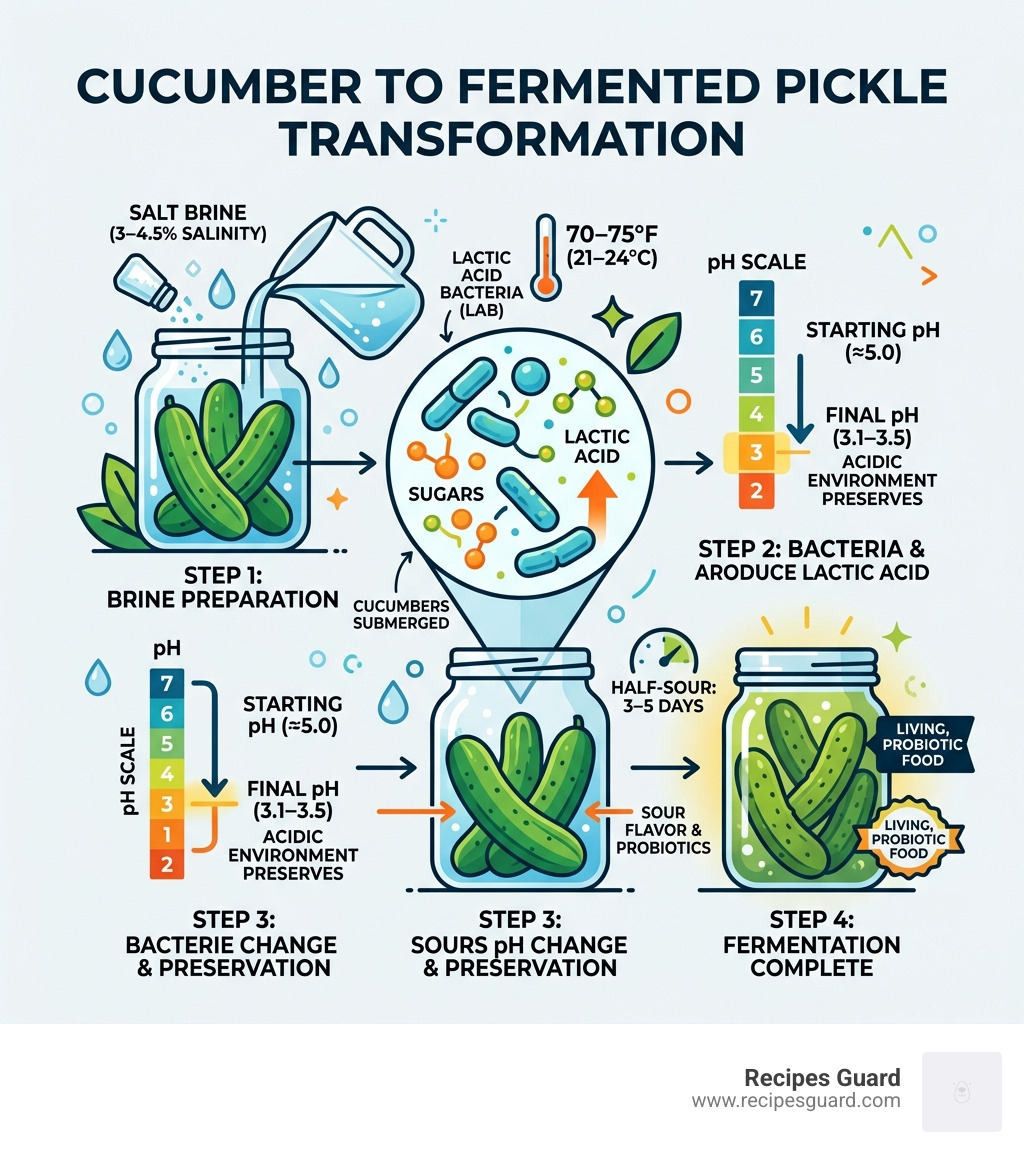
- Salt brine is prepared (typically 3–4.5% salinity) and poured over cucumbers
- Lactic acid bacteria (LAB) — already present on the cucumber skin — begin consuming sugars
- Lactic acid is produced, lowering the pH to between 3.1 and 3.5
- The acidic environment preserves the cucumbers and gives them their sour flavor
- Fermentation is complete in roughly 3–4 weeks at 70–75°F (or as few as 3–5 days for a milder half-sour)
This is one of the oldest food preservation methods in the world. Archaeological evidence places cucumber pickling as far back as 2030 BCE in the Tigris Valley. Today in the United States alone, roughly 60% of the annual cucumber harvest is still preserved through natural brine fermentation rather than vinegar.
The difference between a jar of lacto-fermented pickles and a store-bought vinegar pickle isn’t just flavor — it’s biology. Fermented pickles are living foods, rich in probiotics. Vinegar pickles are not.
If you’ve ever felt nervous about letting cucumbers sit in salty water on your counter for days — wondering if you’re making pickles or a science experiment gone wrong — you’re not alone. That anxiety is completely normal. As fermentation author Sandor Katz puts it, salt is the main thing separating fermented vegetables from rotten ones. Get the salt right, keep the cucumbers submerged, and the process largely takes care of itself.
This guide walks you through everything: ingredients, brine ratios, packing techniques, troubleshooting, and storage — so your first (or fiftieth) batch comes out crunchy, tangy, and full of flavor.
Understanding Fermentation in Pickle vs. Vinegar Pickling
When we talk about pickles, most people think of the bright green, shelf-stable jars in the grocery store aisle. However, there is a massive scientific and nutritional divide between those and a true fermentation in pickle batch.
In vinegar pickling (often called “fresh-pack”), the acidity comes from adding acetic acid (vinegar) directly to the jar. To make these shelf-stable, they are usually heat-pasteurized. While delicious, this heat kills any beneficial bacteria. In contrast, fermented pickles create their own acidity through the metabolic work of lactic acid bacteria. This is a “living” process that enhances the bioavailability of vitamins and minerals.
| Feature | Fermented Pickles (Lacto-Fermentation) | Vinegar Pickles (Fresh-Pack) |
|---|---|---|
| Acid Source | Lactic acid produced by bacteria | Acetic acid (added vinegar) |
| Probiotics | High (Rich in live cultures) | None (Killed by heat/vinegar) |
| Flavor Profile | Complex, tangy, “funky,” fizzy | Sharp, acidic, often sweet |
| Preservation | Natural brine & low pH | Vinegar & heat pasteurization |
| Storage | Requires refrigeration (living food) | Shelf-stable until opened |
According to The science behind food pickling, the optimal pH range for a safe pickle is typically between 3.4 and 4.6. Fermentation naturally drives the pH into this safe zone, creating a tangy delight that is as good for your gut as it is for your sandwiches.
Essential Ingredients and the Science of Brine
Success in fermentation in pickle starts with the quality of your ingredients. You aren’t just cooking; you are farming microscopic “good guys” called Lactobacillus. To help them win the battle against spoilage, we need to provide the right environment.
- Pickling Cucumbers: Look for “Kirby” or “Liberty” varieties. They have bumpy skin and firm flesh. Avoid the long, waxed English cucumbers found in plastic wrap; the wax prevents the brine from penetrating, and they turn to mush quickly.
- Non-Iodized Salt: This is non-negotiable. Iodine can inhibit the growth of beneficial bacteria and darken your pickles. Use canning salt, sea salt, or Himalayan pink salt.
- Water: Use non-fluoridated, filtered water. Chlorine and fluoride in tap water are designed to kill bacteria—exactly what we don’t want here.
- Tannic Acid Sources: To keep pickles crunchy, we need tannins. Traditional recipes call for adding a grape leaf, oak leaf, or bay leaf to the jar. These tannins inhibit the enzymes that cause softening.
- Flavorings: Garlic cloves, fresh dill stalks (with the flower heads if possible), mustard seeds, and peppercorns are the classic “dill pickle” palette.
For more technical details on ingredient selection, the Making Fermented Dill Pickles guide from Ohio State University is an excellent resource for home preservers.
The Ideal Salt Ratio for Fermentation in Pickle Brine
The salt-to-water ratio is the most critical safety factor in your ferment. Salt works through osmosis, drawing moisture and sugars out of the cucumber to feed the bacteria while simultaneously inhibiting putrefying microorganisms.
For cucumbers, we generally aim for a 3% to 4.5% salinity.
- 3% Brine: Approximately 1 heaping teaspoon (7-9 grams) of salt per 1 cup of water. This is perfect for “half-sour” pickles that ferment quickly (3-5 days).
- 4.5% Brine: Approximately 1.5 tablespoons of salt per 1 quart of water. This higher concentration is safer for long-term “full sour” ferments (2-3 weeks).
In commercial operations, a 6% NaCl brine is often used, but for home use, staying in the 3-4.5% range provides the best balance of safety and flavor. For a deeper look at why these ratios matter, check out Safety First: A Guide to Preserving Fermented Foods.
Preparing Your Cucumbers and Jars for Success
Before you pack your first jar, there is one “secret” step every expert recommends: remove the blossom end.
Cucumbers have a stem end and a blossom end. The blossom end contains enzymes that are specifically designed to soften the fruit as it ripens. If left on, these enzymes will turn your pickles into mush within days. Simply slice off 1/16th of an inch from the blossom end (the end opposite the stem).
We also recommend an ice bath. Soaking your cucumbers in ice water for 1-2 hours before pickling firms up the pectin in the cell walls, ensuring a satisfying “snap” when you bite into them. Finally, ensure your jars are scrubbed clean with hot, soapy water. While we don’t need the “sterile” environment required for canning, starting with clean equipment is a cornerstone of our Preserving Basics.
Step-by-Step Process for Successful Fermentation in Pickle Batches
Now that your ingredients are prepped, it’s time to assemble.
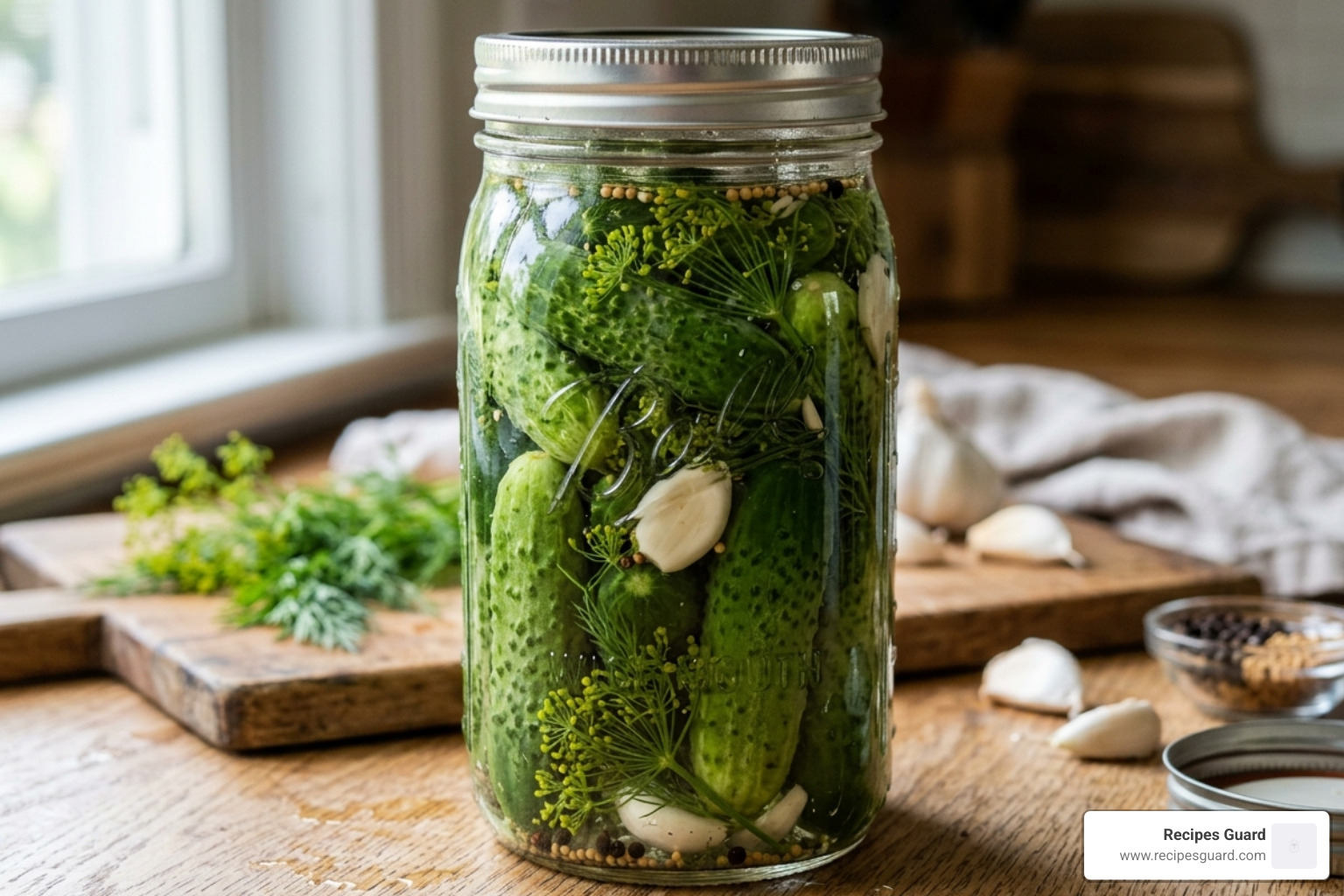
- Bottom Layer: Place your tannins (grape/bay leaves), half of your garlic, and half of your dill at the bottom of a clean half-gallon or quart Mason jar.
- The Pack: Tilt the jar on its side and stack the cucumbers vertically. Pack them as tightly as possible without bruising them. A tight pack helps keep them from floating later.
- Top Layer: Stuff the remaining garlic and dill into the gaps.
- Add Brine: Pour your prepared salt brine over the cucumbers, leaving about 2 inches of headspace at the top.
- Seal and Store: Place your weight (more on this below) to keep everything submerged. Cover with a loose lid or a “burping” fermentation lid.
If you enjoy the pungent aroma of fermented aromatics, you might also want to try our Dont Be Afraid of the Funk With This Easy Fermented Garlic Recipe, which uses a very similar brine technique.
Maintaining Submersion and Preventing Mold
The golden rule of fermentation is: “Under the brine, all is fine. Above the brine, mold is mine.”
Fermentation is an anaerobic process, meaning it happens without oxygen. When cucumbers poke above the liquid line, they are exposed to air, which allows mold and Kahm yeast to grow.
To prevent this, use fermentation weights (glass disks) or a small “jelly jar” filled with water that fits inside the mouth of your larger jar. Some folks even use a clean cabbage leaf tucked over the top of the cucumbers like a blanket to keep small bits from floating up. If you see a thin, white, dusty film on the surface, don’t panic! That is likely Kahm yeast, which is harmless but should be skimmed off to prevent off-flavors. For more tips on managing different types of produce, see Quick and Easy Pickled Vegetables for Every Meal.
Monitoring Temperature and Timing in April 2026
As of April 2026, many home fermenters are using smart thermometers to track their jars, but the old-fashioned way works just as well. The ideal temperature for fermentation in pickle is 70–75°F.
- Too Cold (Below 55°F): Fermentation may stall or never start.
- Too Hot (Above 80°F): The bacteria work too fast, which often leads to softened pickles or spoilage.
In the first few days, you will notice the brine turning cloudy and small bubbles rising to the top. This is a great sign! It means the Lactobacillus are hard at work. By day 3, start taste-testing. If you like a “half-sour” (crisp, bright green, mildly tangy), they might be ready. If you want a “full sour” (olive green, very tangy, translucent flesh), let them go for 2 to 3 weeks. This patience is the same virtue required when Mastering the Art of Lacto-Fermented Hot Sauce.
Troubleshooting Common Fermentation Problems
Even with the best intentions, things can go sideways. Here are the most common issues:
- Softening: Usually caused by leaving the blossom end on, fermenting at too high a temperature, or using a brine with too little salt.
- Bloaters: These are cucumbers that float or have hollow cavities. This is caused by gas (CO2) buildup inside the cucumber. Commercial processors often “air purge” their tanks to prevent this, but at home, it’s mostly a cosmetic issue. You can still eat them!
- Slimy Brine: This is a sign of spoilage. If the brine feels like thick syrup or the pickles are mushy and smell like old gym socks, discard the batch.
- Discoloration: White sediment at the bottom of the jar is normal (it’s spent yeast and bacteria). However, if the pickles turn dark brown or black, it’s a sign of minerals in your water or iodized salt.
For those interested in the industrial side of things, Scientific research on cucumber fermentation defects shows that bloater defects can impact up to 40% of a harvest in a bad season.
Frequently Asked Questions about Fermented Pickles
How do I know when my pickles are ready to eat?
The best tool you have is your tongue! Start tasting on day 3. A ready pickle will have lost its “raw” cucumber taste and replaced it with a pleasant tang. Visually, the flesh will change from bright white to a more translucent, yellowish-green. Once they hit the flavor profile you love, move the jar to the refrigerator. Cold temperatures slow the bacteria down significantly, allowing you to enjoy your batch for up to 6 months.
Can I ferment other vegetables using this same brine method?
Absolutely! The 3% brine method is incredibly versatile. You can use it for:
- Carrots: Add ginger and turmeric for a zesty snack.
- Green Beans: Often called “Dilly Beans.”
- Cauliflower and Peppers: The basis for a traditional Italian Giardiniera.
- Radishes: They turn the brine a beautiful pink!
Why is my fermentation brine turning cloudy?
Cloudy brine is actually a badge of honor! It is the visual evidence of lactic acid bacteria multiplying. In vinegar pickling, cloudy brine is a sign of spoilage, but in fermentation in pickle, it is exactly what you want to see. As the ferment finishes, this cloudiness may settle to the bottom as a fine white powder. This is perfectly safe.
Conclusion
At Recipes Guard, we believe that bringing the art of fermentation in pickle back into the kitchen is about more than just a crunchy snack. It’s about connecting with a global tradition of “living foods” that support gut health and offer flavors that no factory-made vinegar pickle can match.
The gut-brain connection is a growing field of study, and many researchers believe that the probiotics found in traditional ferments can even have a positive effect on our mood and mental clarity. Whether you are using a traditional ceramic crock or a simple Mason jar, the process of watching life flourish in a salty brine is deeply rewarding.
Ready to expand your fermentation station? Explore our full library of Fermented Recipes and start your journey into the wonderful, funky world of lacto-fermentation today!