
When Your Studies Stop, Your Financial Protection Shouldn’t
A student study interruption claim is how you recover non-refundable tuition fees, prepaid housing, and travel costs when an unexpected event forces you to pause or abandon your studies abroad.
Here’s what you can typically claim back:
- Tuition and program fees — the portion your university won’t refund
- Return airfare — flights home due to a covered emergency
- Prepaid accommodation — housing costs you can’t recover
- Additional travel costs — unexpected expenses caused by the interruption
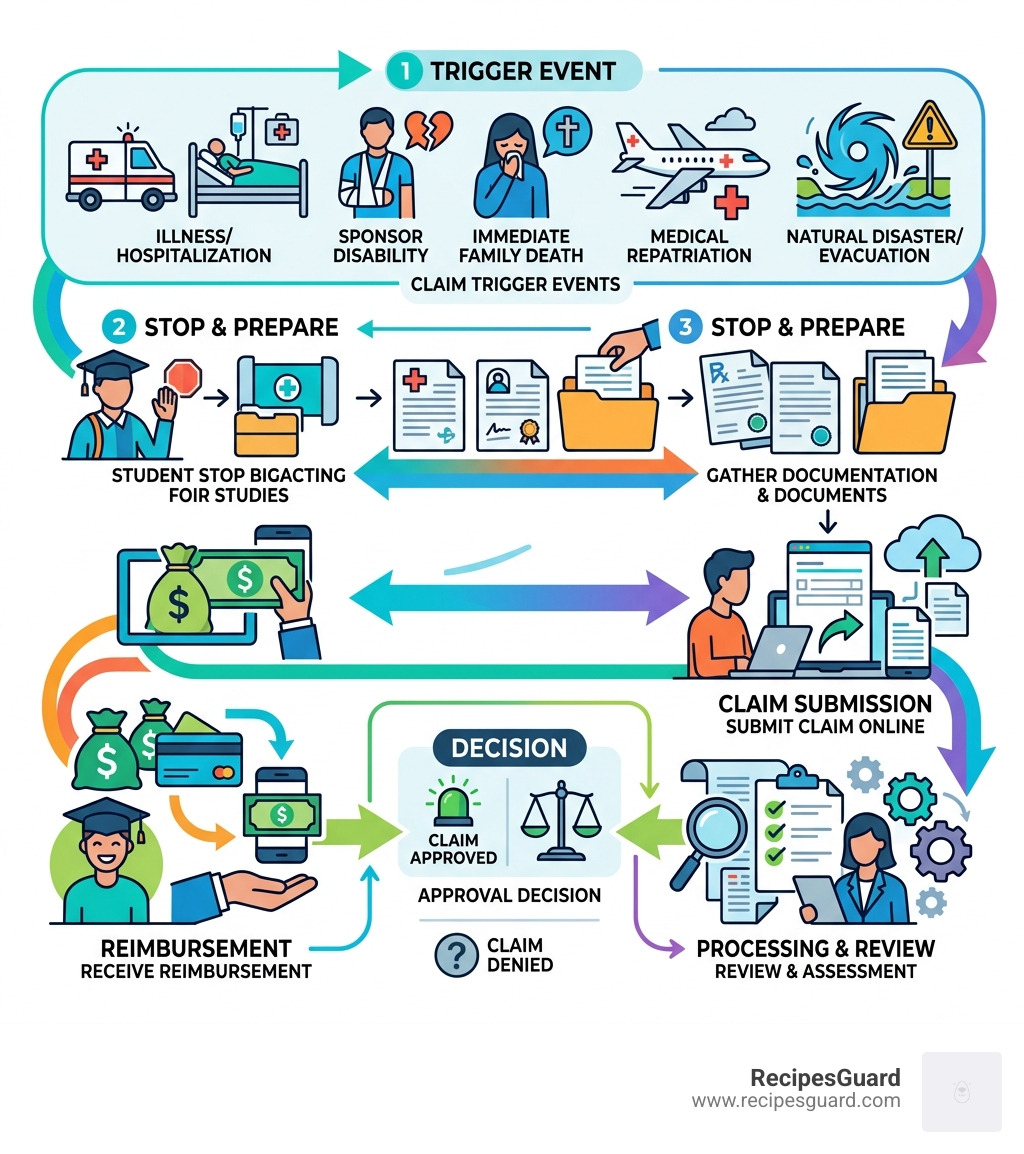
Common triggers that qualify for a claim:
- Serious illness or hospitalization (often requiring 30+ consecutive days)
- Death or permanent disability of your financial sponsor
- Death or serious illness of an immediate family member
- Medical repatriation ordered by a treating physician
- Natural disaster or security evacuation at your study destination
Picture this: you’re halfway through a semester abroad when a family emergency forces you home. Your university won’t refund your tuition. Your flights are non-refundable. Suddenly, you’re facing thousands of dollars in losses — with no clear idea of how to get any of it back.
This is exactly what study interruption insurance is designed for. Yet most students have never heard of it, and even fewer know how to actually file a claim when something goes wrong.
Whether your studies were cut short by a medical crisis, a sponsor issue, or a family emergency, understanding your rights and the claims process can make a significant financial difference.
This guide walks you through everything — from what qualifies as a covered interruption, to the documents you need, to the steps that get your money back fastest.
Discover more about student study interruption claim:
- australia student insurance policy
- claim process student visa
- claim student visa policy
Understanding the Student Study Interruption Claim

When we talk about a student study interruption claim, we are looking at a very specific intersection of university policy and insurance law. In the academic world, an “interruption of study” is often called an authorized absence or “stopping the clock.” It allows a student to pause their degree for a set period—usually due to health or personal reasons—without losing their place in the program.
However, just because the university says you can leave doesn’t mean they will give your money back. Most Australian universities have strict “census dates.” If you interrupt your studies after these dates, you are typically liable for the full semester’s tuition. This is where your insurance policy steps in to catch the falling knife.
A valid claim covers the non-refundable portion of your tuition and program fees. It essentially reimburses the “lost” investment of that semester. According to Interruptions of study | Academic Quality and Standards | Student Administration, these interruptions are only authorized for “good reason,” and your insurance provider will look for that same level of justification.
For students in Australia, understanding the difference between a simple trip delay and a full study interruption is vital. A trip delay might pay for a hotel for a night; a study interruption claim can save you $20,000 in tuition fees. To learn more about the broader context, check out Everything You Need to Know About Student Study Abroad Insurance.
Key Triggers for a Valid Claim
Not every bad day at university qualifies for a payout. To file a successful student study interruption claim, the event must be “unforeseen” and “beyond your control.” We generally see claims triggered by three main categories: medical, familial, and sponsorship issues.
1. Medical Emergencies
If you are hospitalized for a significant period—often defined in policies as more than 30 consecutive days—you can usually claim for study interruption. This isn’t for a common cold; it’s for situations where it is medically impossible to continue your coursework. We go into more detail on this in our guide: Don’t Let a Medical Emergency Fail Your Semester Abroad.
2. The “Sponsor” Clause
This is a unique feature of student-specific insurance. If the person paying for your education (your “sponsor,” such as a parent or guardian) passes away or suffers a permanent disability that prevents them from continuing to fund your studies, the insurance may cover your return flight and the remaining semester fees.
3. Family Bereavement or Emergency
If an immediate family member (spouse, parent, sibling, or child) falls critically ill or passes away, requiring you to return home permanently or for the remainder of the semester, this is a standard trigger for a claim.
Study Interruption vs. Standard Trip Interruption
| Feature | Standard Trip Interruption | Study Interruption Claim |
|---|---|---|
| Primary Focus | Travel costs (flights, hotels) | Academic costs (tuition, program fees) |
| Sponsor Coverage | Rarely included | Often a core benefit |
| Hospitalization | Any duration usually triggers | Often requires 30+ days for tuition refund |
| Documentation | Travel receipts | University invoices + Medical certs |
For more on the academic side of these triggers, see Interrupting Studies.
Step-by-Step Guide to Filing Your Student Study Interruption Claim

Filing a claim can feel like a second degree in administration, but we’ve broken it down into a manageable process. Timing is everything here. If you wait too long to notify your provider, they may deny the claim based on “delayed notification.”
- Notify Everyone Immediately: As soon as the event occurs, contact your insurance provider’s 24/7 emergency assistance line. Simultaneously, notify your university’s registrar or student services office. You need to establish the “date of interruption” clearly.
- Request an “Authorized Interruption”: You cannot just stop going to class. You must follow the university’s formal process to pause your studies. This provides the “Proof of Interruption” required by insurers.
- Track Every Cent: Keep a folder (digital or physical) of every receipt. This includes the original tuition invoice, any partial refund letters from the school, and travel expenses.
- Coordinate with the Provider: Your insurer may want to speak with your treating physician or the university directly. Ensure you’ve signed any necessary privacy waivers to allow this.
For a deeper dive into the reimbursement mechanics, read The Ultimate Guide to Trip Interruption and Illness Claims and From Forms to Funds: A Student Guide to Insurance Reimbursement.
Essential Documents for Your Student Study Interruption Claim
To get your credits and cash back, you need a solid paper trail. We recommend gathering these documents before you even leave the country where you are studying:
- Medical Certificates: These must include the diagnosis, the dates of admission/discharge, and a specific statement from the doctor saying you are “unfit to continue studies.”
- Official University Invoices: The original bill showing how much you paid for the semester.
- Proof of Non-Refundability: A letter from the university stating exactly how much of your tuition they are not refunding.
- Payment Vouchers: Proof that the money actually left your (or your sponsor’s) bank account.
- Enrollment Verification: Confirmation that you were a full-time student at the time of the incident.
Having these ready is the best way to ensure a smooth process. Check out our specific tips in Study Abroad Claims: How to Get Your Credits and Cash Back.
Common Exclusions in a Student Study Interruption Claim
Insurance isn’t a blank check. There are “gotchas” that can lead to a rejected student study interruption claim. Knowing these ahead of time can help you avoid a financial headache.
- Academic Failure: You cannot claim for study interruption because you failed your exams or were expelled.
- Voluntary Withdrawal: If you simply decide that “study abroad isn’t for me” or you’re feeling homesick without a diagnosed medical condition, the claim will be denied.
- Pre-existing Conditions: If you had a medical issue before the policy started and didn’t declare it, any interruption caused by that issue is usually excluded.
- Pregnancy and Childbirth: Most standard policies exclude claims related to normal pregnancy or childbirth.
- Substance Abuse: Any interruption caused by the use of alcohol or non-prescription drugs is a standard exclusion.
For more on what not to do, see The Student Guide to Getting Your Money Back After a Cancelled Trip.
Academic and Visa Implications of Interrupting Studies
In Australia, your study status is directly tied to your visa. If you interrupt your studies, your university is legally required to notify the Department of Home Affairs. This can have immediate consequences for your right to remain in the country.
Visa Curtailment When you stop being a “full-time enrolled student,” your Subclass 500 visa may be subject to cancellation. According to the Your study situation has changed – Immigration and citizenship page, you must usually either leave Australia or apply for a different visa within a specific timeframe (often 28 days) once your enrollment ends.
Tuition Fee Liability As mentioned earlier, interrupting doesn’t mean the debt disappears. You remain liable for fees up until the point of formal interruption. It is vital to check your university’s specific “Return-to-study plans.” Some institutions, like those referenced in Section 7: Interruption of Study | Study at UCL, require a welfare review or a medical “fit to return” note before you can re-enroll.
Always consult with an international student advisor before finalizing your interruption to ensure you don’t accidentally become an unlawful non-citizen.
Frequently Asked Questions about Study Interruptions
What is the difference between withdrawing and interrupting?
Withdrawing is permanent. You are ending your relationship with the university and the program. Interrupting is a “pause.” You remain a registered student (though not “enrolled” for that specific term), and you intend to return. Insurance claims are much easier to process for interruptions because they imply a temporary, forced break rather than a voluntary life change. For more, see What is the difference between withdrawing and interrupting when it comes to my studies.
Does insurance cover “Cancel For Any Reason” (CFAR) upgrades?
CFAR is an optional add-on that is becoming more popular. It allows you to cancel or interrupt your trip for reasons not typically covered (like just wanting to go home). However, CFAR usually only reimburses 50% to 75% of costs and must be purchased very early—often within 14-21 days of your initial trip payment. You can find a full breakdown in The Ultimate Guide to Trip Cancellation and Interruption.
How long does the reimbursement process typically take?
Once all documents are submitted, most reputable insurers aim to process a student study interruption claim within a 14-day window. However, this depends entirely on the completeness of your paperwork. If the insurer has to chase your university for an invoice, it can take months. This is why we emphasize “direct billing” or “receipt verification” early in the process.
Conclusion
At RecipesGuard, we know that an interrupted semester is more than just a financial loss—it’s a massive disruption to your life and career goals. But while you focus on your health or your family, let your insurance focus on the bills.
By understanding the triggers, gathering the right documents, and keeping a close eye on your visa status, you can ensure that a temporary setback doesn’t become a permanent financial burden. A successful student study interruption claim is your ticket to academic peace of mind, allowing you to return to your studies when the time is right, without the weight of lost thousands hanging over your head.
Stay safe, stay informed, and remember: we are here to help you navigate the fine print. For more information on staying compliant, see our guide on International Student Visa and Travel Insurance Requirements.

My name is Bianca, and my journey into the world of fermentation and food safety began with a costly mistake. I once lost an entire season’s harvest of chili peppers because I relied on guesswork instead of science. That failure was my turning point.
